

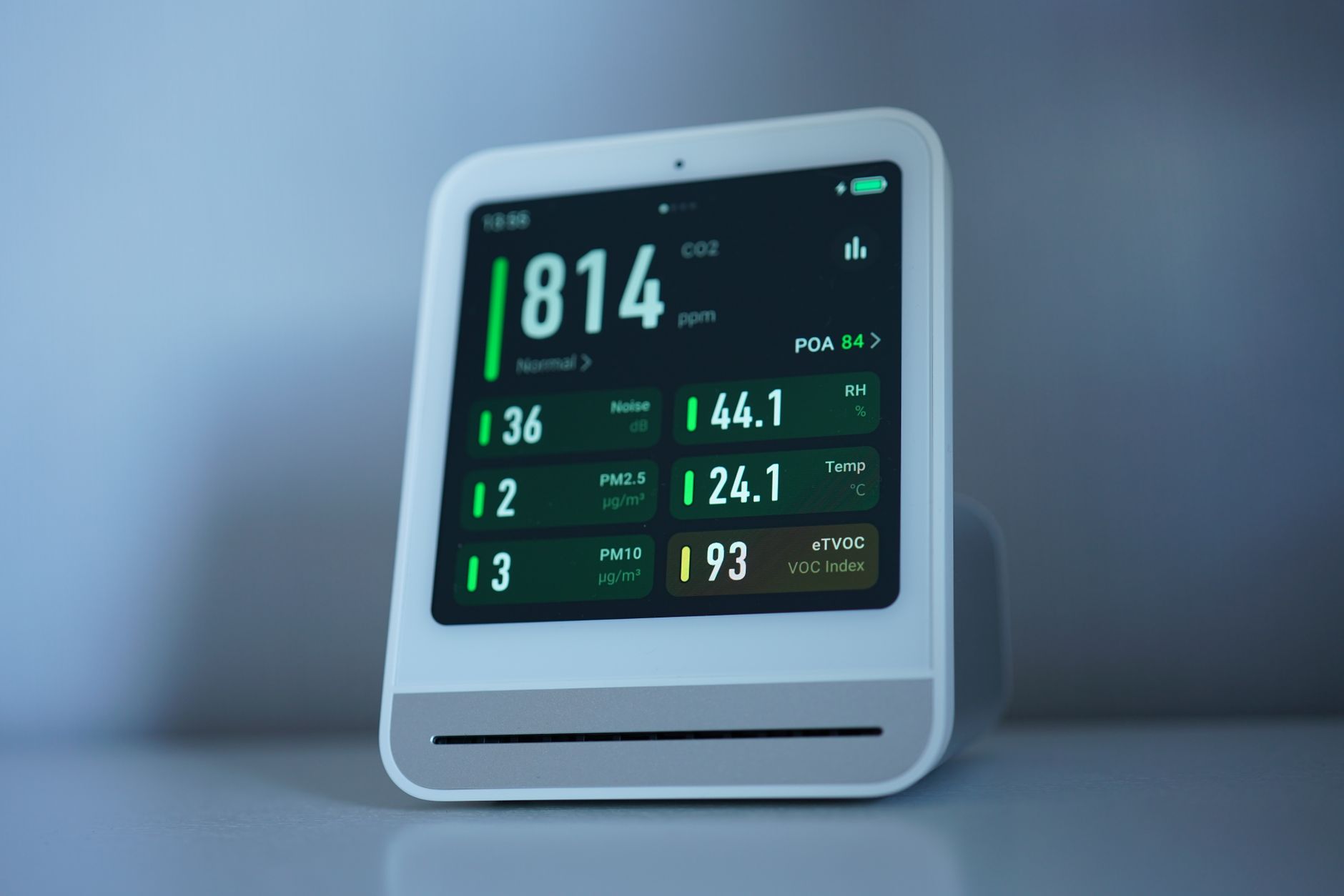

Moisture levels between 30% and 50% relative humidity keep most living spaces comfortable while starving mold, dust mites, and dry-air damage, with 40% serving as a steady target throughout the year. Anything above 60% gives mold colonies a foothold, while anything below 30% pulls moisture from skin, wood, and electronics. Holding moisture in that band keeps air healthier, rooms quieter, and energy bills steadier.
This guide explains how to dial in healthy indoor humidity, from choosing a reliable hygrometer and selecting dehumidifiers or humidifiers, to adjusting targets across changing seasons for a drier, quieter, mold-free home.
What Indoor Humidity Means and Why the 30–50% Range Matters
Relative humidity measures the moisture actually in the air compared to what it could hold at that temperature. Warm air carries more water than cold air, so the same percentage can feel muggy in July and parched in January. That seasonal shift is why goal posts move with outdoor temperature, and why one number on your thermostat never tells the whole story.
Most homes stay comfortable and healthy between 30% and 50% relative humidity, a range backed by ASHRAE Standard 62.1 for acceptable indoor air quality. Inside that band, your skin retains moisture, sinuses stay clear, and wood floors stop shrinking. Outside it, small problems compound fast: a window that fogs in winter, a closet that smells musty in August, a child who wakes congested night after night.
Levels above 60% invite mold, dust mites, and the musty odors that damage walls and furnishings. The EPA recommends keeping indoor relative humidity below 60% specifically to prevent mold growth, since mold spores can germinate on damp surfaces within 24 to 48 hours. Levels below 30% pull moisture from your body and your belongings. Skin tightens, lips crack, and hardwood gaps open up like little canyons. Static shocks become a daily nuisance, and very dry air can shorten the lifespan of electronics by stressing solder joints and circuit boards.
Such damage rarely announces itself before it’s done, which makes the underlying risks worth understanding before they hit your wallet.
The Real Risks of Humidity That Runs Too High or Too Low
High humidity quietly feeds mold colonies behind drywall, under sinks, and inside ductwork long before you smell anything. By the time that earthy, basement-like odor reaches your nose, spores have often colonized a square foot or more of hidden surface. Dust mites and allergen-triggering bacteria multiply fastest when air stays above 55%, turning your bedroom into a sneeze factory if readings creep toward 60% in summer.
Condensation on windows and exterior walls is the earliest visible warning sign of excess moisture. A foggy pane on a cold morning means warm indoor air is meeting a cold surface and dumping its water load onto the glass. Ignore it for a season, and you’ll see peeling paint, swollen window frames, and black spots along ceiling corners.
Dry air inflames airways, cracks hardwood floors, and builds up static that stresses electronics. The Mayo Clinic notes that low humidity worsens respiratory symptoms for people with asthma or allergies, because dry passages can’t trap and clear particles the way they’re designed to. Furniture splits, violin tops crack, and guitar necks warp. A chronic imbalance costs more in repairs and medical visits than any single piece of equipment can fix.
Measuring Your Home’s Humidity the Right Way
Pick a Tool You Trust
A basic digital hygrometer gives accurate readings for under $15 and is the minimum tool worth owning. Brands like Honeywell and AprilAire make models that also track temperature, and Consumer Reports routinely finds the cheapest digital units perform within 2% of lab-grade instruments. Analog dial hygrometers look pretty on a wall but typically drift 5% or more, so spend the extra dollars on a digital sensor.
Place It Where the Air Actually Lives
Set the sensor in a frequently used room, away from vents, windows, and direct sunlight. A hallway shelf at eye level, or a living room end table, gives you a reading that reflects how the air really feels. Avoid bathrooms, kitchens, and laundry rooms, where steam from showers or cooking will spike numbers and tell you nothing about the rest of the house.
Track readings morning and evening for at least a week before changing anything. Morning lows catch the dry side of the day after a night of heating, while evening highs reveal what cooking, showering, and breathing add to the load. Note seasonal baselines so summer and winter adjustments come from data, not guesswork. Compare readings across rooms to spot problem areas like bathrooms, basements, or rooms with houseplants, which often run 10% to 15% higher than the rest of the house.
Spotting the hot spots is only useful if you can trust the number on the dial, so the next step is choosing gear that actually delivers.
Matching the Right Tool to Your Humidity Problem
When to Add Moisture Versus Remove It
Choose a whole-house dehumidifier or a properly sized portable unit for rooms that regularly read above 50%. Pick a humidifier for winter months when indoor readings drop below 30% and skin, sinuses, or wood show stress. The decision hinges on one number, your current reading taken over a week, not a gut feeling about how dry the air feels.
For whole-home integration, units like the AprilAire 600 connect directly to your HVAC system and pull moisture from every return as air cycles through. Portable dehumidifiers work for basements, bedrooms, or single rooms, but emptying the tank every day wears out patience fast. Look for units with built-in humidistats so the device cycles on and off to hold your target percentage, rather than running constantly and driving humidity below the safe range.
Choosing the Right Type of Equipment
Decide between warm-mist, cool-mist, evaporative, or steam based on room size, noise tolerance, and maintenance appetite. Cool-mist evaporative units run quieter and use less electricity but grow mold in the tank if you skip cleanings. Warm-mist and steam humidifiers kill bacteria by boiling water, which helps in nurseries but adds heat to the room. Whole-home steam units cost more upfront but require almost no daily attention once plumbed into your water line.
| Humidifier Type | Best For | Maintenance |
|---|---|---|
| Cool-mist evaporative | Bedrooms, medium rooms, quiet spaces | Weekly tank cleaning, monthly filter swap |
| Warm-mist / steam | Nurseries, cold winter climates | Biweekly descale, daily water refill |
| Whole-home bypass | Large houses, allergy sufferers | Annual pad replacement, seasonal shutoff |
| Portable dehumidifier | Basements, single rooms, rentals | Empty tank daily or run a drain line |
Connect a humidifier or dehumidifier to your HVAC system only after confirming your ductwork can handle the added moisture load. A pro should size the unit to your square footage and static pressure, since an oversized humidifier dumps water into ductwork faster than air can absorb it, leading to damp insulation and the very mold problems you’re trying to prevent. Exhaust fans in kitchens and bathrooms remain the cheapest, most overlooked humidity control in any home. Run the bathroom fan for 20 minutes after every shower, and the kitchen hood while cooking. That habit alone can drop peak humidity by 15%.
Setting Target Levels and Adjusting Them Through the Year
Start at 40% as a comfortable middle ground and fine-tune based on how the air actually feels. If your skin still feels tight at 40% in February, nudge the humidistat to 45%. If your basement smells a little earthy in July, drop the dehumidifier set point from 50% to 45%. The number is a starting point, not a law.
Lower the target toward 35% on the coldest winter days to prevent window condensation, since the dew point of indoor air drops right along with outdoor temperatures. Raise the target toward 45% in spring and fall when outdoor humidity runs higher and heating or cooling is off. The Mayo Clinic recommends keeping bedroom humidity between 40% and 60% for respiratory comfort, but a tighter window of 40% to 45% works best when the goal is also protecting wood furniture and instruments.
| Outdoor Temperature (°F) | Indoor Target RH (%) | Why |
|---|---|---|
| Above 40°F | 45% | Outdoor air carries more moisture; ease off equipment |
| 20°F to 40°F | 40% | Balanced comfort and structural protection |
| 0°F to 20°F | 35% | Prevents window condensation and frost |
| Below 0°F | 30% | Cold air indoors holds almost no moisture |
| Summer (AC on) | 45–50% | AC coils condense moisture naturally; verify with gauge |
Use a simple indoor humidity chart by temperature to avoid the trap of one fixed number year-round. Check the reading after every HVAC filter change, since airflow shifts can swing indoor moisture by 10% or more. A clogged filter slows air movement across cooling coils, which reduces dehumidification and leaves rooms feeling clammy even when the thermostat says everything is fine.
A clean filter is the easy fix, but stubborn clamminess often points to deeper mechanical issues that need a closer look.
Troubleshooting Problems That Persist After Adjustments
When Humidity Refuses to Drop
If humidity stays high despite a running dehumidifier, check for hidden plumbing leaks or poor ventilation in crawl spaces. A slow drip under a sink or a damp vent in a basement can add several gallons of water to indoor air every day, far more than any dehumidifier pulls out. Inspect the area under every sink, look for water stains on basement walls, and make sure crawl space vents are open during dry months and sealed during humid ones.
Persistent window fogging, musty closets, or peeling paint means the target number is wrong, not the equipment. Drop your dehumidifier set point 5% lower and wait three days. If symptoms clear, your old target was too generous. If they don’t, you likely have a moisture source, not a setting problem.
When Humidity Refuses to Climb
Seal obvious air leaks first when winter humidity refuses to climb, since cold drafts pull moisture out faster than any humidifier can add it. Weatherstrip doors, caulk window frames, and add insulation to attic hatches. A leaky house exhausts humidified air before it ever reaches your skin, and no equipment can keep up with a gale-force draft.
Static shocks, cracked lips, or splintering furniture signal a humidifier undersized for the square footage. Bump up to a larger unit or add a second portable humidifier in the worst room. Call an HVAC pro for whole-home integration when readings swing more than 15% between rooms or floors, since ductwork balancing and zone controls solve problems a single thermostat never can.
Building a Maintenance Habit
Make monthly equipment checks a habit: clean tanks, replace filters, and recalibrate the hygrometer twice a year. A hygrometer that drifts 5% in either direction is worse than no reading at all, since it leads you to adjust equipment based on false data. Drop the unit in a sealed plastic bag with a damp cloth overnight; if it reads 95% to 99% in the morning, it’s accurate. Anything outside that range means recalibration or replacement.
- Monthly tasks: Wipe humidifier tanks with diluted white vinegar, empty and rinse dehumidifier reservoirs, vacuum grille filters.
- Quarterly tasks: Replace evaporative pads, descale heating elements, check exhaust fans for proper operation.
- Twice-yearly tasks: Calibrate hygrometers against a known reference, inspect ductwork for moisture stains, test whole-home humidifier water panels.
- Annual service: Have a pro inspect the HVAC coil and condensate drain, since a clogged drain pan floods the air handler and spikes humidity indoors.
Bottom Line
Target 30% to 50% relative humidity, with seasonal adjustments that follow outdoor temperature rather than a single fixed number. Measure with a calibrated digital hygrometer, place it where the air actually lives, and track readings for a week before changing anything. Match the equipment to the problem, dehumidifier for sticky summer air above 50%, humidifier for cracked-lips winter air below 30%, and run exhaust fans in kitchens and bathrooms every time you cook or shower. When symptoms persist, look for hidden moisture sources or air leaks before buying more equipment, and check your settings against an indoor humidity chart by temperature every season.
FAQ
What is the ideal humidity level for a home?
Most living spaces feel comfortable at 30% to 50% relative humidity, and aiming for 40% gives you a reliable middle target year-round. This range protects respiratory health, prevents mold growth, and keeps wood furniture and floors stable through seasonal changes.
What humidity level prevents mold growth?
Mold struggles to gain a foothold when indoor relative humidity stays below 60%, and damp-prone rooms like bathrooms and basements do best at 50% or lower. The EPA recommends this threshold because mold spores can germinate on wet surfaces within 24 to 48 hours when humidity climbs higher.
Should I use a humidifier or a dehumidifier?
Use a humidifier when readings fall below 30%, especially in winter, to relieve dry skin, static, and sinus irritation. Use a dehumidifier when readings climb above 50%, particularly in summer or basements, to prevent mold, dust mites, and that sticky, uncomfortable feeling. The choice depends entirely on your current measurement, not on the season alone.
How often should I check my home’s humidity?
Check indoor humidity at least once a day for a week whenever seasons change, then weekly once you have a stable baseline. A quick morning and evening reading for seven days gives you enough data to set equipment targets and spot problem rooms before moisture damage sets in.
Does air conditioning reduce indoor humidity?
Yes, as warm indoor air passes over the cold evaporator coil, moisture condenses out and drains away, leaving the space noticeably drier. The condensate drain then carries that water out of the house, which is why rooms feel less clammy when the AC runs, even on humid summer days.
How does humidity change with outdoor temperature?
Cold outdoor air holds far less moisture than warm air, so heating that cold air indoors drops indoor humidity sharply in winter. The same home that reads 50% in July can drop to 20% in January without any change in equipment, which is why seasonal adjustments matter more than a single set-and-forget number.