

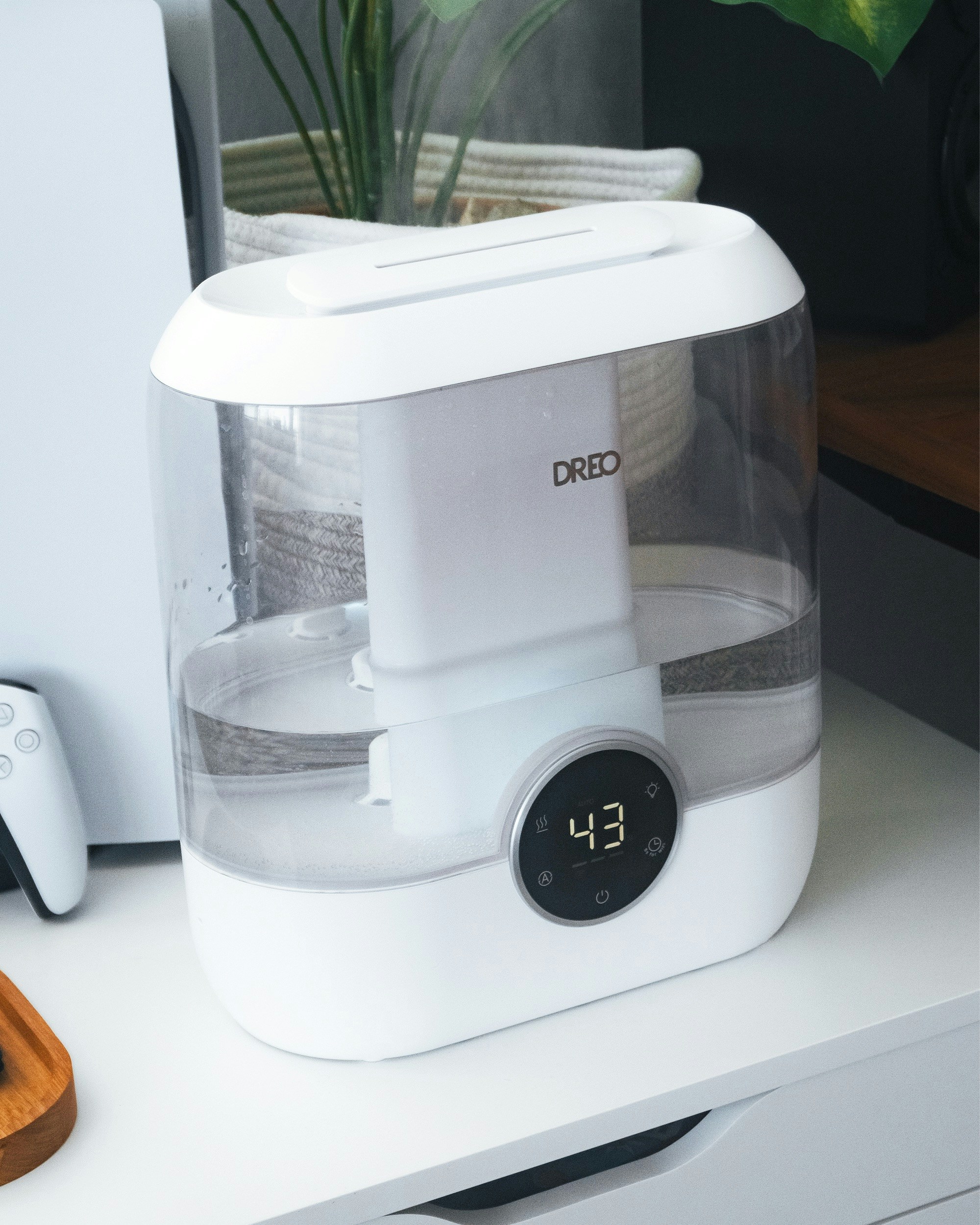

Cool-mist ultrasonic units with a 4–6 liter tank, a built-in humidistat, and a transparent water window usually solve most indoor humidity problems, since a missing controller, an undersized tank, or mineral-heavy tap water is typically what throws a room off balance. Dry household air is the most common reason calathea drops leaves in October or a monstera keeps pushing out foliage with crispy brown margins, even when watering feels on schedule. Choosing a unit with plants specifically in mind, rather than a baby-room vaporizer, protects leaves from mineral buildup, prevents over-humidification, and keeps glossy aroids looking like glossy aroids.
The breakdown below covers the humidity ranges different plants need, the four humidifier types worth comparing, the features that actually matter, and the placement and maintenance routines that keep a plant room healthy. By the end, you’ll know which model fits your collection, where to put it, and how to keep it clean.
Why Indoor Plants Struggle in Dry Household Air
Most homes sit between 10% and 30% relative humidity once the furnace starts running, and that is a desert compared to the 40% to 80% range most houseplants evolved to expect in tropical and subtropical understories. Winter is the worst stretch, with forced-air heat pulling moisture out of every surface it touches, and air-conditioned summers in hot US climates run a close second. Your ferns and calatheas are biologically wired to pull water vapor straight out of the air through their stomata, so when there is no vapor to pull, they ration moisture by curling their leaves and browning the tips first.
The damage usually shows up as brown leaf tips, crispy margins, edges that curl under, and slow new growth even during spring and summer. A common mistake is reaching for the watering can, because the symptoms mimic underwatering. Check the soil with a finger before you assume the plant needs a drink. If the soil is damp and the leaf tips are still burning, the air is too dry and a humidifier is the more useful purchase. Tropical species like calathea, anthurium, and Boston fern show damage within days, but even hardy plants like pothos, snake plant, and ZZ plant slow their growth and shed older leaves when humidity stays below 30% for months. A simple digital hygrometer costs under $15 and removes the guesswork, so you can confirm the problem before spending on a fix.
Matching Humidity Ranges to Your Plant Collection
Before picking a humidifier, you need to know the relative humidity your specific plants want, because a single unit can hit different targets depending on the room you place it in. Grouping plants by their native habitat saves you from over-humidifying a succulent shelf or under-humidifying a fern corner.
| Plant Category | Ideal RH Range | Examples | Humidifier Need |
|---|---|---|---|
| Succulents and cacti | 30% to 40% | Echeveria, Haworthia, jade plant | Rarely needed |
| Common houseplants | 40% to 60% | Pothos, monstera, philodendron, peace lily | Helpful in winter |
| Orchids and anthuriums | 50% to 70% | Phalaenopsis, Anthurium andraeanum | Recommended |
| Tropical ferns and calatheas | 60% to 80% | Boston fern, Calathea orbifolia, maidenhair fern | Essential |
| Greenhouse cabinet plants | 70% to 90% | Carnivorous plants, rare aroids, seedling trays | Required (enclosed space) |
If your collection leans toward the bottom two rows, a humidifier for indoor plants becomes a near-mandatory purchase during the dry months. If you grow mostly succulents on a sunny windowsill, your money is better spent on a small hygrometer and a spray bottle. For mixed collections, set the unit in the room where the most sensitive plants live, and let the moisture drift naturally to the rest. A 4-liter ultrasonic unit from brands like Levoit, Honeywell, or Pure Enrichment can comfortably hold a 200-square-foot room in the 50% to 60% range that satisfies most houseplants without turning the space into a terrarium.
With the right range identified, the next step is choosing a humidifier that actually delivers it.
Cool-Mist, Warm-Mist, Ultrasonic, and Evaporative Compared
Humidifiers fall into four main families, and the type you choose shapes both the plant environment and the maintenance routine that follows. Cool-mist is the broad category that includes ultrasonic and evaporative styles, and it is the safer default for a mixed plant room because it does not add heat to the air. Warm-mist units, also called vaporizers, boil water to release steam, which can raise room temperature and pose a burn risk around curious pets or children.
| Type | How It Works | Best For Plants | Watch Out For |
|---|---|---|---|
| Ultrasonic cool-mist | Vibrates water into a fine mist | Quiet operation, large tanks, dedicated plant rooms | White mineral dust on leaves if tap water is used |
| Evaporative cool-mist | Fan blows air through a wet wick filter | Self-regulating humidity, no over-shoot risk | Filter replacements every 2 to 4 months |
| Warm-mist vaporizer | Boils water to release steam | Cold rooms that need warmth | Adds heat, burn risk, higher energy use |
| Impeller (cool-mist) | Spinning disk flings water into droplets | Small areas, budget builds | Loud, can over-saturate nearby leaves |
Ultrasonic Units and the White-Dust Question
Ultrasonic models run nearly silent, which matters when the humidifier sits in a living room or bedroom, and they ship in large 4 to 6 liter tanks that cover a standard 10 to 12 hour daytime cycle. The trade-off is mineral dust. Tap water carries dissolved calcium and magnesium that ultrasonic vibrations aerosolize along with the water, leaving a fine white film on leaves, terracotta pots, and nearby furniture. The film is mostly cosmetic, but heavy buildup can clog stomata and dull the shine of glossy aroids like anthurium. The fix is straightforward and worth the small ongoing cost.
Evaporative Units and Self-Regulation
Evaporative humidifiers pull air through a damp wick filter using a small fan, and the air leaves the unit holding as much moisture as its current temperature allows. That physical ceiling means a room will not creep past its target humidity, which removes one major risk for plant health and indoor air quality. Honeywell, AprilAire, and Vicks all make evaporative consoles that work well in larger plant rooms. The wick filter needs replacing every 2 to 4 months, and a dusty room shortens that interval, so plan on a few dollars per filter as part of the running cost.
Sizing, Tank Capacity, and Features That Actually Matter
Match the humidifier to the room and the plant load, and most of the work is done before you ever press the power button. A bedroom-sized 4 to 6 liter unit typically runs 8 to 12 hours per fill, which covers a daytime cycle or a full night without a refill. A single plant on a desk does not need a 6 liter console, and a greenhouse cabinet full of seedlings will overwhelm a 2 liter personal unit in under four hours.
For a humidifier for grow room use, a rough sizing rule holds up across most brands: aim for roughly 250 mL of output per hour per 100 square feet of floor space when the goal is 50% to 60% RH in a closed room. A unit that delivers 300 mL/hr will keep a 10 by 10 ft space in range without running on its highest setting, which extends the life of the wick or transducer. Multiply up for a greenhouse: a 12 by 12 ft space usually needs at least 600 mL/hr from a single console or two smaller units working in tandem.
Features That Pay for Themselves
- Built-in humidistat: Set a target RH, and the unit cycles on and off to hold it, preventing over-humidification above the 60% ceiling that most living spaces should not cross.
- Transparent water window: A clear strip on the tank saves daily frustration by showing the water level at a glance.
- Top-fill design: Unscrew the lid, pour water in, and screw it back on. No flipping a heavy tank under a faucet.
- Whisper-quiet operation: Anything under 30 decibels is fine for a bedroom or office; ultrasonic units usually hit that mark.
- Auto shutoff: The unit powers down when the tank empties, protecting the motor and your floors.
For most indoor plant collections, a cool-mist ultrasonic humidifier with a 4 to 6 liter tank, a built-in humidistat, and a top-fill opening hits the sweet spot between coverage, noise, and daily convenience.
Avoid units without a humidistat unless you plan to add a separate plug-in controller. Running a humidifier on full blast for 24 hours in a closed room will push RH past 80% and create the mold and fungus-gnat conditions that hurt plants more than dry air ever did.
Choosing the right technology matters far less than matching the unit to your room and plants.
Placement, Water Quality, and the White-Dust Problem
Where you set the unit matters as much as which one you buy. Aim the mist toward the open room, not directly at a plant canopy, and the moisture will spread evenly as it drifts. Direct mist on leaves can over-saturate the surface and invite fungal spots on species with thin cuticles like African violets and rex begonias. For most setups, 3 to 6 feet of clearance from the densest cluster gives the droplets time to disperse into vapor before they land, and elevating the unit 12 to 18 inches above the floor keeps the plume from pooling on the soil surface of lower pots.
Water Quality Fixes
Distilled, reverse-osmosis, or demineralized water eliminates the white mineral coating that ultrasonic units leave on foliage. A gallon of distilled water costs around $1 at US grocery and drug stores, and one gallon typically lasts a 4 liter unit two to three days. For a permanent fix, a small countertop reverse-osmosis system pays for itself within a year if you run the humidifier daily. Demineralization cartridges built into plant-targeted models from Crane and Pure Enrichment are a third option, and they drop the white-dust problem to near zero without forcing you to buy jugs every week. The dust itself is mostly calcium carbonate, which raises soil pH over months and can lock out iron and magnesium, so the long-term fix matters as much as the cosmetic one.
Hygrometer Placement
Place a digital hygrometer at canopy height, right among the leaves, not on a side table. Air stratifies in plant rooms, and the reading at knee level can be 10% lower than the reading at the top of a fiddle-leaf fig. Aim for a steady 50% to 60% RH for most houseplants, and 65% to 75% for the tropical section. If the canopy reading climbs above 70% in a living space, dial the humidistat down or open a door for an hour. Two hygrometers in opposite corners also catch airflow problems early, since a 15% spread between them usually means the unit is too small or the room needs a small fan to circulate the moisture.
Maintenance Schedules and Safety Limits for a Plant Room
A humidifier left alone becomes a petri dish, and that biofilm can spread bacteria and mold spores to leaf surfaces where the damage shows up as spotting and rot. A light routine every few days keeps the unit clean and the air safe to breathe.
Daily and Weekly Tasks
- Every 2 to 3 days: Empty the tank, rinse it with warm water, and air-dry it upside down on a dish rack.
- Weekly: Wipe the base and any mist nozzle with a soft cloth to clear mineral scale.
- Monthly: Run a dilute white-vinegar or hydrogen-peroxide cycle through the tank to kill biofilm.
- Every 2 to 4 months: Replace the wick filter on evaporative units, or sooner if you notice mineral buildup or reduced output.
Safety Ceilings
Keep room humidity below 70% in occupied living spaces and below 90% even in enclosed grow tents. Pushing past 90% RH encourages mold on walls, mildew on curtains, and the fungus-gnat infestations that thrive in constantly damp soil. A cheap stick-on humidity gauge near the most sensitive plants gives you an early warning before the air crosses into risky territory. If you see condensation on the windows, the room is already past the safe limit and the humidistat needs a lower setting.
Safely running the humidistat is one piece; layering in the right accessories is what keeps humidity consistent.
Building a Layered Humidity Strategy on Any Budget
A single humidifier does not have to do all the work. Grouping humidity-loving plants together creates a microclimate that one unit can serve efficiently, and a few passive tricks extend the reach of the moisture into corners the mist never touches.
Grouping and Passive Tools
Cluster ferns, calatheas, and anthuriums on a single tray or shelf, then point a cool-mist unit at the open side of the cluster. The plants themselves transpire and raise the local RH, so the humidifier works less. Add a humidity tray filled with pebbles and water beneath the pots to extend the effect through slow evaporation, and expect a 5% to 10% local boost that compounds with the active mist. Misting the foliage underneath the unit’s output zone helps during a dry week, but misting alone is a short-term fix; the water evaporates within minutes and provides only a brief humidity bump.
Grow Tents and Greenhouse Cabinets
A 2 to 4 liter ultrasonic unit paired with a small clip fan keeps moisture evenly distributed across grow tents, propagation domes, and IKEA-style greenhouse cabinets without saturating one corner. Stagnant humid air breeds mold faster than moving humid air, so the fan is not optional. A grow tent humidifier from Spider Farmer or Mars Hydro syncs directly with their inline fan controllers, and a basic $30 model from Levoit or Pure Enrichment works just as well for a 4 by 4 foot tent. A 4 by 4 tent with one ultrasonic unit and a 6-inch clip fan will hold 70% to 85% RH through a 12-hour photoperiod without spiking past 90%.
Distilled water, a humidistat set to 65%, and a weekly tank rinse will keep the cabinet between 70% and 85% RH without the biofilm that ruins a setup within a month.
Bottom Line
The right humidifier for your plants comes down to matching the unit type and size to the humidity range your collection actually needs, then placing it where the mist spreads evenly and pairing it with a hygrometer you trust. A cool-mist ultrasonic model with a 4 to 6 liter tank, a built-in humidistat, and distilled water covers most indoor plant collections without over-shooting into mold territory. Treat the humidifier as one tool in a layered strategy, alongside grouped plants, pebble trays, and good airflow, and your foliage will reward you with glossy new growth instead of crispy brown tips.
FAQ
What is the best type of humidifier for indoor plants?
Quiet operation, a 4 to 6 liter tank that lasts a full day, and an automatic shutoff once the target humidity is reached make a cool-mist ultrasonic humidifier with a built-in humidistat the practical choice for most homes. Use distilled or reverse-osmosis water to avoid the white mineral dust that tap water leaves on foliage.
What humidity level do most houseplants need?
Most common houseplants grow best at 40% to 60% relative humidity, while tropical species like calathea, ferns, and anthuriums prefer 60% to 80%. A digital hygrometer at canopy height gives you the most accurate reading for the leaves themselves.
Are cool mist or warm mist humidifiers better for plants?
Because they add no heat to the growing environment and draw less power, cool-mist units are the safer default for plant rooms and propagation shelves. Warm-mist vaporizers work in cold rooms that need extra warmth, but the steam and burn risk make them a poor fit around curious pets and children.
How close should a humidifier be placed to plants?
Set the unit 3 to 6 feet away from the densest cluster of plants with the mist nozzle aimed into open air, not directly at the foliage. The moisture will drift across the canopy and spread evenly as it disperses, and the extra distance keeps water from pooling on leaves with thin cuticles.
What size humidifier do I need for my plants?
Match tank size to room size: a 4 to 6 liter unit covers a 150 to 250 square foot room for 8 to 12 hours per fill, while a single plant on a desk needs only a 1 to 2 liter personal unit. A greenhouse cabinet or 4 by 4 grow tent calls for at least 2 to 4 liters plus a clip fan to keep the air moving.
Can ultrasonic humidifiers harm plants with white dust?
Ultrasonic humidifiers can leave a white mineral film on foliage when filled with tap water, and over months that calcium carbonate can raise surface soil pH and lock out iron and magnesium. Switching to distilled water, reverse-osmosis water, or a unit with a built-in demineralization cartridge eliminates the problem.