

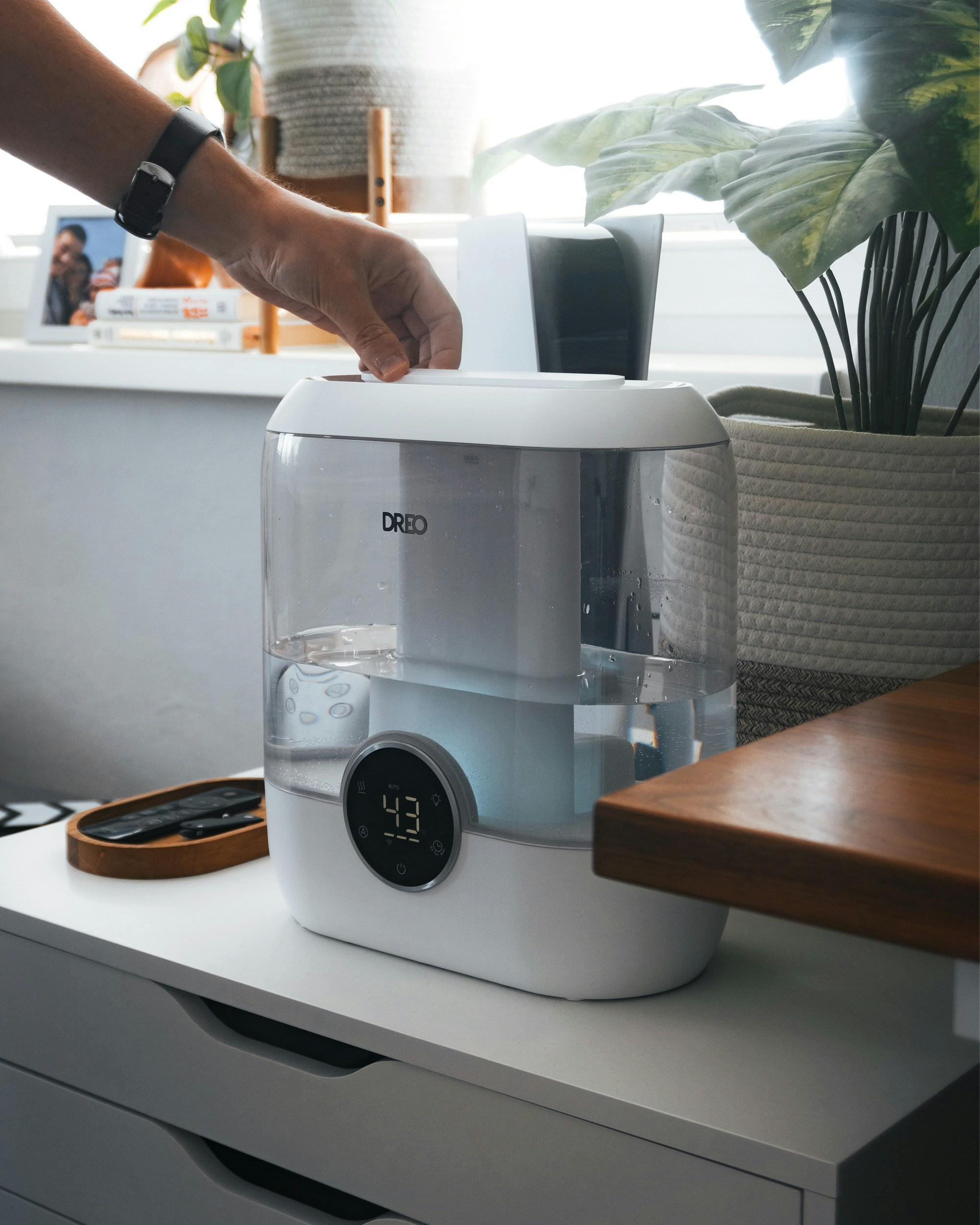

Compact ultrasonic and evaporative units with 1 to 2 liter tanks, built-in humidistats, and noise ratings under 30 decibels fit rooms under about 250 square feet. Choose by room use first, then tank size, then features, because the wrong type will either overshoot humidity or run dry before sunrise.
You’ll find how small-space humidity actually behaves, which humidifier type fits which room, which features earn their cost, and the cleaning steps that keep mold and white dust out of your living space.
Why Small Apartments Need a Different Humidifier Strategy
Compacted air volume changes the rules of moisture control. A 400 square foot studio holds far less air than a 2,000 square foot house, so humidity rises fast and falls fast too. Forced-air heating strips water vapor more aggressively than radiant or heat pump systems, often pushing winter indoor relative humidity below 20% on cold nights. Within hours of that drop, your sinuses, lips, and skin start losing moisture to the air around you.
The comfort sweet spot sits between 30% and 50% relative humidity. Below 30%, you’ll notice static shocks and scratchy throats. Above 50%, window glass fogs, dust mites multiply, and mold risk climbs. Tiny rooms cross that range quickly, which is why an oversized whole-home humidifier is the wrong tool; a unit rated for 1,000 square feet can overshoot a 150 square foot bedroom in under an hour.
Whole-home humidifiers also require ductwork access, and most renters cannot modify HVAC systems. A portable single-room unit that you can carry from the bedroom to the home office or nursery fits apartment life far better.
Tip: Buy a $10 hygrometer before you buy a humidifier. A digital model that shows both temperature and humidity takes the guesswork out of sizing the unit to your space.
The Three Humidifier Types and How They Behave in Tight Quarters
Ultrasonic Humidifier: Silent and Efficient
An ultrasonic humidifier uses a vibrating metal diaphragm to create an ultra-fine cool mist, drawing under 30 watts and producing almost no mechanical noise. In a studio where a noisy fan would compete with sleep or work calls, that silence is the main selling point. Brands like Levoit, Honeywell, and Crane build popular ultrasonic models in the 1.5 to 6 liter range, many of them sized for a nightstand or desk.
The tradeoff is white dust. Ultrasonic units aerosolize whatever minerals sit in the water, and tap water leaves a fine white powder on nearby furniture. Distilled water solves it completely, and most owners accept the small ongoing cost.
Evaporative Humidifier: Self-Regulating Output
An evaporative humidifier blows air through a wet wick filter. As water evaporates, humidity rises; as humidity rises, evaporation slows. The unit cannot over-humidify a space, which is a real safety advantage in a closed bedroom. Honeywell’s HCM-350 line is a classic example, and the wick filter needs replacing every 1 to 3 months depending on use. The fan is audible, usually 35 to 45 decibels, but on its lowest setting most people tune it out.
Warm Mist Humidifier: Faster Relief, Higher Draw
A warm mist humidifier boils water to sterilize it, then releases a heated vapor. Vicks and similar brands dominate this category. The steam feels pleasant in a chilly apartment, and the heat kills bacteria in the tank. Energy consumption runs higher, often 200 to 350 watts, and the heating element produces a low bubbling sound. For a nursery, a cool mist unit remains the safer pick because there’s no hot surface near small hands.
| Type | Best For | Noise Range | White Dust Risk | Energy Draw |
|---|---|---|---|---|
| Ultrasonic | Bedrooms, offices | Under 25 dB | High (with tap water) | 20-30 W |
| Evaporative | Allergies, asthma | 35-45 dB | None | 30-40 W |
| Warm mist | Cold rooms, congestion | 30-40 dB | None | 200-350 W |
Tank Capacity, Run Time, and Refill Reality for Overnight Use
Matching Tank Size to Sleep Hours
A 1 to 2 liter tank keeps a small room humidified for 8 to 12 hours overnight, which covers a full night of sleep for most people. Larger 4 to 6 liter tanks exist, but they add weight, footprint, and a higher spill risk on a crowded nightstand. For a single room under 250 square feet, bigger rarely means better.
Top-Fill Designs Win in Cramped Bathrooms
Top-fill humidifiers let you pour water straight into the opening without flipping a heavy tank upside down over a sink. In a studio with a narrow bathroom counter, that detail matters daily. Bottom-fill models work, but expect a small splash zone every refill.
Indicator Lights and Tank Windows
A clear tank window or a low-water indicator light removes the 3 a.m. guesswork of whether the unit will last until morning. Both features are common on compact models and worth the small price premium.
Picking the right type only matters if it can actually run while you sleep through the night.
Features That Actually Matter in a Small-Space Humidifier
Built-In Humidistat With Auto-Shutoff
A smart humidifier with humidistat measures room humidity and powers the unit off when it hits your target, usually 40% or 45%. Without one, you risk waking up to fogged windows and a damp pillow. Look for models that let you set the target rather than offering only an on/off switch.
Whisper-Quiet Noise Level (Decibels)
Under 30 decibels is the threshold for bedroom use; a bathroom or living room can tolerate 40 decibels. Manufacturer ratings can be optimistic, so check independent reviews if silence is the top priority. Ultrasonic models generally win this category.
Filters and Long-Term Cost
Evaporative wicks need replacing every 1 to 3 months at roughly $5 to $15 per filter. Ultrasonic models with no filter cost less to maintain, but the trade is distilled water purchases. A true HEPA pre-filter is rare in this category and usually unnecessary.
Smart Features Worth the Premium
Wi-Fi app control, scheduling, and sleep timers add real value in a studio where the unit sits far from your bed. Voice control through a smart speaker is convenient but not essential. Skip the essential oil tray unless you’ll genuinely use it, because most are plastic trays that trap residue and require extra cleaning.
Matching the Humidifier to the Room and the Person Using It
Bedroom Humidity (40-60% RH)
Prioritize silence and auto-shutoff. A bedroom humidifier runs 7 to 9 hours while you sleep, and any fan noise above 30 decibels becomes noticeable in a quiet room. Cool mist is the standard choice, and a quiet humidifier for bedroom use under $60 typically covers the requirement.
Nursery or Child’s Room
Cool mist only, no exceptions. Warm mist units have a heating element and hot water inside, which is a burn risk near curious hands. Look for safety certifications from a recognized testing lab and a sealed-tank design that prevents tipping spills.
Home Office
Compact footprint and directional mist output matter most. A 360-degree rotating nozzle lets you aim moisture away from paperwork and electronics. An ultrasonic model with a 1.5 liter tank fits a small desk without crowding it.
Allergies and Asthma
Evaporative models avoid aerosolizing minerals, which keeps fine particles out of the air. That matters for anyone sensitive to indoor air quality issues. The wick filter also catches some airborne impurities as a side benefit.
Dry Skin and Sinus Relief
Ultrasonic cool mist paired with distilled water delivers fast, clean moisture. The fine mist reaches sinuses within minutes, and many owners notice softer skin and fewer nosebleeds within the first week of consistent use.
Once the right unit is in the right room, the next headache is keeping it clean enough to keep running.
Preventing Mold, White Dust, and the Maintenance Nobody Talks About
Daily and Weekly Cleaning
Empty the tank every morning and let it air dry. Once a week, wash the tank and base with a diluted white vinegar solution, then rinse thoroughly. Skip bleach unless the manual specifically calls for it, because residue can aerosolize into the next humidification cycle.
Why Tap Water Causes White Dust
Municipal tap water contains calcium and magnesium. Ultrasonic units break those minerals into a fine powder that settles on wood, electronics, and fabric. Distilled water eliminates the problem and extends the life of the unit’s diaphragm.
Recognizing Early Mold and Bacteria
A musty smell, visible film inside the tank, or pinkish slime around the base all signal bacterial buildup. Stop using the unit and deep clean before running it again. Most cases trace back to a missed weekly cleaning or a sealed tank that held stagnant water for days.
Storage and End-of-Season Care
Clean and fully dry the unit before storing it for summer. A damp tank sealed in a closet breeds mold within a week, and the smell is hard to remove. Wrap the unit in a breathable cloth rather than plastic.
When Replacement Beats Cleaning
Mineral scale inside ultrasonic diaphragms reduces output over time, usually after 2 to 4 years of daily use. Evaporative wicks last longer, but the fan motor eventually wears out. If cleaning no longer restores full output, replacement is cheaper than repair.
Choosing With Confidence: Trade-Offs Worth Accepting
Whole-Room Humidity Coverage Versus Speed
The quietest units are also the slowest to raise humidity. In a small room that rarely matters because the air volume is small. In a drafty older apartment with poor insulation, a slightly louder evaporative unit may fill the gap faster.
Price Versus Filter Cost Over Time
A $40 evaporative unit will cost $60 to $120 in wick filters over three years. A $60 ultrasonic unit with distilled water runs $80 to $150 in water costs. Either route lands in a similar price range by year three, so choose based on which chore you’d rather handle.
Single-Room Versus Whole-Apartment Coverage
Humidity doesn’t migrate well through closed doors, so a single unit can’t realistically humidify an entire apartment. The honest move is to move one unit between the room you’re in and the bedroom at night, or to buy a second compact unit for the main living area.
A Simple Decision Framework
- Pick the type based on room and health needs: ultrasonic for silence, evaporative for self-regulation, warm mist for cold climates.
- Pick the tank size based on run time needed: 1 to 2 liters for overnight, 3 to 4 liters for all-day use.
- Pick the features that match your tolerance: humidistat and nightlight for sleepers, app control for tech-focused owners, essential oil tray if you’ll actually use it.
The Two Questions That Narrow the Choice
Pick an ultrasonic model with a verified decibel rating under 25. Pick an evaporative model with a replaceable wick. Those two answers cut a 30-model shortlist down to a handful, and from there the choice usually comes down to tank shape and color.
Specific Models Worth Comparing
- Levoit LV600S, a smart humidifier with humidistat, 6 liter tank, and warm or cool mist, best for whole-room humidity coverage in larger studios up to 400 square feet.
- Honeywell HCM350W, a quiet evaporative workhorse with a 1.5 gallon tank, ideal for bedrooms where self-regulating output matters more than silence.
- Crane droplet humidifier, a 1 gallon ultrasonic with a small footprint, designed for nightstands and tight desks.
Final Thoughts
The right humidifier for a small apartment is a quiet, correctly sized unit that maintains 40% to 45% relative humidity without overshooting or running dry before morning. Match the type to your room and your health needs first, then let tank size and features follow. A $10 hygrometer and a few minutes of weekly cleaning will keep it running safely and quietly for years.
FAQ
What size humidifier do I need for a small apartment?
For a single room under 250 square feet, a compact unit with a 1 to 2 liter tank is enough to run 8 to 12 hours overnight. Whole-apartment coverage from a single humidifier is unrealistic because humidity does not travel through closed doors.
Are ultrasonic humidifiers better than evaporative for small rooms?
Ultrasonic wins on silence, often producing under 25 decibels, which matters in a bedroom or home office. Evaporative wins on self-regulation and zero white dust, making it the better choice if you have hard tap water or want a unit you can leave running without watching the humidity level.
What humidity level should I maintain in my apartment?
Aim for 40% to 50% relative humidity in winter. Below 30% you’ll feel dry sinuses and static shocks; above 55% window glass fogs and mold risk climbs. A
FAQ
0 hygrometer lets you verify the actual level instead of guessing.Which humidifiers are quiet enough for bedroom use?
Ultrasonic models under 25 decibels are quiet enough for most sleepers. Evaporative units at 35 to 45 decibels are tolerable on their lowest setting but audible in a very quiet room. Check independent decibel reviews since manufacturer ratings tend to be optimistic.
How often do I need to clean a small humidifier?
Rinse and empty the tank daily to prevent stagnant water. Wash the tank and base with diluted white vinegar once a week, and replace evaporative wicks every 1 to 3 months depending on use.
Do small humidifiers work for whole apartments or just one room?
A single small humidifier works best for one room at a time. Humidity does not move well through closed doors, so a 1 liter unit in the living room will not meaningfully raise bedroom moisture at night. The practical solution is one compact unit you move between rooms, or two units for the two spaces you use most.