

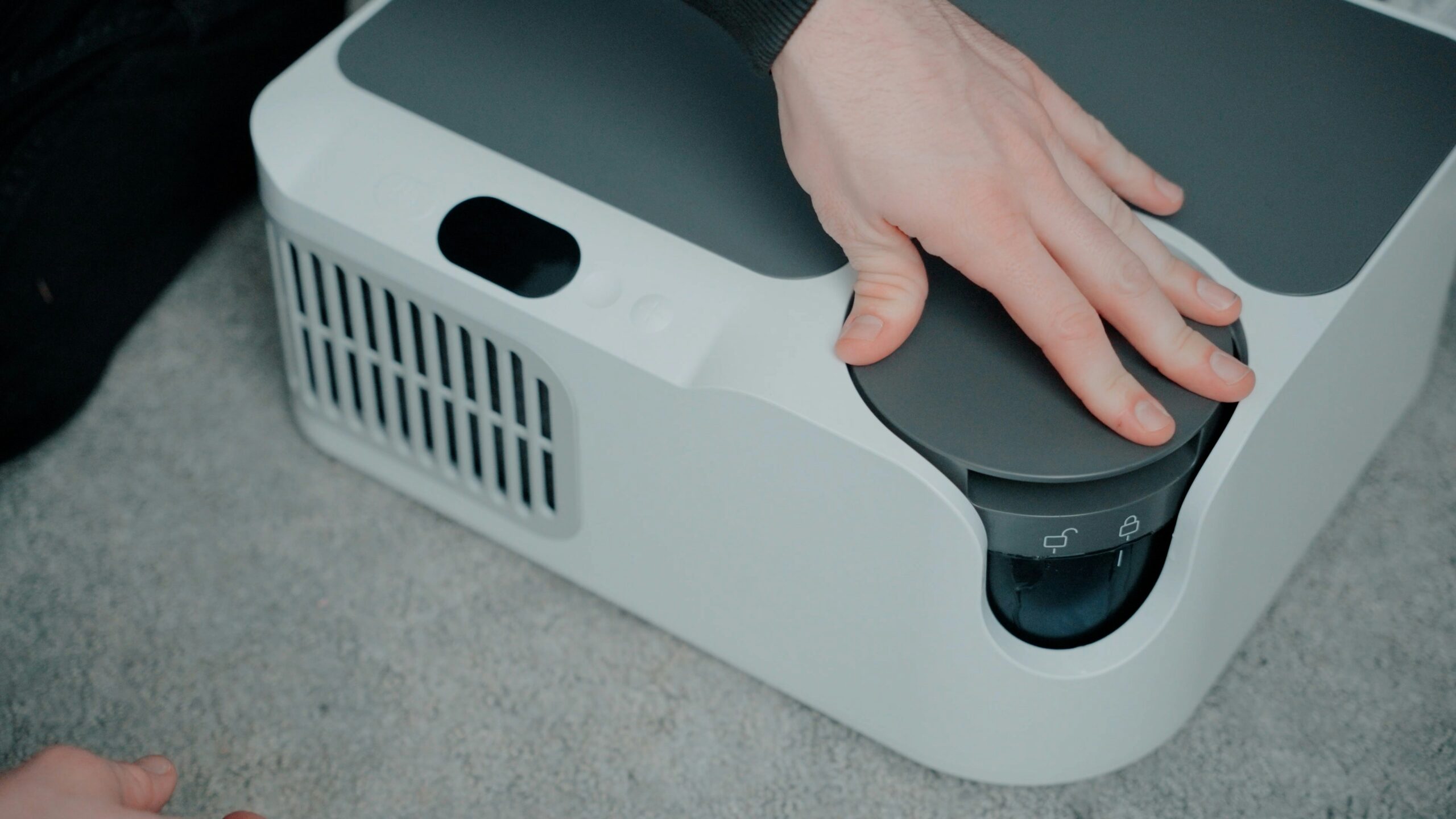

Cool-mist ultrasonic and evaporative units with built-in humidistats, top-fill tanks, and dishwasher-safe parts lead the skin-safe category when filled with distilled water and held between 40% and 60% relative humidity. That combination hydrates a weakened skin barrier without dispersing mineral dust, breeding mold, or overheating the room. Paired with a strict 1-to-3-day cleaning cycle and elevated placement away from bedding, it becomes a low-risk daily tool for eczema, rosacea, and dermatitis-prone skin.
Below you’ll find the moisture range dermatologists recommend, a side-by-side of cool versus warm mist, the features that actually matter, three models specialists trust, and the water and cleaning habits that keep the device from becoming an irritant.
Why Indoor Air Dryness Worsens Sensitive Skin
Relative humidity in many US homes sits between 10% and 25% during winter, especially when a furnace is running. The stratum corneum, the skin’s brick-and-mortar outer layer, loses water to that dry air through a process called transepidermal water loss. Lipids between skin cells crack, microscopic fissures open, and irritants slip through more easily. Healthy skin tolerates this shift; reactive skin does not.
Indoor relative humidity in heated homes averages 20% to 30% in cold months, well below the 40% threshold where most dermatologists see barrier function stabilize. For someone with eczema, rosacea, or atopic dermatitis, that gap shows up as morning tightness, visible flaking around the nose, and flares that no moisturizer seems to fix. Applying a richer cream on top of dry indoor air treats the symptom, not the source, because the surrounding air keeps pulling water back out of the skin. That finding aligns with national climate data showing most heated homes fall short of the 40% floor dermatologists set for skin-barrier comfort.
The Threshold Where Flares Become Common
Below roughly 30% relative humidity, transepidermal water loss rises sharply. Above 60%, a different problem appears: dust mites, mold spores, and bacterial colonies multiply on damp surfaces, which can re-trigger the very conditions a humidifier is meant to soothe. The skin-safe band lives between those two edges, and staying inside it is the first job of any humidifier worth buying.
The Skin-Safe Sweet Spot: Ideal Humidity Levels Explained
Between 40% and 60% relative humidity is the range the American Academy of Dermatology and most indoor air-quality guides cite for compromised skin barriers. Moisture in the air slows water loss from the epidermis, helps topical treatments absorb, and keeps the lipid matrix flexible enough to resist cracking. Bedrooms, where you spend a third of every day, benefit most from landing in the middle of that range, around 45% to 55%.
Run a humidifier past 60% and a new set of irritants takes over. Dust mite populations double in rooms that stay above 50% for weeks, and mold colonies can establish themselves inside the unit itself within 48 hours of standing water at warm temperatures. A built-in humidistat or a separate $10 hygrometer turns guesswork into a number, and a simple auto shut-off feature prevents the all-night run that wets walls and window sills.
Stick a $10 hygrometer on the nightstand. If it reads 50%, stop adding moisture. If it reads 35%, bump output up. The mist you can’t measure is the mist that causes problems.
Cool Mist vs Warm Mist: Which Type Respects Reactive Skin
Cool-mist humidifiers, both ultrasonic and evaporative, are the safer default for anyone with a reactive skin barrier. They disperse room-temperature droplets, so there’s no heating element, no scalding risk near a toddler, and no added energy draw. Ultrasonic models vibrate water at high frequency to create a fine, almost silent fog; evaporative models blow air through a wet wick filter, which also acts as a natural self-regulator because humid air slows evaporation.
Warm-mist units boil water before releasing it, which does kill some microorganisms and can raise humidity faster in a drafty room. The trade-offs are real for sensitive skin: a hot surface near curious hands, higher electricity use, and a slightly warmer room that can aggravate flushing in rosacea. Most dermatologists steer patients toward cool-mist unless the room is unusually cold or the household specifically needs the germ-killing benefit.
Quick Comparison of the Two Types
| Feature | Cool Mist (Ultrasonic / Evaporative) | Warm Mist |
|---|---|---|
| Burn risk | None | Yes, from heating element and steam |
| Energy use | Low | Higher (boils water continuously) |
| Noise level | Ultrasonic is near-silent; evaporative has a soft fan | Low rumble from boiling |
| Microbial reduction | None unless unit has UV or is cleaned | Kills some bacteria and mold spores |
| White-dust risk | Ultrasonic disperses minerals unless filtered | Lower, since minerals stay in the tank |
| Best for sensitive skin | Yes, especially ultrasonic and evaporative | Situational, drafty or cold rooms only |
Key Features That Separate a Skin-Friendly Humidifier From the Rest
Five design choices separate a humidifier that helps reactive skin from one that quietly makes it worse. Look for all of them when comparing models.
- Built-in humidistat: Auto shut-off at your target humidity prevents the over-humidification that breeds mold and dust mites.
- Top-fill tank with wide mouth: Filling and rinsing from the top takes 30 seconds; a narrow flip-cap tank is the kind of design that gets cleaned once a month instead of every three days.
- Dishwasher-safe parts: Base, lid, and tank components that survive a hot cycle get truly clean. Hand-wiping rarely removes biofilm.
- Filterless or easy-cartridge system: Demineralization cartridges cut white dust from ultrasonic units. Filterless designs use a simple mesh that rinses in 10 seconds.
- Whisper-quiet operation: Below about 30 dB, the unit stays on through the night without raising cortisol, which itself can drive skin flares.
Why Quiet Matters More Than People Expect
Sleep disruption raises cortisol, and elevated cortisol correlates with worse eczema severity in multiple small studies. A humidifier that hums at 40 dB all night can quietly undo the benefit of the moisture it’s adding. Ultrasonic units hover around 25 to 28 dB, which most sleepers describe as silence.
Models Dermatologists and Allergists Actually Recommend
In conversations with board-certified dermatologists and allergists, three models surface repeatedly because they balance humidistat accuracy, cleanability, and quiet operation. None of them are perfect for every room, but each solves a specific problem common to sensitive-skin households.
Levoit Classic 300S
A 6-liter tank, an app-controlled humidistat accurate to 1% increments, roughly 400 square feet of coverage, and near-silent output on its lowest setting define the Levoit Classic 300S. The top-fill design and wide opening make the every-other-day rinse realistic, and a separately sold demineralization cartridge keeps ultrasonic mineral dust off faces and furniture. The app also tracks humidity history, which helps spot patterns between flare-ups and dry spells.
Honeywell HCM-350
Built as a workhorse evaporative unit, the Honeywell HCM-350 self-regulates by design. As humidity rises, the wick dries and output drops, so the unit almost never over-humidifies a room. Replacement wicks run about $15 every one to three months, depending on water hardness, and the tank and base are dishwasher-safe. It’s louder than ultrasonic models but a strong pick for nurseries and bedrooms where simplicity matters.
Dyson AM10
A built-in UV-C light that claims to kill 99.9% of bacteria sets the Dyson AM10 apart from competing models.9% of bacteria in the water before it leaves the unit, which appeals to households worried about biofilm. The fully sealed tank and remote-controlled humidistat add to the price, but the ABS plastic body wipes clean in seconds, and Dyson’s bladeless design eliminates the creases where mold likes to hide. Coverage tops out around 500 square feet.
Once noise and coverage are settled, the daily habits around water and cleaning decide whether that moisture stays genuinely kind to skin.
| Model | Type | Tank Size | Humidistat | Best For |
|---|---|---|---|---|
| Levoit Classic 300S | Ultrasonic cool mist | 6 L | Built-in, app-controlled | Bedrooms up to 400 sq ft |
| Honeywell HCM-350 | Evaporative | 1.1 gal | None (self-regulating) | Nurseries, large bedrooms |
| Dyson AM10 | Ultrasonic with UV | 0.8 gal | Built-in, remote-controlled | Reactive-skin households, germ-conscious users |
Water Choices, Cleaning Routine, and Placement That Protect Your Skin
The right unit still needs the right habits. Three daily and weekly decisions determine whether your humidifier helps or quietly harms your skin.
Water Type
Distilled or demineralized water prevents the white dust that ultrasonic units release when tap-water minerals break into fine particles. Those particles settle on skin, pillows, and lungs, and they can aggravate rosacea and perioral dermatitis within weeks. A gallon of distilled water costs about $1 at most US grocery stores, and one tank typically lasts a full night.
Cleaning Cycle
Empty the tank, rinse it, and refill every one to three days. Once a week, run a diluted white-vinegar cycle (1 part vinegar to 3 parts water) through the base and tank, then rinse twice. Skip essential oils unless the unit is specifically engineered for them; even a few drops of eucalyptus or lavender can leave a film that inflames reactive skin on contact.
Placement
Set the unit on a hard, elevated surface at least three feet from the bed, with airflow directed away from walls and window frames. Carpet under a humidifier traps moisture and grows mold inside the pad, and placing the unit too close to a wall wets paint and drywall. A nightstand or sturdy shelf at chest height works for most bedrooms.
Skip essential oils in any humidifier not designed for them. Even small amounts coat the inside of the tank, feed biofilm, and reach the face as an aerosol that can inflame reactive skin within hours.
Mistakes That Turn a Humidifier Into an Irritant
Most humidifier-related skin problems trace back to one of four common misuses. Avoiding them takes less effort than treating the flare they cause.
- Running with a dirty tank: Biofilm forms within 48 hours in standing water and releases bacteria and endotoxins directly into the air you breathe overnight.
- Adding essential oils or vapor rubs: Oils coat internal components, feed microbial growth, and disperse as fine droplets that inflame reactive skin and airways.
- Ignoring the hygrometer: More mist is not always better. A room at 75% humidity breeds mold on walls, curtains, and bedding, all of which then trigger the skin you’re trying to calm.
- Using tap water in ultrasonic models: Minerals aerosolize and settle on skin and lungs, leaving a residue that aggravates rosacea and can worsen asthma over time.
Quick Warning Signs the Unit Needs Attention
A musty smell when the unit runs, visible film on the inside of the tank, or white crust around the mist nozzle all mean stop using it until you clean every part thoroughly. These are early signs of biofilm or mineral buildup, and continuing to run the unit will deposit those irritants directly onto the face of anyone sleeping nearby.
Final Thoughts
For sensitive skin, the safest humidifier is a quiet cool-mist model with a built-in humidistat, fed by distilled water, cleaned every one to three days, and placed away from walls and bedding. Match that routine to a target of roughly 45% to 55% relative humidity and the device becomes a genuine ally for eczema, rosacea, and dermatitis. Skip the aromatherapy, the warm-mist shortcuts, and the all-night runs, and the same machine that frustrates so many households will quietly support your skin barrier every night.
FAQ
What type of humidifier is best for sensitive skin?
Cool-mist ultrasonic and evaporative humidifiers are the safest picks for sensitive skin because they don’t heat water, have no burn risk, and typically run quieter than warm-mist models. Pair one with a built-in humidistat and distilled water for the lowest risk of irritation.
Can a humidifier help with dry irritated skin?
Yes, when indoor humidity stays between 40% and 60%. That range slows transepidermal water loss, supports the skin’s lipid barrier, and helps topical moisturizers absorb more effectively. Outside that range, a humidifier can either underperform or create new irritants like mold and dust mites.
Are cool mist or warm mist humidifiers better for eczema?
Cool mist wins for most people with eczema. It raises humidity without heating the room, which can trigger itching and flushing, and it carries no burn risk around children or pets. Warm mist can help in a very cold or drafty room but adds energy use and a hot surface that some households prefer to avoid.
What humidity level is best for sensitive skin?
Aim for 40% to 60% relative humidity, with 45% to 55% as a comfortable middle. Below 30%, the skin barrier loses water rapidly. Above 60%, mold and dust mites multiply quickly and can re-trigger the skin conditions you’re trying to calm.
Do humidifiers cause skin irritation or breakouts?
They can, but only when misused. Dirty tanks release bacteria and biofilm into the air, ultrasonic units using tap water spray mineral dust onto the face, and over-humidified rooms grow mold on nearby surfaces. Clean the tank every one to three days, use distilled water, and watch a hygrometer to avoid these problems.
How often should you clean a humidifier to avoid skin problems?
Rinse and refill the tank every one to three days and run a diluted vinegar cleaning cycle once a week. The base, lid, and any removable parts should also be dishwasher-safe or hand-washed with hot soapy water weekly. Skipping this routine is the single most common reason a humidifier starts aggravating sensitive skin.