

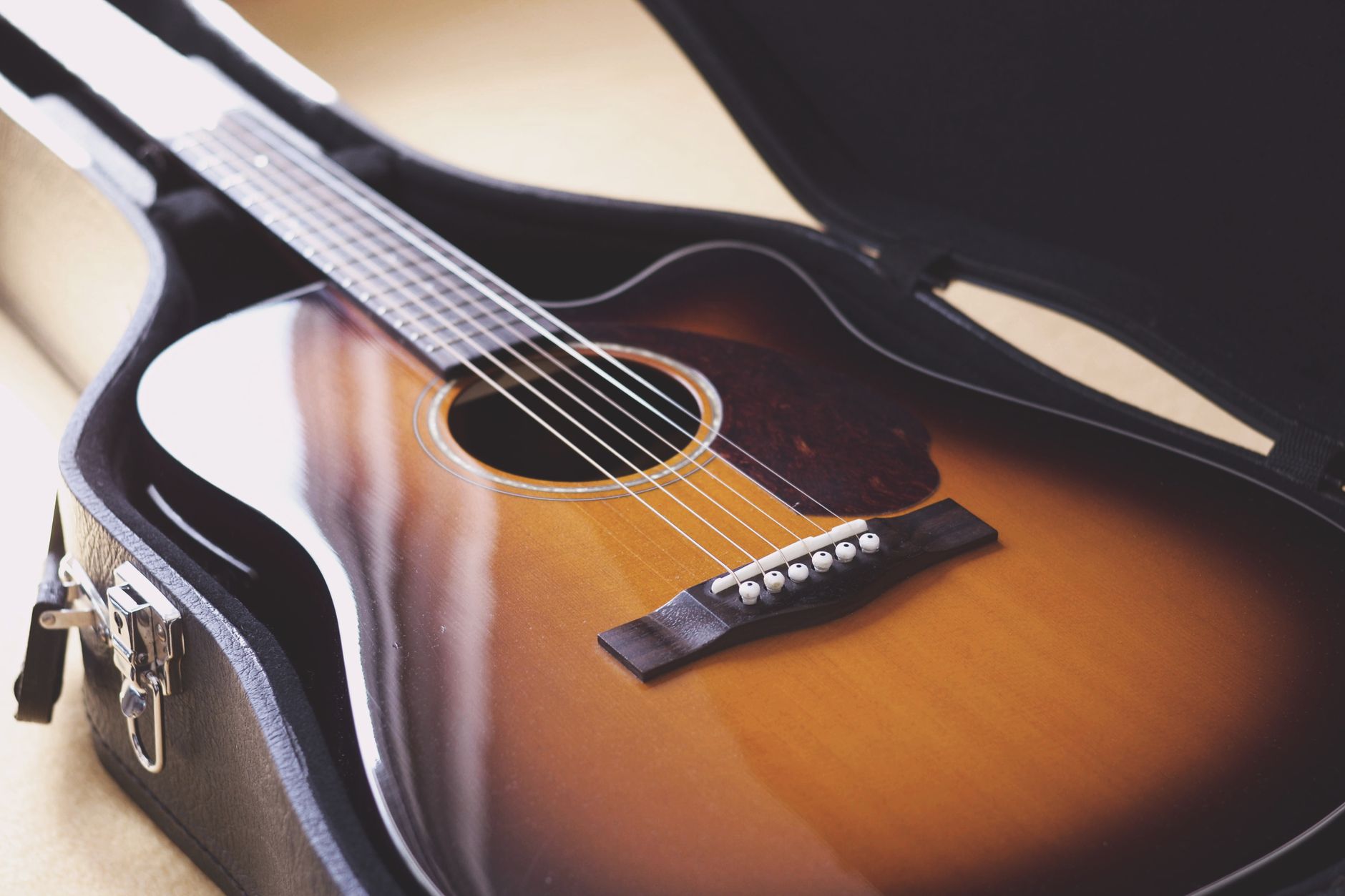

Cracking, sunken tops, and sharp fret ends are exactly what a 40–50% relative humidity range prevents, because wood that loses or gains moisture too fast is what produces those classic storage disasters. For acoustic and solid-body guitars kept in heated homes, dry mountain air, or variable four-season climates, an in-case unit, a room humidifier with a humidistat, or a two-way packet system each solve a different storage problem.
This walkthrough explains how a humidifier for guitar storage actually works, what humidity range to aim for, and which type of unit,case, room, or two-way system,fits your climate and instrument.
Why Humidity Matters More Than Most Players Realize
Guitars are precision wooden instruments whose tone, playability, and structural integrity all respond to moisture in the air. Solid tonewoods in an acoustic top expand and contract with every shift in ambient relative humidity, which is why a Martin dreadnought left in a heated living room over January often shows a slight forward bow by February.
The real threat is fluctuation, not any single reading. Stable 35% RH held for months is safer for tonewood than a wild swing between 25% in winter and 55% in summer, because every cycle pumps moisture in and out of the wood fibers and slowly weakens the glue joints holding the bridge, braces, and top to the body.
Electric and solid-body guitars tolerate wider swings but still suffer at the extremes. The fingerboard can shrink enough on a maple neck to leave sharp fret ends protruding past the binding, a condition called fret sprout, and the polyester finish on a Stratocaster can develop micro-cracks known as finish checking when the wood beneath it keeps moving.
Cracking, top sinking, lifted bridges, and glue failure are all downstream effects of uncontrolled moisture movement, and they rarely happen overnight. By the time a Taylor acoustic shows a hairline crack along the grain, the wood has usually been under-humidified for many weeks.
The Safe Humidity Range and What Happens at Each Extreme
The widely accepted target is 40–50% relative humidity for long-term guitar storage, and most luthiers aim for the middle of that window because it leaves headroom in both directions. Climate research from D’Addario and the storage guides published by Martin both land on this range, and it lines up with how a solid wood top behaves in a controlled shop environment.
What Goes Wrong Below 30% RH
Solid wood shrinks, top braces loosen, and cracks become a real risk once the gauge drops under 30%, a problem that hits hardest on thinner torrefied tops where the bracing has already been lightened for vibration. A dry winter in Denver or Minneapolis can drop indoor humidity to 15% if no humidifier runs, which is bone-dry enough to crack a spruce top in a matter of weeks.
What Goes Wrong Above 60% RH
Glue joints soften, finishes blush or bloom, and mold can quietly colonize the case interior once readings climb past 60%, especially on leather-bound Martins and French-polish shellac guitars with no synthetic seal. Coastal homes, basements, and unventilated closets hit this range most often during summer.
| Relative Humidity | What Happens to the Guitar | Action Needed |
|---|---|---|
| Below 30% | Wood shrinks, braces loosen, tops can crack, frets protrude | Add humidity immediately, refill case humidifier, run room unit |
| 40–50% | Stable wood moisture content, normal playability and tone | Maintain current setup, check weekly |
| Above 60% | Glue softens, finish clouds, mold risk on leather and felt | Stop humidifying, add air circulation, consider a dehumidifier |
Hygrometer accuracy varies, and a $5 analog dial can read 10 points off and quietly undermine every other step. Calibrate the unit with a salt test before trusting it, or buy a digital model with a stated accuracy of ±2% RH. The whole humidity strategy rests on that one reading, so a wrong baseline wastes every other precaution.
Once the right baseline is locked in, the question becomes which humidifier actually delivers that level consistently.
Distilled water prevents the mineral haze that tap water leaves on lacquered surfaces inside a closed case, where evaporated calcium and magnesium settle as a fine white dust on the pickguard and headstock.
Room Humidifiers, Case Humidifiers, and Two-Way Systems
Room humidifiers raise ambient humidity across an entire space and work only if the guitar is stored open or in a room you actively manage, while in-case units localize moisture around the instrument where it actually matters. The choice between them hinges on where the guitar lives and how much attention the storage area gets.
Room Humidifiers
Room units are designed for human comfort, often targeting 30–60% RH, which is a wider window than a guitar needs. Cool-mist and ultrasonic models can saturate a small bedroom quickly, but they leave mineral dust on everything in the room and can over-humidify a closed hardshell case sitting on the floor. Run one only with a built-in humidistat so the unit cycles off when the room hits the target.
In-Case Guitar Humidifiers
Models like the Oasis OH-1 and the classic Dampit are built for that narrow 40–50% window, sitting against the body or tucked into the soundhole and releasing moisture through a sponge or clay element. They are the right answer for a guitar that lives in its case, because they directly buffer the air right next the wood. Kyser and Herco make similar products aimed at players who need a simple fill-and-go system.
Two-Way Humidity Control
Two-way systems like the D’Addario Humidipak and Boveda both add and absorb moisture, which prevents the summer over-humidification that pure humidifiers cause. These packets use a semipermeable membrane and a saturated salt solution to lock relative humidity at a fixed set point, usually 49% for guitar packs, and they require no water refills. They cost more per unit but eliminate the entire failure mode of forgetting to refill.
| Type | Best For | Limitation |
|---|---|---|
| Room humidifier with humidistat | Open stands and wall hangers in dry homes | Can over-humidify a closed case in the same room |
| In-case soundhole or case humidifier | Hardshell case storage, travel, closet storage | Needs refilling and a working hygrometer |
| Two-way packet (Humidipak, Boveda) | Four-season climates, hands-off care, vintage guitars | Replacement cost every 2–6 months |
Room units are prone to over-humidifying a closed hardshell case if the case is sitting in the same room, because a sealed case traps the moisture the room unit adds. A guitar on a stand benefits from a room unit, but a guitar in its case needs in-case control or a packet system.
Matching the Right Setup to Your Storage Environment
The best humidifier for guitar storage depends entirely on where the instrument lives and what climate surrounds it, which is why a one-size-fits-all recommendation fails more often than it works. A hardshell case in a climate-controlled home is a different problem than an open stand in a Phoenix bedroom, and the gear has to match.
Hardshell Case in a Climate-Controlled Home
A case-style humidifier like the Oasis or Dampit plus a reliable digital hygrometer is usually sufficient when the room itself stays between 30% and 60% RH year-round. The case acts as a micro-climate, so the in-case unit only has to buffer small swings, not fight the entire room.
Open Stand or Wall Hanger in a Dry Climate
Open stands in mountain west, upper midwest, or high-desert homes need a room humidifier with a humidistat and a separate hygrometer that reads the air right next to the guitar, because the instrument is fully exposed to whatever the room does. A cool-mist console unit aimed away from the wall can keep a 200-square-foot bedroom in the 40–50% window through a Denver winter.
Humid Coastal or Summer-Heavy Climates
Focus shifts to dehumidification, air circulation, and silica-based moisture control in places like Houston, Miami, or anywhere summer RH routinely climbs past 65%. A small dehumidifier in the closet, a fan moving air across the guitar, and silica gel packs inside the case are far more useful than another humidifier adding moisture to already-saturated air.
Variable Four-Season Regions
Plan for both ends of the spectrum rather than installing a single-season solution, because a Chicago or Boston guitar room swings from 18% in February to 65% in August. The most reliable approach is a two-way system like the D’Addario Humidipak in the case plus a room humidifier with humidistat in winter and a dehumidifier in summer, switched at the thermostat.
Even the best hardware fails without a routine, so the next step is building the habit around it.
The two-way system wins in any climate where the seasons swing more than 25 points of relative humidity, because it removes the human error of remembering to swap equipment every March and October.
Step-by-Step Setup and Monitoring Routine
A reliable humidity routine takes about ten minutes to set up and five minutes a week to maintain, and it pays for itself the first time it prevents a crack. MusicNomad’s monitoring gear and the standard luthier routine follow roughly the same five steps.
- Calibrate the hygrometer so the baseline reading is trustworthy, using either a salt test in a sealed bag or a factory calibration against a known reference. Skip this step and the rest of the system is guessing.
- Fill the humidifier with distilled water and place it where airflow reaches the guitar without bathing the headstock, usually against the body in a hardshell case or on the floor of a stand room away from direct mist.
- Close the case and recheck the reading after 24 hours before trusting the system, because sponges and clay elements need a full day to equilibrate with the air around them.
- Log humidity daily for the first two weeks, then weekly once readings stabilize inside the 40–50% window, so any drift is caught before the wood starts moving.
- Refill, replace, or swap the humidification method at the first sign of drift outside the 40–50% window, rather than waiting for visible damage to appear on the instrument.
Avoid placing the humidifier directly against the soundboard or under the strings, because concentrated moisture in one spot can swell the wood unevenly and lift the bridge on a Taylor or Martin acoustic. A few inches of clearance lets the moisture diffuse evenly through the case air.
That spacing habit also doubles as a diagnostic tool, since uneven moisture is often the first clue something is off.
Troubleshooting, Warning Signs, and When to Stop Humidifying
Over-humidification causes as much damage as under-humidification, and the symptoms show up faster. The goal is balance, not constant moisture, so the ability to recognize early warning signs matters as much as the ability to set the system up in the first place.
Signs You’ve Over-Humidified
Foggy hygrometer, damp case lining, or musty smell means the storage environment has crossed into over-humidification territory, and the right move is to stop adding moisture immediately. Pull the humidifier, open the case, and let everything air out for 24 hours in a room at normal humidity. Mineral crust on the guitar or hardware signals tap water was used, and switching to distilled water plus a soft microfiber wipe down prevents the white haze from etching the lacquer.
Signs You’ve Under-Humidified
Fret sprout, sharp fret ends, a convex top, or a sudden buzz on the low strings are early structural warnings of under-humidification, and they call for a faster humidification response. Persistent low readings despite a running humidifier usually point to case seal failure, a room baseline below 30% RH, or a dead unit, in that order. Check the case gasket for light leaks, raise the room humidifier output, and replace the in-case element if it has dried out.
When to Stop Humidifying Entirely
Summer months above 60% RH call for active dehumidification rather than more humidification, because the wood is already holding enough moisture and any additional water invites mold and finish blush. A small closet dehumidifier or a silica-gel pack system can pull the air back into the 45% range without touching the case, and the guitar will hold its shape without any help through muggy August weather.
Watch the hygrometer, not the calendar. A 60% August day in Atlanta needs zero humidification, while a 20% January night in the same house needs a refill by morning.
Bottom Line
Humidity control is the single highest-leverage habit in long-term guitar care, and the right setup is the one that matches your storage environment rather than the one that costs the most. A hardshell case with a calibrated hygrometer and a refillable in-case humidifier handles most situations, while a two-way packet system solves the four-season problem without refills. Check the reading weekly, refill or replace at the first sign of drift, and the wood inside the guitar will hold its shape and tone for decades.
FAQ
Should I use a humidifier when storing my guitar?
Yes, anytime the storage environment drops below 40% RH or rises above 60% RH for more than a few days. A humidifier prevents the dry-air damage that cracks solid tops and shrinks fingerboards, and a dehumidifier handles the wet-air risk of glue failure and mold in humid climates.
What humidity is too low for an acoustic guitar?
Anything below 35% RH is risky for a solid-wood acoustic, and readings under 30% can produce cracks in a thin spruce top within weeks. A safe target for long-term storage is 40–50% RH, which keeps the wood’s moisture content stable through seasonal heating cycles.
Can too much humidity damage a guitar?
Yes, sustained readings above 60% RH can soften hide-glue joints, cause the finish to blush or bloom, and let mold colonize the case lining and leather accents. The damage is slower than dry-air cracking but harder to reverse once it starts.
Where do you place a humidifier in a guitar case?
Set a soundhole unit across the strings inside the opening, or rest a case-style humidifier on the case floor against the body, keeping a few inches of clearance from the top and headstock. Avoid direct contact with the soundboard so moisture diffuses evenly through the case air.
Do electric guitars need a humidifier?
Solid-body electrics tolerate wider humidity swings but still benefit from a humidifier in dry winter rooms, because the maple neck and rosewood or ebony fingerboard can develop fret sprout and finish checking at low RH. A simple in-case humidifier during storage is enough for most players.
How long does a guitar humidifier last?
A refillable sponge or clay humidifier lasts as long as the water holds out, usually 7–14 days between refills in a dry climate, and the element itself should be replaced every one to two years. A two-way packet like the D’Addario Humidipak lasts two to six months depending on how far the ambient humidity drifts from the set point.