


Damp basements, musty crawl spaces, and that sticky summer feeling across an open floor plan all trace back to the same culprit: excess moisture hanging in the air. A properly sized whole-house dehumidifier pulls that moisture out quietly, day after day, and protects everything from hardwood floors to the framing inside your walls. The seven models below cover crawl spaces, basements, and larger living areas, with capacity levels matched to real square footage rather than marketing claims. Pick the one that matches your square footage, drainage setup, and noise tolerance, and the rest takes care of itself.
A Closer Look At The Lineup

ALORAIR 70 PPD Dehumidifier with Pump

ALORAIR 120 Pints Energy Star Crawlspace Dehumidifier with Pump

ALORAIR 198 Pints Crawlspace Dehumidifier, Sentinel HD90

ALORAIR 120 Pints Energy Star Crawlspace Dehumidifier, Sentinel HD55S

ALORAIR 70 Pints Crawlspace Dehumidifier, Sentinel HS35
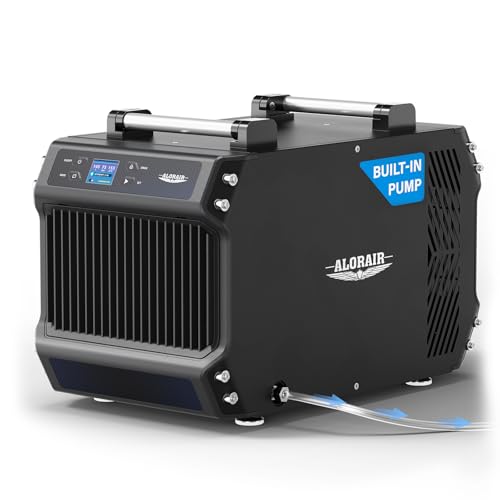
ALORAIR 145 Pints Crawlspace Dehumidifier with Pump, Galaxy 60P

ALORAIR 70 Pints Energy Star Crawlspace Dehumidifier
The Strengths Of Each Pick
The ALORAIR 70 PPD sits in a sweet spot many homeowners don’t realize exists: small enough to slip into a tight crawl space, capable enough to handle a mid-size basement without running constantly. The built-in pump is the real differentiator here, because it lets you route condensate (the water the unit pulls from the air) uphill to a sink, floor drain, or window without manually emptying a tank. In practice, that’s the difference between “set it and forget it” and remembering to walk downstairs every few hours.
Coverage lands at 1,000 square feet, which lines up with a standard finished basement or a moderately damp crawl space. Automatic defrost keeps the coils from icing up in cooler corners, and memory start restores your settings after a power blip so you don’t return from a weekend trip to find the unit stuck in factory mode.
Noteworthy Benefits
- Integrated condensate pump with included drain hose, removing the need to empty a collection bucket by hand
- Auto-defrost function that keeps extraction consistent in cool basement corners where other units stall
- Memory restart that resumes your humidity target after an outage, useful in rural areas with occasional power drops
- 1,000 sq. ft. rating that matches the most common residential basement size
- cETL safety listing, which simplifies compliance for landlords and property managers
Worth Noting
- The pump adds audible clicking you may notice in finished living space
- Drain hose routing needs a nearby drain or sink within reach of the included line
- Filter access sits behind the front panel, so routine cleaning takes an extra step
Right Fit For
Homeowners with a 700 to 1,000 sq. ft. basement or crawl space who want pump-assisted drainage and don’t need commercial-grade output.
Look Elsewhere When
Your space runs larger than 1,200 sq. ft. or holds standing water after storms, in which case the ALORAIR 120 Pints Energy Star Crawlspace Dehumidifier with Pump offers more headroom.
Step up in capacity and the ALORAIR 120 Pints Energy Star model earns its place as a balanced everyday choice. It covers up to 1,300 square feet, which covers most full-size basements and open rec-room layouts, and it keeps doing the work without the compressor sounds older units made when humidity spiked. The Energy Star rating is a quiet but real cost saver on continuous-duty installs where the unit runs eight or more hours a day.
Compared to the 70 PPD unit earlier in this list, the jump here isn’t just more pints pulled per day. The internal coil and fan are sized for sustained loads, so it spends less time cycling on and off in a damp basement. For homeowners with persistent humidity rather than a seasonal spike, that running profile matters more than the headline number.
Key Advantages
- 120-pint-per-day removal at saturation, a step up from entry-level residential units
- Energy Star certification that lowers long-term running costs on a 24/7 install
- Built-in pump for remote or uphill drainage without a separate accessory
Trade Offs
- Heavier than the 70 PPD model, so plan a second pair of hands for the initial install
- At full output the fan is noticeable in a finished room unless you route the discharge into ducting
Built With In Mind
Owners of mid-to-large basements up to 1,300 sq. ft. who run the unit continuously and want lower energy use over months of operation.
Consider Something Else When
You’re fighting recurring standing water or covering a space larger than 1,500 sq. ft., where the ALORAIR 198 Pints Crawlspace Dehumidifier, Sentinel HD90 has the extra capacity to keep up.
The Sentinel HD90 is the unit you reach for when moisture is winning the fight. Rated at 198 pints per day at saturation and 90 pints at AHAM (the standardized 80°F/60% RH test condition used for fair comparisons across brands), it covers up to 2,600 square feet, a footprint that includes most mid-size commercial spaces and oversized residential basements with adjacent storage rooms. The R32 refrigerant system is the current efficiency benchmark, and the unit is compact for its class, which matters when you’re threading it through a standard crawl-space hatch.
Where the 120-pint model handles chronic dampness, the HD90 tackles acute moisture events: post-flood drying, sealed crawl spaces that trap ground vapor, and large basements that stay above 60% relative humidity through summer. Carry handles are a small but real upgrade over units that expect you to wrestle a 70-pound box into position.
Practical Advantages
- 198 PPD saturation capacity, the highest in this lineup, with 90 PPD at AHAM for honest comparison
- 2,600 sq. ft. coverage that handles open floor plans and finished basements with adjacent mechanical rooms
- R32 refrigerant for better thermodynamic efficiency than legacy R410A units
- Quality carry handles, useful when moving the unit between jobs or seasons
Some Limits To Know
- Overkill for a 900 sq. ft. apartment basement where it will short-cycle (turn on and off too quickly) and waste energy
- Airflow noise registers higher than smaller residential units, so placement matters in finished living space
- Initial cost is the steepest in this roundup, which only makes sense for genuinely demanding conditions
Made For
Property managers, homeowners with very damp crawl spaces, and anyone drying out a space after water damage where standard residential capacity would run nonstop and still fall behind.
Reach For A Different Pick When
Your basement stays under 1,300 sq. ft. and humidity is moderate, in which case the ALORAIR 120 Pints Energy Star Crawlspace Dehumidifier with Pump costs less to buy and run.
The Sentinel HD55S is the workhorse of the family, and the one contractors tend to recommend for permanent crawl space installs. The difference shows up in the metal housing, which shrugs off the bumps and scrapes that come with tight hatches and uneven sub-floors, and in the longevity of the internal components, which are designed for years of continuous duty rather than seasonal use. It pulls 120 pints per day at saturation with 55 pints at AHAM, the same Energy Star efficiency standard, across 1,300 square feet of coverage.
Where the 120-pint model in slot 2 leans on a pump for drainage, the HD55S prioritizes a more robust build and is often paired with a gravity drain line in fixed installs. For a sealed crawl space with rigid PVC piping already in place, that setup tends to outlast pumped configurations over the long haul.
Useful Touches
- Rugged metal casing that holds up to crawl-space conditions better than molded plastic housings
- Energy Star certification for continuous-duty efficiency
- 1,300 sq. ft. coverage, sized for typical whole-basement or large-crawl-space installs
Points To Keep In Mind
- Heavier than the same-capacity 120-pint unit with a pump, so consider the install path before ordering
- Best paired with a gravity drain; not the simplest choice if you lack a floor drain nearby
The Right Fit
Homeowners planning a permanent, set-and-forget crawl space dehumidification system, especially in regions where the unit will run year-round.
A Better Fit Elsewhere
Renters and short-term owners may prefer the ALORAIR 70 PPD Dehumidifier with Pump, which is easier to relocate and doesn’t require a dedicated drain line.
Compact matters more than people expect. The Sentinel HS35 squeezes 70-pint saturation performance into a footprint that fits through standard crawl-space hatches and tucks beside a sump pump without dominating the room. Coverage lands at 1,000 square feet with 115 CFM airflow (cubic feet per minute, a measure of how much air the unit circulates), which is the throughput you want for tight, low-ceiling spaces where air doesn’t move on its own.
For bathrooms, small basements, and sealed crawl spaces under 1,000 sq. ft., the HS35 lands the right balance. It doesn’t have a built-in pump, so the drainage story relies on gravity or a separate condensate pump, but for many installs that’s actually simpler than routing a pump discharge.
The Upside
- Compact form factor that fits through standard crawl-space hatches and tight utility closets
- 115 CFM airflow that keeps air moving in low-ceiling, poorly ventilated spaces
- 70 PPD saturation capacity, well-matched to 1,000 sq. ft. coverage
Worth Bearing In Mind
- No internal pump, so install planning centers on a gravity drain or a separate accessory pump
- Filter access is less intuitive than on the larger Sentinel models
Best Suited To
Homeowners with smaller crawl spaces, finished basements under 1,000 sq. ft., or oversized bathrooms where humidity lingers after showers.
Swap It Out When
Your crawl space has no nearby floor drain and you want the simplest possible install, in which case the ALORAIR 70 PPD Dehumidifier with Pump includes everything you need in one box.
The Galaxy 60P sits in a productive middle ground. Its 145 PPD saturation rating handles spaces up to 1,800 square feet, and the integrated pump matches the convenience of the 70 PPD unit while delivering meaningfully more capacity. For homeowners whose basements fall in the awkward range between the 1,300 sq. ft. 120-pint units and the 2,600 sq. ft. HD90, the 60P fills a real gap.
The compact commercial-style design keeps the body manageable for a one-person install, which isn’t always the case at this capacity tier. For mixed-use basements that double as home gyms, workshops, or storage, the 60P pulls its weight without forcing you up to industrial sizing.
A Few Strong Suits
- 145 PPD saturation capacity, a step up from 120-pint units without jumping to commercial sizing
- 1,800 sq. ft. coverage that suits open-concept basements and bonus rooms
- Built-in pump with included drain hose, simplifying uphill or remote drainage
Smaller Caveats
- Higher running cost than Energy Star-rated units in the same bracket
- Filter sits behind the intake grille, so routine cleaning requires a tool or two
Whose Shelf It Belongs On
Homeowners with basements or combined spaces between 1,300 and 1,800 sq. ft. who need pump-assisted drainage and want headroom beyond standard residential capacity.
Where Another Pick Suits Better
Energy-conscious shoppers running the unit continuously should look at the ALORAIR 120 Pints Energy Star Crawlspace Dehumidifier, Sentinel HD55S, which trades a bit of capacity for ongoing efficiency.
The final 70-pint Energy Star unit closes the list with a focus on air quality, not just moisture. The integrated MERV-1 filter (a rating on the Minimum Efficiency Reporting Value scale, where higher numbers catch smaller particles) captures particles down to 10 microns, which is dust-sized, and helps protect the internal coils from the kind of buildup that shortens compressor life in dusty basements and construction-stage properties. For a workshop, a rental between tenants, or a basement you store cardboard boxes in, that filter earns its keep.
Energy Star certification and a 1,000 sq. ft. rating put it on equal footing with the 70 PPD unit at the top of this list, but the trade-off shows up in drainage: this model ships with a drain hose for gravity-fed continuous drainage rather than a built-in pump. For installs where a floor drain sits within hose reach, that’s a perfectly clean setup.
The Value In It
- MERV-1 filter that captures dust and airborne particles, protecting internal components in dusty spaces
- Energy Star certification for lower continuous-duty operating cost
- Compact and portable enough to move between rooms or properties
- Auto-defrost and memory restart, useful in unconditioned basements and seasonal spaces
Honest Caveats
- No internal pump, so you need a gravity drain or a separate accessory pump for uphill routing
- Filter swaps are routine, which adds an annual maintenance task to remember
Perfect Match For
Landlords, workshop owners, and homeowners in dusty environments who want filter-equipped moisture control without paying for pump-driven drainage they don’t need.
Skip It When
Your install location has no nearby floor drain, because the ALORAIR 70 PPD Dehumidifier with Pump solves the same humidity problem with integrated pump drainage instead.
What To Weigh Before Choosing Whole House Dehumidifiers
Capacity Matched To Real Square Footage
The pints-per-day rating tells you how much water the unit can pull under specific test conditions, but the number that actually matters is coverage area. A 1,000 sq. ft. dehumidifier doesn’t mean it magically dries a 1,000 sq. ft. basement; it means the unit is sized to keep that footprint at a healthy relative humidity under moderate conditions. Damp basements, sealed crawl spaces, and homes with persistent standing water need the next size up, and oversizing wastes energy in a dry space. Match the coverage rating to your actual room size, then add a tier if your home is older, your basement has visible moisture, or you run a dehumidifier year-round.
Drainage Setup Matters More Than People Expect
Every whole-house dehumidifier produces water, and how that water leaves the unit shapes your daily experience. Gravity drain with a hose works when a floor drain or sump sits below the unit. Built-in pumps push water uphill or across longer distances, useful when the nearest drain is a sink in the next room. Forgetting this detail is one of the most common install headaches, so it pays to plan the route before you choose the model.
Build Quality And Continuous-Duty Use
Whole-house dehumidifiers run for hours, often days, sometimes months without a break. Plastic housings and lightweight compressors work fine in seasonal setups, but for continuous operation, look for metal casings, robust internal components, and Energy Star certification. The upfront cost difference usually pays back in lower energy use and a longer service life, especially in sealed crawl spaces where the unit runs unattended for years.
Noise And Placement
Larger-capacity units move more air, which means more fan noise. In finished living space, that registers as a low hum you may not notice. In a quiet bedroom or a home office, the same unit can feel intrusive. Placement near return-air ducts, mechanical rooms, or unfinished basements keeps the sound out of the rooms you actually use, and that decision often matters as much as the model itself.
Key Considerations Across These Picks
Wrong Turns To Avoid
First-time shoppers often pick capacity by the biggest number on the spec sheet, then wonder why the compressor short-cycles and the electric bill climbs. The honest move is to size to your real square footage and moisture severity, then add headroom only if your basement stays damp after storms. Another common slip is overlooking drainage, ordering a gravity-drain unit for a basement with no floor drain, and discovering the hose needs to climb stairs to reach a sink. Measure the drain path before you order.
Where The Extra Money Goes
Higher-tier models in this category earn their premium through R32 refrigerant systems, metal housings, integrated pumps, and Energy Star-rated compressors that cost less to run over years of continuous use. The upgrade pays off when you run the unit daily, install it in a sealed crawl space, or cover a square footage that justifies the extra capacity. For seasonal use in a dry climate, the premium is harder to justify, and a compact Energy Star unit at the 70-pint tier is often the smarter spend.
Frequently Asked Questions
How many pints per day do I need for a whole house?
Match capacity to your square footage and moisture severity, not to a single number. A 1,000 sq. ft. basement with moderate humidity usually does well with a 50 to 70 pint unit, while damp basements and sealed crawl spaces typically need 120 pints or more.
Should I get a model with a built-in pump?
A built-in pump makes sense when the nearest drain is uphill, far away, or simply inconvenient to reach. For installs with a nearby floor drain, gravity drainage is cleaner and one less component to service.
How often does the filter need cleaning?
Most whole-house dehumidifier filters need a quick rinse or vacuum every one to three months, depending on dust levels. Workshop and rental-property installs often need monthly attention, while clean residential basements can stretch longer between checks.
Can one unit cover a finished basement and the crawl space above it?
Generally no, because conditioned basement air and unconditioned crawl space air don’t mix freely. A separate unit for each sealed space gives more consistent humidity control and prevents the basement unit from working against the crawl space environment.
Where should the dehumidifier sit for best results?
Central placement with a few feet of clearance on all sides gives the best airflow. Avoid corners, tight closets, and spots directly against walls, since restricted intake and discharge force the compressor to work harder and pull less moisture per hour.
Closing Thoughts
Pick the model whose capacity matches your square footage, whose drainage fits your space, and whose build quality matches how often it will run. The right unit is the one that disappears into the background while keeping humidity in a comfortable range. Start with the picks above, and trust the size that lines up with your home rather than the largest number on the spec sheet.