


A foggy mirror after a hot shower is more than an annoyance. Trapped moisture feeds mildew on grout, peels wallpaper, and makes towels smell stale. The right small dehumidifier pulls that dampness out of the air before it becomes a problem, and you don’t need an industrial box to do it. Below, eight compact options cover the most common bathroom scenarios, from steamy ensuite retreats to chilly half-baths with no windows.
A Side-By-Side Look

PLUSCENT 21 Pint Dehumidifier with Drain Hose

PSOS 98 OZ Dehumidifier for Home (Gray)
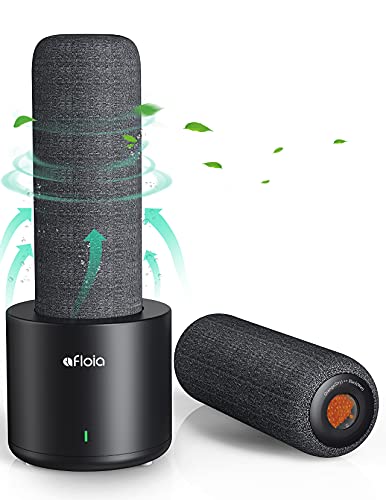
Afloia Gun Safe Dehumidifier, Rechargeable Cordless, Heating Base, TOPZ 2+1

Afloia Rechargeable Cordless Gun Safe Dehumidifier, Heating Base, TOPZ 4+1

TABYIK 35 OZ Dehumidifier for Bedroom RV, Blue

TABYIK 35 OZ Dehumidifier for Bedroom RV, Grey

TABYIK 35 OZ Dehumidifier for Bedroom RV, Gold
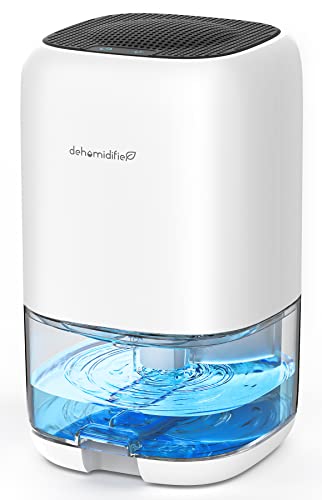
TABYIK 35 OZ Dehumidifier for Bedroom RV, White
More On The Choices That Made The List
For homeowners dealing with a chronically damp bathroom, the PLUSCENT 21 Pint Dehumidifier brings meaningful muscle to a problem the smaller Peltier units can’t fully solve. Rated to extract up to 21 pints per day in hot, sticky conditions and cover roughly 1,500 square feet, it leans into compressor-based dehumidification, the same technology found in full-size basement units.
The included drain hose is the real differentiator. A continuous gravity drain means you can set it up near a floor drain or sink and walk away, rather than emptying a small tank every few hours. Households without nearby plumbing can still use the built-in reservoir, but the option is there. For most people running it in a shared bathroom that doubles as a laundry zone, the auto-shutoff and washable filter keep maintenance light.
Where It Delivers
- The 21-pint-per-day capacity handles the kind of heavy moisture load smaller thermoelectric units (Peltier-style chillers that condense water quietly but slowly) cannot keep up with.
- A continuous drain hookup removes the need to babysit a tank, which matters in a steamy bathroom used multiple times a day.
- The washable air filter is reusable, cutting down on replacement parts over time.
- Coverage up to 1,500 square feet gives you headroom for open-plan homes where the bathroom sits near a humid living area.
Things To Consider
- Compressor-based dehumidifiers run louder than Peltier models, so the PLUSCENT may compete with a sleep routine in a connected bedroom.
- The physical footprint is larger than the compact bathroom options later in this list, which can crowd tight half-baths.
Who It Suits Best
Homeowners with a serious, persistent moisture problem, especially in bathrooms that share walls with a laundry area or sit above a damp basement, get the most value from this kind of capacity.
Where Another Pick Suits Better
For a small guest bathroom that only needs a quiet overnight touch-up, the PSOS 98 OZ Dehumidifier for Home (Gray) makes more sense at a fraction of the size.
The PSOS 98 OZ Dehumidifier for Home sits in the middle of this roundup in size, but at the top of the list when it comes to user feedback. Its 98-ounce tank runs longer between empties than the typical 35-ounce Peltier design, and the front-facing humidity display tells you exactly what is happening in the room without guesswork.
Built around dual semiconductor condensation (a quiet, low-heat method that uses cool plates rather than a compressor), this unit keeps noise low while still pulling meaningful moisture from rooms up to 1,000 square feet. The seven-color ambient light is more useful than it sounds: a quick glance at the glow tells you the unit is running, and at night it doubles as a soft nightlight. Compared to the PLUSCENT 21 Pint Dehumidifier earlier, the PSOS trades raw capacity for a friendlier footprint and much quieter operation.
Noteworthy Benefits
- The visible humidity readout takes the guesswork out of setting a target, and most people find a sweet spot around 45 to 50% relative humidity.
- Dual semiconductor tech keeps the unit quiet enough for a small bathroom used overnight or during early-morning routines.
- Auto shutoff at tank-full prevents spills on tile or wood floors.
- The 98-ounce tank reduces how often you empty it, helpful in bathrooms without a floor drain.
- The 7-color ambient light adds a soft glow that doubles as a nightlight.
Worth Noting
- Semiconductor units slow down as room temperature drops, so the PSOS performs best in bathrooms that stay reasonably warm.
- Even with the larger tank, you will still empty it manually every few days in heavy use.
Built With In Mind
Households that want a real humidity reading and a quiet-running unit for a medium-sized bathroom, especially families with kids who need a soft nightlight, will find the PSOS a comfortable fit.
Not Your Match When
You need cordless, no-plug placement; the Afloia TOPZ 2+1 stick dehumidifier below runs without an outlet for occasional spot use.
The Afloia TOPZ 2+1 takes a completely different approach from the electric units around it. Instead of a compressor or Peltier cooler, it uses silica-gel beads to absorb moisture passively, and the included heating base recharges the beads for reuse. For most people, this looks unusual the first time they see it, since the “dehumidifier” is really a rechargeable cylinder you place where dampness collects.
The 360-degree circular air inlet means orientation doesn’t matter; the cylinder pulls in air from all sides. Once saturated, the silica gel shifts from orange to dark green, and a two-hour cycle on the heating base drives the moisture back out. The system is fully cordless between charges, which makes it perfect for spots where running a power cord is awkward, like a medicine cabinet, a small vanity drawer, or a windowless half-bath with no outlet nearby.
The Practical Payoff
- Truly cordless operation lets you place it in cabinets, drawers, and small enclosures that have no outlet.
- No water tank to empty, no compressor noise, no dripping hoses.
- The orange-to-green color shift makes it obvious when the unit needs recharging.
Trade Offs
- Passive silica-gel absorption is slow compared to electric dehumidification, so this is not the right tool for an actively steamy bathroom.
- The two-hour regeneration cycle means one stick is out of service while the other charges if you rotate them.
Right Fit For
People with small, enclosed spaces like safes, lockers, and medicine cabinets where a power cord is impractical, and anyone who wants zero-noise moisture control in a tiny footprint.
Skip It When
You need active moisture removal from a shower-heavy family bathroom; the TABYIK 35 OZ Peltier units ahead handle that workload better.
Think of the TOPZ 4+1 as the wider-deployment version of the previous Afloia stick. Same rechargeable silica-gel technology, same orange-to-green saturation indicator, but with four absorption sticks instead of two and the same single heating base. The trade is straightforward: you get more coverage area at the cost of a longer rotation cycle.
For a small bathroom, that math works well. Drop one stick in the vanity, one in a linen closet, one near the toilet base, and keep the fourth on the charging base. As each cylinder hits dark green, swap it out and recharge. You end up with a small humidity-control network that runs without plugging anything into a wall outlet, which is rare in this category.
The Case For It
- Four sticks let you spread passive moisture control across several problem spots at once.
- A top window on each stick makes it easy to check saturation at a glance.
- One base handles recharging for the whole set, so you only need a single outlet.
Points To Note
- With only one heating base, the rotation cycle is the bottleneck; households with persistent dampness may find a two-stick set easier to manage.
- Like the 2+1, this system is for low-volume, enclosed-space moisture rather than active shower steam.
Best Suited To
Anyone wanting to scatter passive dehumidification across a bathroom and adjacent storage, especially renters who can’t run cords or modify the space.
Another Choice May Suit
The Afloia TOPZ 2+1 is the better fit when you only need one or two spots covered and want a faster swap cycle.
The blue TABYIK 35 OZ Dehumidifier is the first of four near-identical Peltier-style units in this roundup, and the differences across them come down to color, finish, and a few small feature variations. Rated at 28 decibels, it is genuinely quiet, more like a soft hum than a fan, which makes it the kind of unit you can leave running through the night without thinking about it.
The 35-ounce tank pulls up to 16 ounces of water per day in a closed, humid bathroom, and the seven-color ambient light gives it some visual personality if you want to use it as a nightlight. Auto shutoff at tank-full prevents overflow on a tile floor. Compared to the PSOS 98 OZ earlier, the TABYIK is smaller, lighter, and cheaper, but it pulls less water per cycle.
Positive Points
- 28 dB operation is quiet enough for a bedroom or a baby nursery adjacent to a bathroom.
- The 7-color light is a genuinely useful nightlight, with a separate button that lets you cycle colors or turn it off entirely.
- Low power draw keeps operating costs minimal for daily use.
Honest Caveats
- The 16-ounces-per-day ceiling means it works best in bathrooms under roughly 280 square feet, not open-plan spaces.
- Peltier units lose effectiveness when room temperature drops below about 59°F, so a chilly unheated bathroom in winter may see slow results.
Key Advantages
Nighttime bathroom users, light sleepers, and small en suite setups benefit most from a near-silent Peltier unit like this blue TABYIK.
Where A Sibling Pick Shines
The gold TABYIK further down adds auto defrost, which is the better pick for unheated winter bathrooms.
Quick Technical Notes
The grey TABYIK 35 OZ Dehumidifier is functionally identical to the blue version above, with the same 28 dB rating, 35-ounce tank, and 16-ounce daily extraction ceiling. The difference is purely cosmetic: a muted grey shell that blends into most modern bathroom hardware, brushed nickel, or matte black fixtures. For most people picking one for a contemporary apartment bathroom, the grey is the safer color match.
Operation is the same quiet, low-draw Peltier cycle, with a separate light button so the nightlight function never gets in the way of the main controls. If you have a half-bath that doubles as a guest powder room, this color choice helps the unit disappear into the corner.
Strengths Worth Knowing
- The neutral grey finish fits unobtrusively into a wider range of bathroom color schemes than the blue or gold versions.
- The compact body slides behind a toilet or onto a narrow vanity shelf without crowding the space.
Points To Keep In Mind
- Same Peltier temperature sensitivity as the other TABYIK models: a cold, unheated bathroom will slow it down.
- The 35-ounce tank still needs manual emptying every few days in steady use.
Who Should Grab It
Apartment dwellers and renters outfitting a small en suite with neutral-toned fixtures will appreciate how the grey housing disappears into the room.
Reach For A Different Pick When
You want a defrost cycle for a cold winter bathroom; the gold TABYIK 35 OZ below is built for that environment.
Feature Snapshot
The gold TABYIK 35 OZ Dehumidifier keeps the same body, tank size, and 280-square-foot coverage as its siblings, but adds a feature the others lack: an auto defrost function. That detail matters more than it sounds for anyone running a Peltier dehumidifier in a chilly, unheated bathroom during the colder months. Without defrost, the cold plates inside can ice up, slowing extraction to a crawl.
For most people in homes where the bathroom runs cool in winter, the auto defrost makes this the most reliable four-season option in the TABYIK family. The gold finish is a stylistic call, slightly more decorative than the grey or white versions, so keep that in mind if you prefer a unit that blends into the background.
Notable Upsides
- Auto defrost prevents the cold-plate icing that cripples standard Peltier units in low-temperature rooms.
- Same 35-ounce tank and 28 dB operation as the other TABYIK models, so no trade-offs on noise or capacity.
Practical Considerations
- The gold shell is more visually distinct than the grey or white, so it shows up more in a small bathroom.
Perfect Match For
Households with unheated or poorly insulated bathrooms who want year-round moisture control without babysitting the unit through winter.
A Better Fit Elsewhere
For warm-climate bathrooms used mostly in summer, the blue or white TABYIK models offer the same core performance at a lower profile.
At A Glance
The white TABYIK 35 OZ Dehumidifier is the cleanest visual match of the family, a soft matte white shell that disappears into almost any bathroom color palette. Beyond color, it shares the same core spec sheet as the blue and grey: a 35-ounce tank, 16-ounce daily extraction ceiling, 280-square-foot coverage, and that quiet 28 dB hum that makes it easy to forget the unit is even running.
For most people, the white is the safe default. It picks up less visible dust than darker finishes, and the seven-color nightlight reads softer through the white housing. If you’re buying your first small dehumidifier and don’t want to overthink the choice, this is a low-fuss starting point that still has the auto shutoff and energy efficiency of the rest of the line.
What Helps Most
- White finish hides dust better than darker shells and fits cleanly into most bathroom designs.
- Auto shutoff at tank-full keeps the unit from overflowing onto a tile floor.
- Low power draw makes daily, year-round use affordable on a household electricity bill.
- Compact body fits on a counter, in a corner, or under a sink without rearranging the room.
- Light-touch controls are easy to use in a steamy bathroom without wiping the unit down first.
Some Limits To Know
- Like the other TABYIK models, this one slows in cooler rooms, so an unheated winter bathroom may need the defrost-equipped gold version instead.
Whose Shelf It Belongs On
First-time buyers and anyone outfitting a guest bathroom will find this white TABYIK an easy, unobtrusive fit.
Swap It Out When
You need set-and-forget moisture control in a cool, unheated bathroom; the gold TABYIK 35 OZ above handles the cold better.
Feature Rundown
Matching Capacity To Your Bathroom Layout
The right dehumidifier size depends less on square footage and more on how the room is used. A guest half-bath that sees a sink and toilet twice a day is a different problem than a master en suite with a daily 15-minute steam shower, and both differ from a windowless basement bathroom that never sees a ray of sun.
Start with the room’s actual moisture load. Compressor-based units like the PLUSCENT 21 Pint Dehumidifier move more water per kilowatt-hour in warm, sticky conditions, which is why they’re common in basements and whole-home setups. Peltier units (the smaller, quieter design used in the TABYIK and PSOS models) are slower but use less power and run nearly silent, so they’re the more practical pick for a bathroom where the unit sits a few feet from where you sleep.
Tank Size Versus Emptying Frequency
A larger tank means fewer trips to the sink. The PSOS 98 OZ tank can run for days in moderate humidity, while the 35-ounce TABYIK units ask for an empty every two to three days under steady load. For most people, the trade-off between tank capacity and unit size is the real decision point. If you have floor space and don’t mind a slightly bigger footprint, go larger on the tank. If you’re tucking the unit behind a toilet, the smaller Peltier cylinders make more sense.
Noise, Nightlights, And Shared Walls
Bathrooms attached to bedrooms deserve quiet operation. Anything rated 30 dB or below is essentially a soft hum, and the 28 dB TABYIK models are a good reference point. If you want a visual cue that the unit is running, a color-changing nightlight is more useful than you might expect, especially for kids’ bathrooms and guest powder rooms.
Continuous Drain Versus Manual Emptying
Only compressor-based units like the PLUSCENT 21 Pint typically support a continuous drain hose. For Peltier and silica-gel designs, you empty manually. The honest read is that for most people running a small bathroom, manual emptying every few days is a fair trade for the smaller size and quieter operation.
Key Considerations Across These Picks
Where Shoppers Go Wrong
The most common mistake is buying by tank size alone. A bigger tank in a unit that can’t keep up with the humidity load just means the tank fills faster, so you end up emptying it more often. Match the dehumidification rate (pints per day) to your room first, then check tank size as a convenience factor.
Another trap: assuming any dehumidifier works in a cold room. Peltier units lose efficiency below about 59°F, and passive silica-gel models like the Afloia sticks slow down noticeably in chilly spaces. If your bathroom runs cool in winter, prioritize the gold TABYIK with its auto defrost or step up to a compressor unit.
When Paying More Pays Off
Higher-tier small dehumidifiers typically buy you one of three things: a humidity display, a continuous drain option, or a meaningful jump in daily extraction. The PSOS 98 OZ adds a real humidity readout, which makes daily use less guesswork. The PLUSCENT 21 Pint adds a drain hose, which removes the tank-emptying chore entirely. For most people, those features pay off only if the room actually demands them. A small guest bathroom doesn’t need 21 pints of capacity, and a damp basement doesn’t need a 7-color nightlight.
Frequently Asked Questions
How often will I need to empty the tank on a small bathroom dehumidifier?
Expect to empty the 35-ounce TABYIK tanks every two to three days in steady use, and the 98-ounce PSOS tank about every five to seven days under the same conditions. In a lightly used guest bathroom, the interval stretches to once a week or longer.
Can I leave a small dehumidifier running all day?
Yes, the units in this roundup are designed for continuous operation. The Peltier and compressor models use auto shutoff when the tank is full, while the Afloia silica-gel sticks regenerate on a separate heating base, so none of them need babysitting.
Will a Peltier dehumidifier work in an unheated bathroom in winter?
Performance drops as room temperature falls below about 59°F, and the cold plates can frost over. The gold TABYIK with auto defrost is the most reliable cold-weather option in this list. A compressor-based unit handles low temperatures more consistently, but it’s louder and larger.
Where should I place a small dehumidifier in the bathroom?
Set it on a flat, stable surface with at least a few inches of clearance on all sides for airflow. Avoid placing it directly on a rug or carpet, since a tank overflow can soak into the floor. The back of the toilet, a vanity shelf, or a corner of the counter all work well.
Are silica-gel dehumidifiers effective in a bathroom?
Passive silica-gel sticks like the Afloia TOPZ 2+1 and TOPZ 4+1 are best for small, enclosed spaces such as cabinets, drawers, and safes. They’re slow in open, steamy bathrooms, so for a daily-use bathroom an electric Peltier or compressor unit is the more practical choice.
Final Verdict
The right pick depends on your bathroom, not the spec sheet. A damp, actively used family bathroom points toward the PSOS 98 OZ or the gold TABYIK with auto defrost. A cool, quiet guest powder room is the natural home for any of the smaller TABYIK color variants. A chronic, whole-home moisture problem calls for the muscle of the PLUSCENT 21 Pint. Match the unit to the room, and the daily maintenance almost takes care of itself.