

Humidity creeps in quietly: a musty closet, foggy windows, a basement that never quite dries out. Choosing a dehumidifier that pulls moisture effectively without turning your living space into a mechanical hum is the real challenge. The seven models below cover everything from compact bedrooms to oversized basements, with noise profiles and tank setups that match how you actually live.
The Choices Worth Comparing

PLUSCENT 1,500 Sq. Ft 21 Pint Dehumidifier
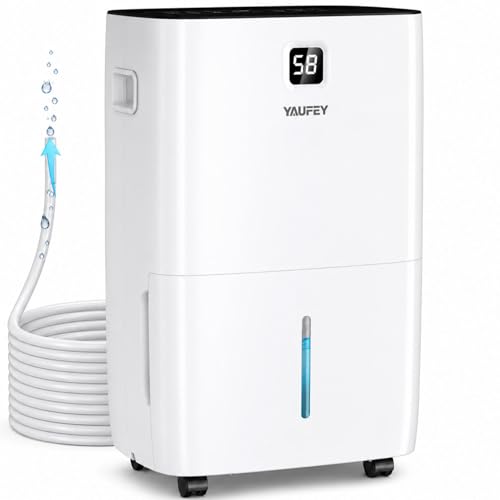
Yaufey 150 Pint Dehumidifier for Basement 8500 Sq. Ft.

PSOS 98 OZ Dehumidifier for Home 1000 sq.ft

DREO 110-Pint Smart Dehumidifier 711S

Yaufey 80 Pint Dehumidifier for Basement 5000 Sq. Ft.
Yaufey 120 Pint Dehumidifier for Basement 6000 Sq. Ft.

DREO Energy Star 2025 Smart Dehumidifier 1.85 Gal
More On The Choices That Made The List
The PLUSCENT 21-pint sits in that useful middle ground where most households actually live. Rated for spaces up to 1,500 square feet, it pulls roughly 21 pints of moisture per day under heavy conditions, which translates to a noticeably drier basement after a week of run time. The 160W compressor keeps power draw modest compared to the larger Yaufey models further down this list.
A built-in drain hose port is the small touch that makes a big difference for a basement dehumidifier. You can route a line to a floor drain and skip the daily tank-emptying routine entirely. The tank still works for above-floor setups, but for long unattended stretches the gravity-drain option is what most people end up relying on.
What Stands Out
- 1,500 sq. ft. coverage handles most mid-size basements and open living areas without strain
- 21-pint daily extraction is enough to noticeably cut mustiness in damp climates
- Continuous drain port lets you bypass manual tank emptying on long runs
- 160W draw keeps it from inflating the utility bill over a full season
- Compact shell fits beside a laundry stack or under a workbench
Things To Consider
- The internal tank fills quickly in very damp basements, so the drain hose is almost mandatory in those settings
- At full compressor speed, you can hear it from an adjacent room, though it quiets down as humidity drops
Key Product Details
Right Fit For
Households with a finished basement around 1,200 to 1,500 square feet who want a set-and-forget unit with a gravity drain line.
Look Elsewhere When
The Yaufey 80 Pint Dehumidifier suits you better if you need ENERGY STAR efficiency and a noticeably larger tank for multi-day unattended use.
The Yaufey 150-pint is the workhorse of this roundup, sized for serious dampness and big basements. Rated for spaces up to 8,500 square feet, it removes up to 150 pints of moisture per day under extreme conditions, which is a category above anything else on this list. The upward drainage port is an unusual design choice that helps when the nearest drain sits above the unit.
Three operating modes give it flexibility the smaller PLUSCENT lacks: a continuous mode, a targeted humidity range, and a more aggressive extraction setting. The 30% to 80% RH adjustment, moved in 5% increments, lets you match conditions to a finished basement or a workshop without overshooting.
The Helpful Details
- 150-pint ceiling handles standing water and post-flood drying in addition to chronic dampness
- Upward drainage routing simplifies installs when floor drains are scarce
- Three operating modes cover everything from seasonal moisture to active drying
- 30–80% RH range with 5% steps is unusually precise at this capacity
Trade Offs
- The compressor is louder than smaller units at peak output, so placement away from living areas is wise
- Its physical size and weight make it more of a permanent install than a portable option
- Higher power draw than the 21-pint and 80-pint models in the same brand line
Whose Shelf It Belongs On
Owners of large unfinished basements, crawl spaces, or post-renovation drying projects who need maximum extraction rather than compact placement.
Swap It Out When
The PSOS 98 OZ Dehumidifier is the better match for a bedroom or home office where whisper-quiet operation matters more than raw pints per day.
The PSOS unit takes a different approach from the compressor-driven picks above. It uses dual semiconductor condensation, a thermoelectric method that strips moisture quietly enough to sit on a nightstand. The trade-off is capacity, so this is built for 1,000-square-foot zones rather than the cavernous basements the Yaufey 150 targets.
A 98-ounce removable tank keeps the footprint compact, and the auto shut-off prevents overflow when you forget to empty it for a day. The seven-color ambient light is a small flourish that doubles as a soft nightlight, useful in a nursery or guest room where you want a little glow without a separate lamp.
What Makes Sense
- Whisper-quiet operation is a true standout for sleeping spaces and nurseries
- Compact 1,000 sq. ft. rating matches bedrooms, small dens, and home offices perfectly
- Auto shut-off protects against overflow when the tank reaches capacity
- 98 oz tank balances runtime with a manageable carry weight to the sink
- Ambient light option is a small but appreciated touch in darker rooms
Soft Spots
- Semiconductor extraction is slower than compressor-based units, so don’t expect rapid drops in heavy dampness
- No continuous drain option, which means manual emptying in persistent humidity
Feature Snapshot
Made For
Light sleepers, nursery setups, and small-office owners who need moisture control without the constant hum of a compressor.
Reach For A Different Pick When
The PLUSCENT 21 Pint Dehumidifier is a stronger fit if you need to actually dry out a damp basement rather than maintain a comfortable bedroom.
The DREO 711S is the smart-home play in this lineup, aimed at people who already manage their home from a phone. Rated for 4,500 square feet with up to 110 pints of daily extraction, it covers large rooms and full basements while letting you dial in humidity without leaving the couch. The 2-gallon tank is generous for those who don’t want to plumb a drain line.
Three operating modes are the real differentiator here. Auto mode handles day-to-day moisture by adjusting output to the room’s reading, Comfort mode targets a comfortable humidity band, and Constant mode keeps the unit running until you switch it off. Compared to the PLUSCENT earlier in this list, the DREO offers more granular control and a noticeably larger tank.
Good Reasons To Consider
- 110-pint output at high humidity drops basement moisture quickly
- Three-mode design gives you hands-off automation or manual control as the situation demands
- 2-gallon tank stretches run time between emptyings, useful in rentals without floor drains
- Drain hose support for permanent setups means you can plumb it once and forget it
Worth Noting
- Compressor noise ramps up in higher output modes, so it isn’t as bedroom-friendly as the PSOS
- Smart features add a small learning curve for anyone new to connected appliances
Core Details
Best Suited To
Smart-home households who want app control and flexible mode switching rather than a simple on-and-off dehumidifier.
Consider Something Else When
The DREO Energy Star 2025 Smart Dehumidifier is a better match if you want a more efficient successor with refined controls and ENERGY STAR operation.
The Yaufey 80-pint slots in as the practical mid-tier option, offering ENERGY STAR efficiency without the size and price of the 150-pint sibling. It covers up to 5,000 square feet and pulls 80 pints per day, which lines up well with average basements in temperate climates. The heat exchange design uses less energy per pint than older non-certified models.
An adjustable 30% to 80% RH range mirrors the larger Yaufey 150 above, so you get the same precision dialed into a more manageable footprint. The included drain hose continues the hands-free operation pattern that runs through this brand’s lineup, removing one of the more annoying recurring chores.
A Favorable Mix
- ENERGY STAR efficiency trims long-term operating costs over non-certified units
- 80-pint capacity is a realistic match for typical 3,000 to 5,000 sq. ft. basements
- 30–80% RH range gives finer control than basic humidistats
- Included drain hose means no extra accessory purchase for continuous operation
Points To Keep In Mind
- At full output, the compressor is audible from a nearby room, similar to other ENERGY STAR compressor units in this range
- Not the right tool for serious standing-water or flood recovery where the 150-pint model earns its keep
Who It Suits Best
Families with a standard basement in a humid climate who want certified efficiency and don’t need the 8,500-square-foot reach of the larger Yaufey.
A Better Fit Elsewhere
The DREO 110-Pint Smart Dehumidifier 711S is a smarter choice if you want app integration and three distinct operating modes.
The Yaufey 120-pint sits between the brand’s 80-pint and 150-pint models, offering a step up in extraction without the full-size footprint of the largest unit. Rated for 6,000 square feet, it removes 120 pints per day in extreme conditions and around 90 pints in more typical warm, damp environments. That dual rating matters because real-world basements rarely see 95°F indoor temperatures.
Like the rest of the Yaufey basement lineup, it includes a drain hose for continuous operation and an adjustable 30% to 80% RH range. The ENERGY STAR certification keeps operating costs in line with the 80-pint sibling, even with the higher output. For most people choosing between the 80 and 120 in this brand, the deciding factor is square footage rather than efficiency.
Real-World Strengths
- 120-pint rating covers 6,000 sq. ft., which fits most full basements in mid-size homes
- ENERGY STAR operation matches the 80-pint model for efficiency despite higher output
- Continuous drain option eliminates manual tank emptying for long unattended runs
- 30–80% RH adjustment allows precise comfort tuning
Things That May Matter
- Airflow and compressor sound increase at peak extraction, more noticeable in open-plan layouts
- Larger chassis than the 80-pint, so plan the placement spot before delivery
Who Will Love This
Homeowners with a 4,000 to 6,000 sq. ft. basement who want higher daily extraction without jumping to commercial-grade capacity.
Not Your Match When
The PSOS 98 OZ Dehumidifier suits a smaller space better, where quiet semiconductor operation outperforms raw compressor output.
The DREO Energy Star 2025 rounds out the list as a refined whole-home option, balancing 73 pints of daily extraction with a 1.85-gallon tank and certified efficiency. It targets basements, bedrooms, and large open areas where you want steady moisture control without oversizing the unit. Compared to the larger DREO 711S earlier, this one is tuned for everyday use rather than aggressive drying.
ENERGY STAR 2025 certification is the meaningful detail here: it indicates compliance with the latest efficiency standards, so per-pint energy use is lower than older certified models. The 1.85-gallon tank hits a sweet spot, big enough to skip daily emptying but not so large that the unit becomes a chore to move when you want to reposition it.
Strengths Worth Knowing
- ENERGY STAR 2025 certification delivers measurable savings over older models
- 73-pint capacity handles most home environments without the bulk of 100+ pint units
- 1.85-gallon tank is the practical middle ground for tank-only setups
- Smart controls let you monitor and adjust from your phone
- Versatile placement across basements, bedrooms, and large living rooms
Honest Caveats
- Not designed for severe flooding or commercial-scale moisture problems where the Yaufey 150 excels
- Smart features require initial setup, more involved than a basic dial unit
Quick Technical Notes
Perfect Match For
Homeowners who want a modern, efficient whole-home dehumidifier and care about both running costs and smart-home integration.
Where Another Pick Suits Better
The Yaufey 120 Pint Dehumidifier is the stronger choice if you need higher daily output for a 6,000 sq. ft. space and don’t need smart features.
What Matters Most Before Choosing Quiet Dehumidifiers
Match Capacity to Room Size, Not Hype
A 21-pint unit in a 2,000-square-foot basement will run nonstop and still leave the air heavy. Conversely, a 150-pint compressor in a small bedroom is overkill that wastes energy and adds noise. Match the pint rating to your actual room size, and remember that “pints per day” is measured under extreme lab conditions, so real-world output runs lower in typical home temperatures around 70 to 80°F.
Know Your Drainage Setup
Continuous drain capability, available on most compressor-based picks in this list, is what separates set-and-forget from daily maintenance. Models like the PSOS rely on tank emptying alone, which works for bedrooms but becomes a chore in damp basements. Before buying, check whether the unit includes a drain hose and whether your intended location has access to a floor drain, utility sink, or condensate pump.
Decide How Quiet You Really Need
“Quiet dehumidifiers” covers a wide spectrum. Semiconductor units like the PSOS run nearly silent, ideal for sleeping spaces. Compressor-based models are louder at peak output but quiet down as humidity drops, often becoming inaudible in finished basements with closed doors. Match the noise profile to where you’ll actually place the unit, not the spec sheet’s best-case number.
Factor in Energy Use Over Time
Higher-pint units pull more watts, but ENERGY STAR certified models like the Yaufey 80 and 120, and the DREO 2025, offset that by extracting more moisture per watt. A 150-pint non-certified model can cost noticeably more to run across a humid summer than an 80-pint ENERGY STAR unit, even though the smaller one removes fewer pints per day.
Key Considerations Across These Picks
Where Shoppers Go Wrong
The most common mistake is buying by pint count alone. A 150-pint model in a tight 1,000 sq. ft. apartment will short-cycle, waste energy, and wear out the compressor faster than a properly sized 50-pint unit. Another frequent misstep is ignoring drainage: shoppers focus on extraction numbers and forget that every pint removed has to go somewhere, either into a tank you’ll empty or down a drain you’ll plumb.
When Paying More Pays Off
The price jump from entry-level picks to models like the DREO Energy Star 2025 and the Yaufey 120-pint typically delivers in three places: better energy efficiency, longer component life, and smarter controls. The upgrade is worth it for year-round use in a humid climate, where lower operating costs and reduced maintenance add up quickly. For occasional seasonal use in a milder climate, a more modest pick handles the job without the premium.
Frequently Asked Questions
How loud is a quiet dehumidifier in practice?
Compressor-based models typically run between 35 and 50 decibels, comparable to a quiet office. Semiconductor units like the PSOS run noticeably quieter, often below 35 decibels, which is the realistic ceiling for a unit you can sleep next to.
Can one dehumidifier cover multiple rooms?
A single unit handles open-plan layouts and connected rooms if the total square footage stays within its rating. Closed doors, hallways, and stairwells restrict airflow, so separate zones usually need separate units.
How often do you need to empty the tank?
Tank-only models in moderate humidity typically need emptying every two to four days. In a very damp basement without a drain line, daily emptying is common, which is why the continuous drain option on most compressor-based picks in this list is so practical.
Do ENERGY STAR dehumidifiers really save money?
Yes, particularly for units that run for months at a time. ENERGY STAR 2025 models use noticeably less electricity per pint of moisture removed, which adds up across a full humid season in a basement or whole-home setup.
Is a bigger pint rating always better?
No. Oversizing leads to short cycling, where the compressor turns on and off frequently, which wears components and wastes energy. Match the pint rating to your room size for the best balance of performance and longevity.
The Takeaway
A quiet dehumidifier earns its place by matching your room, your drainage setup, and your tolerance for compressor noise. The PSOS handles bedrooms and offices where silence matters, the Yaufey lineup covers basement-heavy households, and the DREO models add smart controls and modern efficiency for connected homes. Pick the one that fits your actual space rather than chasing the highest pint count, and you will end up with a quieter, more reliable result.