


Big rooms, finished basements, and open floor plans all share one quiet enemy: air that won’t stop feeling heavy. You notice it on sticky summer mornings, on bathroom mirrors that never quite clear, and on cardboard boxes in the garage that slowly warp at the edges. A room-sized dehumidifier pulls that moisture back into something you can measure, and the eight models below cover everything from a damp bonus room to a sprawling basement.
Your Options, Compared

Vellgoo 100 Pint Dehumidifier for Basement, Home and Garage 5000 Sq.Ft

CHIVALZ 25Pints Dehumidifier for Basement with Drain Hose

AprilAire E070 Pro 70 Pint Whole House Dehumidifier Bundle
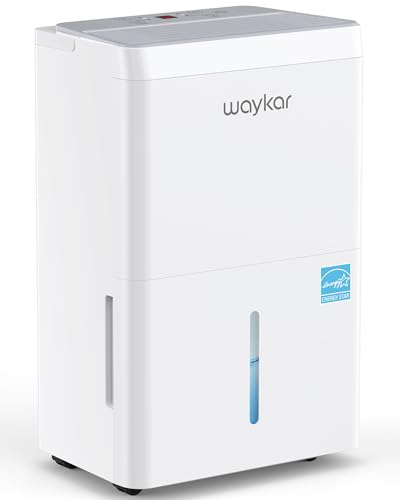
Waykar 6000 Sq.Ft 120 Pint Energy Star Dehumidifier

Arecovas 105 Pint Energy Star 2025 Dehumidifier for Basement
Waykar 5000 Sq. Ft. 80 Pints 2025 Energy Star Dehumidifier
Waykar 2000 Sq. Ft. 30 Pints 2025 Energy Star Dehumidifier
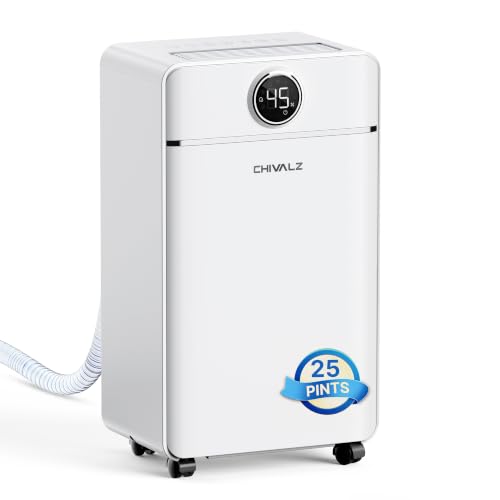
CHIVALZ 25Pints Dehumidifier for Basement 1800Sq.Ft
The Picks, Examined More Closely
The Vellgoo 100-pint model targets the kind of space most plug-in units struggle with: a finished basement that doubles as a gym, a workshop, or a rec room. Rated for up to 5,000 square feet at extreme humidity (95°F and 95% relative humidity), it pulls moisture aggressively when conditions are at their worst, which is exactly when a lighter unit falls behind.
For homeowners dealing with persistent damp walls, a musty storage room, or a garage that collects condensation, the heavy-duty framing makes sense. Pair it with a nearby floor drain and the continuous-drain setup keeps the tank out of the picture. Run it during the muggy months, then dial it back or store it through winter.
Real Benefits
- 100-pint daily extraction handles high-humidity basements without running flat-out all day.
- 5,000 sq ft coverage suits open-plan lower levels and oversized garages.
- Continuous-drain option removes the daily ritual of emptying a tank.
- Strong airflow helps clear stale, heavy air in rooms that feel closed-in.
Trade Offs
- Its full output mode is loud enough that placing it far from living areas helps.
- The body is bulky, so plan the placement before unboxing rather than after.
Key Specs
Whose Shelf It Belongs On
Homeowners with a damp, multi-use basement who need serious daily extraction and have somewhere to route a drain hose.
Where Another Pick Suits Better
The AprilAire E070 Pro 70 Pint Whole House Dehumidifier Bundle fits better when you want a built-in whole-home install rather than a portable floor unit.
The CHIVALZ 25-pint skips the brute-force pitch and leans on a more measured approach. The bright LED humidity readout sits at the front of the unit, so you can glance across the room and see exactly where the air is at. Set your target between 40% and 60% relative humidity (the range most sources cite as the comfort sweet spot) and the unit cycles itself rather than running flat-out.
Three modes shape the daily experience. Auto Mode takes care of the routine maintenance of a balanced basement, Laundry Mode speeds up indoor drying on a damp clothes rack, and Sleep Mode drops the fan to a library-quiet level for overnight runs. The included drain hose means you can route condensation to a sink or sump and skip the tank trip entirely.
What Earns Its Place
- LED display with a target humidity range simplifies day-to-day use.
- Three modes (Auto, Laundry, Sleep) cover common household routines.
- Included drain hose supports unattended operation.
- Compact body slides into corners of finished basements.
Worth Noting
- 25-pint capacity is undersized for unfinished stone basements with standing damp.
- Tank-fallback mode means you still empty the reservoir if you skip the drain hose.
Made For
Finished basements around 1,500 to 2,000 square feet where you want a simple, display-driven unit that runs quietly overnight.
Swap It Out When
The Waykar 6000 Sq.Ft 120 Pint Energy Star Dehumidifier fits better when your space is much larger or noticeably draftier than a typical finished basement.
The AprilAire E070 sits in a different category from the portable floor units around it. The E-Series is built for installed use, covering crawl spaces, basements, and full homes up to 2,800 square feet. Where the CHIVALZ or Waykar units roll into a corner and plug into a wall outlet, this one gets ducted in and tied into your home’s air handling.
The bundle arrives with a drain hose, duct collars, a filter, risers, and an extra filter, so the install parts are already on hand. Homeowners often pair it with a dedicated return and supply grille in a mechanical room, or mount it in a crawl space with ducted supply and return. Coverage of 2,800 square feet comfortably reaches most mid-size single-family homes, and the brand’s five-year warranty adds long-term confidence.
Useful Highlights
- 70-pint capacity suits whole-home and crawl-space use.
- Bundle includes drain hose, duct collars, risers, and an extra filter.
- 2,800 sq ft coverage fits most single-family homes.
- Five-year warranty covers long ownership.
Practical Considerations
- Installation is more involved than a freestanding unit, so plan for duct work or a contractor.
- Filter changes should be on a calendar reminder; a clogged filter quietly reduces output.
Feature Snapshot
The Right Fit
Homeowners committed to a permanent, ducted whole-home solution who want a warranty that matches the long-term install.
Consider Something Else When
The Vellgoo 100 Pint Dehumidifier for Basement suits you better if you want a portable floor unit you can roll between rooms rather than a fixed install.
The Waykar 120-pint model targets the awkward middle of the market: rooms too big for a 30-pint apartment unit, but not quite at the installed whole-house level. With a published 40 dB noise floor, it’s the quietest of the high-output options on this list, which is meaningful for finished basements that double as media rooms or guest spaces.
The 6,000 sq ft coverage spec is generous, but the practical use case is a single open-plan zone rather than a true whole-home install. Smart Auto Comfort mode reads the room’s humidity and adjusts fan speed without you reaching for the controls. Compare that to the Arecovas 105-pint below, which leans harder on raw extraction, and the Waykar’s value shows up in the noise and refinement side rather than peak output.
The Helpful Details
- 120-pint daily extraction handles heavily humid spaces without long run cycles.
- 40 dB noise floor makes overnight or media-room use realistic.
- Smart Auto Comfort mode self-adjusts fan speed based on room readings.
- Energy Star rating supports everyday running costs.
Points To Note
- Size and weight are substantial, so choose its spot early and keep it there.
- Premium-tier output means a matching price tier.
Who Should Grab It
Homeowners with a large open-plan basement or living area who want strong output without the white-noise drone of a heavy-duty unit.
Not Your Match When
The Waykar 2000 Sq. Ft. 30 Pints 2025 Energy Star Dehumidifier fits a smaller bedroom or home office far better, where 120 pints is overkill.
The Arecovas 105-pint lands in the sweet spot for big, damp basements where the 70-pint class feels underpowered and the 120-pint class is more than you need. The 2025 Energy Star compliance is the headline: the unit is built to the most recent efficiency standard, which matters for any model you plan to leave running 24/7 through a humid summer.
Manufacturer-rated output scales with conditions: 105 pints at extreme 95°F/90% RH (relative humidity), 72 pints in standard 86°F/80% RH, and around 32 pints in cooler 65°F/60% RH air. That last figure is the one to watch, because basement temperatures often run cool, and capacity drops as the air gets colder. For most households, the 5,000 sq ft rating gives plenty of headroom.
What Pays Off
- 2025 Energy Star compliance targets the latest efficiency benchmarks.
- 105-pint peak output suits stubbornly damp basements.
- 5,000 sq ft coverage matches large finished and semi-finished spaces.
- Output scales across temperature and humidity conditions, which most spec sheets skip.
A Few Limitations
- Cooler basement temperatures cut daily extraction noticeably, so set expectations for winter use.
At A Glance
Perfect Match For
Energy-conscious households with large basements who want strong summer output without paying a long-term running-cost penalty.
Look Elsewhere When
The CHIVALZ 25Pints Dehumidifier for Basement fits smaller spaces and tighter budgets far better, where 105 pints of capacity is wasted.
The 80-pint Waykar lives in the practical middle of the list. It’s the model you consider when the Waykar 120-pint feels like overkill and the 30-pint underperforms for the space. The 5,000 sq ft rating lines up with the Arecovas 105-pint above, but with a smaller tank of daily extraction that’s still plenty for medium-large basements.
The 2025 Energy Star compliance keeps running costs in check during long stretches of summer humidity. The body style mirrors the higher-end Waykar, so once you’ve decided on the brand, moving between models feels familiar. This is the model many homeowners land on when they want one unit that handles a finished basement, a large living room, or a converted bonus space without oversizing.
Well-Handled Touches
- 80-pint capacity matches most medium-large basements without oversizing.
- 2025 Energy Star rating supports everyday running costs.
- 5,000 sq ft coverage works across finished basements and large living areas.
- Same Waykar interface as the larger 120-pint unit, so usage feels familiar.
Honest Caveats
- Not enough headroom for genuinely damp, unfinished basements with standing moisture.
Best Suited To
Homeowners who want a single mid-large unit that handles finished basements and oversized living areas without stepping into premium-tier pricing.
Reach For A Different Pick When
The Vellgoo 100 Pint Dehumidifier for Basement fits better when the basement is unfinished or has chronic moisture issues that need more aggressive daily extraction.
The 30-pint Waykar earns its place in a large-room roundup because not every “large room” actually needs industrial output. A master bedroom suite, a home office, or a converted bonus room around 2,000 square feet often sits in the sweet spot for this size. The unit is small enough to fit beside a dresser or under a desk, which is something the 80- and 120-pint siblings can’t claim.
The 15% to 80% RH adjustable range is unusually wide on the low end, which matters for spaces that need to stay dry without over-drying the air. Owners commonly report the unit pulling steady moisture from damp closets and interior bathrooms that just don’t vent well. For whole-basement coverage, you’ll want the larger Waykar above; for room-by-room comfort, this one stays in the conversation.
A Few Highlights
- 30-pint capacity suits bedrooms, home offices, and bonus rooms around 2,000 sq ft.
- Compact body fits beside furniture or in tight corners.
- Wide 15% to 80% RH target range handles drier and damper rooms.
- 2025 Energy Star rating keeps the long-term electricity use modest.
Less Ideal Details
- Daily extraction is well below the basement-focused models on this list.
- Best as a room-specific pick rather than a whole-home solution.
Right Fit For
Apartment dwellers, home office users, and homeowners targeting one specific room rather than a whole basement.
A Better Fit Elsewhere
The Waykar 6000 Sq.Ft 120 Pint Energy Star Dehumidifier fits better when the goal is whole-basement or open-plan conditioning rather than a single room.
The second CHIVALZ on this list covers the smaller end of the basement category. The 1,800 sq ft rating targets rental units, townhomes, and finished basements that are large but not sprawling, the kind of space where a 50- or 80-pint unit would run short cycles and waste electricity.
The same three-mode system (Auto, Laundry, Sleep) from the larger CHIVALZ carries over, along with the LED humidity display and the included drain hose. That consistency matters if a household is buying two units for two different rooms, since the controls feel identical. For a small basement, a guest room over a garage, or a converted workshop, the 25-pint capacity hits the realistic daily moisture load without overshooting.
Points In Its Favor
- 25-pint daily extraction matches mid-size finished basements and rentals.
- Three operating modes cover Auto, Laundry, and Sleep routines.
- LED display with a 40% to 60% RH target range simplifies use.
- Included drain hose supports continuous-drain setups.
Where It Is Less Suited
- Underpowered for unfinished basements or homes with chronic moisture intrusion.
- Plastic body is lightweight for portability but feels less substantial than premium units.
Who It Suits Best
First-time dehumidifier shoppers with a small-to-mid basement or rental who want simple controls and a reasonable starting price.
Another Choice May Suit
The Waykar 5000 Sq. Ft. 80 Pints 2025 Energy Star Dehumidifier fits better when the basement is closer to 3,000 or 4,000 square feet rather than under 2,000.
What to Weigh Before Choosing a Large Room Dehumidifier
Match Capacity to Your Real Square Footage
The pint-per-day rating matters, but the conditions behind that rating matter just as much. A 100-pint figure tested at 95°F and 95% relative humidity drops sharply in a cool 65°F basement. A practical rule: pick a model that handles your space with comfortable headroom, not one sized exactly to the room. For finished basements around 1,500 to 2,500 square feet, the 25- to 30-pint class usually fits. For 3,000 to 5,000 square feet, look at 70 to 105 pints. Anything beyond that is whole-home territory.
Drain Setup Changes Daily Ownership
A built-in tank means daily or twice-daily emptying during humid stretches. A continuous-drain port with the included hose moves that water to a sink, sump, or floor drain, which is the difference between “set it and forget it” and “remember to check the tank.” Renters without a nearby drain should size down and accept the tank routine, or plan a creative drain route. The included drain hose in several models on this list makes that choice easier.
Noise, Footprint, and Living Habits
A dehumidifier running next to a TV, a guest bed, or a home office has to behave differently than one tucked into an unfinished basement corner. Look at published decibel ratings and think about the room’s actual use. Lower-output models with sleep modes often outperform higher-output models in finished living spaces, simply because you can run them overnight without noticing.
Energy Use Over the Long Haul
A unit that runs 12 hours a day, six months a year, draws real electricity. Energy Star compliance, especially under the 2025 standard, signals models tuned for efficient operation. Higher-tier models often pay back part of the price difference over a few humid seasons, particularly in regions where the unit runs most of the year.
Things Worth Knowing Before You Commit
Where Shoppers Go Wrong
The most common mistake is buying by maximum coverage alone. A unit rated for 5,000 square feet doesn’t always dehumidify all of that space well, especially if the basement is cool, partially finished, or has poor air circulation. Measure your actual target room, then add 20% headroom for real-world conditions. The second slip-up is skipping the drain setup, which turns a “set-and-forget” appliance into a daily chore.
When Paying More Pays Off
Higher-tier models typically deliver quieter fans, stronger extractors in cool conditions, better ducting options, and longer warranties. The AprilAire E070 is the clearest example, trading a portable rollout for a permanent install with a five-year warranty. For most households with a chronically damp basement, stepping up from a budget 25-pint to a mid-tier 70- or 80-pint class is the upgrade that pays off, because the unit runs less aggressively and lasts longer between maintenance cycles.
Frequently Asked Questions
How big of a dehumidifier do I need for a large room?
Match the pint-per-day rating to your square footage with some headroom, typically 20% above the actual room size. Cooler basements need a higher-rated unit than the same square footage in a climate-controlled living area, because extraction capacity drops as air temperature falls.
Where should a large room dehumidifier be placed?
Place it where air circulates freely, away from walls and furniture, and ideally near a drain if you plan to use the continuous-drain option. For basements, central placement on a slightly elevated surface helps the unit pull air from more of the room.
How often does the tank need emptying?
Without a drain hose, a mid-size tank fills within 8 to 24 hours during humid weather, so daily emptying is realistic. With a drain hose routed to a floor drain or sump, the tank fills much less often and the unit can run unattended for days.
Can a dehumidifier run all the time?
Yes, most modern units are designed for continuous operation, especially models with auto modes that cycle the compressor based on humidity readings. Just keep the filter clean and ensure the drain path stays clear if you’re using continuous drainage.
Is a whole-house dehumidifier better than a portable one?
A whole-house or ducted model handles every room evenly and runs quietly out of sight, but it requires installation. A portable unit is cheaper, easier to set up, and works well for a single large room. The right answer depends on whether you’re conditioning one zone or your whole home.
Final Verdict
The right dehumidifier matches the space you actually live in, not the biggest number on a spec sheet. For most finished basements, the Waykar 80-pint and Arecovas 105-pint land in the practical middle. For whole-home conditioning, the AprilAire E070 bundle sets the bar. For one specific room, the smaller Waykar and CHIVALZ models do the job without excess. Pick the unit that fits your square footage, your drain setup, and your tolerance for noise, and the rest tends to take care of itself.