


Sticky summer air, that windowpane condensation in February, a musty closet you keep meaning to empty: humidity is the kind of problem you stop noticing until a dehumidifier quietly takes it off your hands. The eight picks below cover everything from a closet-sized Peltier cube to a 6,000-square-foot basement workhorse, all without forcing a major appliance-budget moment.
A Quick View Of The Lineup

PSOS 98 OZ Dehumidifier for Home 1000 sq.ft

FreAire 34Pint Dehumidifier for 2500Sq.Ft
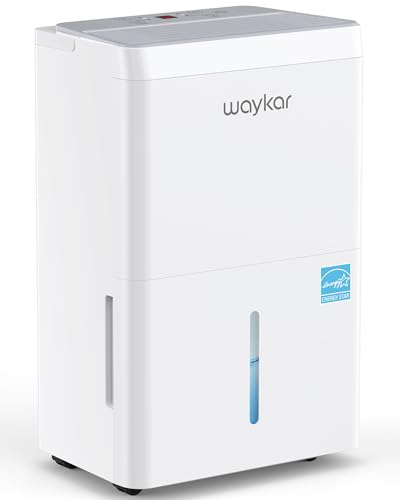
Waykar 6000 Sq.Ft 120 Pint Energy Star Dehumidifier
Waykar 5000 Sq. Ft. 80 Pints Energy Star Dehumidifier
Waykar 2000 Sq. Ft. 30 Pints Energy Star Dehumidifier

TABYIK 35 OZ Bedroom Dehumidifier Grey

TABYIK 35 OZ Bedroom Dehumidifier Blue
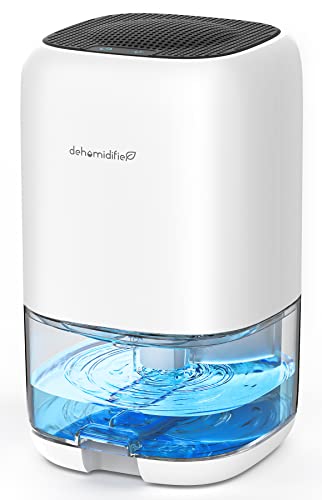
TABYIK 35 OZ Bedroom Dehumidifier White
Taking A Closer Look At The Options
For a midsize room that runs damp a few months a year, the PSOS 98 OZ sits in a useful middle ground between the tiny Peltier cubes below and the full basement compressors higher up the list. Its 98-ounce tank is large enough to skip a daily empty in a typical bedroom, and the visible humidity readout takes the guesswork out of placement.
Unlike the heavy-duty Waykar models reviewed further down, this one uses dual semiconductor condensation, so it runs quieter and cooler to the touch. For a nursery, home office, or finished basement corner, that matters more than raw extraction rate.
The Helpful Details
- 98 oz tank covers a couple of humid nights before a refill.
- Front humidity display makes target setting straightforward.
- Auto shutoff protects the unit when the tank fills.
- Dual semiconductor design keeps noise down for sleep-friendly use.
- Seven-color ambient light doubles as a soft nightlight.
- Listed coverage fits bedrooms and small basements around 1000 sq ft.
Worth Noting
- Semiconductor models pull less moisture per day than compressor units, so very damp basements may feel under-served.
- Tank removal needs a clear path; tucking the unit tight against a wall can make emptying awkward.
Key Specs
Who It Suits Best
You sleep in a room that always feels a little clammy, and you want quiet operation with a visible humidity number rather than guesswork.
Where Another Pick Suits Better
For a 2,500+ sq ft basement with serious dampness, the FreAire 34Pint compressor will move far more water per day.
The FreAire 34Pint is the kind of dehumidifier you set up once and largely forget, which is the real point of buying a compressor unit. It pulls 34 pints per day under hot, sticky conditions, so even a basement that smells like a beach towel after a storm will start to feel neutral within a day or two.
Compare that to the PSOS pickup above, which trades raw capacity for a quieter semiconductor build. Here, the trade goes the other way: a noticeably stronger compressor, but a unit you will hear working from across the room.
The Case For It
- 34-pint daily extraction handles 2,500 sq ft open layouts.
- Included 6.56 ft drain hose supports unattended operation.
- Adjustable humidity target keeps the room in a specific range.
Trade Offs
- Compressor noise is louder than the Peltier models further down the list.
- Unit weight makes it more of a set-and-leave appliance than a daily-room shuffle.
Made For
You have a large finished basement, a big workshop, or a sprawling open floor plan where moisture keeps showing up on the windows.
Skip It When
A small bedroom is the only space you need to dry out, in which case the TABYIK 35 OZ Bedroom Dehumidifier Grey will be cheaper, quieter, and easier to live with.
Pulling 120 pints per day is a different league entirely, and the Waykar 6000 Sq.Ft is built for the wettest corners of a typical house. Whole basements, post-flood recovery, and chronically damp crawl spaces are the scenarios it was designed for, and the included drain hose means you can plumb it to a floor drain and walk away.
It is also where the Energy Star rating starts to genuinely pay off, since a 120-pint unit running 12 hours a day can otherwise add up on a utility bill. The 40 dB claim, assuming a quiet basement to begin with, is a nice surprise at this size.
Notable Upsides
- 120-pint daily capacity tackles genuinely wet basements.
- Energy Star rating keeps long-run power use in check.
- Built-in smart auto mode reads the room and adjusts the fan.
- Drain hose plus internal tank gives you two setup options.
Things To Consider
- Overkill for apartments or single rooms; a Peltier unit like the TABYIK will be quieter and cheaper.
- Large physical footprint, so plan a permanent spot before unboxing.
- Coil cleaning is part of long-term ownership, especially in dusty basements.
Feature Snapshot
Right Fit For
You are dealing with a large, persistently damp basement and want a single appliance that runs for hours without babysitting.
Consider Something Else When
Your humidity problem lives in a single 200 sq ft bedroom, where the Waykar 2000 Sq. Ft. 30 Pints model is a better match.
The 80-pint Waykar lands in a sweet spot for many households. It is heavy enough to handle a 5,000 sq ft space, yet it does not feel like overkill in the way the 120-pint sibling above can. If the bigger model is a steamroller, this one is a steady shovel.
Energy Star shows up here too, and the 30% to 80% adjustable humidity range is wide enough for everything from a storage room to a comfortable living area.
What Earns Its Place
- 80-pint daily capacity covers large basements without overbuilding.
- Energy Star efficiency trims running costs.
- Adjustable humidity target supports sensitive storage rooms.
Honest Caveats
- Still a compressor, so it is not bedroom-quiet on the highest fan setting.
- Drain hose routing needs planning if there is no nearby floor drain.
Best Suited To
Homeowners with a finished or partially finished basement in the 2,000 to 5,000 sq ft range, where you want real drying power without jumping to a whole-home unit.
Reach For A Different Pick When
You only need to dry a small bedroom and value silence above all, in which case the TABYIK 35 OZ Bedroom Dehumidifier White is a quieter, lighter choice.
The 30-pint Waykar is the model most people probably actually need. It is sized for a typical mid-size home, runs on standard household power, and the 15% to 80% humidity range is forgiving for sensitive uses like a guitar room or a small wine corner.
Compared to the FreAire above, it is more modest in capacity, but also easier to place in a living area without rearranging the furniture around it.
Everyday Advantages
- 30-pint extraction covers most mid-size rooms and basements.
- Energy Star certified for reasonable operating cost.
- Wide 15% to 80% humidity range suits both damp and dry climates.
A Few Limitations
- Will not keep up with serious basement flooding situations that the 120-pint Waykar is built for.
- Drain hose setup is optional but recommended for hands-off use.
Quick Facts
Who Should Grab It
You want one solid, energy-efficient dehumidifier for a mid-size basement, bedroom, or multipurpose living area.
Not Your Match When
You need to cover 5,000+ sq ft, where the Waykar 5000 Sq. Ft. 80 Pints will be a better fit.
The grey TABYIK 35 OZ is the kind of small dehumidifier you tuck next to a bookshelf and forget is there. Peltier-style cooling, the same tech that runs portable wine fridges, keeps the 28 dB claim honest enough for light sleepers.
Compare that to the larger Waykar units earlier, which move serious water but would never pass the bedroom test. This is the right shape of appliance for a 280 sq ft room where silence is non-negotiable.
What It Does Well
- 28 dB operation is bedroom-friendly.
- 35 oz tank fits nightly runs in a small room.
- Auto shutoff when the tank fills.
- Compact cube design fits nightstands and RV counters.
Room For Improvement
- Peltier units extract slowly; a damp basement will be a long fight.
- Listed 280 sq ft coverage assumes a closed room, so open layouts will see less impact.
Spec Overview
Perfect Match For
Light sleepers in a small to mid-size bedroom who want a dehumidifier that disappears into the room.
Look Elsewhere When
You are battling musty basement air across several thousand square feet, where the FreAire 34Pint will make real headway.
The blue TABYIK 35 OZ is functionally the same compact Peltier unit as the grey version above, wrapped in a slightly different cabinet that some shoppers prefer for kid rooms or coastal decor. The seven-color ambient light gives it a little personality without turning it into a gadget.
You are choosing this for color and price more than for any technical difference, so the better question is whether you want a quieter nightlight or a quieter workhorse. This is the nightlight.
Where It Delivers
- Same quiet 28 dB operation as the grey sibling.
- Color light option is handy as a low-watt nightlight.
- Tank auto shutoff adds a layer of safety in bedrooms.
Points To Note
- Performance ceiling is the same 280 sq ft room, so don’t expect miracles in a large basement.
- Cleaning the small tank weekly is part of the routine.
Whose Shelf It Belongs On
You want a small, quiet dehumidifier for a nursery, reading nook, or home office, and you like the blue cabinet.
A Better Fit Elsewhere
For a finished basement near 2,000 sq ft, the Waykar 2000 Sq. Ft. 30 Pints will pull far more water per day.
The white TABYIK is the cleanest-looking of the three color options, which is why it often ends up in minimalist bedrooms and RV interiors. The engineering underneath is the same quiet Peltier platform, so you are picking aesthetic fit more than performance.
For RV and small-office use in particular, the white cabinet blends into the wall better than a flashier color, and the 35 oz tank is genuinely useful in a space where a larger compressor would be impractical to power.
Everyday Wins
- Same 28 dB quiet operation as the rest of the TABYIK line.
- Low 1 kWh-per-day draw suits off-grid and RV setups.
- White finish blends with most interior styles.
- Lightweight enough to move between rooms.
Some Limits To Know
- Not designed for whole-home moisture problems.
- Emptying the small tank is part of weekly ownership.
Built With In Mind
You want an inexpensive starter dehumidifier for a bedroom, RV, or small office, and you prefer a neutral white finish.
Where A Sibling Pick Shines
For larger living areas where you want visible humidity control, the PSOS 98 OZ is a smarter step up.
What To Weigh Before Choosing An Inexpensive Dehumidifier
Match The Capacity To The Room
Pickups are usually sized by the square footage they can realistically cover, and the gap between a 280 sq ft Peltier cube and a 6,000 sq ft compressor is enormous. Measure the room you actually need to dry, then add a little headroom for closets and adjoining hallways, because a unit running at the edge of its range will be loud and short-lived.
Compressor Vs Peltier Cooling
Peltier units are quiet, light, and inexpensive, but they move water slowly. Compressor models, like the Waykar and FreAire picks above, pull pints of moisture per day and handle real basement dampness, at the cost of fan noise and a heavier chassis.
Drainage And Tank Habits
If you do not want to remember the tank, a built-in pump or a gravity drain hose is the upgrade that saves the most annoyance. For small bedrooms, an auto-shutoff tank combined with a weekly empty is a fair trade, especially with a quiet 28 dB Peltier model.
Energy Use Over Time
A 30-pint or 80-pint Energy Star model can run many hours a day without shocking the utility bill. Cheap Peltier units draw barely a kilowatt-hour daily, which is part of why they work so well in RVs and small offices.
Key Considerations Across These Picks
Pitfalls Shoppers Hit
The most common mistake is buying by room size alone, without checking whether the unit uses Peltier or compressor cooling. A Peltier unit marketed for 280 sq ft cannot match a 30-pint compressor in a real basement, and shoppers end up running it 24/7 to little effect. The other trap is ignoring drainage. A small tank in a damp basement fills every few hours, and without a drain hose, you have a new chore.
Why Top Tier Costs More
Larger compressor dehumidifiers cost more because they move significantly more water per day, run on more robust internal components, and often include Energy Star efficiency that cheaper Peltier units skip. The upgrade is genuinely worth it once your space crosses roughly 1,500 sq ft of persistent moisture, since the time you save and the lower running cost close the price gap over the first year.
Frequently Asked Questions
How big a dehumidifier do I need for a bedroom?
A 280 sq ft Peltier unit is plenty for a typical bedroom, and a 1000 sq ft dual-semiconductor model like the PSOS will cover larger master suites with margin. Anything more powerful is overkill for sleep use.
Are Peltier dehumidifiers any good?
Yes, for small closed rooms. They run quietly, use minimal power, and handle a closet, RV, or bedroom well. They struggle in larger or damper spaces, where a compressor model is the better tool.
How often do I need to empty the tank?
A 35 oz tank in a moderately humid bedroom typically fills in a day or two, while a 98 oz tank can run several nights. Hooking up a drain hose removes the task entirely for basement setups.
Can a dehumidifier run all day safely?
Most modern units, including all picks on this list, include auto shutoff when the tank fills, and the compressor models are designed for long continuous runs. Good airflow around the unit matters for heat dissipation.
Do I need a dehumidifier in winter?
Indoor humidity often rises in winter from cooking, showers, and poor ventilation, so a small quiet unit in a bedroom or bathroom can still be useful year-round. Basements in cold climates are where a compressor model earns its keep most.
Closing Thoughts
The right inexpensive dehumidifier is the one that matches the room you actually need to dry, whether that is a closet-sized Peltier cube or a 6,000 sq ft basement compressor. Start with the square footage, then decide how much noise and maintenance you can live with, and the rest of the decision tends to take care of itself.