


A 1000 sq ft living space is large enough to feel stuffy in winter, dry in summer, and stubborn to condition evenly. The right humidity unit tackles that scale without overworking itself, turning a wide open-plan room into a place where wood floors stop cracking and sinuses feel less prickly. This shortlist covers humidifiers and dehumidifiers rated for that footprint, including a few that stretch well beyond it for basements and full-floor layouts.
How The Shortlist Stacks Up

DREO 16L Smart Humidifier Large Room 1000 ft²

AEOCKY 50 Pint/Day Ultra-Quiet Dehumidifier

Levoit OasisMist 1000S Smart Humidifier

Glowells 6500 Sq.ft Dehumidifier 120 Pints

AEOCKY 4500 Sq.Ft Dehumidifier with Pump

Glowells 34 Pints Dehumidifier 2500 Sq.Ft

Glowells 5500 Sq.ft Dehumidifier 80 Pints
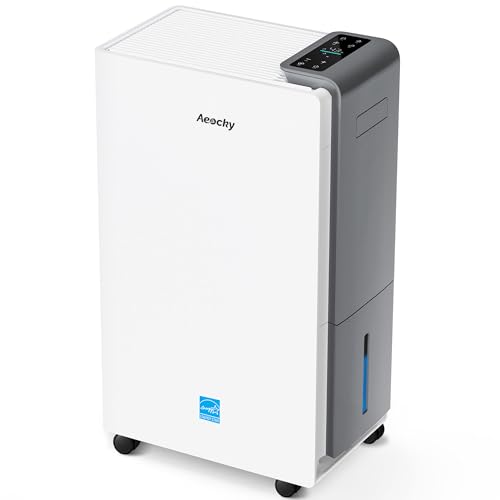
AEOCKY 5500 Sq.Ft Dehumidifier 80 Pint
Inside Each Recommended Option
The DREO 755S lands as the most connected unit on this list, aimed squarely at a connected 1000 sq ft living space where the air swings between bone-dry and uncomfortably clammy. Its top-fill design and 16L tank are the kind of details that matter when a tall, narrow humidifier sits next to a sofa in a real living room rather than a showroom. Compared with the Levoit OasisMist covered below, the DREO leans harder into automation and runtime, trading some of the smaller-tank simplicity for sheer endurance.
For anyone who wants a single unit to drift moisture through a long evening without babysitting, the long continuous runtime here is the headline feature. Auto mode reacts to room humidity, while remote, touch, and voice options cover the moments you don’t want to get up. A 30dB floor rating puts it in the conversation for bedrooms, though any ultrasonic unit (a model that uses high-frequency vibrations to turn water into a fine mist) can hum faintly on its highest setting.
What Works In Its Favor
- 130-hour maximum runtime means roughly five nights of steady moisture before a refill.
- 400 ml/h mist output and a 6 ft mist plume help moisture reach across a 1000 sq ft open plan.
- Auto mode adjusts output to match target humidity, easing the day-to-day fiddling.
- Top-fill opening removes the upside-down tank shuffle that’s a common complaint with humidifiers.
- Voice, app, and remote control give multiple paths to change settings from a sofa or bed.
Things To Consider
- The 16L tank is heavy at full capacity, so a two-handed carry to the sink is the norm.
- Built-in RGB lighting is decorative; some users disable it, which slightly clutters the touch panel.
Right Fit For
Smart-home users running a 1000 sq ft open layout who want a refill-it-once-a-week humidifier with app and voice control baked in.
Consider Something Else When
The Levoit OasisMist 1000S is a calmer choice for bedrooms where simple top-fill maintenance matters more than long runtime or smart features.
The AEOCKY 50-pint brings dehumidification onto the list, and it earns its slot by stretching well past 1000 sq ft while keeping noise gentle. A 3500 sq ft rating and a 40dB floor mean this is a unit you can park in a living room or a finished basement without it dominating conversation. Compared with the DREO above, it runs in the opposite direction: pulling moisture out instead of adding it, which matters in damp climates or summer months when humidity climbs past 60%.
The included drain hose changes ownership in a practical way. Owners can route water straight to a floor drain or a sink and skip the daily tank-empty ritual that frustrates people with smaller dehumidifiers. A 50-pint-per-day extraction rate at saturated conditions is plenty for a moderately damp 1000 sq ft room, and it has headroom for slightly larger layouts.
The Helpful Details
- 40dB low setting is friendly enough for living rooms and shared bedrooms.
- 50 pint/day capacity (measured at saturated lab conditions) handles damp basements and ground-floor rooms with room to spare.
- Built-in drain hose option turns the tank into a hands-off appliance rather than a daily chore.
- 3500 sq ft rated coverage is well beyond the 1000 sq ft target on this list.
Worth Noting
- Compressor-based dehumidifiers (units that cool air across a refrigerated coil to condense moisture) are heavier and warmer to the touch than evaporative models.
- Built-in humidistat (a sensor that measures room humidity and tells the unit when to switch on) tends to read a few points off compared with separate standalone meters.
At A Glance
Who It Suits Best
Anyone in a humid climate drying out a 1000 to 1500 sq ft living area who wants quiet compressor performance and a hands-off drain option.
Where Another Pick Suits Better
The Glowells 34 Pints model is a tighter fit for renters or smaller basements where 50 pints of extraction is overkill and a lighter cabinet is easier to move.
Levoit’s OasisMist 1000S slots in as the calm, bedroom-first humidifier on this list, the kind of unit that quietly does its job while you sleep. Its 10L tank is more modest than the DREO’s 16L, but the 100-hour rating and Levoit’s app ecosystem make it a sensible middle ground. Compared with the AEOCKY dehumidifier above, the OasisMist is its mirror image: it adds moisture in dry seasons rather than pulling it out.
For most people, the appeal is the soft mist plume that rises 5+ feet and an auto mode that holds humidity steady without manual nudging. The humidistat in particular is the part owners tend to notice most; set it once and the unit cycles on and off to keep readings inside your chosen range.
Features That Help
- 100-hour maximum runtime cuts down on refills for typical bedroom use.
- 5+ ft mist height helps moisture reach a ceiling fan or vaulted room without a long warm-up.
- 350 ml/h output is balanced for overnight humidity rises without flooding the room.
- Smart controls let you change target humidity from bed, which matters more than it sounds.
Honest Caveats
- 10L tank means slightly more frequent refills than larger units like the DREO 16L above.
- Top-fill design works well but the opening is narrower than some competing tanks, slowing the refill pour.
Made For
Bedrooms, nurseries, and home offices in a 1000 sq ft range where quiet operation and steady humidity matter more than smart-home flash.
Look Elsewhere When
The DREO 16L makes more sense for open-plan living spaces or anyone who wants multi-day runtime without touching the tank.
Glowells’ 120-pint dehumidifier is the muscle pick of the roundup, the kind of unit that earns its keep in a finished basement or a garage workshop. With a 6500 sq ft rating, it overshoots the 1000 sq ft brief on purpose, leaving real headroom for damp concrete walls and ground-level moisture. Compared with the AEOCKY 50-pint above, this is roughly twice the extraction power for rooms that genuinely need it.
The honest read is that this is a workhorse, not a bedroom piece. Owners commonly report placing it in basements where the air is thick in summer, then noticing fewer musty smells within a few days. The included drain hose and 0.58-gallon tank make it flexible: route water out for hands-off use, or rely on the tank in rooms without a nearby drain.
What Pays Off
- 120 pints/day extraction tackles the genuinely damp basements where 50-pint units struggle.
- 6500 sq ft coverage means real overspec for the 1000 sq ft target, which is helpful in concrete-walled rooms.
- Auto defrost protects the coils when temperatures drop, a common weak spot in cheaper basement units.
- Energy Star certification trims running costs over a full humid season.
Points To Keep In Mind
- The cabinet is bulky and the casters help, but it’s still a two-person carry to a new spot.
- On high fan speed, the unit is louder than the AEOCKY 50-pint, so placement away from living areas matters.
Quick Facts
Who Will Love This
Homeowners with a large basement, finished lower level, or ground-floor space where humidity sits stubbornly above 60% for months.
Swap It Out When
The AEOCKY 50-pint is a better everyday match for a 1000 sq ft living area where 120 pints of extraction is more capacity than the room needs.
The AEOCKY 80-pint with a built-in pump is a smart middle-tier dehumidifier for the 1000 sq ft and beyond, especially where a gravity drain isn’t an option. The pump actively pushes water upward, which is the kind of detail that makes a basement installation possible without a floor drain. Compared with the Glowells 120-pint above, it trades raw extraction for installation flexibility and a smaller footprint.
For a finished basement where a drain sits higher than the unit, the built-in pump is the headline. The intelligent humidistat adjusts output to your target humidity, which trims wasted runtime and the related electric draw. The Energy Star Most Efficient 2025 rating also signals lower running costs, which matters in a unit that’s likely to run for months at a stretch.
Positive Takeaways
- Built-in pump enables upward drainage, opening up installations without a floor drain.
- 80-pint extraction capacity suits a 4500 sq ft rated space and handles a 1000 sq ft basement with ease.
- Intelligent humidistat reads room humidity and adjusts output, which helps in shoulder seasons.
- Energy Star Most Efficient 2025 designation targets lower long-term operating cost.
Trade Offs
- The pump adds weight and a small mechanical noise during discharge cycles.
- At 4500 sq ft rated coverage, the cabinet is larger than the AEOCKY 50-pint from earlier in this list.
Perfect Match For
Basement dwellers and homeowners who want an installed-style dehumidifier with a pump for non-gravity drainage and steady year-round humidity control.
Reach For A Different Pick When
The Glowells 34 Pints is friendlier for apartments or bedrooms where a compact, light, and quiet unit is the priority.
The Glowells 34-pint lands as the most apartment-friendly dehumidifier on this list, sized for a 2500 sq ft range and tuned for everyday room use. The 34-pint extraction is more measured than the 50-, 80-, and 120-pint models, and that lighter touch is the point. Compared with the AEOCKY 80-pint with pump, this is the easier-to-move sibling, built for renters and mid-size homes.
Three operating modes and a 24-hour timer make this unit feel more like a small appliance than an industrial dehumidifier. The included drain hose is a thoughtful touch, and a built-in timer is the kind of detail that quietly saves energy when the unit runs in a bedroom overnight. It also handles a clothes-drying mode for damp laundry days, which is useful in older homes without dryer venting.
The Good Stuff
- 34 pints/day capacity suits a 2500 sq ft rated space, with a 1000 sq ft room well within its comfort zone.
- Three operating modes plus a clothes-dry function cover everyday needs without a learning curve.
- 24-hour timer helps trim overnight electricity use in a bedroom setup.
- Compact cabinet fits in corners and rolls easily on its casters.
Some Limits To Know
- 34-pint capacity tops out in truly saturated rooms; a 1200 sq ft basement at 80% humidity may outpace it.
- Smaller tank volume means more frequent emptying if you skip the drain hose option.
Feature Snapshot
Best Suited To
Renters, apartment dwellers, and small-home owners who want a portable, three-mode dehumidifier without the size of a basement workhorse.
A Better Fit Elsewhere
The Glowells 80-pint is a more capable match for basements with persistent damp where 34 pints of extraction runs out of headroom.
The Glowells 80-pint sits in the middle of the dehumidifier range here, splitting the difference between the 34-pint apartment model and the 120-pint basement brute. Rated for 5500 sq ft, it covers a 1000 sq ft open-plan living area with comfortable headroom and a 1.32-gallon tank that doesn’t demand constant attention. The Energy Star certification also signals a more efficient compressor, which matters on a unit likely to run for weeks at a time.
For most homes, this is the practical sweet spot: serious extraction without stepping into industrial territory. Owners commonly report pairing it with a gravity drain in a basement utility room, where it quietly holds humidity between 45 and 50% across a humid summer. The smart humidity control adjusts fan speed based on readings, which trims the constant on-off cycling that frustrates owners of cheaper units.
Why It Works Well
- 80-pint extraction handles damp basements and large living rooms with comfortable overspec.
- 1.32-gallon tank is large enough to skip daily emptying when the drain isn’t connected.
- Smart humidity control adjusts fan speed based on room readings, trimming wasted runtime.
- Auto defrost protects the coils in cooler basement corners, extending the unit’s service life.
Worth Bearing In Mind
- At 80 pints, the cabinet is heavier than the 34-pint model and harder to move up basement stairs.
- Compressor warmth on the intake side is noticeable; placement away from bedrooms is wise.
Who Should Grab It
Homeowners with a moderately damp basement or a large open-plan living space who want dependable extraction without going to the 120-pint tier.
Skip It When
The Glowells 34-pints is a friendlier pick for renters and smaller rooms where 80-pint extraction is more power than the space actually needs.
The AEOCKY 5500 closes the list as the most efficiency-focused 80-pint in the group, carrying the Energy Star Most Efficient 2025 designation that’s genuinely hard to earn. For a 1000 sq ft living area, the 5500 sq ft rated coverage is real overspec, which translates into shorter compressor runtimes and a quieter day-to-day experience. Compared with the Glowells 80-pint above, the practical difference is operating cost and a tighter efficiency profile rather than raw extraction.
For homeowners who plan to run a dehumidifier through a full humid season, the efficiency tier is where the long-term value lives. The intelligent humidistat also helps trim runtime by switching the compressor on and off based on target humidity, which is the kind of automation that pays for itself over a year of use.
Strong Points
- Energy Star Most Efficient 2025 certification targets noticeably lower electricity use over months of operation.
- 80-pint extraction covers a 5500 sq ft rated space, leaving comfortable headroom for a 1000 sq ft room.
- Intelligent humidistat cycles the compressor based on target humidity, trimming wasted runtime.
Trade-Offs To Consider
- Premium efficiency tier typically carries a higher upfront cost than standard Energy Star models.
- Compressor warm-up is slightly longer on first cycle as the unit verifies humidity readings.
Technical Highlights
Whose Shelf It Belongs On
Homeowners who run a dehumidifier for months at a time and care about electricity costs as much as raw extraction power.
Not Your Match When
The Glowells 80-pint is a more accessible alternative for anyone who wants similar extraction without paying for the top-tier efficiency designation.
How To Choose A Humidifier Or Dehumidifier For A 1000 Sq Ft Space
A 1000 sq ft room is large enough that a small humidifier feels like a fan in a gym, and a small dehumidifier never catches up. The first decision is direction: do you need to add moisture in dry winter air, or pull it out in a humid climate? Once that’s settled, the next filter is square footage rating, with most room humidifiers rated conservatively and most whole-home dehumidifiers rated generously.
A humidistat is worth prioritizing in either direction. It’s the sensor that reads room humidity and tells the unit when to switch on, and it removes the guesswork of leaving a unit running all night. For humidifiers, look at tank size and refill style, since a 10L tank is meaningfully different from a 16L one for refilling frequency. For dehumidifiers, extraction pints per day, drain hose support, and Energy Star status shape long-term ownership more than peak noise ratings do.
Placement matters more than people expect. A humidifier near a heat register dries out faster, while a dehumidifier tucked into a closet starves itself of airflow. The honest read is that buying slightly more capacity than your exact square footage tends to age better than buying the precise match, because real-world humidity loads swing with season, ventilation, and how many people are home during the day.
Key Considerations Across These Picks
Mistakes Worth Dodging
A common slip is buying by tank size alone on a humidifier, without checking mist output in milliliters per hour. A small tank with a strong mist rate can outperform a larger tank with a weak plume, especially in a tall-ceilinged 1000 sq ft room. Another is assuming any dehumidifier handles a basement; without a built-in pump or a gravity drain path, the tank fills daily and the unit cycles off. Finally, overspec’ing a humidifier in a small room leads to damp walls and fogged windows, so match output to the space rather than chasing the biggest number.
The Upgrade Payoff
Higher-tier models in this category earn their keep through efficiency and quieter operation. Energy Star Most Efficient units target noticeably lower electricity use across a full humid season, which adds up over years of constant runtime. Premium humidifiers add longer tank endurance, smart controls, and quieter fans, which is most valuable in bedrooms where a 40dB unit barely whispers but a budget compressor hums. The honest read is that the upgrade pays off fastest in rooms where the unit runs daily, not in guest spaces that see occasional use.
Frequently Asked Questions
How many gallons of water does a 1000 sq ft humidifier use per day?
Most 1000 sq ft rated humidifiers consume between 1 and 4 gallons across a full day of steady use, depending on mist output and target humidity. Larger 16L tanks hold just over 4 gallons, which roughly matches a day of moderate output, so refill frequency depends on how aggressively the unit runs.
Can one dehumidifier cover an entire 1000 sq ft floor plan?
A single dehumidifier rated for 2500 to 5500 sq ft typically handles a 1000 sq ft open layout with comfortable headroom, especially in basements where moisture loads run high. Closed-off rooms, multiple stories, or unusual ventilation may call for a second unit or strategic placement near the dampest zone.
Is Energy Star worth it for a dehumidifier that runs daily?
Energy Star dehumidifiers use measurably less electricity than non-certified models, and the gap widens the longer the unit runs each day. For basement installations that operate through a full humid season, the efficiency tier typically pays back through lower utility costs over the unit’s service life.
How loud is a quiet dehumidifier in a bedroom?
Compressor-based dehumidifiers rated around 40 dB on low fan are generally bedroom-friendly, though any compressor produces a low hum on startup. Ultrasonic humidifiers tend to be quieter overall, with most of their sound coming from the fan rather than the mist mechanism.
How often should I clean a humidifier tank?
Weekly rinses with fresh water and monthly deeper cleans are widely recommended to prevent mineral buildup and biofilm. Owners who skip this step often notice a faint smell within a few weeks, which is the kind of small detail that quietly shapes long-term satisfaction with a humidifier.
The Takeaway
The right unit for a 1000 sq ft space comes down to climate and habits, not just square footage. Dry-winter homes benefit from a long-runtime smart humidifier like the DREO or Levoit, while humid-climate basements need a serious dehumidifier with a drain path. Pick the direction first, then match capacity to the room, and the rest of the decision tends to fall into place on its own.