


Tackling indoor humidity is rarely a one-room problem. A damp basement, a dry bedroom, and a large open living area each call for a different tool, and buying two separate units gets expensive fast. This roundup walks through eight focused picks that handle one job very well, so you can pair or stack them based on your home’s actual moisture map. The goal is simple: dry air where you need humidity, wet air where you need to pull it out, and clear guidance on which model fits which space.
A Side-By-Side Look

Waykar 145 Pint High-Efficiency Dehumidifier with Pump
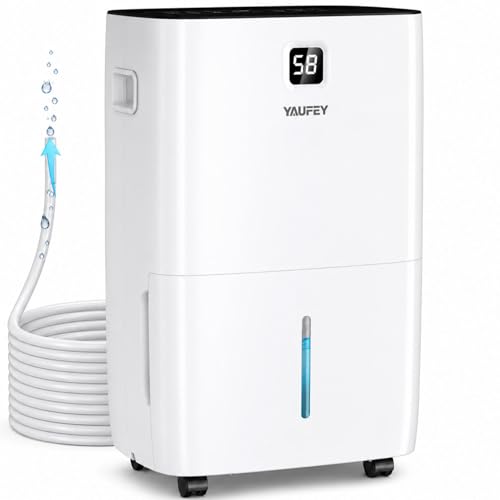
Yaufey 150 Pint Dehumidifier with Upward Drainage

Afloia 1000ml/h Mist Free Humidifier and Air Purifier

Waykar 34 Pint Energy Star Dehumidifier

Waykar 150 Pint Energy Star Dehumidifier with Pump

DREO 8L Smart Humidifier with Warm & Cool Mist

Yaufey 80 Pint Dehumidifier for Basement 5000 Sq. Ft.
Yaufey 120 Pint Dehumidifier for Basement 6000 Sq. Ft.
The Picks, Examined More Closely
The Waykar 145-pint is built for basements and storage rooms that get damp every summer and stay that way for months. A built-in pump pushes water upward through a drain hose, so you can route condensate to a sink, window, or floor drain without emptying a tank by hand. Owners dealing with finished basement spaces or workshop humidity tend to gravitate toward this class of unit because it removes a chore that smaller dehumidifiers turn into a daily task.
Coverage stretches to roughly 6,500 square feet, which is more than most homes need in a single room, so you may find it best suited to wide open-plan basements or split-level lower floors. Compared to the Yaufey 150-pint model further down the list, this Waykar trades a bit of raw capacity for that integrated pump, which matters more in finished spaces where you don’t want a bucket.
Strengths Worth Knowing
- Integrated pump eliminates daily tank emptying in most installations
- Adjustable target humidity lets you tune the room rather than running flat-out
- Large coverage handles open-plan basements without needing a second unit
- Drain hose included for flexible routing options
Things To Consider
- Body is bulky, so tight crawlspace corners are out of reach
- Pump models tend to consume more energy than passive-drain designs
Key Specs
Right Fit For
Homeowners with a large finished basement who want set-and-forget humidity control without hauling a tank to the sink every morning.
Look Elsewhere When
The Yaufey 80 Pint Dehumidifier for Basement 5000 Sq. Ft. is a better fit for smaller basement rooms where a heavy-duty pump is overkill.
Yaufey’s 150-pint unit pushes the daily moisture removal figure up while keeping the drain routing flexible. Upward drainage means the hose can run to a higher exit point, like a utility sink on a raised platform, which is genuinely useful in basements where the floor drain sits above the unit’s level. Coverage is the largest in this list at around 8,500 square feet, so it suits very wide lower levels.
Humidity adjusts in 5% increments, which gives finer control than a coarse 10% dial. Multiple operating modes are included, so the unit can stay useful through shoulder seasons when basement humidity drops. For shoppers comparing it head-to-head with the Waykar 145-pint, the trade-off is coverage versus pump convenience, and only your room layout decides which matters more.
A Strong Showing
- Highest coverage rating in the roundup at roughly 8,500 sq. ft.
- 5% humidity steps for precise comfort tuning
- Upward drain routing solves basement elevation headaches
Honest Caveats
- Larger footprint than mid-size picks, so plan floor space accordingly
- Drain hose installation takes a few minutes of setup work
Who Should Grab It
Owners of very large basements or split-level homes who need maximum coverage and prefer step-by-step humidity control over a simpler dial.
Swap It Out When
The Waykar 150 Pint Energy Star Dehumidifier with Pump is a better fit when you specifically want a built-in pump and self-drying cycle on a similar-capacity unit.
The Afloia flips the script by adding moisture rather than removing it, which is exactly what a heated winter bedroom or nursery needs. It uses evaporative humidification, a process where a wick absorbs water and a fan blows air through it, so there is no visible mist and no white dust settling on nightstands. For most sleepers, that’s a quieter, cleaner experience than ultrasonic units.
Output tops out around 1,000 ml per hour, which is meaningful in a small to mid-size bedroom, and the unit doubles as an air purifier, so you’re consolidating two appliances. The 4-way airflow design spreads humidity more evenly than a single-direction top vent, which matters in rooms where one side tends to feel drier than the other.
Reasons It Performs
- Mist-free output keeps furniture and electronics free of mineral dust
- Doubles as an air purifier, reducing the number of devices on the nightstand
- Even 4-way airflow helps avoid dry corners in mid-size rooms
Points To Note
- Filter changes are a recurring ownership cost on evaporative units
- Best suited to smaller rooms rather than open-plan living areas
Feature Snapshot
Built With In Mind
Sleepers, parents, and home-office workers in dry climates who want a quiet, dust-free humidifier that won’t leave residue on nearby wood furniture.
Consider Something Else When
The DREO 8L Smart Humidifier is a better fit for large living rooms where you need higher output and dual warm and cool mist options.
The 34-pint Waykar is the smallest unit in this roundup, and that’s the point. It targets spaces up to 2,000 square feet, which covers a typical bedroom, home office, or small basement rec room without overcooling the area or running up the bill. A rotary compressor keeps the body compact, so it tucks into corners where the larger Waykar and Yaufey models simply won’t fit.
You get auto or manual drainage, meaning the unit can run with a hose to a floor drain or fall back to a built-in tank when no drain is available. Energy Star certification means lower standby draw, which matters for a unit you’ll likely leave running for weeks. For shoppers torn between this and the Yaufey 80-pint, the deciding factor is square footage: this one is built for a single room, not a whole basement.
What It Does Well
- Compact body fits closets, small offices, and tight bedroom corners
- Energy Star rating keeps long-running electricity use in check
- Dual drainage options cover both drain-equipped and drain-free rooms
Soft Spots
- 0.62-gallon tank fills up fast in very damp rooms without a drain
- Not designed for whole-basement humidity control
Perfect Match For
Apartment dwellers and small-home owners who need a quiet, low-profile dehumidifier for a single bedroom, office, or small finished basement nook.
Skip It When
The Yaufey 150 Pint Dehumidifier with Upward Drainage is the right call for whole-basement coverage where a compact 34-pint unit would run constantly.
The 150-pint Waykar combines high daily moisture removal with a built-in pump, auto-defrost, and a self-drying cycle that helps prevent mold inside the unit itself. Coverage stretches to roughly 7,000 square feet, putting it in the same commercial-leaning tier as the 145-pint model but with extra convenience features. It’s a natural fit for warehouses, large basements, and homes with serious moisture problems.
The auto-defrost cycle matters in colder spaces where coils would otherwise ice up and stall the unit, and the self-drying feature runs a brief purge after shutdown so the interior dries out. Energy Star certification keeps operating costs reasonable given the capacity. For homes that have tried smaller dehumidifiers and watched them struggle, this is the next logical step up.
Advantages To Know
- Auto-defrost prevents coil freeze-up in unheated basements
- Self-drying cycle reduces mold risk inside the unit between runs
- Built-in pump plus Energy Star efficiency in one package
Small Caveats
- Larger and heavier than mid-size picks, so plan help during setup
- Pump-equipped units cost more than passive-drain equivalents
Technical Sheet
Made For
Homeowners and shop owners running large unheated basements or commercial spaces where smaller units stall out in winter cold.
Reach For A Different Pick When
The Waykar 34 Pint Energy Star Dehumidifier is a smarter fit for single-room use where a 150-pint commercial-grade unit would be massive overkill.
The DREO 8L is a humidifier for people who actually want control rather than just “more moisture in the air.” It produces both warm and cool mist, so you can run a warm cycle in winter for sinus comfort and switch to cool mist in summer without buying a second unit. Output reaches roughly 550 ml per hour, with reported coverage up to 600 square feet, and runtime extends to around 80 hours on the 8-liter tank.
Precise humidity targeting, app control, and voice compatibility make it feel more like a smart-home device than a basic appliance, and the 28 dB sleep rating is genuinely quiet for bedrooms. Plant owners in dry indoor climates tend to favor this class because the consistent humidity keeps tropicals happy. The Afloia earlier in this list is the cleaner option for nurseries, while DREO wins on output and smart features.
Bright Spots
- Dual warm and cool mist covers winter and summer use in one unit
- 80-hour runtime means fewer refills on a single fill
- Smart controls and precise humidity targeting reduce guesswork
Trade Offs
- Larger tank footprint than compact bedroom humidifiers
- Smart features add complexity shoppers may not need
Best Suited To
Tech-comfortable homeowners with large living rooms, plant collections, or nurseries who want app-driven humidity control year-round.
A Better Fit Elsewhere
The Afloia 1000ml/h Mist Free Humidifier suits smaller bedrooms where evaporative, dust-free output matters more than smart features.
The Yaufey 80-pint sits in the middle of the pack on capacity, which is actually the sweet spot for many homes. It covers up to 5,000 square feet, so it handles a typical basement rec room, a mid-size workshop, or a large living area without the bulk or running cost of a 145-pint commercial unit. The drain hose is included, so you can set up continuous drainage out of the box.
Energy Star certification keeps operating costs reasonable for a unit that may run for months at a time. Humidity adjusts across a 30% to 80% range, covering everything from winter mustiness to summer stickiness. For shoppers considering the Waykar 145-pint but worried about overpaying for capacity they won’t use, this is the right sizing compromise.
What Works In Its Favor
- Mid-size capacity suits typical basements without excess
- Energy Star efficiency keeps long-run electricity costs down
- Drain hose included for simple continuous setup
Worth Noting
- No built-in pump, so drainage relies on gravity and floor level
- Lacks smart-home integration found on premium picks
Whose Shelf It Belongs On
Budget-focused homeowners with a standard mid-size basement who want Energy Star efficiency without paying for a 150-pint commercial unit.
Where A Sibling Pick Shines
The Waykar 150 Pint Energy Star Dehumidifier with Pump is the upgrade path when you need auto-defrost and a built-in pump in colder basements.
The 120-pint Yaufey rounds out the lineup with capacity that bridges the mid-size and heavy-duty tiers. It removes up to 120 pints per day under humid conditions, scaling down to 90 pints in milder environments, which is useful context: actual output depends heavily on room temperature and humidity baseline. Coverage reaches around 6,000 square feet, fitting most whole-basement layouts without overflow.
Energy Star certification, a 30% to 80% humidity range, and a drain hose for continuous drainage put this in the same family as the 80-pint sibling but with more headroom for very damp basements. Versus the Waykar 145-pint with pump, you trade the integrated pump for a lower capacity, so this one is for basements with a usable floor drain rather than those needing upward routing.
Where It Helps
- 120-pint capacity handles very damp basements without overworking
- Energy Star rated for sensible long-run operating costs
- Drain hose included for set-and-forget continuous drainage
Practical Considerations
- Output drops in cooler or less humid conditions, so spec the room carefully
- No pump, so the drain exit must sit at or below unit level
Who Will Love This
Homeowners with a moderately large basement and a nearby floor drain who want a balanced unit that doesn’t lean too small or too commercial.
Not Your Match When
The Yaufey 80 Pint Dehumidifier for Basement 5000 Sq. Ft. is the better fit for smaller basements where 120-pint capacity is more than necessary.
Factors To Consider Before Choosing Humidifier And Dehumidifier Comboes
A combo setup only works when each unit matches the room it lives in. Start by mapping your home: which rooms run damp, which run dry, and which fall somewhere in between. A dehumidifier in a dry room wastes energy and overcools the space, while a humidifier in a damp room feeds mold growth. Match the tool to the symptom, room by room.
Coverage area is the most misunderstood spec. Manufacturers rate coverage under ideal conditions, typically 95°F and 90% relative humidity, and real-world output drops in cooler or less humid spaces. For basements, you generally want a unit rated for more square footage than your actual room, because the unit cycles less and lasts longer. For humidifiers, output in milliliters per hour and tank size both matter, since a small tank in a large room means constant refills.
Drainage method decides how much babysitting the unit needs. Tank-only models demand daily emptying in damp rooms, while drain hose or pump-equipped models run unattended. Energy Star certification is worth seeking out for any unit that runs continuously, and filter or wick replacement costs add up over years, so factor them in for humidifiers. Cold-room features like auto-defrost matter if your basement drops below 65°F in winter.
Key Considerations Across These Picks
Mistakes Worth Dodging
Oversizing a dehumidifier for a small bedroom leads to short cycling, where the unit kicks on, hits target humidity fast, and shuts down, wearing the compressor out faster. Undersizing for a basement means the unit runs nonstop without ever hitting the target, driving up your electric bill. Always pick the unit sized to your actual room, then add a small buffer.
Another common slip is ignoring the drainage story. A unit with no pump and no floor drain nearby turns into a daily chore, and a pump-equipped model in a room with a perfectly good gravity drain path is money wasted. Walk the room, find the drain exit, and choose accordingly.
What Separates Premium From Basic
Higher-tier dehumidifiers earn their cost through build quality, energy efficiency, and convenience features. Energy Star certification, rotary compressors, and auto-defrost cycles all extend the unit’s working life and lower the electric bill over months of continuous use. Pump-equipped models cost more up front but eliminate the daily tank-empty routine.
In humidifiers, the premium tier brings dual mist modes, precise humidity targeting, and smart-home integration. The DREO 8L in this list is a clear example: it costs more than basic evaporative units but replaces a humidifier and a smart controller in one box. Whether that’s worth it depends on how much you value automation and quiet operation over a simple on-and-off dial.
Frequently Asked Questions
Can a single unit both humidify and dehumidify the same room? Most consumer units handle one direction at a time. Whole-home systems can do both, but in portable form factors you’re typically choosing a dehumidifier for damp rooms and a humidifier for dry ones, then placing each where it belongs.
How often does the tank need emptying on a dehumidifier without a drain hose? A 0.6-gallon tank in a moderately damp room typically fills within 8 to 12 hours. Heavily damp basements can fill smaller tanks in under 6 hours, which is why drain hose or pump setups are so popular in those spaces.
Do evaporative humidifiers really avoid white dust? Yes, in most cases. The wick traps minerals before the water reaches the air, so the output is cleaner than ultrasonic mist, though the wick itself needs replacement every few months depending on water hardness and usage.
Is Energy Star certification worth prioritizing for a basement unit? For a dehumidifier that runs continuously through humid months, Energy Star typically reduces electricity use meaningfully over a season. The savings compound year over year, which justifies choosing a certified model when one fits your capacity needs.
Where should a humidifier be placed in a bedroom for best results? Place it a few feet off the floor on a stable surface, away from walls and direct sunlight, and ideally not aimed directly at wood furniture. Elevating the mist output helps it disperse before settling, and keeping it away from electronics prevents any mineral residue buildup on sensitive gear.
Bottom Line
Humidity is a room-by-room problem, and the right answer is usually a small, focused tool in each space rather than one oversized unit trying to do everything. Pick the dehumidifier that matches your basement square footage and drainage situation, then add a humidifier sized to your driest living space. That pairing covers most homes comfortably, and any of the eight picks above slots into one of those two roles.