


Humidity quietly shapes how a home feels. Run a humidifier in a dry winter bedroom and you notice the difference overnight, then watch it swing wildly the moment you open a window. A reliable hygrometer turns that guesswork into something you can read at a glance, and in 2026 the category has settled into two clear paths: simple tabletop gauges that do one job well, and app-connected sensors that log trends and ping your phone when a wine cellar drifts out of range. This roundup covers both, from a single Bluetooth LCD for a small apartment to a six-sensor WiFi kit for a multi-room setup, so you can match the tool to the space rather than the other way around.
The Leading Options At A Glance

GoveeLife 2.0 WiFi Hygrometer Thermometer with Gateway, Mini Sensor 3-Pack

GoveeLife Bluetooth Thermometer Hygrometer H5220, Large LCD Display 1-Pack

GoveeLife 2.0 WiFi Hygrometer Thermometer with Gateway, Mini Sensor 6-Pack
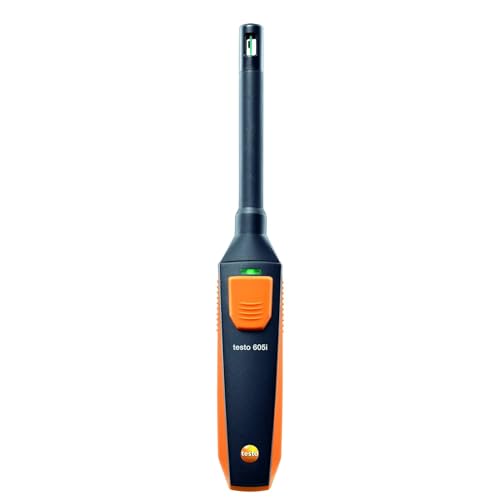
Testo 605i Thermohygrometer with Bendable Probe
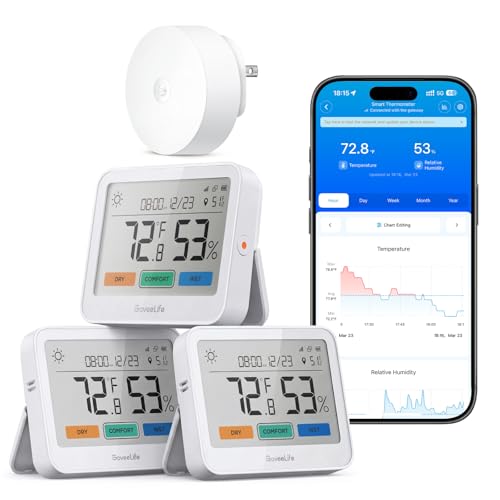
GoveeLife WiFi Thermometer Hygrometer 5-in-1, Large LCD 3-Pack with Gateway

Geevon 6 Pack Mini Digital Hygrometer Gauge Indoor Thermometer
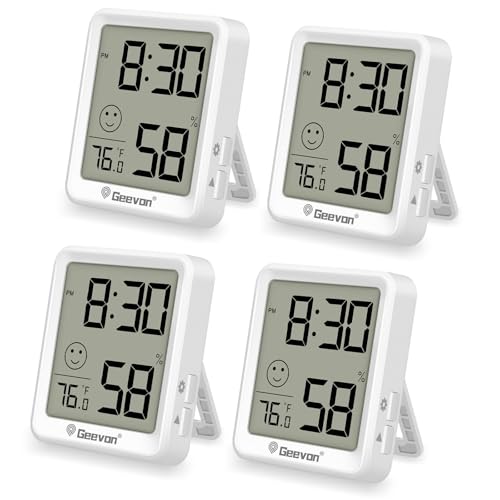
Geevon 4Pack Mini Indoor Thermometer Hygrometer with Comfort Indicator

SwitchBot Thermometer Hygrometer with App Control, 2 Pack
A Deeper Look At The Lineup
Three little mini sensors paired with a single WiFi gateway give this GoveeLife kit an appealing balance of coverage and simplicity. The Swiss-made sensor inside each unit is rated to a tight ±0.3°C, fine enough to catch the slow drift in a wine cellar before corks start to complain. Where it pulls ahead of a basic LCD gauge is the app side: you get 2-year data retention and push alerts the moment a reading wanders out of the range you set.
For anyone with a basement, bedroom, and nursery to watch, three remote sensors feeding one dashboard removes the chore of walking room to room. The catch is the 2.4 GHz Wi-Fi requirement, which means a dual-band router needs the older band enabled. Battery life is the other quiet win, with the sensors rated to run up to two years on a fresh set.
The Upside
- Swiss sensor for tight ±0.3°C accuracy, more precise than a typical commodity gauge
- 2-year data retention lets you spot seasonal drift without re-syncing
- One gateway handles up to 10 sensors, plenty of headroom for whole-house mapping
- App alerts flag out-of-range humidity before mold or cracked wood develops
- Compact sensor bodies tuck onto a shelf without crowding the room
Points To Keep In Mind
- Requires a 2.4 GHz Wi-Fi network, so 5 GHz-only setups need adjusting
- You may find the gateway’s placement matters for whole-home reach through thick walls
Who It Suits Best
Multi-room households that want one app view of every space and don’t mind a quick initial Wi-Fi setup.
Where Another Pick Suits Better
The Testo 605i Thermohygrometer with Bendable Probe fits HVAC pros who need an in-duct reading rather than a multi-room dashboard.
For a single room where you just want a glanceable readout, the H5220 keeps things uncomplicated. The large LCD surfaces temperature, humidity, a comfort indicator, and even the time of day, so one device replaces a clock and a gauge on the nightstand. It pairs to the Govee app over Bluetooth (a short-range wireless link that lives on your phone) without a gateway, which keeps setup to a few taps.
The 196-foot open-air range is generous for a Bluetooth device and covers most apartments without trouble. Add the Govee H5044 gateway later and the same unit stretches out to 1,640 feet, picking up weather forecast data along the way. The trade-off shows up when you want to monitor three or four rooms: Bluetooth works best in view of the phone, so this feels right as a one-room solution.
The Helpful Details
- Large LCD combines temp, humidity, comfort, and clock in one panel
- No-hub Bluetooth pairing speeds up first-time setup
- Gateway compatibility leaves room to grow into a wider network later
- Comfort indicator simplifies the reading for non-technical users
Worth Noting
- Bluetooth range can drop through dense walls, limiting multi-room reach
- Single-pack means additional rooms require more units
Made For
Anyone who wants a single, easy-to-read display in a bedroom or living room without committing to a full sensor network.
Look Elsewhere When
The GoveeLife 2.0 WiFi Hygrometer Thermometer with Gateway, Mini Sensor 3-Pack suits shoppers who want coverage across several rooms from one dashboard.
Same engine as the 3-pack, but with double the sensors, this kit suits a house where humidity behaves differently from floor to floor. Six rooms of data on one app makes it easier to spot the bathroom that runs 70% after a shower while the rest of the house sits at 40%. The Swiss sensor and 2-year battery life carry over unchanged, which keeps the maintenance story simple.
You may find the real value here is the labelling. Six identical mini sensors can quickly become a guessing game of “which one is in the basement?”, so naming each unit in the app from day one saves a lot of frustration. Compared to the 3-pack earlier, the price per sensor drops meaningfully, which makes sense for anyone planning to monitor the whole home rather than a hand-picked few rooms.
Positive Points
- Six sensors in one box delivers true whole-house coverage out of the gate
- Lower per-sensor cost than buying smaller packs piecemeal
- Swiss sensor accuracy of ±0.3°C holds up across all six units
- 2-year data retention tracks seasonal swings without re-pairing
Trade Offs
- Six sensors in the app need clear naming to stay organized over time
- Still requires 2.4 GHz Wi-Fi for the gateway
Feature Snapshot
Best Suited To
Homeowners mapping humidity across a full multi-room layout, including trickier zones like basements and attics.
Skip It When
The Geevon 6 Pack Mini Digital Hygrometer Gauge Indoor Thermometer fits shoppers who want simple LCD-only units with no app setup at all.
Testo’s 605i is built for a different job than the GoveeLife kits earlier. The 90-degree bendable probe head slides into ductwork, supply registers, and crawl spaces, places a tabletop sensor cannot reach. Live data feeds straight to the Testo app on iOS or Android, and the screen on your phone becomes the readout.
For HVAC technicians and serious DIYers, the appeal is the in-duct measurement. A standard room hygrometer only tells you the air that has already reached the living space, while the 605i shows what the system is actually delivering. The shape of the tool means it lives in a toolbox rather than on a shelf, and pricing reflects that specialist focus.
Why It Works Well
- 90° bendable probe reaches into ducts, registers, and tight cavities
- App integration enables live data and automatic calculations
- Bluetooth pairing works with iOS and Android devices
- Compact probe head fits where handheld room sensors cannot
Honest Caveats
- Single-probe design suits spot checks more than continuous room monitoring
- Phone-dependent display means no readings without the paired device nearby
Right Fit For
HVAC technicians and inspectors who need to log conditions inside ductwork rather than ambient living spaces.
Reach For A Different Pick When
The GoveeLife WiFi Thermometer Hygrometer 5-in-1, Large LCD 3-Pack with Gateway suits homeowners who want multi-room ambient readings on a large screen.
The “5-in-1” label here isn’t marketing fluff. Each unit pulls in real-time trends, a color-coded comfort face, room temperature, humidity, and a local weather forecast fed through the gateway, so one device replaces a clock-thermometer, a separate hygrometer, and a glance at the phone. The 1,640-foot open-air range (when used with the gateway) is one of the widest you’ll find in this category and punches through thick walls better than the average Bluetooth setup.
Three sensors and a gateway in one box makes the most sense in a larger home where you want wall-clock visibility in each room. The large LCD reads from across the room, which is the practical difference over the smaller 2.0 sensors earlier. Pricing tends to sit above the simpler Govee kits, so the value story lives in the bundled functionality rather than the sensor count alone.
Points In Its Favor
- Five functions per sensor reduce the number of devices on a shelf
- 1,640-foot gateway range handles multi-floor homes
- Color-coded comfort face adds quick visual feedback
- Weather forecast feed means no separate barometer needed
Less Ideal Details
- Bundled gateway and LCD size push the price above simpler Govee models
- Weather forecast features require the gateway to stay online
Who Will Love This
Data-driven homeowners who want rich per-room data and a glanceable wall-friendly screen rather than a tucked-away mini sensor.
A Better Fit Elsewhere
The GoveeLife Bluetooth Thermometer Hygrometer H5220, Large LCD Display 1-Pack suits anyone who only needs one room and wants to skip the gateway entirely.
No app, no gateway, no pairing: the Geevon mini gauges are pure plug-and-play, which is exactly the point. Each unit runs on its own battery and shows temperature, humidity, and a comfort-level face on a single LCD, so a glance tells you whether the room is dry, comfortable, or damp. A single button switches between Celsius and Fahrenheit, which makes the units friendly for mixed households or seniors who prefer one scale.
Six units at a budget price make this the practical choice for every-room coverage in a house, a greenhouse, or a classroom. The honest read is that accuracy here (±1.8°F, ±5-10% RH) is wider than a Swiss sensor, so the readings are useful for spotting trends rather than lab-grade logging. The 15-second refresh rate keeps the display feeling current without draining the battery.
Strong Points
- Six independent units cover a full home at a low per-unit cost
- Comfort face gives at-a-glance feedback without app context
- Single-button °C/°F toggle suits mixed-preference households
- No wiring or app setup, just battery and place
Worth Bearing In Mind
- Humidity accuracy of ±5-10% RH is wider than app-connected sensors
- No data logging, so readings only exist in the moment
Feature Snapshot
Who Should Grab It
Budget-focused households and greenhouse owners who want a basic comfort reading in every room without setting up a network.
Swap It Out When
The GoveeLife 2.0 WiFi Hygrometer Thermometer with Gateway, Mini Sensor 6-Pack suits shoppers who want app logging and alerts on top of multi-room coverage.
The 4-pack version of the Geevon line trims the same idea down to a more modest room count. The 1.9-inch LCD serves up temperature, humidity, and a built-in time display with large digits, so the device doubles as a bedroom or kitchen clock. A comfort icon adds the same dry/comfort/wet shortcut you find on the 6-pack, making the unit approachable at any age.
Four units fit a small apartment or a focused set of rooms (kitchen, bedroom, bathroom, office) without overbuying. The lack of Wi-Fi or Bluetooth means zero accounts to manage, which some shoppers genuinely prefer. The trade-off is the same as the 6-pack: no historical data, so the value lies in present-moment readings rather than long-term trend tracking.
Advantages To Know
- 1.9-inch LCD with large digits reads easily across a small room
- Time display replaces a separate bedside or desk clock
- Comfort icon gives a non-technical reading at a glance
- Zero setup, no apps, no account creation
Practical Considerations
- No data logging, so trends require manual note-taking
- Four units may under-cover larger homes
Perfect Match For
Small apartments and shortlists of key rooms where simplicity matters more than data history.
Not Your Match When
The SwitchBot Thermometer Hygrometer with App Control, 2 Pack suits shoppers who want Bluetooth history and app alerts without Wi-Fi.
SwitchBot leans into the smart home crowd with a Bluetooth sensor that logs to the app and pushes notification alerts when conditions slip. The Swiss-made sensor inside is rated to ±0.2°C and ±2% RH, the tightest spec in this roundup, so readings lean more toward lab-grade territory than the casual LCD gauges. A large LCD keeps the at-a-glance experience intact for anyone in the room.
The honest read is that two units fit a focused two-room setup, and the SwitchBot ecosystem ties neatly into other SwitchBot gear for households already invested in that brand. Without a SwitchBot hub, the data lives in the app over Bluetooth, so range behaves like a phone peripheral. If you want a wider network, the Govee WiFi kits earlier cover that ground at the cost of router dependency.
Standout Benefits
- Swiss sensor with ±0.2°C and ±2% RH accuracy for finer readings
- Data storage export lets you keep long-term logs outside the app
- Notification alerts fire on out-of-range conditions
- Large LCD doubles as a room-side readout
Things To Weigh
- Bluetooth-only data limits the range from your phone
- Two units cover a smaller footprint than the 3- and 6-packs in this list
Feature Snapshot
Whose Shelf It Belongs On
Smart home households already running SwitchBot gear who want finer accuracy and app alerts without a Wi-Fi gateway.
Consider Something Else When
The Testo 605i Thermohygrometer with Bendable Probe suits professionals who need in-duct measurements rather than ambient room tracking.
What To Weigh Before Choosing A Home Hygrometer
How Many Rooms Need Watching
A single bedroom or living room calls for a basic LCD gauge or one Bluetooth sensor, the kind of thing you place once and forget. A whole house, or any setup that includes a basement, attic, or wine cellar, really benefits from a multi-sensor kit with a gateway, so you can compare readings side by side instead of walking from room to room with a handheld device. Pick a sensor count that matches the number of spaces you actually care about, and resist overbuying for rooms that never see a humidifier or dehumidifier.
Accuracy Versus Convenience
Tighter accuracy specs (around ±0.2°C and ±2% RH) matter for wine storage, instrument rooms, or any space where a few percentage points of humidity move the needle. A wider tolerance (around ±5-10% RH) is fine for everyday comfort checks and most bedrooms. App-connected sensors log history and alert you to drift, while passive LCD gauges do their job without any setup, so the right call depends on whether you want data over time or just a snapshot.
Connectivity Choices
Bluetooth sensors pair to a phone directly, which keeps things simple but limits range to roughly line-of-sight to your device. Wi-Fi gateways route data through your router, which extends range across an entire home and unlocks remote alerts, but the sensor depends on a 2.4 GHz network and a powered gateway. Pick the connectivity type that matches your home network and how far you want to read from the sensor.
Display And Comfort Cues
A large LCD reads easily from across a room, while a compact mini sensor needs you to walk up to it. A color-coded comfort face simplifies the reading for anyone who doesn’t want to interpret numbers, which makes a difference in shared households or for kids learning what “comfortable humidity” means. Time and clock displays on the same panel save shelf space if you’re already tight on room.
Common Considerations Across These Picks
Mistakes Worth Dodging
Buying a Wi-Fi kit without checking your router band is a common trap, since many dual-band routers need the 2.4 GHz band manually enabled for sensors to connect. Another slip is over-trusting tight accuracy claims in a room with poor airflow, where a sensor tucked behind a curtain reads a microclimate rather than the room. Place each unit in open air, away from direct sunlight, heaters, and windows, so the number reflects the space you actually live in.
When Paying More Pays Off
The premium tier in this category usually buys you a Swiss-made sensor, multi-year data retention, and app alerts that fire before a problem develops. For a wine cellar, baby nursery, or any room with expensive contents sensitive to humidity, that extra accuracy and remote monitoring justify the cost. For a guest room that just needs a “is it dry in here” check, a budget LCD gauge does the same job without the setup overhead.
Frequently Asked Questions
What humidity level should a home aim for?
Most homes feel comfortable between 40% and 60% relative humidity, with the lower end easier on wooden furniture and the upper end kinder to sinuses in dry winters. Bedrooms and nurseries can lean a touch higher, while basements and bathrooms benefit from staying below 55% to discourage mold growth.
Do Wi-Fi hygrometers drain a lot of power?
Most Wi-Fi sensor units run on small batteries and are rated for roughly two years of typical use, since they only transmit when readings change or at long intervals. The gateway, which stays plugged in, draws more continuously, but the sensors themselves are designed for low-drain operation.
How often should a hygrometer be recalibrated?
A consumer-grade hygrometer does not need frequent recalibration, though owners commonly give it a sanity check once a year using a salt test or by placing it next to a known-accurate reference. If a reading suddenly drifts far from a second unit in the same room, that’s the signal to swap batteries or replace the sensor.
Can one sensor cover a whole house?
One sensor reports the air immediately around it, so a single unit cannot represent a multi-room home accurately. Kitchens, bathrooms, and basements routinely run 10-20 percentage points apart from living areas, which is why multi-sensor kits exist for whole-house mapping.
Is Bluetooth enough without a hub?
Bluetooth works well for one or two rooms where the paired phone is usually nearby, and it keeps setup to a minimum. For whole-home coverage or remote alerts when you’re away, a Wi-Fi gateway or a Bluetooth-to-hub bridge extends the useful range considerably.
The Takeaway
Pick the sensor count first, the accuracy second, and the connectivity last, in that order, and the right hygrometer usually surfaces on its own. A wine cellar, a nursery, and a guest room all want different things, and the eight picks above cover each of those scenarios without forcing you into one rigid setup. Trust the room you actually live in, and the readings will tell you what to do next.