


Humidity shows up in the worst places: a musty basement after summer storms, foggy bedroom windows in January, a bathroom that never quite dries. The right dehumidifier quietly takes that moisture off your hands and lets you forget about it. After looking through the current lineup, these seven home dehumidifiers stand out for different room sizes, noise tolerances, and drainage preferences, so you can match one to your real situation instead of guessing.
Your Options, Compared

PLUSCENT 1,500 Sq. Ft 21 Pint Dehumidifier for Basement and Home with Drain Hose

PSOS 98 OZ Dehumidifier for Home 1000 sq.ft with Ambient Light

AEOCKY 50 Pint/Day 3500 Sq.Ft Ultra-Quiet 40dB Dehumidifier

AEOCKY 4500 Sq.Ft Energy Star Most Efficient 2025 Dehumidifier with Pump

Dravonic 2,000 Sq.Ft Dehumidifier for Basement & Large Room
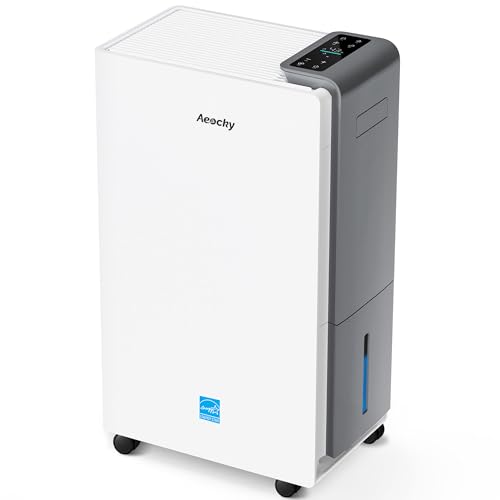
AEOCKY 5500 Sq.Ft Energy Star Most Efficient 2025 Dehumidifier
Dravonic 1500 Sq.Ft Compressor Dehumidifier, 21 Pints, 40dB
The Details Behind The Selections
The PLUSCENT sits in a sweet spot that most shoppers actually need: a 1,500-square-foot capacity and a 21-pint daily extraction (a “pint” here is a U.S. pint of liquid water, roughly 473 mL) without the bulk of a 4,000+ square-foot workhorse. It pulls moisture from basements, bathrooms, bedrooms, and even tight RV layouts, which makes it the kind of one-machine solution a lot of households end up leaning on.
Where it gets interesting is the included drain hose, since most rivals at this size ship with a tank-only setup. Run the hose to a floor drain or sink and you can leave the unit running for days without a single manual empty. The 160-watt draw keeps it modest on the power bill too, which matters for anyone planning to run a dehumidifier around the clock in a damp basement.
The Case For It
- 21-pint daily removal covers most 1,500 sq ft basements without overworking
- Included drain hose lets you skip the manual tank-emptying routine
- Low 160-watt power draw keeps long-term electricity use reasonable
- Works in mixed-use rooms, not just finished basements
Worth Noting
- Owners commonly report the included hose fitting can run loose on some floor drains, so a small adapter may help
- Tank still needs emptying when you can’t route a hose, which is normal for the category
Key Attributes
Whose Basement It Belongs On
Households with a moderately damp, mid-size basement who want a no-fuss plug-and-drain setup.
Reach For A Different Pick When
The Dravonic 2,000 Sq.Ft Dehumidifier makes more sense if you need a real-time humidity readout and a slightly larger coverage area.
Skip past the name and the PSOS reads as a classic small-room thermoelectric dehumidifier (a design that uses a Peltier element rather than a refrigerant compressor, making it lighter and quieter but slower in big spaces). It’s the right scale for a bedroom, nursery, or small office rather than a basement, and at 1,000 sq ft of stated coverage, it works best when the room isn’t doing a lot of heavy lifting.
Compare that to the PLUSCENT above, which is a compressor-based unit built for real basement work. The PSOS trades raw extraction for a 98 oz tank, a humidity display, auto shut-off, and a seven-color ambient light that doubles as a soft nightlight. Quieter operation and lighter weight are the real selling points here, especially if you just want a closet-sized machine that hums along while you sleep.
Bright Spots
- Dual semiconductor condensation keeps noise low enough for bedrooms
- Visible humidity display takes the guesswork out of settings
- Auto shut-off protects the unit when the 98 oz tank fills
- Ambient light is a nice touch in a nursery or guest room
Honest Caveats
- Thermoelectric design means slower extraction in a room over 500 sq ft
- No drain hookup, so you’ll be emptying the tank on humid days
Quick Facts
Made For
Anyone who needs quiet moisture control in a bedroom, nursery, or small home office without the bulk of a basement-grade unit.
Look Elsewhere When
The AEOCKY 50 Pint/Day, 3500Sq.Ft Ultra-Quiet 40dB Dehumidifier is a better match for open-plan living areas where a thermoelectric unit would struggle to keep up.
Compressor dehumidifiers tend to sound like small refrigerators, so a 40 dB noise floor at full tilt is genuinely noticeable. The AEOCKY 50-pint sits in the middle of the brand’s lineup: bigger than the bedroom-scale PSOS, but a step down from the 80-pint Energy Star flagships covered later. It hits 3,500 sq ft, which lines up with most large finished basements, oversized living areas, and combined main-floor spaces.
Where it pulls ahead of the PLUSCENT is sheer output. If your basement smells like a cave in July or you’re storing anything moisture-sensitive down there, 50 pints per day makes a real difference compared to 21. The included drain hose means you can keep it running unattended, and the 40 dB rating puts it closer to library-quiet than to kitchen-appliance-loud.
What Works In Its Favor
- 50-pint daily capacity tackles serious basement dampness
- 40 dB operation is quieter than most compressor units this size
- 3,500 sq ft rating covers large finished basements and open living areas
- Drain hose included for continuous operation
Points To Keep In Mind
- Heavier than a 21-pint unit, so plan its spot before filling it
- At 3,500 sq ft of stated coverage, a tight bedroom would be overkill
Core Details
Who It Suits Best
Shoppers who need genuine basement-grade extraction without the louder compressor noise that usually comes with it.
Not Your Match When
The PSOS 98 OZ Dehumidifier is the more natural choice for a small bedroom, where a 50-pint compressor would be wildly oversized.
The “with pump” detail is the headline. A built-in condensate pump (a small internal pump that pushes water upward through a hose) lets this AEOCKY route drainage up and out, which solves a problem standard gravity-drain units can’t: basement installs where the nearest floor drain sits uphill. That alone is enough to put it on the shortlist for finished basement renovations or split-level homes.
Capacity is 80 pints per day over 4,500 sq ft, with an intelligent humidistat that reads the room and cycles the compressor on and off to hold your target humidity. For shoppers comparing it to the AEOCKY 50-pint above, the trade-off is mostly size and cost. You get more headroom for stubborn dampness and longer unattended runs, but the unit is bigger and heavier.
The Good Stuff
- Built-in pump removes the gravity-drain limitation of most units
- 80-pint daily capacity covers severe basement dampness
- Intelligent humidistat holds your set humidity automatically
- Energy Star Most Efficient 2025 rating trims running costs
Trade Offs
- Larger footprint than the 50-pint sibling, so plan placement carefully
- Pump adds a small mechanical part that owners commonly report needs periodic cleaning
Feature Snapshot
Right Fit For
Owners finishing a basement or managing an uphill-drainage layout who want set-and-forget operation.
Skip It When
The Dravonic 1500 Sq.Ft Compressor Dehumidifier is a smarter pick for tighter spaces where 80-pint capacity is simply unnecessary.
The Dravonic 2,000 sq ft is the kind of unit you set once and mostly forget. Its real-time humidity display shows the current percentage on the front panel, no phone app required, and the 30 to 80 percent target range covers everything from a too-dry winter living room to a stubborn summer basement. Once the room hits the target, the compressor cycles off on its own.
That cycling behavior matters more than it sounds, because a dehumidifier that runs flat-out wastes electricity and overheats the room. The 2,000 sq ft rating puts it a step up from the PLUSCENT but well below the AEOCKY 80-pint flagships, which makes it the middle ground for finished basements that aren’t extreme but still need daily moisture removal. Drain hose is included, so a floor-drain install is straightforward.
Where It Excels
- Front-panel humidity readout is easier to read than buried LED displays
- 30-80% target range handles both winter dryness and summer dampness
- Auto-cycle behavior reduces wasted runtime and electricity
- Drain hose included for unattended operation
Small Caveats
- 2,000 sq ft is the published ceiling, so it can struggle in larger basements during peak humidity
- Owners commonly report the front display can wash out in bright basement lighting
Who Should Grab It
Anyone who wants a clear humidity readout without relying on a phone app, and whose basement sits in the moderate, not severe, dampness range.
Swap It Out When
The AEOCKY 50 Pint/Day, 3500Sq.Ft Ultra-Quiet 40dB Dehumidifier is the better answer for larger basements that need more extraction than 2,000 sq ft can cover.
For shoppers with serious square footage, the 5,500 sq ft AEOCKY sits at the top of the brand’s regular lineup. It pulls 80 pints per day and carries the Energy Star Most Efficient 2025 designation, which is a stricter tier than standard Energy Star and is held by a small slice of certified models. For a dehumidifier that may run 12+ hours a day, the efficiency angle matters for the power bill.
Compare that to the AEOCKY 50-pint covered earlier, and the real difference is scale rather than features. Both rely on the same compressor-based design, but this one is built for whole-basement or sprawling open-plan installs where a smaller unit would run constantly without catching up. The trade-off is footprint and weight, so this is a “place it once” machine more than a portable one.
Real Benefits
- 5,500 sq ft coverage handles very large basements and open floorplans
- 80-pint daily extraction tackles persistent, high-humidity spaces
- Energy Star Most Efficient 2025 keeps long-run electricity use in check
- Drain hose support for continuous unattended operation
Things To Weigh Up
- Large physical footprint rules out small-room use
- Higher up-front cost than the 50-pint sibling, mostly tied to capacity
Built With In Mind
Households with large basements, multi-room floor plans, or persistent humidity problems who plan to run a dehumidifier for months at a time.
A Better Fit Elsewhere
The Dravonic 2,000 Sq.Ft Dehumidifier is a better match for moderately damp basements where 5,500 sq ft of capacity is just overkill.
The Dravonic 1500 sq ft is the budget-friendly compressor option in this list, and that’s the angle that makes it interesting. Most low-cost dehumidifiers in this size class use thermoelectric Peltier designs, which are quiet but slow. A real refrigerant compressor (the same kind of heat-exchange cycle your fridge uses) extracts moisture faster, especially when the room is cool, and this Dravonic adds auto-defrost to keep the coil from icing up in a chilly basement.
Other thoughtful touches include a 40 dB quiet mode, dual drainage with hose support, and a child lock for households with curious hands. For a tight basement bedroom or a finished room under 1,500 sq ft, it does a lot of what the PLUSCENT does at a friendlier price point, though owners commonly report that build quality feels a step below premium options.
The Practical Payoff
- Real compressor extraction handles basement-level moisture better than thermoelectric units
- Auto-defrost keeps the coil working in cool basement temperatures
- 40 dB quiet mode is friendlier to living spaces than typical compressor noise
- Dual drainage with hose support for set-and-forget operation
- Child lock adds safety in family homes
Practical Considerations
- Build quality and finish feel a step below premium compressor units, based on common owner feedback
- Coil cleaning every few months is widely recommended to maintain extraction performance
Best Suited To
Shoppers who want real compressor performance at a tighter budget, in a basement or bedroom under 1,500 sq ft.
Where Another Pick Suits Better
The AEOCKY 4500 Sq.Ft Energy Star Most Efficient 2025 Dehumidifier with Pump is worth the jump if you need uphill drainage and a much larger coverage area.
Picking a Dehumidifier That Actually Solves Your Moisture Problem
Coverage area is the first filter. Measure or estimate the room you want to treat, then add a small buffer: a dehumidifier rated for 1,500 sq ft in a basement that size will run constantly, while one rated for 2,500 sq ft in the same space will cycle off and last longer. A “pint” rating refers to how much liquid water the unit pulls from the air in 24 hours, so a 21-pint model handles a moderately damp basement, while 50-pint and 80-pint units are the right scale for severe humidity or large open spaces.
Compressor vs. thermoelectric is the next big call. Compressor units (refrigerant-based, like an air conditioner) extract more moisture and work in cooler rooms, which makes them the right pick for basements. Thermoelectric (Peltier) units are quieter and lighter, but they slow down significantly below about 60°F, so they’re better suited to bedrooms and small living areas.
Drainage changes the day-to-day experience. A built-in tank works, but emptying it every day in a humid basement gets old fast. A drain hose lets you route water to a floor drain for true set-and-forget operation, and a built-in pump (as on the AEOCKY 4500) lets you push water uphill when no floor drain is nearby. Noise matters too, especially for bedrooms and living areas: 40 dB is library-quiet, while most compressor units run louder without a dedicated quiet mode.
Finally, look at the control layout. A front-panel humidity readout is genuinely useful day to day, and an auto humidistat (a sensor that turns the compressor on and off to hold your target humidity) saves both electricity and wear. For energy-sensitive shoppers, the Energy Star Most Efficient 2025 designation held by the AEOCKY 4500 and 5500 models is a stricter tier worth considering for machines that will run for months at a time.
Key Considerations Across These Picks
Mistakes Worth Dodging
A common slip is sizing a dehumidifier to the square footage of the whole house instead of the specific damp room. A 5,500 sq ft unit in a 1,000 sq ft basement will short-cycle, waste electricity, and over-dry the air. Another frequent miss is overlooking drainage: a tank-only unit in a basement you’ll never visit daily means constant manual emptying. Routing a drain hose at install time is far less hassle than hauling a full tank up the stairs every morning.
When Paying More Pays Off
The premium tier in this list, including the AEOCKY 4500 with pump and the AEOCKY 5500, earns its higher price through stronger extraction, larger coverage, and stricter Energy Star Most Efficient 2025 ratings. For a basement that stays damp for half the year, the higher up-front cost is offset by lower electricity use and the ability to leave the unit running unattended. The extra spend makes less sense for a small bedroom where a quiet 21-pint compressor will do the job without the bulk.
Frequently Asked Questions
How many square feet can a home dehumidifier cover? Most home dehumidifiers in this list cover between 1,000 and 5,500 square feet, and the right size depends on the specific room rather than the whole house. Measure the room you want to treat, then choose a unit rated slightly above that number to avoid constant runtime.
Do dehumidifiers work in cold basements? Compressor-based dehumidifiers like the Dravonic 1500 with auto-defrost can keep working in cool basements, while thermoelectric units slow down significantly below 60°F. Auto-defrost is the feature to look for if your basement runs cool in winter.
How often do you need to empty the water tank? With a built-in tank only, expect to empty every 8 to 24 hours depending on humidity. A drain hose routed to a floor drain removes the need to empty manually, which is the most convenient option for basement installs.
Are dehumidifiers expensive to run? Modern Energy Star dehumidifiers draw between 150 and 500 watts, and running one 12 hours a day typically adds only a modest amount to a monthly electricity bill. Energy Star Most Efficient 2025 models trim that further, which matters most for units running continuously.
Where is the best place to put a dehumidifier? The middle of the room with some clearance on all sides gives the best airflow, and for basements, placing it away from exterior walls helps it sense the average room humidity. Keep it a few inches off the floor on a level surface, and route a drain hose if you plan to leave it running.
Bottom Line
Match the unit to the room, not the other way around. Small bedroom humidity calls for a quiet thermoelectric or compact compressor, mid-size basements want a 21 to 50-pint workhorse with a drain hose, and large damp spaces justify the heavier 80-pint Energy Star flagships. The right pick is the one that runs efficiently, drains where you need it, and disappears into the background of your home.