


A damp basement can quietly undermine everything stored below, from seasonal furniture to drywall and wood framing. The right pump-equipped dehumidifier pulls moisture from the air and routes the condensate (the water that condenses out of humid air) out through a drain line, so you are not hauling a tank to a slop sink every few hours. This roundup focuses on built-in pump models built for real basement duty, comparing capacity, coverage area, and continuous-drain convenience across six serious options.
The Choices Worth Comparing
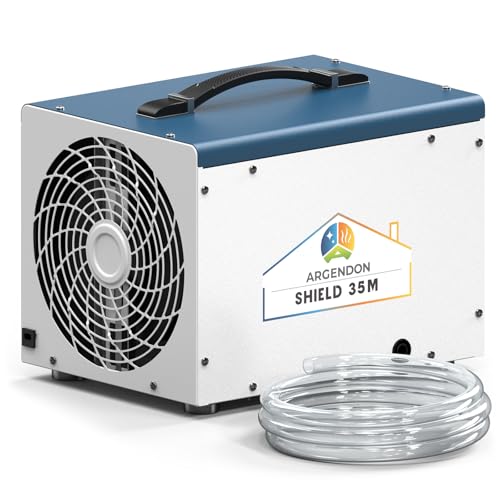
ARGENDON Dehumidifier for Crawlspace and Commercial
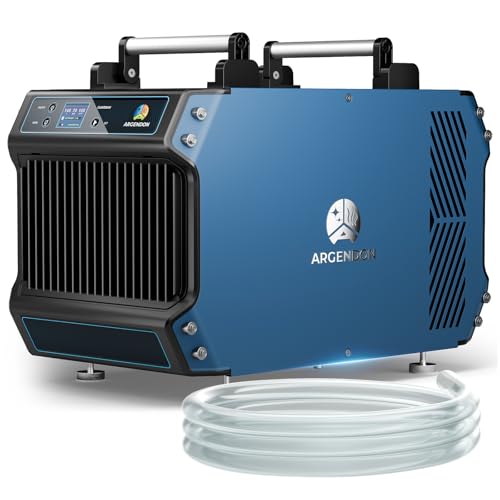
ARGENDON 180 Pints Crawlspace Dehumidifier, ETL

ARGENDON 145 Pint Crawl Space Dehumidifier, Guardian 60P
ARGENDON Commercial Dehumidifier for Crawlspace

ARGENDON Crawl Space Dehumidifier with Pump

ARGENDON 145 Pint Crawl Space/Basement Dehumidifier
More Details On Our Top Picks
The opening pick targets the homeowner who finally wants to stop renting a bulky residential box that clogs and overflows. Rated for areas up to roughly 1,000 square feet, it pushes out 115 CFM (cubic feet per minute, a measure of how much air the unit moves each minute) and pulls about 70 pints of water per day, which is enough to keep a mid-size finished basement dry through muggy summers.
Because the unit is built for crawlspaces and basements, the chassis tends to handle cool downdrafts better than a typical bedroom dehumidifier. Owners with a floor drain nearby can route the built-in pump’s discharge hose and walk away, since the pump pushes water vertically and horizontally rather than relying on gravity alone. For a household that has battled a musty rec room, this is the balanced middle of the lineup.
Noteworthy Benefits
- 70-pint daily removal handles most finished basements without constant tank checks
- Built-in pump sends water up and out, freeing you from hauling a reservoir
- 1,000 sq ft coverage suits open rec rooms and split basement layouts
- 115 CFM airflow dries laundry air and reduces that closed-in basement smell
Things To Consider
- Daily removal rate drops in cooler basement conditions, so sizing for shoulder seasons matters
- Pump models can run louder than passive drain units, especially on hard floors
Key Specs
Who It Suits Best
Homeowners with a mid-size finished basement who want set-and-forget pump operation and an extra-long warranty tied to commercial-grade construction.
Where Another Pick Suits Better
For a basement larger than about 1,500 sq ft or one that floods after heavy rain, step up to the ARGENDON 180 Pints Crawlspace Dehumidifier, ETL, which is built for heavier saturation.
Where the first pick handles everyday basement duty, this model ramps up to industrial-grade capacity. At 180 pints per day in saturated conditions and roughly 2,300 square feet of coverage, it is the workhorse for a basement that sweats after every storm or a workshop that needs year-round humidity control.
The ETL listing is a signal that the unit meets recognized electrical safety standards, which matters when you are running a high-draw appliance on a basement circuit for long stretches. Combined with a built-in pump, this is the kind of machine you can plumb to a utility sink or condensate line and largely forget. Compared with the Guardian 60P later in the list, this is the bigger, less efficient cousin that prioritizes brute output.
Positive Takeaways
- 180-pint capacity tackles standing-moisture problems that overwhelm smaller units
- 2,300 sq ft coverage handles very large basements and open commercial spaces
- ETL electrical listing adds confidence for continuous, unattended operation
- Built-in pump moves condensate out without relying on a floor drain
Trade Offs
- Larger chassis and heavier weight make placement a two-person job
- Power draw is higher than mid-size models, so expect a noticeable line on your utility bill
At A Glance
Made For
Property owners dealing with chronic basement moisture, post-storm dampness, or large utility spaces that smaller residential dehumidifiers cannot keep up with.
Skip It When
A typical finished rec room in a 1,000 sq ft basement does not need this much capacity, and the Guardian 60P or Pick 5 will run cooler and quieter on a standard 15-amp circuit.
The Guardian 60P is the efficiency-focused middle of the lineup. Its rated output is 145 pints per day at saturation but 60 pints per day under the AHAM standard (the Association of Home Appliance Manufacturers test at 80°F and 60% relative humidity, the standard used to compare residential dehumidifiers fairly), and it covers up to 1,800 square feet. For a basement that runs 10 to 12 hours a day, that difference between the saturation figure and the AHAM figure is where the real-world cost lives.
Two drain hose outlets make it easy to send water to a sump pit, a utility sink, or outside through a window. Owners commonly report that the internal pump is the deciding feature, because it removes the need to hover over a tank. The trade-off shows up in size: it is bigger than a 50-pint residential unit, so plan for placement in an out-of-the-way corner.
Benefits That Matter
- AHAM rating of 60 pints per day gives a realistic picture of long-running energy use
- 1,800 sq ft coverage suits most full basements in mid-size homes
- Dual drain hose outlets simplify routing to a sump or sink
- Built-in pump removes the daily chore of emptying a tank
Points To Keep In Mind
- Filter needs periodic cleaning, especially in dusty basement air
- Performance at very low basement temperatures can dip below the AHAM figure
Best Suited To
Energy-conscious households that run a dehumidifier almost year-round and want a realistic AHAM-rated benchmark to estimate operating cost.
Consider Something Else When
For a smaller basement where 1,800 sq ft of capacity is overkill, the ARGENDON Crawl Space Dehumidifier with Pump from Pick 5 will match the workload with a smaller footprint.
Think of this as the workmanlike cousin of the 180-pint model: same commercial-grade intent, slightly different capacity curve. Rated for 145 pints at saturation with coverage up to 1,800 square feet, it lands right in the sweet spot for a basement workshop, a home gym with a rubber floor, or a utility room that doubles as a wood shop.
The 5-year limited warranty is the quiet headline here. Long warranties on this kind of equipment tend to track build quality, and the convenience of a built-in pump means there is no tank to babysit during a multi-day rain event. For anyone whose basement is more than storage, the trade-off is the usual commercial catch: heavier chassis and higher noise under heavy load.
Advantages To Know
- 145-pint commercial output handles tough loads and stubborn humidity
- 1,800 sq ft coverage supports full-basement or open workshop layouts
- 5-year limited warranty signals long-term reliability expectations
- Built-in pump enables continuous drain operation
Honest Caveats
- Heavier than residential units, so placement should be a permanent spot
- Higher airflow noise under peak demand compared with smaller units
Whose Shelf It Belongs On
Workshop owners, serious hobbyists, and anyone treating the basement as usable square footage rather than storage will value the commercial output and long warranty.
Look Elsewhere When
For a smaller finished basement without industrial demands, the ARGENDON 145 Pint Crawl Space/Basement Dehumidifier from Pick 6 offers similar capacity in a more homeowner-friendly form factor.
Not every basement needs industrial output, and this is the unit for the smaller, more typical space. Rated at 35 pints per day under AHAM and 70 pints at saturation, it covers up to 1,000 square feet, which lines up with most average finished basements in a mid-size home.
The pump and included drain hose do the heavy lifting. You can route the line to a floor drain, a sump pit, or even out a window well. For most homeowners, the practical appeal is that the unit does not need a dedicated 20-amp circuit, so it can drop into the outlet you already use for a spare freezer. Compared with Pick 1, capacity is similar but the efficiency story is the more compelling angle.
What Pays Off
- Lower energy draw suits year-round, low-cost operation
- 1,000 sq ft coverage matches a typical mid-size finished basement
- Built-in pump and drain hose simplify setup without a floor drain
- 70-pint saturation rating handles humid summer peaks
Where It May Fall Short
- AHAM figure of 35 pints means a long ramp-up in a very damp basement
- Pump head height is limited, so vertical drain runs need to stay modest
Right Fit For
First-time basement dehumidifier shoppers with a modest space who want pump convenience without paying for industrial output they will never use.
Another Choice May Suit
For a larger, more demanding basement where 1,000 sq ft of coverage is not enough, step up to the Guardian 60P from Pick 3 for higher AHAM-rated output.
The closing pick is the all-purpose option. At 145 pints per day at saturation, 60 pints per day at AHAM, and coverage up to 1,800 square feet, it can serve as either a whole-basement workhorse or a garage-and-basement combo depending on how you route the included drain hose.
Versatility is the headline. Run it on continuous drain with the pump and you have a set-and-forget basement unit. Move it to a garage with a longer hose run, and the same hardware keeps working. Where the Guardian 60P from Pick 3 is the efficiency-focused sibling, this model leans toward flexible deployment across multiple problem rooms.
The Upside
- 145-pint saturation capacity handles both basement and garage duty
- AHAM 60-pint rating gives a usable real-world benchmark
- 1,800 sq ft coverage suits open layouts and split basements
- Built-in pump and drain hose support continuous, unattended drainage
A Few Limitations
- General-purpose design lacks the commercial focus of Pick 4
- Drain hose length limits how far you can site the unit from a drain
Feature Snapshot
Perfect Match For
Households with a basement plus a damp garage, workshop, or bonus room who want one pump-equipped dehumidifier to move between problem spots.
Reach For A Different Pick When
For a single dedicated basement installation where efficiency and warranty are top priorities, the Guardian 60P from Pick 3 is a tighter fit.
What Matters Most Before Choosing Dehumidifiers With Pump For Basement
Right-Sizing Capacity To Your Space
Pint ratings only mean something when they match the basement you actually have. A standard 1,000 sq ft finished basement usually needs a 50 to 70 pint unit, while a 2,000+ sq ft open basement or one with a sump area often needs 100 pints or more. Sizing up is fine, but sizing down creates the endless battle of an overworked compressor that never quite reaches your humidity target. The AHAM figure (the standard 80°F / 60% relative humidity test result) is the more honest number to compare across brands because the saturation figure assumes extreme, lab-like conditions.
Drainage And Pump Logistics
A built-in pump changes ownership. Instead of emptying a tank or relying on gravity to a floor drain, the pump pushes water up and out through a hose. Check the rated vertical pump head, which is how high the pump can push water, and plan your drain route before installation. A unit that pushes water 12 feet up clears most basement-window exits, while one rated for 5 feet may not reach a utility sink on the floor above.
Coverage, Airflow, And Basement Conditions
Square footage ratings assume standard ceiling height and reasonable insulation. Stone-walled basements, finished rooms with closed doors, or homes in very humid climates will see real-world performance below the spec sheet. Look for CFM (cubic feet per minute) as a secondary signal: higher CFM means the unit circulates more basement air through the coils, which is what actually dries the space rather than just chilling it.
Key Considerations Across These Picks
Pitfalls Shoppers Hit
Sizing a dehumidifier to the wrong square footage is the most common error. A unit rated for 1,000 sq ft in a 2,200 sq ft basement will run constantly and never hit the target humidity, which shortens compressor life. Another trap is forgetting to plan the drain route. Pump models can lift water, but only to a certain height, so locating the unit too far from a drain or too low relative to a window often forces a redo. Finally, ignoring the AHAM rating in favor of the saturation figure leads to a machine that underperforms the moment the basement cools below 80°F.
Where The Extra Money Goes
The price gap between a 35-pint residential model and a 145-pint commercial unit reflects more than raw capacity. Commercial-grade compressors run longer cycles, are built with heavier coils, and tend to carry longer warranties. For most homeowners, the upgrade is worth it when the basement is finished living space, when humidity is a year-round problem, or when you would rather set up a drain line once than service a small tank for years. For occasional use in a smaller space, the lighter model is the smarter spend.