


Sticky summers, musty basements, and that “window fog” feel on a cold morning all trace back to the same thing: too much water vapor in the air. Pulling that moisture out makes rooms feel cooler, helps allergies, and stops mold before it gets a foothold. The right dehumidifier for your home matches the room size, the dampness level, and how much noise you can tolerate. This lineup covers small bedroom units through heavy-duty basement workhorses, so you can land on the one that fits your space without overspending.
A Quick View Of The Lineup

PLUSCENT 21 Pint Dehumidifier for Basement and Home with Drain Hose

Waykar 145 Pints High Efficiency Dehumidifier with Pump 6,500 Sq. Ft

PSOS 98 OZ Dehumidifier for Home with Ambient Light (Gray)

AEOCKY 50 Pint/Day Ultra-Quiet 40dB Dehumidifier with Drain Hose
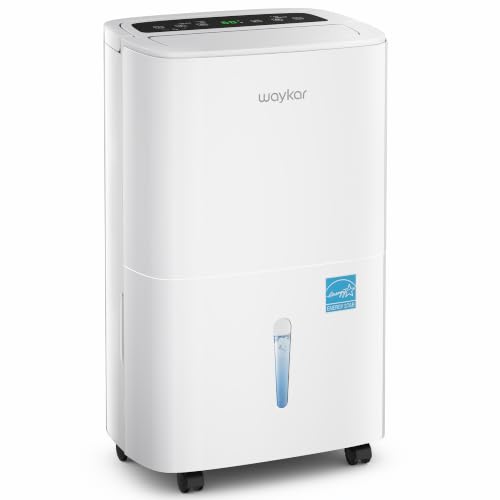
Waykar 140 Pints Energy Star Dehumidifier for Basement up to 6,500 Sq. Ft

AEOCKY 4500 Sq.Ft Energy Star Dehumidifier with Pump 80 Pint

Waykar 150 Pint Energy Star Dehumidifier with Pump up to 7,000 Sq. Ft
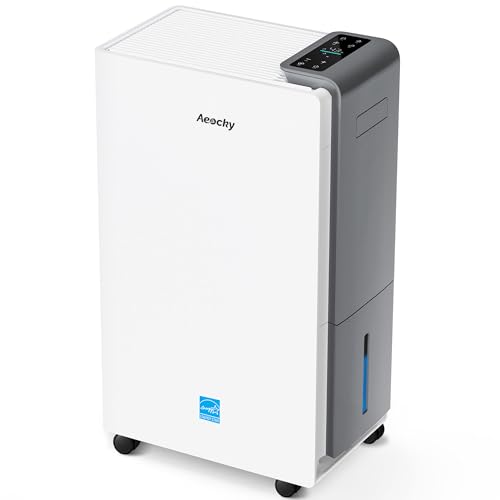
AEOCKY 5500 Sq.Ft Energy Star Most Efficient 2025 Dehumidifier 80 Pint
Inside Each Recommended Option
The PLUSCENT 21 Pint Dehumidifier is the “just right” middle of this list. It pulls up to 21 pints of moisture a day from rooms around 1,500 square feet, which covers most finished basements, large bedrooms, and open living areas without dominating the space.
You’ll likely appreciate the included drain hose: route it to a floor drain or sink and you can run this unit for weeks without touching the tank. It also helps set it apart from a basic bedroom model like the PSOS coming up later, which trades that continuous-drain convenience for compactness.
Strengths Worth Knowing
- 1,500 sq ft coverage suits most mid-size homes
- 21-pint daily extraction handles heavy summer dampness
- Continuous drain option means less tank-emptying
- Portable form factor rolls where you need it
- Straightforward controls keep setup simple
Things To Consider
- Not built for multi-room or commercial-scale humidity
- You may find the tank fills quickly without the drain hose connected
Made For
Homeowners with a single damp basement or large bedroom who want a balanced, no-fuss unit.
Consider Something Else When
Pick the AEOCKY 5500 Sq.Ft Energy Star Most Efficient 2025 Dehumidifier 80 Pint instead if your space is wider than 1,500 square feet or runs persistently damp.
Where the PLUSCENT handles a single room, the Waykar 145 Pints High Efficiency Dehumidifier steps in for the big jobs. Rated for spaces up to 6,500 square feet, it extracts 145 pints of water per day, the kind of output a chronically wet basement or a workshop demands.
The built-in pump is the headline feature here: water can be pushed upward and out through a hose, so the unit doesn’t have to sit next to a floor drain. If you’ve ever wrestled a heavy dehumidifier up a flight of stairs to reach the only available drain, that detail alone changes the ownership experience.
A Favorable Mix
- 145-pint daily capacity tackles severe dampness
- Built-in pump allows vertical water discharge
- Coverage up to 6,500 sq ft for open layouts
- Adjustable humidistat helps dial in target levels
Worth Noting
- Larger footprint takes up floor space in tight rooms
- Heavier than compact units, so plan placement carefully
- Higher output means higher energy draw
Feature Snapshot
Best Suited To
Owners of large basements, workshops, or storage rooms where humidity is heavy and a floor drain isn’t convenient.
Reach For A Different Pick When
The PSOS 98 OZ Dehumidifier for Home is a better match for a small bedroom or office where a 145-pint workhorse would be overkill.
The PSOS 98 OZ Dehumidifier is a thermoelectric-style unit built for personal spaces, not basements. Its 1,000-square-foot rating and 98-ounce tank land it in the “quiet, unobtrusive” category: the kind of thing that sits on a nightstand or office shelf and just works.
It’s also one of the few units here that treats itself as a piece of room decor. The seven-color ambient light cycles or holds a single hue, which some people genuinely enjoy and others simply turn off. Compared to the PLUSCENT above, this trades raw extraction for silence and portability.
What It Does Well
- Whisper-quiet thermoelectric operation
- Auto shut-off protects against tank overflow
- Built-in humidity display at a glance
- Compact shell fits on shelves and counters
- Optional 7-color nightlight adds ambience
Points To Note
- Tank needs manual emptying every couple of days in muggy rooms
- Not designed to drain continuously through a hose
- Slower moisture pull than compressor-based models
Quick Facts
Who Will Love This
Light sleepers and renters who want a small, quiet unit in a bedroom or home office, not a basement workhorse.
Where Another Pick Suits Better
Step up to the Waykar 145 Pints High Efficiency Dehumidifier with Pump if you need to dry out a basement rather than a single room.
The AEOCKY 50 Pint/Day Ultra-Quiet model is the unit you buy when noise is a dealbreaker. At 40 dB on its lower settings, it sits closer to a quiet library than a kitchen fridge, which makes it one of the few mid-size compressor dehumidifiers that won’t intrude on a living area or workspace.
Its 3,500-square-foot rating puts it between the PLUSCENT and the Waykar 145: serious enough to dry a real basement, gentle enough to leave on while you work. The included drain hose is the practical companion piece, letting you skip tank duty entirely.
Key Advantages
- 40 dB noise output for shared living spaces
- 3,500 sq ft coverage bridges mid-size homes
- 50-pint daily extraction for steady dampness
- Drain hose included for continuous operation
Trade Offs
- Still louder than thermoelectric bedroom units
- Compressor generates some warmth as a side effect
The Right Fit
Homeowners running dehumidifiers in finished basements used as living or play space, where noise echoes off the walls.
A Better Fit Elsewhere
The PSOS 98 OZ Dehumidifier is a smarter match for a tight bedroom where even 40 dB is too much background hum.
Energy Star certification sounds like a sticker on the box, but over a humid summer it shows up on the utility bill. The Waykar 140 Pints Energy Star Dehumidifier pulls 140 pints per day while meeting efficiency standards, which matters for anyone planning to run a unit around the clock in a large basement.
The 90-degree auto swing also helps: instead of blowing in one direction, the unit distributes dry air across the room so the far corner doesn’t stay damp. If you’ve used older single-direction dehumidifiers, you know how big a difference that circulation makes.
Everyday Advantages
- Energy Star rated for lower running costs
- 90-degree auto swing circulates air evenly
- 140-pint daily output for whole-basement use
- Self-drying mode helps prevent internal mold
Honest Caveats
- No built-in pump, so a floor drain is highly useful
- Footprint and weight demand a permanent-ish spot
Feature Card
Perfect Match For
Eco-conscious owners running a dehumidifier for months on end in a large basement, where even small efficiency gains add up.
Skip It When
The Waykar 145 Pints High Efficiency Dehumidifier with Pump is a better pick when no floor drain is available and you need vertical water removal.
This AEOCKY is the sweet spot of the lineup for a lot of households. It’s a real “set it and forget it” machine: 4,500-square-foot capacity, up to 80 pints per day, Energy Star efficiency, and a built-in pump for continuous drainage.
Compared to the Waykar 140 Pints model above, the upgrade is mostly about installation flexibility. The pump means you can route the drain hose up and over to a utility sink, so placement doesn’t depend on gravity. For most people reading this list, that’s the moment a dehumidifier stops being a chore and starts being background infrastructure.
Features That Help
- Built-in pump for flexible drain routing
- Energy Star Most Efficient 2025 tier
- Intelligent humidistat tracks and targets levels automatically
- 80-pint max output for multi-room coverage
Less Ideal Details
- Higher up-front cost than smaller units
- Pump adds a small mechanical part that can wear over time
At A Glance
Whose Shelf It Belongs On
Homeowners who want a near-permanent basement or large-room install with minimal day-to-day intervention.
Not Your Match When
The AEOCKY 50 Pint/Day Ultra-Quiet 40dB Dehumidifier is a smarter match for smaller, finished living spaces where its raw output would be wasted.
The Waykar 150 Pint Energy Star Dehumidifier is the heavy hitter at the top of the capacity ladder. It covers up to 7,000 square feet and extracts 150 pints per day, enough for flooding recovery, chronically wet basements, and serious commercial-style spaces.
What separates it from a stripped-down industrial unit is the smart auto comfort mode. Instead of just running at full blast until the room is dry, it adjusts output as conditions change. Auto defrost also keeps the coils working when temperatures dip, which matters in unheated basements and garages during shoulder seasons.
The Case For It
- 150-pint max output for severe dampness
- Built-in pump for vertical drain routing
- Auto defrost keeps performance stable in cool rooms
- Smart auto comfort mode scales output to conditions
- 7,000 sq ft coverage for large or open layouts
Things To Weigh
- Largest and heaviest unit on this list
- Overkill for a typical single-room install
Right Fit For
Owners with very damp basements, large workshops, or commercial-leaning spaces who need a high-capacity unit and won’t flinch at the size.
Look Elsewhere When
The AEOCKY 4500 Sq.Ft Energy Star Dehumidifier with Pump 80 Pint is a better match for standard 3,000 to 4,500 sq ft homes where 150 pints is more than you need.
Closing the list is the AEOCKY 5500 Sq.Ft Energy Star Most Efficient 2025 Dehumidifier, a unit that pushes 80-pint extraction across an unusually wide 5,500-square-foot rating. “Most Efficient 2025” is a stricter Energy Star tier, the kind of label that’s only earned by a small slice of certified models.
It occupies a useful middle ground: more coverage than the 50-pint AEOCKY, more refinement than the 150-pint Waykar. For an open-plan main floor or a sprawling finished basement, it tends to hit a sweet spot of capacity and efficiency without tipping into industrial scale.
What Helps Most
- 5,500 sq ft coverage handles open layouts
- Energy Star Most Efficient 2025 tier
- Up to 80 pints per day at peak conditions
- Smart humidistat automates day-to-day operation
Practical Considerations
- Performance tapers in spaces much larger than its rating
- No built-in pump, so gravity-drain placement helps
- Coil cleaning every few months is widely recommended
Built With In Mind
Homeowners with open-concept layouts or large bonus rooms who want efficiency credentials without stepping up to commercial size.
Swap It Out When
The Waykar 150 Pint Energy Star Dehumidifier with Pump is the better choice if you need a built-in pump and more raw extraction in tougher spaces.
Matching The Right Dehumidifier To Your Space
Sizing is the single biggest decision, and it starts with square footage, not pints. Measure the room or basement you actually want to dry, then add roughly 10% for unusually damp conditions like a basement below grade, a bathroom without a vent, or a laundry area with poor airflow. A 1,000-square-foot unit in a 2,500-square-foot basement will run constantly and never quite catch up.
Pint capacity, the second number on the spec sheet, tells you how much water the unit can pull in a day under ideal lab conditions (95°F, 90% relative humidity). Real-world output is almost always lower, so look for a unit that rates higher than your worst-case estimate. A 50-pint model in a chronically wet basement becomes a 25-pint model in the real world.
Noise matters more than people expect. Thermoelectric units like the PSOS barely make a sound, which is why they suit bedrooms, but they also extract far less water. Compressor-based units are louder but far more capable. If the unit will live in a living area or finished basement, look for ratings under 45 dB. The AEOCKY 50-pint hits 40 dB, which is a meaningful quality-of-life upgrade.
Drainage is the underrated feature. A continuous-drain hose or built-in pump turns a dehumidifier from a daily chore into a hands-off appliance. Gravity drain requires a floor drain or low sink nearby. Pumps can push water upward several feet, which is the difference between placing a unit where you want it and placing it where plumbing allows.
Finally, check the humidistat quality. Basic units let you set a target humidity and shut off when they hit it. Smarter units ramp output up and down as conditions change, saving energy and reducing compressor wear. For most homes, that flexibility is worth the modest step up in cost.
Key Considerations Across These Picks
Where Shoppers Go Wrong
The most common mistake is buying a unit that’s too small for the space. An undersized dehumidifier runs constantly, shortens its own lifespan, and barely moves the humidity needle. The second is ignoring drainage. A unit without a continuous-drain option means emptying a heavy tank every day or two, and in busy households that routine gets skipped, which leads to overflow and the very musty smell the dehumidifier was meant to prevent.
When Paying More Pays Off
Stepping up to a premium model tends to buy three things: a stricter efficiency tier, a built-in pump, and a more capable humidistat. Efficiency saves money every month the unit runs. A pump buys placement freedom. A better humidistat reduces compressor cycling. For a permanent basement install where the unit runs for months, those upgrades usually pay themselves back in comfort and lower maintenance. For a small guest room used occasionally, the extra money rarely returns enough value to justify itself.