


High humidity turns a comfortable home into a damp, musty environment where mold, condensation, and stale air settle in fast. The right dehumidifier pulls that excess moisture out of the air and keeps wood, fabrics, and electronics from slowly absorbing damage. This roundup covers seven solid options across different room sizes, noise expectations, and use cases, from a 1000 sq ft bedroom model to a 7000 sq ft commercial unit.
The Shortlist At A Glance

Waykar 145 Pints 6,500 Sq. Ft High Efficiency Dehumidifier with Pump

PSOS 98 OZ Dehumidifier for Home, 1000 sq.ft, Quiet

FreAire 34Pint Dehumidifier for 2500 Sq.Ft
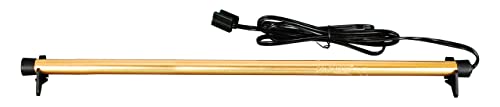
Lockdown Golden Rod Dehumidifier, 24″ Vermiculite

FreAire 54Pint Quiet Dehumidifier for 4500 Sq.Ft

Waykar 34 Pints 2025 Energy Star Dehumidifier

Waykar 150 Pint 2025 Energy Star Dehumidifier with Pump
The Details Behind The Selections
Designed for serious moisture loads, this Waykar model pulls up to 145 pints of water per day under demanding lab-style conditions, which translates to real work in a damp basement, large warehouse, or finished garage. The built-in condensate pump pushes water upward and out through the included hose, so the unit can drain into a sink, window, or floor drain without you hauling a heavy tank back and forth. In practice, that means fewer interruptions during long, humid stretches when moisture is at its worst.
Compared to the PSOS unit in spot 2, this is a much more industrial-feeling machine with louder operation, but also dramatically higher output. Owners in damp coastal homes and large workshops will get the most from it.
Positive Points
- Built-in pump lets the unit drain continuously, cutting out manual tank emptying
- Covers up to 6500 sq ft, fitting sprawling basements and warehouse spaces
- Adjustable humidity range from 30% to 80% for fine-tuned comfort
- Runs on standard 110-120V household power, no special wiring required
Things To Consider
- Physical size is substantial, so smaller rooms may feel dominated by the unit
- Compressor noise is noticeable in quiet living areas, especially overnight
Feature Snapshot
Who It Suits Best
Anyone running a large basement, workshop, or storage space with persistent dampness will appreciate the pump-driven, set-and-forget setup.
Consider Something Else When
The Waykar 34 Pints 2025 Energy Star Dehumidifier is a better fit for someone wanting a quieter, more compact unit in a mid-size finished room.
PSOS takes a quieter, lighter approach with dual semiconductor condensation, the same tech found in many small thermoelectric coolers. That means no compressor hum, just a low background sound, which makes this dehumidifier a natural fit for bedrooms, nurseries, and small home offices where a louder unit would be disruptive. The 98 oz tank collects a useful amount before auto shutoff kicks in to prevent overflow.
Where the Waykar 145-pint unit is built for raw muscle, this PSOS is built for everyday comfort. It’s a friendlier scale for apartments and small homes where the air feels sticky but isn’t being flooded by standing water or a chronic leak.
What Stands Out
- Silent operation suited to sleep and focus
- Compact body fits on nightstands, shelves, or bathroom counters
- Auto shutoff protects against spills when the tank fills
Honest Caveats
- Capacity tops out around 1000 sq ft, so large open layouts are out of reach
- Tank needs regular emptying without a continuous drain option
Best Suited To
Bedroom dwellers and small-apartment residents who want a low-noise unit that simply tucks into a corner and runs.
Look Elsewhere When
Reaching for the FreAire 54Pint Quiet Dehumidifier is a smarter move for households needing to cover 4500 sq ft of open-plan living space.
FreAire’s 34-pint model is the middle-of-the-pack option that most homes will find genuinely useful. It pulls up to 34 pints of water per day under high-heat and high-humidity conditions, which is plenty for a typical finished basement or a large living area. The 6.56 ft drain hose is long enough to reach a floor drain, sump pump cover, or a utility sink without repositioning the whole unit.
It runs quieter than the heavy-duty Waykar units but extracts more than the PSOS bedroom model. For most mid-size homes, that balance is exactly the right read.
Strengths Worth Knowing
- Daily extraction matches moderate basement conditions
- Long drain hose gives flexible installation choices
- Covers up to 2500 sq ft, suitable for most main-floor layouts
Worth Noting
- No internal pump, so drainage relies on gravity and a nearby outlet
- Not designed for warehouse-scale moisture problems
Quick Facts
Made For
Mid-size households with a finished basement or open-concept living area who want compressor-based performance without overpaying for capacity they won’t use.
Skip It When
Stepping up to the FreAire 54Pint Quiet Dehumidifier makes more sense for homes that need to cover 4500 sq ft or run quietly through the night.
The Lockdown Golden Rod is a different kind of tool entirely. Instead of cooling air to condense moisture, it uses a 110-120V heating element wrapped in vermiculite, a mineral that holds and slowly releases warmth, to gently raise the air temperature inside an enclosed space. That temperature bump allows warm air to keep circulating, which prevents the condensation that leads to rust on metal hardware and mildew on leather.
It’s sized for small, sealed environments. Think gun safes, ammo cans, and similar storage boxes up to 300 cubic feet, not open living rooms. The 6 ft power cord makes placement flexible inside a walk-in safe, and the low wattage means it can run continuously without dominating an outlet.
Points In Its Favor
- Designed specifically for gun safes and similar enclosures
- Low wattage makes continuous operation practical
- Plug-and-play setup with a 6 ft cord
Less Ideal Details
- Only useful in small, sealed volumes around 300 cubic feet
- Not interchangeable with room-sized dehumidifiers
Who Should Grab It
Gun owners, reloading hobbyists, and anyone storing humidity-sensitive gear in a sealed safe or cabinet.
Reach For A Different Pick When
Any actual living space calls for a compressor-based unit like the PSOS 98 OZ Dehumidifier, which is designed for open room air rather than sealed metal boxes.
FreAire’s larger 54-pint model is aimed at households that need real coverage without constant attention. The 3.3 ft drain hose is shorter than the 34-pint sibling’s, but the unit still offers continuous drain functionality for set-and-forget operation. Energy-saving modes and a quiet sleep setting make it friendlier to bedrooms and living areas than most compressor units at this capacity.
Up to 4500 sq ft of coverage is the kind of number that handles open-plan main floors, large basements, and high-moisture zones like converted workshops. For people who want a single machine to take on the whole downstairs, this is a strong candidate.
What Helps Most
- Generous 4500 sq ft coverage for open layouts
- Sleep mode reduces noise for overnight use
- Front-facing humidity readout is easy to check at a glance
Trade Offs
- Drain hose is short, which may require creative routing
- Larger physical footprint than bedroom-sized units
Feature Card
Right Fit For
Owners of large open-plan homes who need one machine to cover the whole main floor and run quietly while they sleep.
A Better Fit Elsewhere
For pure warehouse or commercial use, the Waykar 150 Pint 2025 Energy Star Dehumidifier with Pump delivers more daily extraction and a built-in pump.
Waykar’s 2025 update brings Energy Star efficiency to a 34-pint capacity, pairing modern rotary compressor tech with a smaller chassis than older units. It pulls up to 34 pints per day under hot, sticky conditions and runs cool enough for finished living areas up to 2000 sq ft. The 0.62-gallon internal tank plus optional continuous drain gives flexibility when you’re between emptying sessions.
Where the PSOS unit leans on semiconductor tech for silence, this Waykar leans on efficiency and a smaller body. In a real basement or main-floor room, the rotary compressor sips power relative to older dehumidifiers, which matters for anyone running one continuously through the humid season.
Useful Strengths
- Energy Star rated for lower running costs over the humid season
- Compact body fits tighter spaces than older compressor units
- Auto or manual drainage covers both routine and set-and-forget use
Points To Note
- Coverage tops out at 2000 sq ft, smaller than the FreAire 54-pint sibling
- Internal tank requires manual emptying without a drain setup
Built With In Mind
Energy-conscious households who want compressor-grade performance in a smaller, more efficient body for a single mid-size room or basement zone.
Swap It Out When
The FreAire 54Pint Quiet Dehumidifier is a better match for open-plan homes needing 4500 sq ft of quiet coverage.
This is the top-spec Waykar for serious moisture. It removes up to 150 pints per day under heavy conditions and covers up to 7000 sq ft, which is large enough for commercial basements, workshops, and very big homes. The built-in pump plus included drain hose lets the unit send water upward to a sink or window drain, while auto defrost keeps the coils working in cooler basement temperatures where other machines would ice up.
Smart Auto Comfort Mode adjusts output based on the humidity it reads, which means less babysitting during a long, sticky stretch. Compared to the older 145-pint Waykar, the 2025 update brings Energy Star efficiency and a smarter control scheme.
Where It Helps
- Highest daily extraction in this roundup for severe moisture problems
- Built-in pump plus auto defrost supports continuous cold-room operation
- Smart auto mode tunes output to current conditions
A Few Limitations
- Physical size and weight are considerable, so plan placement carefully
- Compressor noise is noticeable in living areas, so it’s better in utility spaces
- More capacity than most apartments or small homes realistically need
Spec Overview
Perfect Match For
Workshops, commercial basements, and very large homes where persistent dampness has outgrown smaller consumer units.
Where A Sibling Pick Shines
The Waykar 34 Pints 2025 Energy Star Dehumidifier is the more sensible pick for mid-size basements that don’t need 150 pints of daily extraction.
What Matters Most Before Choosing Dehumidifiers For High Humidity
Match Capacity To Room Size, Not The Other Way Around
Capacity ratings, measured in pints of water removed per day, only matter when they line up with the actual square footage you need to treat. A 1000 sq ft bedroom model will run constantly and still feel ineffective in a 4500 sq ft basement, while a 150-pint commercial unit will short-cycle, turning on and off in quick bursts, in a small apartment, wasting energy and wearing out the compressor. The picks above pair each capacity tier with a coverage range so you can match realistically to the room you have.
Choose Compressor Or Thermoelectric Based On Noise Tolerance
Compressor-based dehumidifiers, which are most of this list, extract far more moisture per day but generate compressor hum. Thermoelectric (semiconductor) units like the PSOS model run nearly silent, a Peltier-style heat pump with no moving refrigerant parts, but extract less moisture. Bedrooms and nurseries usually favor thermoelectric. Living areas, basements, and workshops can usually absorb compressor noise in exchange for real extraction power.
Decide Between Manual Tank And Continuous Drain
A built-in tank means occasional emptying, which becomes a chore in very humid conditions. A continuous drain setup, whether gravity-fed through a hose or pushed by a built-in pump, lets the unit run without intervention. If your space has a floor drain, sink, or window nearby, continuous drain is the better long-term play. The Waykar units with pumps add the option of pushing water upward, useful when the only drain is above the unit.
Factor In Long-Term Running Costs
Energy Star rated units like the Waykar 34-pint and 150-pint models use modern rotary compressors that sip power relative to older dehumidifiers. In a humid climate where the unit runs most of the day for half the year, that efficiency adds up. A cheaper unit that runs constantly may end up costing more on the electric bill than an efficient one that costs a bit more upfront.
Key Considerations Across These Picks
Mistakes Worth Dodging
Choosing a unit by price alone is a common slip. A small thermoelectric bedroom model in a damp basement will run non-stop and barely move the needle on humidity, leaving you with high energy bills and still-sticky air. Always cross-reference the room size you actually need to treat against the model’s coverage rating, and err toward a slightly larger unit if your space is on the edge. Also remember that a continuous drain setup only works if you have a nearby drain or sink, so factor in routing the hose before you commit.
Where The Extra Money Goes
Higher-tier models like the Waykar 150-pint add a built-in pump, auto defrost, and smart humidity modes that cheaper units skip. Auto defrost keeps the coils ice-free in cooler basements where cheaper machines stall out, and a built-in pump removes the need to empty a heavy tank in tight spaces. For a damp finished basement that runs year-round, those features pay back in convenience and reliability. For a small bedroom used seasonally, you won’t notice the difference and a compact model is the smarter spend.
Frequently Asked Questions
How Many Pints Per Day Do I Need For A Damp Basement?
For a typical 1000 to 2000 sq ft basement with noticeable dampness, a 30 to 50 pint per day unit is a reasonable starting point. Larger basements with standing water or persistent mustiness benefit from 50 to 150 pint capacity.
Can A Dehumidifier Run Continuously?
Most compressor-based dehumidifiers are designed for continuous operation, with auto defrost to prevent ice buildup in cool spaces. The tank fills and triggers auto shutoff unless a continuous drain hose or pump is connected.
Where Should I Place A Dehumidifier In A Basement?
Centering the unit in the dampest area, away from walls and furniture that block airflow, gives the best results. If a floor drain is available, place the unit near it so the drain hose has a short, gravity-friendly run.
Do Thermoelectric Dehumidifiers Work In High Humidity?
Thermoelectric units work best in small, mildly humid spaces like bedrooms and bathrooms. In heavy basement conditions, they extract less moisture than compressor units and may leave humidity levels higher than desired.
How Often Do I Need To Empty The Water Tank?
Tank emptying frequency depends on humidity and capacity. A 0.6 to 1 gallon tank in a moderately damp room typically needs emptying every day or two, while a connected drain hose removes the need for manual emptying altogether.
Closing Remarks
A good dehumidifier pays for itself in comfort, in protected furniture, and in air that simply feels easier to breathe. Match the capacity and noise level to your specific room, decide whether continuous drain fits your layout, and lean toward Energy Star efficiency if the unit will run for months at a time. The right choice depends less on the brand and more on how honestly you size the problem before you buy.