

A damp crawl space quietly invites mold, musty air, and warped floorboards above it. You notice the smell long before you see the damage, and by then the fix is rarely cheap. The right dehumidifier pulls that moisture out before it becomes a remodel, running on its own in a space most people never visit. This list covers six purpose-built options for tight, humid, hard-to-reach areas, sorted by what each one actually does best.
How The Shortlist Stacks Up
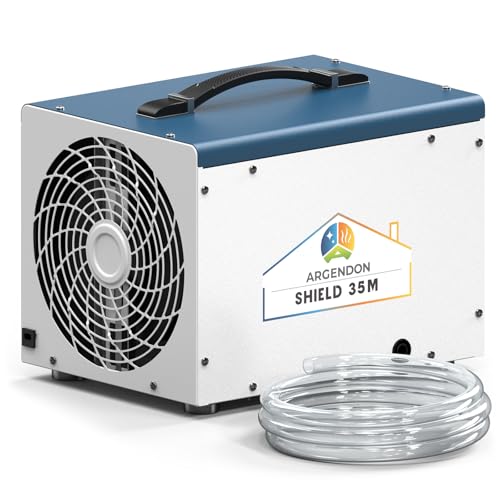
ARGENDON 70 Pint Crawlspace Dehumidifier (5-Year Warranty)
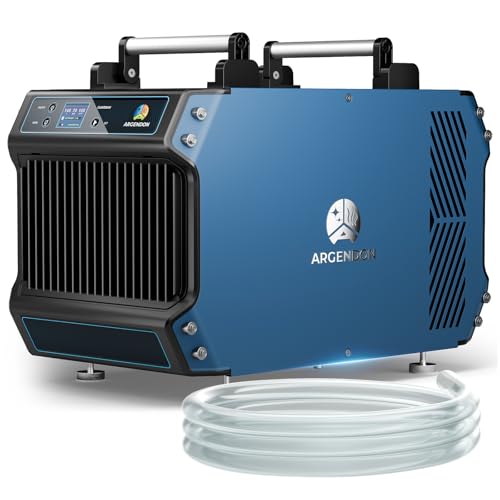
ARGENDON 180 Pint Crawlspace Dehumidifier with Pump (ETL)

ARGENDON 145 Pint Crawlspace Dehumidifier with Pump (Guardian 60P)
ARGENDON Commercial Crawlspace Dehumidifier (5-Year Warranty)

ARGENDON Crawlspace Dehumidifier with Pump and Drain Hose

ARGENDON 145 Pint Crawlspace and Basement Dehumidifier with Drain Hose
Meet The Standout Selections
The 70-pint ARGENDON is the small-space workhorse on this list, sized for crawl spaces up to around 1,000 square feet. It moves air at about 115 CFM (cubic feet per minute, a measure of how much air the unit cycles), which matters more than people expect: the faster the air exchange, the quicker damp corners stop smelling stale. Compared to the larger 180-pint model below, this one is far easier to wrestle through a narrow access hatch.
Coverage starts on the date of purchase, and the warranty plan covers drops, spills, cracked screens, and power surges from day one, with malfunctions picked up after the manufacturer term ends. For most homeowners dealing with a single damp crawl space, that safety net carries real weight.
A Few Highlights
- 70-pint daily capacity suits a typical single-zone residential crawl space
- 115 CFM air output speeds moisture removal in tight corners
- Coverage includes accidental drops, spills, and power surges from day one
- 24/7 support access removes the usual “leave a voicemail” friction
- Compact enough to slide through a standard crawl access
Worth Noting
- Not designed for whole-basement scale; buyers with combined basement-and-crawl humidity may find it undersized
- Owners commonly report periodic filter rinsing as a small maintenance task the unit does demand
Made For
Homeowners with one modest crawl space under a single-story or small two-story home who want coverage that includes accidental damage from the start.
Consider Something Else When
The ARGENDON 180 Pint Crawlspace Dehumidifier with Pump fits better for anyone running moisture control across a large basement plus attached crawl area.
This is the largest pull rate in the lineup, rated to remove 180 pints per day at 90°F and 90% relative humidity (a standard extreme-condition lab measurement). The capacity suits spaces up to roughly 2,300 square feet, which puts a sprawling basement or commercial crawlspace squarely in its wheelhouse. The built-in pump pushes condensate (the water the unit pulls from the air) upward and out, so you are not babysitting a drain bucket.
For crews managing multiple properties or anyone tired of running a smaller unit around the clock, the jump to 180 pints can be the difference between chronic dampness and a dry space. ETL listing is the relevant spec to know here: it means the unit has been tested to a recognized electrical safety standard, useful for inspectors and insurance paperwork.
Benefits That Matter
- 180-pint daily capacity handles damp, large, or commercial-grade spaces
- Covers footprints up to about 2,300 square feet, enough for a full basement
- Internal pump allows drainage to a sink, window, or remote line
- ETL safety listing simplifies compliance for contractors and property managers
- Coverage includes accidental drops, spills, and power surges from day one
Trade Offs
- Bulkier chassis can be awkward to maneuver through narrow access points
- Power draw is meaningfully higher than the 70-pint model, worth factoring into long-running utility costs
Built With In Mind
Property managers, contractors, and homeowners with oversized crawlspaces or combined basement-plus-crawl layouts who need industrial pull rates and don’t mind a larger footprint.
Skip It When
The ARGENDON 145 Pint Crawlspace Dehumidifier with Pump (Guardian 60P) is a smarter pick for anyone whose space is mid-sized and whose priority is keeping the electric bill in check.
The Guardian 60P sits in the middle of the range and earns its badge on efficiency. It removes up to 145 pints per day at saturation and 60 pints per day at the AHAM (Association of Home Appliance Manufacturers) standard of 80°F and 60% relative humidity, which is a fairer reading for real-world use. Coverage extends to roughly 1,800 square feet, so a typical whole-basement layout sits comfortably inside its range.
The pump is the part most shoppers overlook. Having one means you can route a drain line to a sink, a floor drain, or even outside, and the unit runs itself for weeks without attention. For households where the crawl space is the only damp zone, this is the sensible pick over a heavier commercial unit.
Everyday Advantages
- 145-pint saturation removal handles most residential humidity loads
- Runs at lower energy cost than larger commercial-tier units, per typical spec comparisons
- Internal pump plus two drain hookup options gives installation flexibility
- Covers around 1,800 square feet, a typical whole-basement footprint
Some Limits To Know
- Below the 180-pint model, so oversized commercial spaces may outgrow it
- Like most units in this category, the filter benefits from a periodic rinse to keep airflow steady
Right Fit For
Homeowners in humid regions running the unit year-round, where efficiency savings on the electric bill matter as much as raw moisture removal.
Look Elsewhere When
The ARGENDON 180 Pint Crawlspace Dehumidifier with Pump is the better match for commercial-grade square footage or extreme humidity that smaller units can’t keep up with.
This commercial-grade unit pulls 145 pints at 90°F and 90% relative humidity and covers up to 1,800 square feet, a familiar stat in this lineup. What sets it apart is the build, the metal chassis and heavier-duty components you can feel when you lift it. For a workshop, garage, or workspace under a structure that is not climate-controlled, the heavier hardware tends to hold up better over years of dusty, temperature-swung conditions.
Owners commonly report these commercial models running continuously for long stretches without complaint. The trade is weight and noise, both meaningfully higher than the residential 70-pint option above.
What It Does Well
- 145-pint capacity is well-matched to a 1,800 sq ft workshop or garage
- Sturdier chassis suited to harsh, dusty, or temperature-volatile environments
- Convenient drain hookup supports unattended long-term operation
Honest Caveats
- Heavier than residential picks, so plan the install route before ordering
- Operating noise is a real factor in occupied spaces
Who It Suits Best
Contractors, hobbyists, and homeowners running humidity control in a workshop, garage, or standalone structure that needs tougher hardware than a residential model offers.
Reach For A Different Pick When
The ARGENDON 70 Pint Crawlspace Dehumidifier is a more practical call for a small, finished-area crawl space where noise and weight matter more than heavy-duty build.
The 35-pint AHAM and 70-pint saturation rating on this unit is the smallest in the lineup, but the included pump and drain hose change the practical picture. Pull rates are measured at 80°F and 60% relative humidity for AHAM, and at saturation (essentially 100% humidity) for the higher number, so the real-world day-to-day number lands in the 35-pint range. For a tight 1,000-square-foot crawl space, that is plenty.
Where it earns its badge is the install-once, walk-away approach. The drain hose routes to a sink, sump, or outside grade, and the pump handles the lift so you can avoid a check-it-every-few-days routine. Owners who hate hauling buckets tend to love this format.
Everyday Perks
- Built-in pump plus drain hose removes the manual empty-tank chore
- 35-pint AHAM rating is sized appropriately for tighter residential crawlspaces up to 1,000 sq ft
- Coverage starts on the purchase date and includes accidental damage from day one
- 24/7 support and a frustration-free claims process lower the long-term risk
Some Limits To Know
- Smaller capacity means it will struggle in oversized or extreme-humidity spaces
- You may find the included drain hose length restrictive on unusual layouts, depending on placement
Best Suited To
Homeowners who want a one-time install and a unit that quietly runs itself, with no bucket to empty or constant monitoring.
Swap It Out When
The ARGENDON 145 Pint Crawlspace and Basement Dehumidifier with Drain Hose fits better for whole-basement square footage or persistent high humidity that demands more pull.
The 145-pint saturation and 60-pint AHAM rating puts this unit on equal footing with the Guardian 60P above, and the included drain hose makes it friendlier for DIY installs. Coverage reaches up to 1,800 square feet, which is plenty for a finished basement, a large crawl space, or both. For a household that wants one unit covering either area, this is a flexible middle-of-the-road pick.
The energy-efficient design keeps the operating cost down over months of continuous run, a real consideration for anyone planning to leave the unit on full-time. The honest read is that it is not the quietest option, and it is heavier than the 70-pint residential model, so placement matters during install.
What Helps Most
- 145-pint saturation and 60-pint AHAM capacity covers up to 1,800 sq ft
- Energy-efficient operation helps offset long-term electric costs
- Included drain hose supports flexible placement and a no-bucket install
- Coverage spans drops, spills, and power surges from the purchase date
Points To Keep In Mind
- Operating noise is noticeable in adjacent living areas, depending on layout
- Heavier than smaller residential models, so the install path through the access hatch is worth planning
Whose Shelf It Belongs On
Homeowners with a multi-zone humidity problem who want one capable unit and value the energy savings over months of continuous duty.
Where A Sibling Pick Shines
The ARGENDON 70 Pint Crawlspace Dehumidifier is a cleaner fit for a small, single-zone residential crawl space where size and noise carry more weight than raw pull rate.
What To Weigh Before Choosing Crawl Space Dehumidifiers
Size And Moisture Load
Crawl spaces range from a small access under a single-story home to sprawling commercial foundations, and pint ratings only mean something relative to your square footage and humidity. The AHAM standard (80°F, 60% relative humidity) is a useful baseline since most units advertise the more dramatic saturation number. For a typical 800 to 1,200 sq ft residential crawl, a 35 to 70-pint AHAM unit covers the need without burning extra power. Oversized units cycle on and off inefficiently in small spaces, while undersized ones run constantly and still fall behind.
Drainage And Pump Setup
A bucket-only unit demands regular checks, which is hard if your access hatch lives behind the bushes. Built-in pumps paired with a drain hose let you route condensate to a sink, sump, or outside grade, and once installed, the unit runs itself for weeks. The trade-off shows up if your layout lacks a downhill drain path: in those cases, you may find the pump can’t lift water high enough, and a gravity drain to a floor drain is the only option. In our view, this single feature decides whether humidity control feels automatic or like a part-time job.
Build Quality And Long-Term Use
A crawl space environment is tough: dust, temperature swings, low ventilation. Residential-grade units handle this fine for a season or two, but commercial-spec models with metal chassis and heavier coils tend to hold up longer in harsh conditions. Worth considering if your space sits under a workshop or garage rather than a finished living area, and depending on how long you plan to keep the unit running.
Warranty And Coverage Fine Print
Standard manufacturer warranties cover defects, but accidental damage and power surge coverage are where you find the real-world value. Several models in this lineup include drops, spills, and surge protection from the purchase date, with malfunctions picked up after the manufacturer term ends. That matters more than people expect, since a crawl space install is the kind of job where a slip or a power event is not a hypothetical.
Key Considerations Across These Picks
Pitfalls Shoppers Hit
The single most common mistake is buying by saturation pint count alone. A 145-pint saturation number sounds impressive, but if your space sees 60% humidity most of the year, the AHAM number is what actually runs day to day. Another trap is overlooking drainage. A unit without a pump means you will be hauling condensate in a season, and even with a pump, you need a drain route that the unit can physically reach.
Why Top Tier Costs More
The jump from a 70-pint residential unit to a 145 or 180-pint commercial model is not just about more moisture pulled. The chassis is heavier, the compressor is rated for longer continuous duty, the coils are built to handle dust and heat, and the pump is integrated rather than optional. Where the extra money goes is into parts that survive a crawlspace environment for years rather than a couple of seasons. The upgrade pays off when you plan to run the unit continuously, your space is oversized, or the install location is hard to access and you would rather not swap units every few years.
Frequently Asked Questions
How Many Pints Per Day Do I Need For My Crawl Space?
For most residential crawl spaces up to 1,000 square feet, a 35 to 70-pint AHAM-rated unit covers the load. Larger spaces or extreme-humidity regions benefit from a 60 to 80-pint AHAM rating, and 1,800+ sq ft commercial footprints usually need 80 pints or more at AHAM.
Do I Need A Built-In Pump?
A built-in pump is the most useful feature for unattended operation. Without one, you must empty a reservoir tank manually, which becomes a chore quickly in damp conditions. Pumps let you route water to a sink, sump, or outside drain.
Can One Unit Cover Both A Crawl Space And A Basement?
Yes, if the combined square footage stays within the unit’s rated coverage and you can position it to circulate air across both. For most homes, a 145-pint unit handles a combined basement and crawl layout, though you may find air circulation weaker in tighter, separated zones.
How Often Does The Filter Need Cleaning?
Filters in this category benefit from a monthly rinse under normal use, with more frequent checks in dusty environments. A clogged filter chokes airflow and reduces moisture removal, so the few minutes of maintenance is well worth it.
Is Professional Installation Required?
Most residential crawlspace units are designed for DIY install: set the unit, route the drain hose, plug it in. Commercial-grade models are heavier and may need an electrician for a dedicated circuit, depending on your existing wiring.
The Takeaway
Crawl space moisture is the kind of problem that gets worse quietly, and the right unit handles it for years without you thinking about it. Match the pint rating to your square footage, prioritize a built-in pump if you want a hands-off install, and consider a tougher commercial chassis if your space sees dust or temperature swings. Any of these six options will do the job when sized correctly, and the only real mistake is undersizing and then wondering why the musty smell never goes away.