


Cold rooms are a different kind of problem. A regular compressor dehumidifier struggles once the air drops below about 65°F, the coils ice up, and the whole unit grinds to a halt. That’s why the picks below lean on desiccant (a moisture-absorbing material that pulls water from the air without needing cold coils) and compressor designs that hold their own in chilly basements, garages, and unheated workshops. Each one is matched to a real scenario, so you can land on the right size without overpaying or under-equipping the space.
The Shortlist At A Glance

PSOS 98 OZ Dehumidifier for Home 1000 sq.ft (Gray)

FreAire 34Pint Dehumidifier for 2500Sq.Ft With 6.56ft Drain Hose

QFOX 2000 Sq.Ft Rotary Dehumidifier with Drain Hose and 2.5L Water Tank
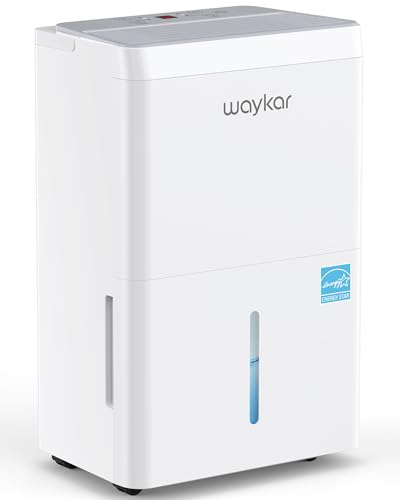
Waykar 6000 Sq.Ft Energy Star Dehumidifier (120 Pint/Day)

FreAire 54Pint Quiet Dehumidifier for 4500Sq.Ft With 3.3Ft Drain Hose
Waykar 5000 Sq. Ft. 80 Pints 2025 Energy Star Dehumidifier for Home
A Deeper Look At The Lineup
The PSOS 98 OZ is a small-format thermoelectric dehumidifier, a design that uses a Peltier chip to condense moisture rather than a compressor, which means it has no moving refrigerant parts and runs nearly silently. Sized for roughly 1,000 square feet, it fits naturally on a bedroom shelf or a desk in a home office. The 98-ounce tank means most users will empty it only every few days in a typical room.
Compared to the larger FreAire and Waykar units further down this list, the PSOS trades raw extraction power for a much smaller footprint and lighter weight. In a small, well-sealed room, that trade feels sensible. In a damp basement that runs cold, you’ll want something with more muscle.
Notable Upsides
- Near-silent operation makes it livable in a bedroom without disturbing sleep.
- Lightweight body is easy to move between rooms or pack away in warmer months.
- Front humidity display gives you a real-time read without bending down to check.
- Auto shut-off protects the unit once the tank fills, a useful feature if you tend to forget maintenance.
Small Caveats
- Thermoelectric designs are slower to pull moisture in cool, dense air, so realistic performance may dip below rated capacity in a chilly basement.
- The 98 oz tank requires regular manual emptying if you don’t connect a drain line.
Right Fit For
You live in a small apartment or run a quiet home office and need a barely-there unit that keeps a single room comfortable.
Swap It Out When
You’re drying a 2,000-plus square foot basement, where the FreAire 34Pint would handle the workload far more efficiently.
The FreAire 34Pint steps things up with a traditional compressor design rated for spaces up to 2,500 square feet. At moderate room temperatures it pulls up to 34 pints a day, which translates to roughly four gallons of water removed from your basement air in a 24-hour period under heavy load. The included 6.56-foot drain hose is a real plus, because it lets you route condensation to a floor drain, sump pit, or utility sink and skip the tank routine entirely.
Where the PSOS 98 OZ Dehumidifier leans on near-silence, the FreAire brings actual extraction muscle. The catch is compressor-based units can frost up below 65°F, so very cold garages may still need a periodic defrost break.
The Case For It
- 34-pint daily extraction handles moderately damp basements and laundry rooms without breaking a sweat.
- Long drain hose supports continuous, hands-free operation in spaces near a floor drain.
- Front-mounted controls and display keep settings accessible when the unit sits against a wall.
Honest Caveats
- Compressor coils can ice in rooms that hold below 60°F, so cold garages may see reduced output.
- Louder than thermoelectric picks like the PSOS 98 OZ Dehumidifier, so placement away from living areas is wise.
Who Will Love This
You maintain a mid-size basement or finished lower level above 60°F and want a set-and-forget unit that ties into a drain.
A Better Fit Elsewhere
You heat your basement only occasionally, in which case the QFOX 2000 Sq.Ft Rotary Dehumidifier is the smarter cold-room specialist.
The QFOX uses desiccant rotary technology, a wheel-based system that absorbs moisture directly from the air instead of cooling it to condense. That’s a real advantage in cold spaces, because there are no refrigerant coils to freeze, so performance stays consistent even in a chilly garage or an unheated workshop. The unit covers up to 2,000 square feet and ships with both a 2.5-liter tank and a drain hose, giving you flexibility for short or long runs.
Against the FreAire 34Pint just above, the QFOX trades raw pint-per-day output for genuine cold-weather stamina. It also runs a bit warmer to the touch, which is normal for desiccant designs but worth knowing if you plan to set it inside a small room.
Where It Delivers
- Desiccant rotary operation keeps extracting moisture in cold rooms where compressor models would frost over.
- 2.5-liter tank plus drain hose covers both portable and stationary use cases.
- Sleep mode quiets the unit for bedrooms or office corners.
Points To Keep In Mind
- Desiccant rotors use a heater element, so you may see a small bump on the power bill versus compressor models.
- Daily extraction is modest compared to the Waykar 80-pint and 120-pint units further down the list.
Feature Snapshot
Best Suited To
You need a cold-tolerant workhorse for an unheated garage, basement, or workshop where compressor units would shut down.
Consider Something Else When
You’re drying a very large basement, where the Waykar 6000 Sq.Ft Energy Star Dehumidifier handles the scale better.
The Waykar 120-pint is the largest compressor unit on this list, rated for spaces up to 6,000 square feet. That’s well beyond a typical basement and closer to a small warehouse or a multi-room finished lower level. Energy Star certification means it sips less power for the volume of moisture it pulls, a real concern for shoppers who plan to run the unit 24/7 through humid months. The 40 dB noise floor is unusually low for a compressor of this size, useful if your basement doubles as a home gym or media room.
Stepping up from the FreAire 54Pint below, you trade 6,000-square-foot reach and Energy Star efficiency for a higher up-front footprint. The tank-and-hose combo still works for either portable or permanent setups.
Positive Points
- 120-pint daily capacity handles very large basements and whole-floor setups.
- Energy Star efficiency reduces long-term operating cost for a unit that may run daily.
- 40 dB rating is genuinely quiet for the extraction class.
- Smart auto comfort mode adjusts fan speed based on the room’s humidity reading.
Practical Considerations
- Larger body means you’ll want to plan placement before unboxing.
- Compressor coils can frost below 60°F, so unheated spaces may need a backup like the QFOX 2000 Sq.Ft Rotary Dehumidifier.
Quick Facts
Whose Shelf It Belongs On
You manage a 4,000-plus square foot basement or want one unit to cover a finished lower level without daisy-chaining smaller picks.
Skip It When
Your space stays under 2,500 square feet, where the FreAire 34Pint is plenty and easier on the budget.
The FreAire 54-pint sits in a useful middle ground, sized for rooms up to 4,500 square feet and built around a quiet compressor design. The 3.3-foot drain hose is shorter than the FreAire 34Pint’s, so route planning matters a bit more, but the trade-off is a smaller cabinet that slides into tighter corners. Owners commonly report that the front humidity readout and the high-sensitivity detector make daily monitoring almost effortless.
Compare it to the Waykar 6000 Sq.Ft Energy Star Dehumidifier reviewed above, and you give up roughly half the daily extraction for a smaller, more apartment-friendly form factor. For most open-plan basements, the capacity still feels generous.
Useful Touches
- 54-pint daily output covers most residential basements without strain.
- Quiet sleep mode is genuinely livable near a TV room or guest bedroom.
- Front display eliminates the bending-down checks common with rear-panel controls.
- Continuous drain option supports set-and-forget operation.
Worth Noting
- 3.3-foot drain hose is shorter than some siblings, so plan your route to a drain before placing the unit.
- Compressor means cold garages below 60°F may see frost, where the QFOX 2000 Sq.Ft Rotary Dehumidifier is more reliable.
Who Should Grab It
You’re drying a 2,000 to 4,000 square foot basement or living area and want a quiet, mid-size compressor you can park near a living zone.
Look Elsewhere When
You need a true whole-home solution over 5,000 square feet, where the Waykar 6000 Sq.Ft Energy Star Dehumidifier makes more sense.
The Waykar 80-pint rounds out the list as a steady, well-balanced mid-to-large compressor. At 5,000 square feet of coverage and 80 pints of daily extraction, it lands between the FreAire 54Pint and the bigger Waykar 120-pint model. Energy Star certification keeps running costs in check for a unit that’s likely to stay on for weeks at a time during humid stretches. The included drain hose gives you a real off-the-clock option, so you can route to a utility sink and skip emptying the tank.
Stacking it against the QFOX 2000 Sq.Ft Rotary Dehumidifier, you trade cold-room specialty for raw capacity. If your basement sits above 60°F most of the year, the Waykar is the more everyday option.
What Earns Its Place
- 80-pint daily extraction suits mid-large basements and shared living spaces.
- Energy Star efficiency trims long-term operating cost for a frequently-run unit.
- Adjustable humidity range lets you dial in a target rather than running flat-out.
- Continuous drain option supports unattended operation.
Trade-Offs
- Compressor coils can ice in unheated spaces below 60°F, so a true cold garage may still want the QFOX 2000 Sq.Ft Rotary Dehumidifier.
- Bigger cabinet than the FreAire 34Pint, so measure your placement spot before delivery.
Feature Card
Made For
You run a 3,000 to 4,500 square foot basement or shop and want steady mid-to-large extraction without oversizing the unit.
Reach For A Different Pick When
You need a unit for a very cold room, where the QFOX 2000 Sq.Ft Rotary Dehumidifier’s desiccant design is the more honest match.
Factors To Consider Before Choosing A Dehumidifier For A Cold Room
Temperature Tolerance And The Compressor Limit
Most traditional dehumidifiers use a compressor to cool air below its dew point, the temperature at which moisture condenses into liquid. Once room temperature drops below about 60-65°F, the coils can ice over, the unit throttles back, and you’ll wake up to a tank that’s barely filled. In genuinely cold rooms (unheated garages, basements in winter, workshops without climate control), a desiccant design like the QFOX 2000 Sq.Ft Rotary Dehumidifier keeps working because there’s no refrigerant loop to freeze. For heated basements, compressor picks remain the more efficient choice.
Room Size And Pint Ratings
Square footage tells you coverage; pints per day tells you muscle. As a rough rule, a 1,500-square foot damp basement needs around 30 pints of daily extraction, while a 4,000-square foot space pushes you toward 50-80 pints. The Waykar 80-pint and 120-pint models exist for those oversized layouts, while the FreAire 34Pint and PSOS 98 OZ Dehumidifier cover smaller, tighter rooms without wasting power on the wrong scale.
Drainage And Tank Logistics
Manual tank emptying works for light-duty use in a bedroom, but any basement running daily wants a continuous drain setup. Hose length matters here. The FreAire 34Pint’s 6.56-foot hose reaches farther drains, while shorter hoses like the FreAire 54Pint’s 3.3-foot run require closer placement to a sink, sump, or floor drain. Plan the route before you settle on a model.
Noise, Controls, And Daily Use
A basement dehumidifier often runs overnight or in a living-adjacent space. Thermoelectric units like the PSOS 98 OZ Dehumidifier are nearly silent, while the Waykar 120-pint’s 40 dB rating is unusually low for its class. Front-mounted humidity displays save you from bending to read the panel, and auto-shutoff protects the unit if you forget the tank. None of these features matter equally to everyone, so match them to the room where the dehumidifier will actually live.
Picking Through The Lineup Without Overpaying
Pitfalls Shoppers Hit
The most common error is sizing by square footage alone. A 1,000-square foot basement with standing water issues demands more capacity than a 2,000-square foot room with mild condensation. The second slip is assuming every “Energy Star” compressor works in cold air, when in reality most still struggle below 60°F. The third is underestimating tank logistics. Forgetting to empty a tank overnight can shut the unit down and quietly undo a week of drying. For cold rooms specifically, a desiccant option like the QFOX 2000 Sq.Ft Rotary Dehumidifier sidesteps the first two issues entirely.
Where The Extra Money Goes
Stepping up from a 34-pint to an 80-pint or 120-pint compressor brings bigger fans, larger coils, and Energy Star efficiency that pays back over months of continuous use. Premium picks also tend to add better humidity sensors, longer drain hoses, and quieter compressor housings. The trade-off shows up in the up-front cost and the physical size of the unit, so a finished basement with limited floor space may not benefit from the extra capacity. Match the upgrade to the room, not the spec sheet.
Frequently Asked Questions
Do standard dehumidifiers work in a cold room?
Most compressor models lose performance below 60°F because the coils ice up and trigger automatic defrost cycles. For genuinely cold spaces, a desiccant design like the QFOX 2000 Sq.Ft Rotary Dehumidifier stays effective because it absorbs moisture without refrigerant cooling.
How many pints per day do I need for a cold basement?
A 1,500-square foot damp basement generally needs 30-40 pints of daily extraction, while a 3,000 to 5,000-square foot space pushes you toward 50-80 pints. Larger finished basements in the 6,000-square foot range benefit from the Waykar 6000 Sq.Ft Energy Star Dehumidifier.
Can I leave a dehumidifier running all the time in a cold room?
A continuous drain setup lets any of these units run unattended, which is the most practical way to maintain stable humidity. Just make sure the room temperature stays above the unit’s operating floor, or switch to a desiccant model for true cold tolerance.
Where should I place a dehumidifier in a cold basement?
Central placement with a few feet of clearance on all sides gives the most even moisture pull. Avoid corners, behind stacked boxes, and tight against exterior walls, since cold air pools there and reduces the unit’s effective coverage.
How do I maintain a cold-room dehumidifier?
Empty and rinse the tank monthly, vacuum the intake grille every few weeks, and check the drain hose for kinks or algae buildup. Compressor models may also benefit from an annual coil inspection if you run them in dusty workshop environments.
Closing Remarks
The right cold-room dehumidifier comes down to matching the unit to your room’s temperature, size, and drainage setup. For a small bedroom, the PSOS 98 OZ Dehumidifier handles the job quietly. For mid-size basements, the FreAire 34Pint and Waykar 80-pint cover the workload without overkill. For genuinely cold or unheated spaces, the desiccant QFOX 2000 Sq.Ft Rotary Dehumidifier is the honest answer, while the Waykar 120-pint steps in when whole-home coverage is the goal. Pick the unit that fits the room, not the spec sheet, and humidity control becomes a background hum instead of a recurring chore.