


Cold-climate homes fight a quieter humidity problem than tropical ones, but the damage looks the same: window condensation in January, musty basement corners, and a stale chill that lingers even with the heat on. Standard compressor dehumidifiers also stall when room temps drop below roughly 65°F, frosting up the coils and shutting off mid-cycle. The picks below lean on a mix of low-temp compressor designs, LGR (low-grain refrigerant) commercial builds, and silent desiccant units that keep pulling moisture from freezing air. Whatever the room, the right type matters more than raw pint ratings.
A Quick View Of The Lineup

Camco Moisture Absorber Bucket (Pack of 4)

Eva-Dry Dehumidifier, Liberty Safes

MOUNTO 268Pints LGR Commercial Dehumidifier (Green)
Onsekin 1000 sq.ft Dehumidifier with Aromatherapy (CS08-Black)

Tenergy Sorbi 1000ml Air Dehumidifier w/ HEPA Filter

VEAGASO 34 Pint/D, 2500 Sq.Ft Dehumidifier for Basement
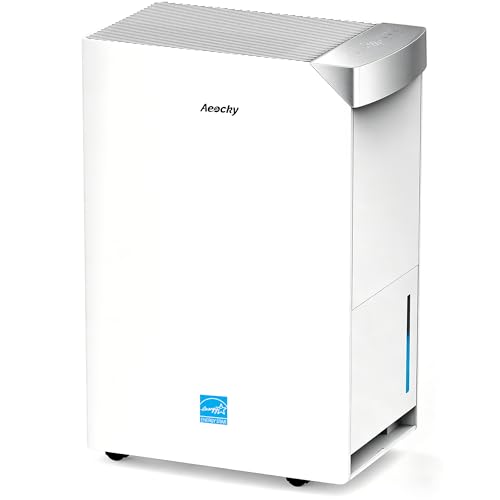
AEOCKY 5500 Sq.Ft Energy Star Dehumidifier

AEOCKY 6000 Sq.Ft Energy Star Dehumidifier Max 105Pint/D
The Picks, Examined More Closely
Tucked into a winterized RV or a garage that never quite dries out, the Camco Moisture Absorber Bucket earns its keep without a single watt of power. Each tub holds a fast-acting desiccant that pulls water from the air and pools it in the bottom, so you trade the noise and frost-cycle of a compressor for a quiet sit-anywhere tub. For spaces without an outlet, or a vehicle that sits all winter, that trade usually feels worth it.
You get four buckets in a pack, which is helpful if you rotate them between a camper, a basement closet, and a musty tackle box. The passive design also means cold temperatures help rather than hurt, since cooler air holds less moisture and the desiccant keeps absorbing regardless. Setup is as simple as peeling the seal and putting the lid on.
The Practical Payoff
- Operates without electricity, making it ideal for unheated storage, RVs, and sheds
- Pulls a meaningful amount of moisture even in sub-freezing conditions where compressor units would ice over
- Pack of four lets you spread coverage across multiple small spaces
- No-fragrance formula suits users sensitive to added scents
Trade Offs
- Not suitable for whole-room humidity control; capacity is small compared to electric units
- Buckets fill up and need replacing on a regular schedule, which adds long-term upkeep
- Spent desiccant becomes liquid brine, so placement on a stable, level surface matters
Who It Suits Best
RVers, cabin owners, and anyone with a cold, unpowered storage space that needs moisture control without running a cord.
Where Another Pick Suits Better
For actively heated bedrooms, the Tenergy Sorbi handles daily comfort with much less hands-on refilling.
Inside a Liberty safe in an unheated garage, winter temperatures can dip well below the working range of any electric dehumidifier, which is exactly why the Eva-Dry wireless unit exists. It uses renewable silica gel beads that absorb airborne moisture on their own, no power, no batteries, and no compressor. You place it on a shelf and let physics do the work.
The beads “renew” by being baked in the oven, so this becomes a low-effort rotation rather than a one-and-done purchase. For firearms owners, document storage, or anyone guarding valuables in a cold outbuilding, that cycle is familiar territory. Compared to the Camco buckets, the Eva-Dry trades bulk for a much smaller footprint.
What Helps Most
- 100% renewable silica gel design means no ongoing refills, just periodic oven recharging
- Completely wireless operation, perfect for safes, lockers, and remote cabinets
- Silent and compact, fitting in tight interior spaces where a powered unit would be intrusive
- Effective in cold temperatures where standard dehumidifiers would freeze up
Points To Keep In Mind
- Best for very small enclosed spaces; not a whole-room solution
- Renewal process takes oven time, so you need a spare unit to rotate during recharging
- Capacity shrinks as beads saturate, so check the indicator before long storage gaps
Made For
Safe owners and collectors who need dry air in an unheated, enclosed storage space where electric power is impractical or absent.
Consider Something Else When
Anyone wanting a livable humidity level in a finished room should look at the VEAGASO 34 Pint basement unit instead.
When the job is a flooded basement in February or a job site that needs to dry out before the drywall goes up, the MOUNTO 268Pints LGR pulls moisture on a different scale than anything else in this lineup. LGR, or low-grain refrigerant, is the same technology restoration contractors use to drop indoor humidity deep into the single digits, and it still works in cold rooms where standard compressors stall. The built-in pump and drain hose mean you can run it unattended for long stretches.
Wheels on the bottom and a relatively compact shell make it portable enough for crews to roll between sites, and the green housing is easy to spot in a crowded warehouse. In a residential basement it is probably overkill, but for restoration pros, garage workshops with chronic dampness, or anyone drying a space after storm damage, that scale is the point.
Strengths Worth Knowing
- LGR refrigeration keeps extracting moisture even in cold environments where ordinary units would freeze up
- Built-in condensate pump and included drain hose allow continuous, unattended draining
- Wheels and compact body make it easier to reposition than typical commercial dehumidifiers
- Large capacity suits water-damage restoration, large basements, and active job sites
Practical Considerations
- Commercial size and weight make it awkward for a casual user to relocate upstairs
- Power draw is significant, so a standard 15-amp household circuit may need to be dedicated
- Noise output is higher than bedroom-rated residential units, so placement away from living areas helps
Feature Snapshot
Best Suited To
Restoration contractors, workshop owners, and homeowners tackling serious flood or moisture issues in cold uninsulated spaces.
A Better Fit Elsewhere
For a finished cold-climate basement used as living space, the AEOCKY 6000Sq.Ft model is a quieter, more efficient everyday fit.
For a chilly bedroom or a small apartment where the radiator is doing its best, the Onsekin CS08 pairs semiconductor condensation with a built-in aromatherapy tray and a seven-color mood light. The semiconductor (Peltier) design is silent and vibration-free, so it makes sense in spaces where the louder compressor hum would be noticeable. The aromatherapy slot is a small but real bonus for bedrooms and reading nooks.
You also get a drain hose port and an auto shut-off for the internal tank, which is a thoughtful dual approach. Coverage tops out around 1,000 square feet under ideal conditions, so realistic performance is best in 250 to 400 square feet. Like most Peltier units, the catch shows up when the room itself is very cold, since the technology depends on a meaningful temperature difference between the warm and cold sides of the module.
The Helpful Details
- Near-silent operation suits bedrooms, nurseries, and home offices
- Aromatherapy tray adds scent diffusion alongside moisture removal
- Seven-color LED ambient light doubles as a subtle nightlight
- Auto shut-off and drain hose port give you two ways to manage water output
Honest Caveats
- Semiconductor extraction drops off sharply in very cold rooms, limiting cold-climate performance
- Internal tank fills quickly in damp spaces, so the drain hose is essentially required for hands-off use
- 1,000 sq ft coverage is best-case, not real-world, so undersized rooms perform best
Who Will Love This
Apartment dwellers, dorm residents, and anyone who wants a quiet, light-touch dehumidifier in a moderately cool bedroom or office.
Not Your Match When
Shoppers needing real cold-climate extraction in an unheated basement should step up to the VEAGASO 34 Pint unit.
The Tenergy Sorbi is the most “two-in-one” appliance in this roundup, pairing a Peltier-style dehumidifier with a true HEPA filter and a touch-control panel. In a small bathroom or a closet, the HEPA layer is meaningful: it captures fine particles while the unit pulls moisture, so the air feels cleaner as well as drier. The touch controls let you adjust fan speed and the auto shutoff adds a layer of safety when the 1-liter tank fills.
At roughly 7 pounds, it is easy to move between rooms, and the cube-shaped body fits on a shelf or counter. The trade-off is the same one shared with the Onsekin: semiconductor extraction is gentler than a compressor, so very cold rooms see limited impact. For chilly-but-occupied indoor spaces the performance is usually enough.
A Favorable Mix
- Combines dehumidification with true HEPA filtration in one compact unit
- Touch-control interface with adjustable fan speed keeps operation simple
- Auto shutoff prevents overflow when the 1-liter tank is full
- Lightweight build (around 7 pounds) makes it portable between rooms
Small Limitations
- HEPA filter needs periodic replacement, adding a small recurring cost
- Like other Peltier units, performance drops in truly cold rooms
- Best suited to small enclosed areas, not open-plan living spaces
Quick Facts
Perfect Match For
Anyone who wants a quiet, low-maintenance dehumidifier for a small bathroom, walk-in closet, or nursery with cleaner air as a bonus.
Look Elsewhere When
Larger cold basements need the extraction muscle of the AEOCKY 5500 Sq.Ft Energy Star unit.
The VEAGASO 34 Pint lands in the sweet spot for most cold-climate basements. It pulls 34 pints per day under standard AHAM conditions and is rated to handle rooms up to about 2,500 square feet, which covers a typical suburban basement with room to spare. Three operating modes (Dehu, Dry, and Continuous) let you tailor the cycle to laundry-drying days versus steady moisture control.
Unlike the small Peltier picks above, this is a real compressor unit with a built-in defrost cycle, so it keeps working in cooler basements where other residential units would ice up. The included drain hose is a real convenience in a basement where the unit can sit near a floor drain and run unattended for weeks. For most homeowners this is the most practical size tier.
Where It Helps
- Compressor-based extraction with defrost cycle keeps running in cooler basement temperatures
- Three operating modes cover everyday humidity, clothes drying, and continuous run
- 34-pint daily capacity is well-matched to mid-size basements and crawl spaces
- Drain hose included for hands-off, continuous draining into a sink or floor drain
Trade-Offs To Consider
- Louder than Peltier units, so placement away from living areas above the basement helps
- 2,500 sq ft rating is best-case; real-world humidity in a sealed basement will be lower
- Compressor technology adds bulk, so the unit is less portable than a 7-pound cube
Feature Rundown
The Right Fit
Homeowners with a mid-size cold basement who want a real compressor unit that runs unattended through winter.
Swap It Out When
Larger or more open basements benefit from the AEOCKY 5500 Sq.Ft model with broader coverage and higher efficiency.
The AEOCKY 5500 Sq.Ft unit steps into whole-home territory, covering large basements, multi-room additions, and combined basement-plus-crawlspace layouts. The Energy Star Version 6.0 rating matters in a category that often runs around the clock, since a more efficient compressor cuts kilowatt-hours meaningfully over a heating season. For homeowners watching their electric bill, that adds up.
Compared to the VEAGASO reviewed above, this is the same family of compressor technology but with a broader coverage envelope and stricter efficiency targets. The body is correspondingly larger, so plan a permanent spot for it near a drain. For anyone sizing up a true whole-basement solution, it sits in a comfortable middle ground between mid-size residential picks and the AEOCKY 6000 flagship.
Everyday Advantages
- Energy Star Version 6.0 efficiency helps control operating costs over a long heating season
- 5,500 sq ft coverage comfortably handles a large or open basement layout
- Compressor design supports low-temperature operation that Peltier units cannot match
- Continuous drain option suits installation near a floor drain or utility sink
Worth Bearing In Mind
- Physical size is substantial, so a permanent placement decision is wise before unboxing
- Compressor noise is noticeable, so shared walls with bedrooms may be a concern
- Higher initial cost than the VEAGASO, though efficiency helps offset that over time
Key Product Details
Whose Shelf It Belongs On
Energy-conscious homeowners with a large cold basement who plan to run the unit continuously through the heating season.
Another Choice May Suit
Shoppers who only need mid-size coverage should save money with the VEAGASO 34 Pint instead.
The AEOCKY 6000 sits at the top of the residential heap, with a maximum 105-pint daily extraction rate and 6,000 square feet of rated coverage. The “Most Efficient 2024” Energy Star designation is a meaningful credential in a category where not every Energy Star unit crosses the higher efficiency threshold. If your basement is large, open, and stays cool, this is the unit that simply keeps up.
For most homes, the extra capacity over the 5500-square-foot sibling is the kind of headroom you only appreciate during a wet spring or after a sump pump failure. It also means shorter run cycles at lower fan speeds, which is easier on the compressor and quieter in the room. Pricing is higher, but for full-basement coverage the upgrade math is straightforward.
Key Advantages
- Maximum 105-pint daily extraction supports very large or unusually damp basements
- Energy Star Most Efficient 2024 certification indicates top-tier operating efficiency
- 6,000 sq ft rated coverage handles expansive basements and finished lower levels
- Compressor design with low-temp operation keeps working in genuinely cold rooms
Potential Sticking Points
- Premium positioning means a higher upfront cost than mid-size residential picks
- Large chassis demands a planned, permanent installation spot with drainage
- Overkill for small basements; the 5500 sq ft AEOCKY is the better value at that size
Spec Overview
Built With In Mind
Homeowners with a large, finished, or chronically damp basement who want the most efficient and capable residential unit available.
Reach For A Different Pick When
Smaller spaces are better served by the VEAGASO 34 Pint, which is more proportionate and easier on the budget.
What To Weigh Before Choosing A Cold-Climate Dehumidifier
Low-Temperature Performance Comes First
Standard compressor units start to ice up once room temperatures drop below roughly 65°F, so the single most important attribute for a cold-climate home is confirmed low-temp operation. Look for an automatic defrost cycle or LGR technology if your basement or crawlspace runs cool most of the year. Peltier (semiconductor) units stay silent but lose extraction power in the same conditions, so they suit warmer rooms, not chilly ones.
Match Capacity To Real Coverage
Manufacturers rate square footage under ideal conditions, which almost never match a real basement. A safe rule is to size up: if your space is 1,200 square feet, look at a unit rated for 1,500 to 2,000. The picks in this list span small closet-sized rooms all the way up to 6,000-square-foot basements, and the difference shows up in how often the unit cycles, not just how dry the air gets.
Drainage Setup Changes Daily Convenience
Units with a built-in pump or a continuous drain port free you from emptying tanks on a daily basis, which matters in winter when no one wants to trek to a cold basement. If a floor drain is nearby, a simple gravity drain hose is often enough. For unattended operation in a remote corner, a built-in pump is worth seeking out.
Form Factor And Noise Shape Placement
Compressor units hum, Peltier units whisper, and desiccant units are silent. Think about where the unit will live: a bedroom adjacent basement argues for quieter tech, while a detached workshop can absorb any noise level. Wheels and a compact shell make seasonal repositioning realistic; a fixed chassis pushes you toward a permanent install.
Where Shoppers Go Wrong In This Category
Trusting Square-Footage Ratings At Face Value
Listed coverage is always the best-case number, and basements almost never match those conditions. Undersizing is the most common mistake, and it shows up as a unit that runs constantly without ever bringing humidity down. Sizing up by 30% or more is a more honest starting point.
Buying A Compressor Unit For A Cold Room
A great warm-climate dehumidifier becomes a noisy space heater once temperatures drop below 60°F, because the coils ice up and the unit short-cycles. Cold-climate homes need a defrost cycle, LGR tech, or a switch to a desiccant-style approach. The technology choice matters more than the pint rating in winter.
Frequently Asked Questions
Do Dehumidifiers Work In Cold Basements?
Standard compressor units struggle below 65°F and ice up below 50°F. Units with automatic defrost cycles or LGR technology keep extracting in colder rooms, while desiccant and Peltier-style units work in different ways across the same range. Choose the technology to match your basement’s actual winter temperature, not the rating on the box.
How Many Pints Per Day Do I Need For A Cold Basement?
For most 800 to 1,500-square-foot basements, a 30 to 50-pint unit is a sensible match. Larger or unusually damp spaces benefit from 70 to 105-pint models with a continuous drain. When in doubt, oversizing is safer than undersizing, since a unit that cycles on and off wears faster than one that runs steadily at lower output.
Are Desiccant Dehumidifiers Better In Cold Climates?
Desiccant units use a moisture-absorbing material rather than a cold coil, so they keep working in freezing temperatures where compressors stall. They are quiet, small, and great for safes, closets, and RVs, but they are not designed for whole-room humidity control. For whole basements, a low-temp compressor is still the more practical tool.
Where Should A Dehumidifier Sit In A Cold Basement?
Place it in the dampest corner, at least six inches from walls, with space around the intake and exhaust. If the basement is partitioned, position the unit in the area where moisture collects first, such as near a sump or exterior wall. A nearby floor drain or sink lets you use the continuous-drain option and avoid tank emptying.
Do Energy Star Dehumidifiers Save Money In Winter?
Energy Star units use less power for the same amount of moisture removal, which matters when the unit runs around the clock. Over a heating season, the savings add up, especially on larger 50-pint and up models. The “Most Efficient” tier pushes that further, so the efficiency gap is worth considering if the unit will run for months at a time.
Closing Remarks
The right dehumidifier for a cold-climate home is less about chasing the highest pint rating and more about matching the technology to the room’s actual winter temperature. Desiccant and Peltier units shine in unheated closets, safes, and small bedrooms, while compressor and LGR units earn their keep in full basements where temperatures stay in the 40s and 50s. Whichever route fits your space, the picks above are a solid starting point for a drier, more comfortable home through the cold months.