


Basements have a humidity problem, and most of them don’t talk about it openly. Standing water, musty air, condensation on cold pipes, that sticky feeling in summer: these are the everyday realities below grade, and a window AC unit or a bath fan won’t fix them. The right dehumidifier pulls moisture from the air before it soaks into drywall, wood framing, and stored belongings. This roundup looks at seven options built for that job, from compact thermoelectric units for finished basements to heavy-duty commercial machines sized for crawlspaces and large open areas.
How The Shortlist Stacks Up

PLUSCENT 1,500 Sq. Ft 21 Pint Dehumidifier for Basement and Home

PSOS 98 OZ Dehumidifier for Basement Bathroom Bedroom (Gray)

AEOCKY 50 Pint/Day 3500 Sq.Ft Ultra-Quiet 40dB Dehumidifier with Drain Hose
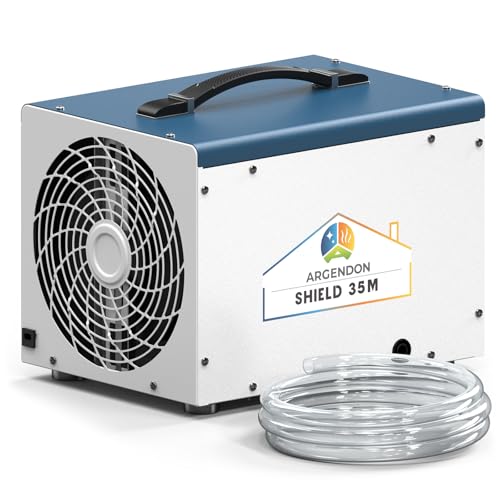
ARGENDON Dehumidifier for Crawlspace and Commercial 5-Year Limited Warranty
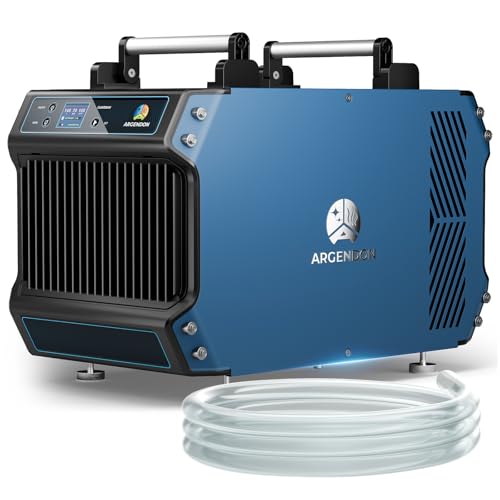
ARGENDON 180 Pints Crawlspace Dehumidifier with Pump (ETL)

AEOCKY 4500 Sq.Ft Energy Star Most Efficient 2025 Dehumidifier with Pump (80 Pint)
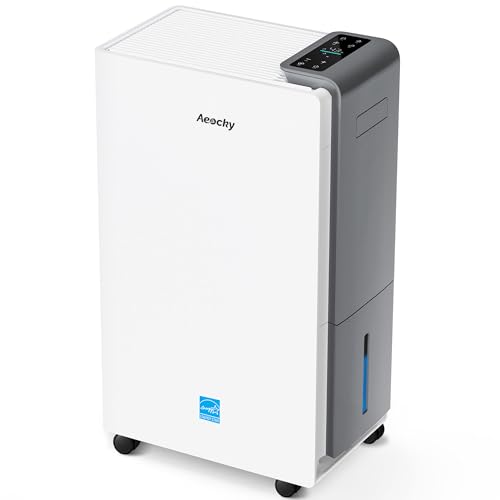
AEOCKY 5500 Sq.Ft Energy Star Most Efficient 2025 Dehumidifier (80 Pint)
The Strengths Of Each Pick
PLUSCENT positions this 21-pint unit as a flexible floor model for basements, bedrooms, and the occasional RV trip. Rated for spaces up to 1,500 square feet, it uses a 160-watt compressor (the standard refrigerator-style pump that condenses moisture from warm air) and ships with a continuous drain hose for unattended operation.
Compared to the smaller PSOS thermoelectric unit that follows, this PLUSCENT pulls moisture more aggressively and handles the deeper dampness you get below grade. Owners of finished basement rec rooms tend to appreciate the balance of capacity and size.
Real Benefits
- 21-pint daily removal handles mid-size finished basements without running constantly.
- Continuous drain option means no midnight tank-emptying trips during humid weeks.
- 1,500 sq. ft. coverage gives headroom for open layouts and L-shaped rooms.
- 160-watt draw keeps electrical cost manageable for everyday use.
Points To Note
- At 21 pints, it underperforms the larger 50- and 80-pint picks later in this list for very wet basements.
- Compressor noise will be more noticeable than thermoelectric options in quiet living spaces.
Key Specs
Right Fit For
Households with a finished basement rec room or home gym who want consistent humidity control without oversizing the unit.
Look Elsewhere When
The AEOCKY 50 Pint/Day 3500 Sq.Ft Ultra-Quiet 40dB Dehumidifier is the better match for very damp basements where you want extra extraction headroom.
PSOS takes a different approach with dual semiconductor condensation, a thermoelectric technology that cools a metal plate to form dew without a compressor, which keeps the unit compact and very quiet. A 98-ounce internal tank covers roughly 1,000 square feet, and a humidity display sits on the front panel for at-a-glance checks.
Where the PLUSCENT above trades silence for extraction, this PSOS leans the other way. It’s the more comfortable pick for a basement apartment, a converted in-law suite, or any finished space where TV audio or sleep matters.
Positive Takeaways
- Thermoelectric operation keeps noise low enough for bedrooms and living areas.
- 7-color ambient light adds a soft glow, useful as a subtle nightlight in finished basements.
- Auto shut-off protects the unit when the 98 oz tank fills up.
- Lightweight build makes it easy to move between rooms seasonally.
Trade Offs
- Thermoelectric models extract moisture more slowly than compressor-based units in very damp conditions.
- 98 oz internal tank means frequent emptying when humidity is high, unless you run a drain line.
Feature Snapshot
Who It Suits Best
Anyone running a quiet finished basement apartment, studio, or guest room where low noise matters more than raw extraction speed.
Skip It When
The PLUSCENT 21-pint model is a stronger call for a damp basement corner where you need compressor-level extraction.
AEOCKY’s 50-pint model is the sweet spot for many basements: serious extraction, a 3,500 square foot ceiling, and a 40 dB noise rating that puts it closer to a library than a refrigerator. A drain hose ships in the box, so the unit can run unattended into a floor drain or sump.
Compared to the PLUSCENT at 21 pints, this machine more than doubles daily removal, which makes it a real step up for homes that have already fought the humidity battle and lost. It’s the mid-tier answer for basements that need more than a casual unit.
A Favorable Mix
- 50-pint daily removal covers large finished basements and open rec areas.
- 40 dB rating keeps the unit tolerable in living areas without dedicated mechanical rooms.
- 3,500 sq. ft. coverage fits whole-basement dehumidification in many homes.
- Included drain hose simplifies continuous operation.
A Few Limitations
- Larger physical footprint than the 21-pint or thermoelectric picks above.
- Higher electrical draw than smaller units, worth factoring in for always-on operation.
Quick Facts
Best Suited To
Homeowners with a 1,000 to 3,000 square foot basement who want one machine to handle the whole space without constant attention.
Swap It Out When
The AEOCKY 80-pint pump model is the better call for crawlspaces, very wet basements, or setups that need to push water uphill to a drain.
ARGENDON’s 70-pint crawlspace unit is built for the harsher side of moisture control. An air output of 115 CFM (cubic feet per minute, the volume of air the fan can move) keeps air moving through enclosed, low-airflow spaces, and a 5-year limited warranty signals confidence in long-term durability.
Where the residential AEOCKY above focuses on quiet living-area use, this ARGENDON is happy to sit in a dirt-floored crawlspace or a workshop. The trade-off is noise and weight, both expected for a commercial-grade compressor.
Reasons It Performs
- 70-pint extraction handles moisture that builds up in crawlspaces and unconditioned basements.
- 115 CFM airflow helps the unit reach corners in long, enclosed spaces.
- 5-year limited warranty is unusually long for this category.
- Suits commercial settings like storage rooms, gyms, and small workshops.
Some Limits To Know
- Commercial-grade build makes it louder and heavier than residential picks.
- Coverage tops out around 1,000 sq. ft., so very large open basements may need a second unit.
Technical Sheet
Made For
Homeowners with a vented or unvented crawlspace, plus light commercial users managing humidity in small facilities.
Reach For A Different Pick When
The ARGENDON 180 Pints Crawlspace Dehumidifier with Pump suits much larger or more demanding commercial jobs.
The 180-pint ARGENDON sits at the top of this list for raw capacity. Rated for spaces up to 2,300 square feet and built around a built-in condensate pump, it’s designed for commercial crawlspaces, basements with no floor drain, and restoration jobs where the unit has to push water uphill.
Compared to the 70-pint ARGENDON above, this model adds more than double the daily extraction and the ability to drain vertically, which simplifies installs where gravity drainage isn’t an option.
A Few Highlights
- 180-pint daily extraction is the highest in this roundup.
- Built-in pump lets you route condensate upward to a sink, window, or remote drain.
- ETL listing (an electrical-safety certification recognized across North America) supports use in commercial and rental settings.
- 2,300 sq. ft. coverage handles warehouses, large basements, and multi-room crawlspaces.
Practical Considerations
- Physical size and weight are substantial, so plan the install path before delivery.
- Higher upfront cost than residential picks, which only makes sense at this scale.
Who Will Love This
Contractors, property managers, and homeowners with large crawlspaces or basements where standard residential units can’t keep up.
Not Your Match When
The AEOCKY 80-pint pump model is the more reasonable choice for typical residential basements that don’t need commercial extraction.
AEOCKY’s 80-pint pump model targets whole-basement humidity control in homes up to 4,500 square feet. The built-in pump can push condensate upward through a 5-meter vertical rise, which is a real convenience when your basement sits below the nearest drain.
Where the 50-pint AEOCKY covers most homes comfortably, this version is the upgrade pick for larger finished basements, dual-zone setups, or homes where the existing dehumidifier simply can’t keep up during peak summer.
What Earns Its Place
- 80-pint daily extraction is a meaningful jump from the 50-pint sibling.
- Built-in pump removes the need to position the unit near a floor drain.
- Intelligent humidistat (the built-in humidity sensor and control board) automates on/off cycling to a target humidity level.
- 4,500 sq. ft. coverage fits large basements and open floor plans.
Where It May Fall Short
- Compressor noise is higher than thermoelectric picks, so placement matters in living spaces.
- Larger footprint requires planning for outlet access and airflow clearance.
Feature Rundown
Perfect Match For
Homeowners with a large finished basement, in-law suite, or workshop who want one capable unit to handle the whole space.
Consider Something Else When
The AEOCKY 5500 Sq.Ft model is the right call for very open layouts or detached basements that exceed this unit’s comfortable coverage area.
The 5500 Sq.Ft AEOCKY extends the 80-pint platform to its largest residential footprint, covering up to 5,500 square feet on a single unit. The same intelligent humidistat that automates the smaller AEOCKY applies here, so the unit ramps up only when humidity drifts above your setpoint.
Compared to the 4,500 sq. ft. AEOCKY, this is the pick for very open basements, dual-basement homes, or properties where the dehumidifier sits between a finished rec room and a workshop. It also makes sense for homeowners who simply want extra capacity headroom.
What Helps Most
- 5,500 sq. ft. coverage is the largest in this list, sized for big open layouts.
- 80-pint extraction handles heavy summer loads without falling behind.
- Intelligent humidistat automates day-to-day humidity management.
- Setup suits dual-use basements that combine finished and utility areas.
Honest Caveats
- Undersized for very tight budgets, since smaller basements don’t need this much capacity.
- Operating cost rises with always-on use in a 5,500 sq. ft. envelope.
Who Should Grab It
Homeowners with a sprawling basement that combines recreation, storage, and utility space in one open area.
A Better Fit Elsewhere
The AEOCKY 4500 Sq.Ft 80-pint model is the more proportionate choice for typical finished basements under 4,000 sq. ft.
What Matters Most Before Choosing Dehumidifiers For Basements
Match Capacity To Square Footage And Dampness
Sizing a basement dehumidifier starts with two numbers: square footage and how wet the space actually gets. A 1,000 sq. ft. finished rec room with mild condensation needs far less muscle than a 2,000 sq. ft. block-walled basement with visible moisture on the walls. A common spec is around 30 to 50 pints per day for average dampness, and 50 to 80+ pints for actively wet spaces. Buying too small forces the compressor to run constantly, while buying too large wastes energy and short-cycles the unit.
Decide Between Compressor And Thermoelectric
Compressor-based dehumidifiers pull more moisture and work in cooler basements, which is why they dominate this list. Thermoelectric units like the PSOS in this roundup run quieter and lighter, but they extract less water and struggle below roughly 60°F. For most below-grade basements that stay cool year-round, a compressor model is the practical pick.
Plan Drainage Before You Buy
Emptying a tank by hand is a chore that gets old fast in humid weather. Continuous drain via gravity hose works when a floor drain is nearby, but a built-in pump (as on the larger AEOCKY and the 180-pint ARGENDON here) is the only option when the drain sits above the unit. Choose based on where the dehumidifier will actually live.
Noise, Airflow, And Where The Unit Will Sit
Dehumidifiers rated under 45 dB are comfortable near living spaces, while commercial units can sound like a small fridge. Air output, measured in CFM, matters most in long crawlspaces where air has to reach the far end of the space. Pick a spot with outlet access, room airflow around the coils, and a path for the drain line before settling on a model.
Key Considerations Across These Picks
Common Buying Slip Ups
The most frequent miss is sizing by square footage alone and ignoring how wet the basement actually is. A 1,500 sq. ft. finished space with a dehumidifier that only removes 21 pints may run around the clock during a stormy week. The other recurring mistake is buying a unit with no drain option and then discovering the nearest floor drain is on the other side of the room. Measure your space, check the drain path, and size for the worst week of summer, not an average day.
What The Higher Tier Buys
Stepping up from a 21-pint residential model to a 50- or 80-pint unit pays for three things: faster moisture removal, larger coil and fan assemblies, and longer component life under heavy use. The premium AEOCKY and ARGENDON models in this list add intelligent humidistats and built-in pumps, both of which remove a layer of daily attention. The upgrade is worth it in basements that stay consistently damp, run for months on end, or sit far from a drain. For a small apartment basement that only gets humid in July, the lower tier is the smarter spend.