


A damp basement is more than an inconvenience. Musty air creeps into storage, makes finished rooms feel clammy, and quietly feeds mold on framing and drywall. A dedicated dehumidifier pulls that moisture out before it becomes a problem, and the right unit runs quietly enough to forget it’s there.
Below is a curated set of seven basement-focused dehumidifiers ranging from compact thermoelectric models to commercial-grade crawlers. The picks span small laundry corners, mid-size rec rooms, and large open basements with persistent humidity, so you can match capacity to your space without overspending on a machine built for a warehouse.
The Choices Worth Comparing

PLUSCENT 1,500 Sq. Ft 21 Pint Dehumidifier for Basement and Home

PSOS 98 OZ Dehumidifier for Home 1000 Sq.Ft (Gray)

AEOCKY 50 Pint/Day 3500 Sq.Ft Ultra-Quiet Dehumidifier
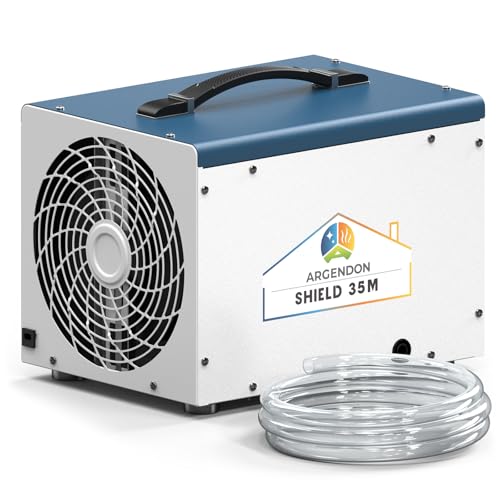
ARGENDON Crawlspace and Commercial Dehumidifier 5-Year Warranty
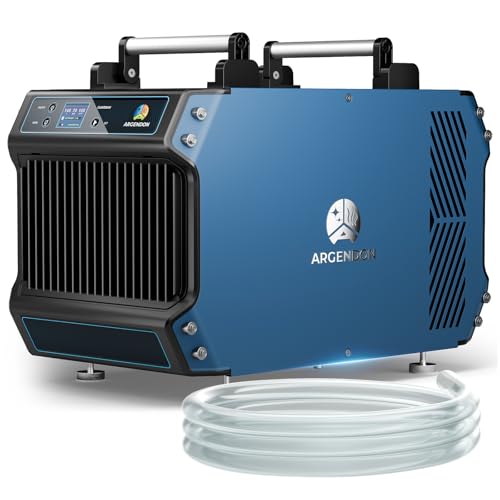
ARGENDON 180 Pints Crawlspace Dehumidifier with Pump ETL

AEOCKY 4500 Sq.Ft Energy Star Dehumidifier with Pump
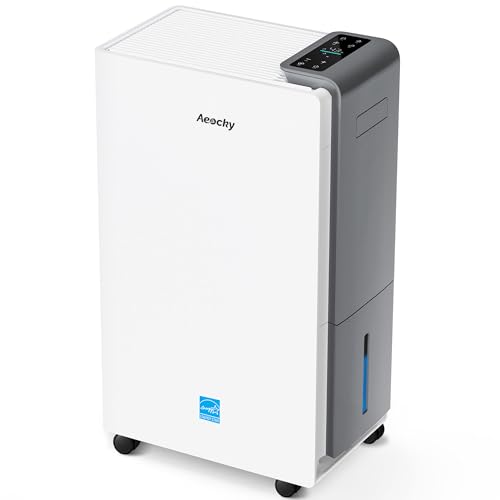
AEOCKY 5500 Sq.Ft Energy Star Dehumidifier Max 80 Pint/Day
The Details Behind The Selections
The PLUSCENT 21-pint compressor dehumidifier is a natural starting point for most basements between 800 and 1,500 square feet, and it does the unglamorous work of pulling water out of the air without requiring a remodel. Its 160-watt draw keeps running costs modest, and the included drain hose means you can route condensate to a floor drain and skip emptying the tank for weeks at a time.
Unlike the PSOS unit in the next slot, this one uses a true refrigeration cycle, so it actually has the pulling power to keep a partially finished basement dry through humid summers. A built-in humidistat lets you dial in a target humidity rather than letting the unit run full tilt, and for most homeowners that “set it and forget it” approach is the entire point.
Practical Pluses
- Compressor design handles real basement humidity where smaller thermoelectric models plateau.
- Included drain hose turns long stretches of damp weather into a true hands-off setup.
- 1,500-sq-ft coverage matches a typical suburban basement footprint, no oversizing required.
- 160W power draw is friendlier on the utility bill than larger 50- or 80-pint machines.
Things To Consider
- 21 pints per day is fine for moderate dampness, but chronic standing-water issues will outpace it.
- Compressor units produce a low hum that you may notice in adjacent living space.
Feature Snapshot
Who It Suits Best
Homeowners with a moderately damp, partially finished basement who want a set-and-forget compressor unit without paying for commercial capacity.
Where Another Pick Suits Better
For a finished basement rec room where quietness matters, the AEOCKY 50 Pint at slot 3 runs noticeably softer while still handling a larger footprint.
The PSOS leans into the quiet, lightweight side of the category using dual semiconductor condensation, which trades raw pulling power for a near-silent operation that won’t intrude on a TV or sleep. The 98-ounce tank is generous for a thermoelectric unit, and the seven-color ambient light is a small but real touch for basement corners that double as hangout space.
Compared to the PLUSCENT compressor that opened the list, this PSOS makes sense for tighter zones like a basement bedroom, a converted office, or a small rec nook where the compressor’s hum would feel obtrusive. It also doubles as a bedroom or bathroom unit if you need to move it upstairs during shoulder seasons.
Useful Highlights
- Semiconductor design runs quietly enough to leave on while you sleep or stream media.
- Humidity display on the front panel removes the guesswork from dial-style controls.
- Auto shut-off protects the unit when the 98 oz tank fills, so you don’t have to babysit it.
- Compact form factor slips into corners where a bulky compressor would stick out.
- Color ambient light makes it a friendlier fit for finished basement living areas.
Worth Noting
- Thermoelectric extraction is slower than compressor models, so the 1,000-sq-ft rating assumes only mild humidity.
- No continuous-drain option, which means manual tank emptying in damp basements.
- Tank needs regular emptying in continuously wet spaces, a chore compressor units with a hose eliminate.
Made For
Basement bedrooms, small offices, and reading nooks where whisper-quiet operation and compact form matter more than raw extraction speed.
Consider Something Else When
For a damp basement with visible moisture or a musty smell, the PLUSCENT in slot 1 will actually move enough water to make a difference.
The AEOCKY 50-pint is the unit you buy when the basement has become an actual living space and the dehumidifier needs to disappear into the background. Rated at around 40 dB on its lower speeds, it is quiet enough to sit near a sectional without dominating conversation, and the included drain hose pairs naturally with a nearby floor drain.
Stepping up from the PLUSCENT in slot 1, you trade wattage for capacity: 3,500 square feet of coverage and 50 pints per day cover most finished basements with a home gym, a sectional, and a small bar setup. It is a compressor unit, but the sound engineering keeps it well below the roar older 50-pint machines are remembered for.
Where It Helps
- 3,500-sq-ft coverage comfortably handles finished basements with multiple zones.
- 40 dB operation makes it livable next to seating areas and home gyms.
- 50-pint extraction clears humidity from a wet basement faster than a 21-pint unit would.
- Included drain hose supports true continuous operation during long humid stretches.
Small Caveats
- Larger chassis takes up more floor space than the PLUSCENT or PSOS models.
- Heavier than compact units, so moving it between rooms is a two-person task.
Spec Overview
Best Suited To
Families with a finished basement rec room or home gym who want real compressor power without the older-generation compressor drone.
Skip It When
For a mostly empty storage basement, the 21-pint PLUSCENT in slot 1 already covers the job at lower cost.
ARGENDON’s crawlspace-focused unit is built for the basement that fights back, with a 70-pint-per-day capacity and a 5-year limited warranty that signals long-term duty. The metal chassis, larger air output, and heavier compressor coil are aimed at environments where a plastic-bodied home unit would burn out within a season or two.
Where the AEOCKY 50-pint in slot 3 is a polished living-area machine, this ARGENDON is the workhorse: a basement with efflorescence on the walls, a damp crawlspace, or a converted workshop where humidity ruins tools and stored boxes. Owners commonly mount it on a stand or hang it in a utility space, freeing floor area in the rest of the basement.
A Few Strong Suits
- 70-pint daily capacity handles basements with visible moisture and active water intrusion.
- 5-year limited warranty is rare at this price tier and points to commercial-grade build quality.
- Heavy-duty construction supports installation in crawlspaces and utility rooms without babying it.
- Higher air output moves more cubic feet per minute, drying tighter spaces more uniformly.
- Suits basements, crawl spaces, bathrooms, and great rooms without needing a separate appliance.
Points To Keep In Mind
- Heavier and louder than typical living-area dehumidifiers, so it belongs in utility zones.
- Power draw is meaningful; expect a real line on the utility bill during summer peaks.
Technical Highlights
Who Should Grab It
Homeowners with a chronically damp basement or sealed crawlspace who want a long-warranty workhorse and don’t mind a utility-grade footprint.
Another Choice May Suit
For a quiet, finished living area, the AEOCKY 50-pint at slot 3 will be far less intrusive while still moving plenty of water.
The 180-pint ARGENDON is essentially a commercial dehumidifier wearing a residential listing, rated for spaces up to roughly 2,300 square feet. The integrated condensate pump is the headline feature: it pushes water upward through a hose to a sink, window, or remote drain, so the unit does not need to sit next to a floor drain to run unattended.
Stacked against the 70-pint ARGENDON in the previous slot, this one targets very different basements: large open layouts, dual-zone cellars, or properties where the previous owners finished the basement and never solved the moisture problem. The pump also makes it a sensible choice for split-level basements where the lowest point is far from a drain.
A Few Highlights
- 180-pint daily capacity is in commercial territory, well beyond most home units.
- Built-in pump removes the need for a nearby gravity drain, opening up placement options.
- 2,300-sq-ft coverage handles sprawling basements with multiple rooms and a bathroom.
- ETL listing supports use in light-commercial and mixed-use spaces, not just homes.
Trade Offs
- Overspec’d for an average 1,000-sq-ft basement, which inflates both purchase and operating cost.
- Larger physical footprint requires planning for a dedicated utility or mechanical area.
Whose Shelf It Belongs On
Owners of large or multi-room basements with persistent water issues, or small commercial spaces that need real capacity.
Look Elsewhere When
For a typical suburban basement under 1,500 sq ft, the AEOCKY 4,500-sq-ft unit in slot 6 covers the same job with a smaller chassis.
The AEOCKY 4,500-sq-ft Energy Star model lands in the sweet spot where most finished basements actually live, with up to 80 pints of daily extraction and an integrated pump that lifts water several feet. That pump feature alone solves the most common install headache: a beautiful finished basement with no floor drain in sight.
The intelligent humidistat reads the room and cycles the compressor intelligently, which is where the efficiency rating earns its keep. Compared with the 50-pint AEOCKY in slot 3, you get more capacity, a pump, and tighter energy use, all in a package that still fits through a standard basement door.
The Practical Payoff
- Built-in pump routes condensate upward, ideal for finished basements without floor drains.
- 4,500-sq-ft coverage handles most finished basements with adjacent utility or storage rooms.
- Energy Star efficiency means lower annual operating cost than non-certified peers at this capacity.
- Intelligent humidistat auto-cycles based on real-time readings, reducing needless runtime.
Honest Caveats
- Pump mechanism adds a minor maintenance point compared to gravity-drain units.
- Price sits above the 50-pint AEOCKY in slot 3, so the upgrade has to earn its keep for your space.
The Right Fit
Finished basements with a bathroom, bar, or laundry where the dehumidifier needs to run quietly, efficiently, and without a gravity drain.
Reach For A Different Pick When
For a smaller, partially finished basement, the AEOCKY 50-pint in slot 3 will handle daily humidity at lower upfront cost.
The 5,500-sq-ft AEOCKY is the biggest residential-style unit on this list, designed for basements that feel more like a small apartment than a cellar. It holds the same 80-pint daily ceiling as the 4,500-sq-ft sibling, but spreads the moisture removal across a much larger air volume for properties with walkout basements, adjoining workshops, or long rec room layouts.
Compared to the 4,500-sq-ft AEOCKY in the previous slot, this is the one to choose when the basement runs wall to wall and you need one appliance to cover it. The efficiency rating still keeps long-term cost reasonable, even at this capacity, which matters when a unit runs 8 to 12 hours a day through the humid months.
Advantages To Know
- 5,500-sq-ft coverage spans sprawling basements, including attached workshop or hobby space.
- Energy Star efficiency keeps the kilowatt-hour cost manageable at this size.
- 80-pint ceiling handles chronic dampness without the compressor running flat out.
- Single-unit solution removes the need to pair two smaller machines across zones.
Less Ideal Details
- Physical size is substantial, so plan a dedicated spot in a mechanical or utility area.
- Higher purchase price than mid-size models, justified mainly in genuinely large basements.
Feature Rundown
Who Will Love This
Homeowners with a sprawling, partially or fully finished basement who want a single high-capacity unit instead of pairing two smaller machines.
Where A Sibling Pick Shines
For a basement under 3,000 sq ft, the AEOCKY 4,500-sq-ft model in slot 6 covers the same humidity profile in a smaller, easier-to-place chassis.
What Matters Most Before Choosing a Basement Dehumidifier
Start with true basement size, not the square footage of the room you happen to use most. Measure length times width, then add a buffer for closets, utility nooks, and bathroom alcoves. A 1,000-sq-ft basement with a glass shower and a laundry dryer vent demands more capacity than the same square footage of dry storage.
Match technology to your tolerance for noise and maintenance. Compressor units move far more water and support continuous drain setups, but they hum. Thermoelectric models like the PSOS run quietly and fit bedrooms, but they plateau in genuinely damp spaces. Pick a compressor for real humidity, a thermoelectric unit for comfort-level dryness.
Plan drainage before you buy. A floor drain nearby means any of the compressor units with a hose will run unattended. No floor drain in sight? Pump-equipped models such as the AEOCKY 4,500-sq-ft unit push water upward to a sink or window, which is the difference between a set-and-forget install and weekly tank-emptying chores.
Consider air quality features you will actually use. A built-in humidistat, a real-time humidity display, and a washable filter all pay off over years of operation. Filters need cleaning every few weeks in a dusty basement, so easy access matters more than the spec sheet suggests.
Smart Choices When Comparing Basement Dehumidifiers
Pitfalls Shoppers Hit
The most common error is sizing to the room you want to dry instead of the basement you actually have. A rec room corner feels damp, but the unit is fighting humidity from the whole basement, including a damp HVAC closet and exterior walls. Pick capacity for the full footprint.
Another frequent mistake is buying a tank-only unit for a basement that will run daily. Manual emptying sounds fine until the tank fills at 2 a.m. and the unit shuts off, leaving the basement to climb back into the 70-percent humidity range by morning. Hose drainage or a built-in pump is worth the small premium in any basement that stays humid for weeks at a time.
The Case For Spending Up
Higher-tier models earn their price through three practical upgrades. First, integrated pumps remove the need to place the unit near a floor drain, opening up basement layouts. Second, Energy Star efficiency trims annual operating cost by a meaningful margin when a unit runs 8 to 12 hours a day through humid months. Third, larger coils and heavier compressors hold target humidity more steadily, which means less cycling, less wear, and a longer service life over a decade of ownership.
Frequently Asked Questions
How many pints per day do I need for a basement?
Most basements benefit from 30 to 50 pints of daily capacity at the standard 95°F/90% RH rating. Damp basements with visible moisture or history of mold should target 50 to 80 pints. Lightly damp storage basements can get by with 20 to 30 pints, like the PLUSCENT in slot 1.
Where should I place a dehumidifier in a basement?
Place the unit in the center of the basement when possible, away from walls, so airflow reaches all corners. Keep it a few feet from exterior walls and away from heat sources like a furnace or water heater. For units with a hose, position them so the hose can run downhill to a floor drain.
Can a dehumidifier run continuously?
Yes, most compressor dehumidifiers are designed for continuous operation, especially models with a humidistat and a drain hose or pump. Empty-tank auto shut-off is a safety feature, not a daily-use limit, so a hose setup lets the unit run 24/7 during humid stretches.
Do basement dehumidifiers use a lot of electricity?
Energy use depends on capacity. A 21-pint unit like the PLUSCENT draws around 160W, while a 50- to 80-pint machine draws noticeably more. Energy Star certified models such as the AEOCKY 4,500-sq-ft and 5,500-sq-ft units trim annual cost by cycling intelligently based on real humidity readings.
How often do I need to clean the filter?
Most manufacturers recommend checking the filter every two to four weeks, with a quick rinse or vacuum to keep airflow strong. A clogged filter makes the compressor work harder, raises energy use, and shortens service life, so a monthly cleaning habit pays off across years of ownership.
Final Verdict
The right basement dehumidifier comes down to your space, your drainage options, and your tolerance for noise. A 1,500-sq-ft compressor like the PLUSCENT in slot 1 covers most moderate cases, while a 4,500-sq-ft Energy Star unit with a built-in pump, the AEOCKY in slot 6, fits finished basements that need both capacity and clean install options. Pick the machine that matches your basement today, and your future self will thank you every time the humid months roll around.