


Breathing shouldn’t feel like work, yet for many households high indoor humidity makes the air feel heavy, musty, and irritating to sensitive airways. Moisture invites dust mites, mold spores, and other triggers that can keep asthma symptoms simmering, and venting a bathroom or drying out a basement only goes so far. A properly sized dehumidifier pulls that excess moisture out of the air, helping your living space sit in the 40 to 50 percent relative humidity range where most people with asthma breathe easier. The picks below cover small bedrooms, large basements, and everything between, so you can match capacity to your square footage and your lungs.
The Lineup, Simplified

Waykar 145 Pints High Efficiency Dehumidifier with Pump

PSOS 98 OZ Quiet Dehumidifier for Home

FreAire 34 Pint Dehumidifier with Drain Hose
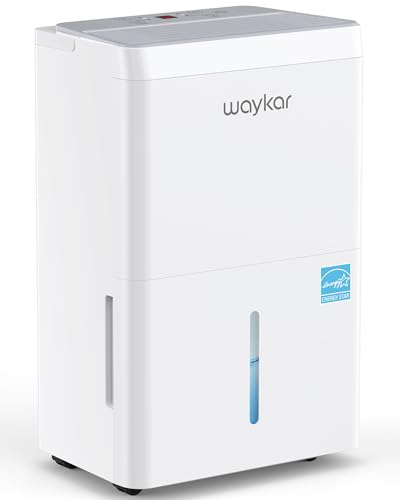
Waykar 6000 Sq.Ft Energy Star Dehumidifier 120 Pint

Waykar 34 Pints 2025 Energy Star Dehumidifier

Waykar 150 Pint Energy Star Dehumidifier with Pump
Waykar 5000 Sq.Ft 80 Pints Energy Star Dehumidifier
Inside Each Recommended Option
Picture a damp warehouse or a basement that never quite dries out, and the Waykar 145 Pints High Efficiency Dehumidifier with Pump earns its keep in exactly that kind of environment. Rated for spaces up to 6,500 square feet, it pulls moisture aggressively, which matters when mold and dust mites have had months to settle in. The built-in pump pushes water upward and out through a hose, so you can route drainage to a sink, a floor drain, or a window without babysitting a tank. A 30 to 80 percent adjustable humidity range lets you dial in a target, and the unit cycles on and off to hold it. For households with asthma where every cubic foot of stale basement air feeds the problem, this is the workhorse end of the lineup.
Compared to the smaller picks later in this list, this one trades portability for raw extraction. The trade-off shows up the moment you try to move it up a flight of stairs.
A Few Strong Suits
- Built-in pump sends water uphill, so you can drain into a sink without lifting a heavy tank
- 145-pint daily extraction handles damp basements, workshops, and storage spaces that smaller units cannot touch
- Adjustable humidity range from 30 to 80 percent lets you target the 40 to 50 percent sweet spot for asthma comfort
- Wide 6,500 square foot coverage means a single unit can serve an open floor plan plus a connected basement
Points To Keep In Mind
- Its size and weight make it more of an install-once choice than a portable one
- Higher extraction rates typically come with a louder compressor cycle than the bedroom-friendly models below
Whose Shelf It Belongs On
Owners of large basements, workshops, or homes with persistent mustiness who need a set-and-forget drainage setup.
Swap It Out When
The Waykar 34 Pints 2025 Energy Star Dehumidifier is a better match for anyone in a small apartment where this unit’s footprint would dominate the room.
Bedrooms and nurseries are where compressor-based dehumidifiers tend to announce themselves, and that is precisely the problem the PSOS 98 OZ Quiet Dehumidifier for Home sets out to solve. It uses dual semiconductor condensation, a Peltier-style design that runs without a noisy compressor, so it sips away moisture in a corner of the room while you sleep. A 98-ounce tank and an auto shut-off keep things safe if you forget about it, and the built-in humidity display takes the guessing out of “is it doing anything.” For a small bedroom around 1,000 square feet, that low-noise operation tends to be the deciding factor.
Step back from the heavy-duty Waykar 145, and the contrast is stark. Where that model flexes with raw extraction, this one leans on stealth.
What Stands Out
- Compressor-free Peltier operation means you can run it through the night without it intruding on sleep
- 98-ounce tank and auto shut-off prevent overflows when the unit reaches capacity
- Front-facing humidity display gives instant feedback on the room’s moisture level
- Compact form fits on a dresser, nightstand, or small bathroom counter without dominating the space
Honest Caveats
- Semiconductor units extract moisture more slowly than compressor-based models, so a 1,000-square-foot room is the realistic ceiling
- Owners commonly report needing to empty the tank daily in genuinely damp bathrooms
Feature Snapshot
Best Suited To
Light sleepers, parents of kids with asthma, and anyone running a dehumidifier in a bedroom where compressor noise would be a dealbreaker.
Look Elsewhere When
The Waykar 6000 Sq.Ft Energy Star Dehumidifier 120 Pint suits a homeowner with a damp basement far better, since the PSOS cannot meaningfully treat that much square footage.
Most asthma households do not need a commercial monster, and most do not want a tiny desktop unit either. The FreAire 34 Pint Dehumidifier with Drain Hose lands in the middle, rated for spaces up to 2,500 square feet with a built-in compressor that pulls up to 34 pints of water per day under typical warm, humid conditions. The 6.56-foot drain hose is the part that ends up mattering day to day, since it lets you route the condensate to a nearby floor drain or sink and skip the ritual of dumping a tank. That hands-off drainage makes it a natural fit for living rooms, finished basements, and open layouts where the unit might otherwise sit unnoticed in a corner.
It looks like a more approachable alternative to the Waykar 145 from the first review, and in most living spaces it does the same job at a friendlier scale.
Points In Its Favor
- 34-pint daily extraction covers mid-size living areas and finished basements in one pass
- 6.56-foot drain hose supports continuous gravity drainage to a sink, sump, or floor drain
- 2,500 square foot coverage handles most apartments, condos, and small single-family homes
Small Caveats
- Gravity drainage needs the unit positioned above or near the drain point, so placement takes some planning
- Coil-based compressors run warmer and a bit louder than the Peltier option in pick 2
Made For
Households with a finished basement or open living area that needs steady humidity control without manual tank emptying.
Not Your Match When
The Waykar 150 Pint Energy Star Dehumidifier with Pump is the right call for truly cavernous spaces, since the FreAire’s 2,500-square-foot ceiling runs out fast in a workshop or large basement.
Pulling 120 pints a day while staying around 40 decibels is the kind of spec that used to be wishful thinking, and the Waykar 6000 Sq.Ft Energy Star Dehumidifier 120 Pint actually delivers it. That quiet operation, roughly the level of a library, makes it usable in finished living areas instead of relegating it to the basement corner. Smart Auto Comfort Mode reads the room and ramps the compressor up or down, which means you do not have to babysit settings once the target humidity is set. The included drain hose and internal tank give you both continuous drainage and a backup reservoir for spots without a drain nearby.
Where the FreAire in pick 3 stops at 2,500 square feet, this Waykar quietly triples the coverage without making the room feel like a server closet.
What Works In Its Favor
- 120-pint daily extraction handles whole-home humidity in spaces up to 6,000 square feet
- 40 dB operation keeps the unit livable near bedrooms, home offices, and living rooms
- Smart Auto Comfort Mode adjusts compressor output based on the ambient humidity reading
- Energy Star design reduces the operating cost over a long, humid summer
Things To Weigh
- Air filter cleaning is a maintenance task the smaller Peltier unit simply does not have
- It still needs a drain destination for the 120-pint-per-day pace to make sense long term
Quick Facts
Right Fit For
Families who want one unit to cover a basement and a connected main floor without retreating to a utility room to hear themselves think.
Reach For A Different Pick When
The PSOS 98 OZ Quiet Dehumidifier for Home is the smarter bedroom-only buy for someone who does not need 6,000 square feet of coverage.
Small basements, converted dens, and apartments with a single stubborn room all share the same need: enough extraction to matter, in a box that does not swallow the floor. The Waykar 34 Pints 2025 Energy Star Dehumidifier uses a newer rotary compressor that the brand describes as more compact and efficient than older designs, and the result is a 34-pint-per-day unit rated for up to 2,000 square feet. You get both auto and manual drainage options, which is genuinely useful in apartments without a floor drain. A 0.62-gallon internal tank means the manual mode is a real option, not a tease.
It slots neatly between the FreAire in pick 3 and the larger Waykars, sized for the person who wants serious capacity without a 50-pound box on wheels.
Real Benefits
- 2025 rotary compressor design shrinks the chassis while keeping 34-pint extraction
- 2,000 square foot coverage suits apartments, dens, and small basements
- Auto or manual drainage gives flexibility in rentals without floor drains
- Energy Star rating helps keep operating costs down during long humid stretches
Trade Offs
- At 2,000 square feet, it cannot serve an open floor plan plus a connected basement the way the 120-pint Waykar can
- Internal tank at 0.62 gallons means manual mode still needs daily attention in heavy humidity
Perfect Match For
Renters and apartment dwellers who need real extraction power without committing to a permanent install or a noisy industrial unit.
Consider Something Else When
The Waykar 5000 Sq.Ft 80 Pints Energy Star Dehumidifier is a better fit for a mid-size home that needs more reach than 2,000 square feet.
At 150 pints per day and 7,000 square feet of rated coverage, the Waykar 150 Pint Energy Star Dehumidifier with Pump sits at the ceiling of what most households realistically need. The built-in pump is the headline feature here, since it pushes condensate vertically through a hose and lets you drain into a window, sink, or overhead line without gravity limiting you. Auto defrost prevents the coils from icing up in cooler basement conditions, which is a real failure mode for cheaper units run year-round. Smart Auto Comfort Mode cycles the compressor based on the room reading, so the unit only works as hard as the current humidity demands.
It picks up where the 120-pint Waykar in pick 4 leaves off, adding pump-driven drainage and a wider coverage area for genuinely large or awkwardly shaped spaces.
Advantages To Know
- 150-pint daily extraction tackles warehouses, large basements, and commercial spaces
- Built-in pump sends water vertically, freeing you from placing the unit next to a drain
- Auto defrost protects the coils during cooler basement operation in shoulder seasons
- Smart Auto Comfort Mode optimizes compressor cycles against the live humidity reading
Possible Compromises
- Its size, weight, and noise floor make it impractical for living areas rather than utility spaces
- Pump-equipped units sometimes need occasional hose checkups to prevent clogs at fittings
Spec Overview
Who Will Love This
Owners of very large basements, multi-unit properties, or light commercial spaces with persistent humidity that smaller units cannot keep up with.
Where Another Pick Suits Better
The FreAire 34 Pint Dehumidifier is the more sensible buy for a single living room under 2,500 square feet, where 150-pint capacity would be overkill.
Sometimes the right answer lives in the middle of the spec sheet, and the Waykar 5000 Sq.Ft 80 Pints Energy Star Dehumidifier is built for that buyer. It pulls 80 pints per day, handles up to 5,000 square feet, and shares the same Energy Star design language as the larger units in this list. Mid-size homes, finished basements that double as living space, and split-level layouts benefit from its capacity without paying for commercial-grade overkill. The 30 to 80 percent adjustable range keeps the target humidity in your hands, which is the actual point of the device for asthma households.
It rounds out the Waykar family between the 34-pint 2025 model and the 120-pint unit, filling the gap most people actually need.
What Earns Its Place
- 80-pint daily extraction balances capacity and energy use for mid-size homes
- 5,000 square foot coverage suits split-levels and most finished basements
- Adjustable humidity range from 30 to 80 percent keeps the asthma-comfort zone within reach
Where It Is Less Suited
- Without a built-in pump, drainage relies on gravity and a nearby drain point
- At 80 pints, it cannot keep up with the largest commercial basements the 150-pint Waykar covers
Feature Rundown
Who Should Grab It
Homeowners with a mid-size house or a finished basement that needs steady humidity control without stepping into commercial territory.
A Better Fit Elsewhere
The PSOS 98 OZ Quiet Dehumidifier for Home makes more sense for a small bedroom-only setup where compressor noise would be unwelcome.
What Matters When Shopping For A Dehumidifier To Support Asthma
Match Capacity To Your Square Footage
Manufacturers rate dehumidifiers by how many pints they extract per day under specific conditions (typically 95°F and 90 percent relative humidity), and the higher that number, the faster a room reaches your target humidity. For asthma households, sizing up is usually better than sizing down: an undersized unit runs constantly, never quite catches up, and shortens its own compressor life. A 30 to 50 pint per day unit handles most bedrooms and small apartments, while 70 to 120 pints covers full homes and basements. Anything above that is industrial territory.
Aim For The 40 To 50 Percent Humidity Target
Dermatologists and allergists commonly suggest keeping indoor relative humidity between 40 and 50 percent to limit dust mite and mold growth without drying out sinuses. Look for a unit with an adjustable setpoint in that range, ideally with a built-in humidistat (the sensor that measures humidity and cycles the compressor accordingly) so it stops and starts on its own. Without that auto control, you risk over-drying the air, which can irritate airways just as easily as damp air.
Noise And Placement Matter In Asthma Households
A dehumidifier that roars in the corner does not get left on, and an off unit cannot help your breathing. Compressor-based models produce more sound than Peltier designs, so noise ratings (typically listed in decibels) are worth checking. For bedrooms and nurseries, anything under 45 dB is a workable target. Drainage planning matters too: a gravity drain hose needs the unit above or beside a drain, while a built-in pump can push water vertically and reach a sink or window.
Filter Access And Long-Term Maintenance
Every compressor dehumidifier needs its air filter cleaned or swapped periodically, and the easier that process is, the more likely you are to do it. A clogged filter chokes airflow, drops efficiency, and can push humidity back up without you realizing why. Look for a washable filter and a removable tank if you plan to use the unit without a permanent drain, and confirm that replacement parts are easy to find.
Pitfalls Shoppers Hit And When To Pay Up
Where Shoppers Go Wrong
The most common buying slip in this category is matching a small bedroom unit to a whole-house humidity problem and then blaming the product when the basement still smells. The opposite error is buying a 150-pint industrial model for a 400-square-foot studio and watching the compressor short-cycle every few minutes. Always size the unit to the space you actually need to treat, and remember that open floor plans share humidity across the entire volume. Another trap is ignoring drainage: a unit with a tiny internal tank in a damp room will shut off every eight hours, and an ignored full tank quietly turns into a small indoor swimming pool on your floor.
When Paying More Pays Off
Higher-tier dehumidifiers earn their premium in three places. Built-in pumps give you drainage flexibility that gravity-only units cannot match in finished basements. Auto defrost prevents coil icing during cooler shoulder seasons, which matters if you plan to run the unit year-round. And quieter compressors at 40 dB or below let you place the unit in living areas instead of relegating it to a utility room, which means you actually leave it on long enough to matter for asthma symptoms.
Frequently Asked Questions
What humidity level is best for asthma?
Most allergists suggest keeping indoor relative humidity between 40 and 50 percent, since lower levels allow dust mites and mold to thrive, while higher levels can promote bacterial growth. A dehumidifier with an adjustable humidistat makes it easier to hold that range steady across changing weather.
How do I choose the right size dehumidifier for my home?
Match the unit’s pint-per-day rating to your square footage, and round up if your space is unusually damp, has poor ventilation, or includes a basement. A 30 to 50 pint model handles bedrooms and small apartments, while 70 to 120 pints covers full homes and basements.
Are compressor or Peltier dehumidifiers quieter?
Peltier, also called thermoelectric, dehumidifiers run without a compressor and tend to be noticeably quieter, but they also extract less moisture and work best in small, enclosed rooms. Compressor models move more water per day and handle larger spaces, though they produce more sound.
Can a dehumidifier help with dust mite allergies?
Lowering humidity below 50 percent makes the indoor environment less hospitable to dust mites, which need moisture to thrive. A dehumidifier alone will not eliminate dust mites, but combined with regular bedding washes and HEPA filtration, it supports a less reactive home.
How often do I need to empty the tank or clean the filter?
In mild humidity, expect to empty the internal tank every one to three days, while a continuously drained unit removes that step entirely. Air filters should be checked monthly and cleaned or replaced according to the manufacturer’s instructions to keep extraction efficiency high.
Bottom Line
Picking the right dehumidifier for asthma really comes down to matching capacity to the space you live in and committing to a target humidity in the 40 to 50 percent range. Small bedrooms and nurseries do well with the quiet PSOS, mid-size homes land comfortably with the 80-pint Waykar, and stubborn basements call for the pump-equipped 150-pint model. The right unit is the one you leave running, in the room that matters most, without thinking twice about it.