

Damp basements, stuffy bedrooms, lingering pet dander, the musty smell of a closed-up home through a wet week: indoor air quality problems rarely come one at a time. This roundup pairs high-capacity dehumidifiers with multi-room HEPA (High-Efficiency Particulate Air) purifiers, so the moisture and the particulates get handled in the same sweep. You will find workhorse commercial-grade dryers, a quiet 7-color nightlight unit, smart monitors, and a couple of LEVOIT picks tuned for pet households and allergy-prone sleepers.
A Fast Comparison Of The Options

Waykar 145 Pints 6,500 Sq. Ft High Efficiency Dehumidifier with Pump

PSOS 98 OZ Quiet Dehumidifier with Ambient Light (Gray)

FreAire 34 Pint Dehumidifier for 2,500 Sq. Ft with 6.56 ft Drain Hose
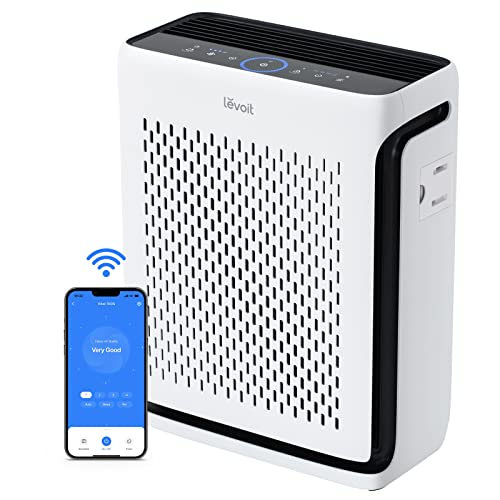
LEVOIT Vital 100S-P Air Purifier with Washable Pre-Filter

LEVOIT Vital 200S-P Smart Air Purifier with Air Quality Monitor

LEVOIT Core 300-P Air Purifier with H13 True HEPA Filter

Waykar 34 Pints 2025 Energy Star Dehumidifier for Spaces up to 2,000 Sq. Ft.

Waykar 150 Pint 2025 Energy Star Dehumidifier with Pump for 7,000 Sq. Ft.
What Each Pick Brings To The Table
This is the workhorse end of the list, the kind of unit that earns a spot in a workshop, garage, or oversized basement rather than beside a bed. Rated for up to 6,500 square feet, it pulls moisture at a rate designed for spaces that smaller dehumidifiers simply cannot keep up with. The integrated pump pushes condensate (collected water) upward and out through a drain hose, which means you can route discharge away from a sump or floor drain without babysitting a bucket.
For anyone managing a damp crawlspace, a multi-room finished basement, or a storage area prone to condensation, the appeal is mostly the capacity and the set-and-forget drainage. Compared with the smaller Waykar 34-pint unit later in this list, this one trades portability and quietness for raw pulling power.
Bright Spots
- Built-in condensate pump eliminates manual tank emptying in most setups.
- Covers up to 6,500 sq. ft, making it suitable for true whole-floor or commercial-scale jobs.
- Adjustable humidity range gives meaningful control over target moisture levels.
- Drain hose and tank options offer flexibility for permanent or semi-permanent installs.
Things To Consider
- Size and weight make it a poor candidate for frequent room-to-room moves.
- Compressor-based cooling tends to run warmer and louder than a small thermoelectric unit.
- Overkill for a single bedroom or a studio apartment.
Quick Facts
Whose Basement It Belongs On
Homeowners dealing with persistent basement dampness, storage facilities, or small warehouse operators who need automated drainage and serious daily capacity.
Swap It Out When
The PSOS 98 OZ Quiet Dehumidifier with Ambient Light is a far better match for a single bedroom or bathroom, where capacity matters less than noise and footprint.
On the opposite end of the scale, the PSOS unit is the kind of small thermoelectric dehumidifier (cools a surface to condense moisture, no compressor) that fits on a nightstand or a bathroom shelf. It uses dual semiconductor condensation, which is the main reason it stays so quiet. There is a humidity display on the front and a 7-color ambient light you can leave on or cycle through, which doubles as a soft nightlight for a kid’s room.
Where the heavy Waykar pumps 145 pints a day, this one is built for roughly 1,000 sq. ft of typical bedroom or home-office duty. You will need to empty the 98 oz tank from time to time, but the auto shut-off keeps that from being a surprise spill. It is the friendliest pick on the list for shared spaces, dorms, and rented apartments where size and noise matter more than raw pulling power.
The Practical Payoff
- Near-silent operation makes it livable in a bedroom or a study.
- Auto shut-off protects the unit and your floor when the tank fills up.
- Color ambient light is a small but useful touch for nurseries and kids’ rooms.
- Compact shell fits on counters, shelves, and tight corners without dominating the room.
Worth Noting
- Thermoelectric capacity is modest; expect slow progress in a large, very damp basement.
- Manual tank emptying on a regular schedule is part of ownership.
- Ambient light is a feature some users will want to disable entirely.
Right Fit For
Apartment dwellers, students, or parents looking for a low-noise, light-touch dehumidifier for a single bedroom, nursery, or small bathroom.
Reach For A Different Pick When
The FreAire 34 Pint Dehumidifier for 2,500 Sq. Ft is the smarter grab for a larger, regularly damp room where a small thermoelectric unit would be running constantly and never catching up.
The FreAire 34-pint sits in the most useful middle ground on this list: large enough to handle a finished basement or a big living room, small enough to still live in a normal house. It uses a compression system and ships with a 6.56 ft drain hose, which is the underrated part. The hose is long enough to reach a utility sink, a floor drain, or a sump pump cover without dragging the unit across the room.
Unlike the PSOS unit, this is a real room-drying machine, but it does not have the bulk of the 145-pint Waykar. The trade-off is mostly noise: a compression system is louder than a thermoelectric one, so most owners place this in a basement, a den, or a laundry area rather than next to a sleeping infant. It is a sensible pick for the household that needs to dry more than a single room without going full-industrial.
Benefits That Matter
- Long drain hose simplifies continuous drainage setups.
- Covers up to 2,500 sq. ft, the sweet spot for most homes.
- Compression-based drying handles true dampness, not just ambient humidity.
- More portable than the commercial Waykar units, easier to reposition seasonally.
Small Caveats
- Compression operation is noticeably louder than the PSOS thermoelectric option.
- Emptying the internal tank manually is still part of the routine without a hose run.
Feature Snapshot
Best Suited To
Homeowners with one genuinely damp room who want a quieter, lower-cost alternative to a full commercial unit.
A Better Fit Elsewhere
The Waykar 145 Pints 6,500 Sq. Ft High Efficiency Dehumidifier is the better fit for anyone drying out a warehouse, a workshop, or a multi-room basement, where this 34-pint unit would run nonstop.
Here the conversation shifts from moisture to particles. The LEVOIT Vital 100S-P is a true HEPA air purifier aimed squarely at homes with shedding pets and allergy-prone sleepers. It carries a washable pre-filter, which catches the visible hair and larger dander before it can clog the HEPA layer underneath. That small design choice cuts down on filter replacement costs, which is the part pet owners tend to care about most.
Rated for rooms up to around 1,073 sq. ft, it covers a generous bedroom or open living area. There is also a quiet HEPA sleep mode that drops fan speed for nighttime use. It is the cleaner-air side of the dehumidifier air purifiers question, designed to tackle dander, pollen, and smoke rather than the damp-basement problems the Waykar units solve.
What Helps Most
- Washable pre-filter extends the life of the main HEPA filter and lowers long-term cost.
- True HEPA layer captures the small particles that drive most allergy symptoms.
- Sleep mode keeps operation unobtrusive in a bedroom.
- Smart monitor adjusts fan speed as air quality changes throughout the day.
Honest Caveats
- HEPA filters still need periodic replacement, just less often thanks to the pre-filter.
- This unit purifies air, it does not dehumidify, so it pairs with a separate dryer in damp spaces.
Perfect Match For
Pet owners and allergy sufferers who want a quieter, lower-maintenance HEPA purifier for a single large room.
Look Elsewhere When
The LEVOIT Vital 200S-P Smart Air Purifier with Air Quality Monitor is the smarter upgrade for open-plan living areas where you need broader coverage and a built-in air quality display.
Where the Vital 100S-P is the everyday bedroom pick, the Vital 200S-P is the bigger, smarter sibling. It pushes coverage up to roughly 1,875 sq. ft, which puts a true open-plan living area or a loft within reach of a single unit. The 27 dB sleep mode is a real number, quieter than a soft whisper, so it remains bedroom-friendly even with the larger fan.
It also ships with a built-in air quality monitor, which is the main reason tech-forward households gravitate to it. Rather than running on a fixed speed, the purifier can react to what it actually senses in the room. For most living areas, that means the fan winds down when you are out, and ramps up when dinner is on the stove or the dog has just shaken off after a walk.
Strengths Worth Knowing
- 27 dB sleep mode keeps the unit livable next to a bed.
- AHAM VERIFIDE seal signals independently tested clean-air delivery and energy performance.
- Air quality monitor enables automatic fan adjustments throughout the day.
- 1,875 sq. ft coverage handles larger rooms without needing a second purifier.
A Few Limitations
- Larger footprint than the 100S-P; harder to tuck into a tight corner.
- No dehumidification function, so it does not solve moisture problems on its own.
Key Product Details
Who Should Grab It
Open-plan dwellers, smart-home users, and anyone who wants the purifier to react to air quality without manual adjustments.
Skip It When
The LEVOIT Core 300-P Air Purifier with H13 True HEPA Filter is the more sensible pick for a small bedroom where ultra-quiet operation and a smaller footprint matter more than wide coverage.
The Core 300-P is the smallest LEVOIT on this list and the one most likely to live on a nightstand. It uses an H13 True HEPA filter, a medical-grade grade that captures 99.97% of particles down to 0.3 microns, and runs at 24 dB on its lowest setting. That is genuinely quiet: closer to soft breathing than to any fan you would normally notice.
It is aimed at small bedrooms, nurseries, and home offices, with coverage rated up to roughly 1,073 sq. ft under ideal conditions. In a real, more cluttered bedroom you may find performance closer to its nameplate, depending on ceiling height and doorway airflow. The honest read is that it does its best work in a closed-door room where it can actually cycle the air.
Useful Touches
- 24 dB on sleep mode is the quietest figure on this entire list.
- H13 True HEPA grade is a step above standard HEPA filters.
- Compact tower fits on dressers and small side tables.
- AHAM VERIFIDE seal confirms independently tested clean-air performance.
Where It Is Less Suited
- Best in a closed-door room; large open spaces will outpace its clean-air delivery.
- No humidity or moisture control, so a damp basement calls for a separate dryer.
Who Will Love This
Light sleepers, parents setting up a nursery, and anyone running a small home office where quiet matters more than square footage.
Where Another Pick Suits Better
The LEVOIT Vital 200S-P Smart Air Purifier is the right move for open-plan living, where the Core 300-P would be undersized and overworked.
The 2025 Waykar 34-pint is the everyday answer to basement dampness for people who care about energy bills. It is rated for spaces up to 2,000 sq. ft and built around a rotary compressor design, which is the main reason it carries an Energy Star label. For most homes, that translates into a unit that can run for days without a noticeable spike on the meter.
You get a 0.62-gallon internal tank for setups without a drain, plus auto or manual drainage for permanent installs. The adjustable humidity range, 30% to 80% RH, is wide enough for both damp basements and a stuffy upstairs bedroom in humid weather. In our view, this is the most balanced residential pick on the list, useful in more scenarios than any other single unit here.
What Stands Out
- Energy Star rated for lower long-term operating cost.
- Compact rotary compressor keeps the unit smaller than older 34-pint designs.
- Dual drainage modes, auto and manual, fit a range of installs.
- 2,000 sq. ft coverage handles most basements and large living areas.
Trade Offs
- Internal tank is on the small side at 0.62 gallons, so without a hose, manual emptying is part of the routine.
- Compression noise means it is not a bedroom-friendly unit.
Made For
Homeowners who want a single capable dehumidifier for a basement, utility room, or open living area, and who would rather not pay a premium on every monthly bill.
Not Your Match When
The Waykar 150 Pint 2025 Energy Star Dehumidifier is the right call for true whole-home or commercial-scale coverage, where this 34-pint unit would run constantly.
The 150-pint Waykar sits at the top of this list for a reason: it does almost everything the 145-pint commercial unit does, with a few meaningful refinements. It pushes coverage to 7,000 sq. ft, adds an auto defrost cycle for cooler basement use, and includes a smart auto comfort mode that adjusts fan output based on the room’s current humidity. For a multi-room basement or a large open-plan home, that automation is the upgrade worth paying for.
It still has a built-in pump and a drain hose, so once installed you can largely forget about it. You may find the size and weight limit it to one room, but in that room it runs all day without complaint. Of every unit on this list, this is the one most likely to be the only dehumidifier a household ever needs.
A Few Strong Suits
- Smart auto comfort mode removes the need to babysit humidity settings.
- Auto defrost supports use in cooler basements where other units would ice up.
- 7,000 sq. ft coverage covers almost any residential or small-commercial space.
- Energy Star rated despite the high daily capacity.
Points To Note
- Larger and heavier than the 34-pint model, so plan a permanent spot before unboxing.
- Power draw is non-trivial, so check your circuit before running it on shared basement wiring.
Technical Highlights
Who Will Love This
Owners of large homes, multi-room basements, or small commercial spaces who want one set-and-forget unit to handle the moisture load across the entire floor.
Consider Something Else When
The Waykar 34 Pints 2025 Energy Star Dehumidifier is the better fit for a single smaller basement where a 150-pint unit would be overbuilt and over-budget.
Choosing Dehumidifier Air Purifiers With Confidence
Match The Unit To The Room, Not The Other Way Around
The single most common mistake is buying a 7,000 sq. ft commercial workhorse for a 300 sq. ft bedroom. A small room with a heavy-duty compressor will cycle on and off constantly, waste energy, and add unnecessary noise. A bedroom or nursery almost always wants a thermoelectric dehumidifier or a quiet LEVOIT purifier instead. A genuinely damp basement or workshop is the place where the larger Waykar units earn their keep. Square footage coverage numbers on the box are useful starting points, but ceiling height, doorway airflow, and how closed-off the space is matter just as much.
Read Past The Pint Count On Dehumidifiers
The 34-pint, 145-pint, and 150-pint figures on this list are all measured under the same condition (95°F at 90% relative humidity). That tells you how the units compare to each other, not how much moisture they will pull in your specific room. Cooler basements produce less moisture in absolute terms, so a 34-pint unit might be all you need. Hot, humid climates or below-grade rooms with active moisture intrusion will push you toward the larger Waykar units with auto defrost.
Decide Between A Dehumidifier And An Air Purifier, Or Both
A dehumidifier and an air purifier solve different problems. A dehumidifier pulls water out of the air. An air purifier (especially one with a true HEPA filter, like the LEVOIT picks above) pulls particles, dander, pollen, and smoke out of the air. Damp basement smell needs the first. Allergy-prone bedrooms with shedding pets often need the second. Many households benefit from running one of each, sometimes even in the same room, since the two functions complement rather than overlap.
Look For Drainage And Filter Realities You Can Live With
A built-in pump and a drain hose turn a dehumidifier from a daily chore into a set-and-forget appliance. Without them, you are manually emptying a tank. Air purifiers, on the other hand, are mostly defined by filter cost. The LEVOIT Vital 100S-P’s washable pre-filter is the kind of detail that quietly saves money over years of ownership. A small feature on day one is a big difference by year three.
Smart Buying Advice For Dehumidifier Air Purifiers
Pitfalls Shoppers Hit
The most common trap is treating “coverage area” as a hard promise. The 1,073 sq. ft, 1,875 sq. ft, and 7,000 sq. ft figures are all best-case numbers, measured in well-sealed rooms under ideal humidity. Real basements with open doorways, vaulted ceilings, or active moisture intrusion will see effective coverage fall well short of the headline. Another common slip is buying a HEPA purifier for a damp basement, where the filter clogs fast and the moisture problem never actually gets addressed.
Where The Extra Money Goes
Higher-tier picks on this list earn their premium through automation and convenience, not magic. The Waykar 150-pint’s auto defrost and smart auto comfort mode remove the trial-and-error of finding the right fan setting. The LEVOIT Vital 200S-P’s air quality monitor and 1,875 sq. ft coverage reduce the need for a second unit in a larger home. Spending up makes sense when you want a unit that runs for years without tweaking, or when you are covering a space large enough to justify the higher capacity in the first place.
Frequently Asked Questions
Do dehumidifier air purifiers work in the same room together?
Yes, they complement each other well. A dehumidifier tackles moisture, mold risk, and that musty basement smell. A LEVOIT air purifier with a true HEPA filter handles particles like dust, dander, and pollen. Running both in a damp bedroom or a finished basement is a common combination and rarely causes issues.
How often do HEPA filters need to be replaced?
Most true HEPA filters in residential purifiers last roughly six to twelve months, depending on air quality and runtime. The LEVOIT Vital 100S-P’s washable pre-filter extends that interval by catching larger particles before they reach the HEPA layer, so you may find yourself replacing the main filter less often than the box suggests.
Can a small thermoelectric dehumidifier handle a basement?
Generally, no. Thermoelectric units like the PSOS model on this list are designed for bedrooms, bathrooms, and small enclosed rooms. For a below-grade basement with persistent dampness, a compression-based unit such as the FreAire 34-pint or the Waykar 34-pint is a more realistic option.
Is a built-in pump worth it on a dehumidifier?
For permanent installs, a built-in pump and a drain hose turn a daily chore into a true set-and-forget setup. The pump pushes water upward, which lets you route the hose to a sink, a sump, or a floor drain. Without it, you will be emptying an internal tank by hand on a regular schedule.
Are air purifiers loud enough to disturb sleep?
The LEVOIT Core 300-P runs at 24 dB on its lowest setting, and the Vital 200S-P runs at 27 dB, both of which are quieter than a soft whisper. Most users find them unnoticeable at night, though the higher fan speeds used for rapid cleaning can be more audible in a quiet room.
Final Verdict
The right dehumidifier air purifier depends on the room, not the spec sheet. Basements and large damp spaces point toward the Waykar 145-pint or 150-pint with a built-in pump, while everyday homes usually get more use from the Waykar 34-pint or the FreAire 34-pint. For allergies, pets, and bedrooms, the LEVOIT Vital 100S-P, Vital 200S-P, and Core 300-P each cover a different size and noise profile. Pick the unit that matches the room you actually need to fix, and you will end up using it for years.