


A damp crawl space quietly creates the conditions for wood rot, musty odors creeping into living areas, and high humidity bills in summer. Picking the right dehumidifier for a roughly 2,000-square-foot zone means matching moisture extraction to your climate, not just your square footage. This roundup focuses on commercial-grade and crawl-space-rated units built to run continuously in tight, cool, often dirty conditions where ordinary room models give up.
The Choices Worth Comparing

Prikod 155 Pint Commercial Dehumidifier with Built-in Pump
CADPXS Commercial Dehumidifier with Pump, Auto Defrost
ARGENDON Dehumidifier for Crawlspace and Commercial Use
ARGENDON 180 Pints Crawlspace Dehumidifier with Pump (ETL)

CADPXS Dehumidifier for Crawl Space Under House (ETL)

ARGENDON Crawl Space Dehumidifier with Pump and Drain Hose

Prikod 70 Pint Crawl Space Commercial Dehumidifier with Drain Hose

CADPXS 125 Pints Commercial Dehumidifier with Pump (ETL)
The Prikod 155 pint is built for the kind of crawl space that punishes ordinary hardware: hot summers, swampy coastal air, or a poorly vented utility room. Its DOE 2019 rating (a federal test standard that measures moisture removal at 65°F and 60% relative humidity) is a more honest number than the saturated lab figure printed on the box, so you know what it actually pulls in cooler conditions. The built-in pump pushes condensate uphill and out through a hose, which matters when there is no floor drain nearby.
Where earlier entry-level residential units fall short on airflow, this one is sized to keep up with a 2,000-square-foot envelope. For a homeowner dealing with visible condensation on joists, this level of headroom is the right call.
Everyday Wins
- High-temperature extraction at 95°F/90% RH keeps up during peak summer humidity
- Built-in pump removes the need to manually empty a tank or rely on gravity alone
- DOE 2018 rating gives you a realistic daily-pint number for cooler crawl-space air
- Higher wattage at full load (around 1,050W) is the trade-off for serious moisture pull
Things To Consider
- Power draw climbs noticeably during long dehumidify cycles
- Larger footprint may need a dedicated mounting spot in tight joist bays
At A Glance
Built With In Mind
Homeowners in hot-humid climates tackling a damp 2,000-square-foot crawl space who need a built-in pump and serious extraction headroom.
Consider Something Else When
Step up to the ARGENDON 180 Pints model if your space runs closer to 2,300 square feet or stays above 90% RH for weeks at a stretch.
CADPXS takes a different angle with a metal outer cabinet (a powder-coated steel shell rather than plastic), which handles the bumps and grit of a real crawl space better than most residential shells. Auto defrost lets the coils keep extracting moisture even when crawl-space air dips below 50°F, where ordinary units freeze up and shut off.
For most DIYers, the practical advantage is the pump. You can route the drain line up and over to a utility sink or outside, instead of relying on a perfect gravity drop to a floor drain.
What Works In Its Favor
- Metal housing shrugs off the dust and accidental kicks of a working crawl space
- Auto defrost keeps the unit pulling moisture in cold shoulder seasons
- Built-in pump gives you flexibility on where the drain line terminates
- 145-pint saturated capacity handles large open crawl areas without strain
Points To Note
- Heavier than plastic-bodied units, so plan a permanent mounting spot
- Airflow at 1,800 sq ft is its comfort ceiling, not a hard limit
Technical Sheet
Who It Suits Best
Owners of cooler basements and crawl spaces who need auto defrost, a metal cabinet, and a pump for flexible drainage routing.
Skip It When
Pick the CADPXS 125 Pints Commercial Dehumidifier instead if your 2,000-square-foot zone is average humidity and you want a smaller, lighter workhorse.
The 70-pint ARGENDON sits in the comfortable middle of this list: not the biggest, not the smallest, but a steady worker for typical residential crawl spaces. Air output of 115 cfm (cubic feet per minute, a measure of how much air the unit circulates per minute) is high enough to keep a 1,000-square-foot basement moving, and the included 5-year limited warranty adds peace of mind for a long-term install.
Compared to the CADPXS 145 above, this is a more measured choice. It is built for crawl spaces that get damp in summer but do not stay soaked year-round, and the price positioning reflects that.
A Favorable Mix
- 115 cfm airflow keeps air moving, which prevents stagnant corners
- 5-year limited warranty covers longer ownership cycles
- Compact footprint fits standard joist-bay clearings
- Compatible with basements, bathrooms, and bedrooms, not only crawl spaces
Some Limits To Know
- 70-pint capacity is undersized for spaces at the 2,000 sq ft ceiling
- Best paired with a sealed vapor barrier to perform as advertised
Right Fit For
Homeowners with a 1,000-square-foot crawl space or basement who want warranty coverage and balanced performance without overspec’ing the install.
Look Elsewhere When
Choose the ARGENDON 180 Pints model if your crawl space sits at the full 2,000 square feet and runs damp most of the year.
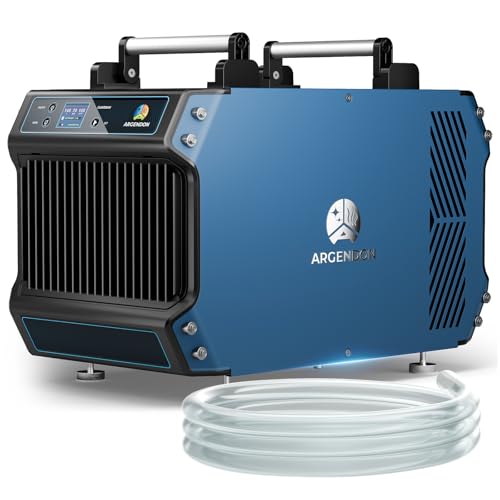
This is the largest-capacity unit in the roundup, rated to cover up to 2,300 square feet. The 180-pint saturated figure is meaningful when a crawl space has standing-water events or chronic groundwater seepage, conditions that defeat smaller residential units in a matter of weeks. ETL listing (a North American electrical safety certification) tells you the electrical work meets commercial standards, which matters when you are running a dedicated circuit.
The honest read is that this is overkill for a sealed, dry crawl space, and that is its main trade-off. The pump, however, is genuinely useful in retrofits where you cannot easily trench a gravity drain line.
Positive Takeaways
- 180-pint capacity handles chronic standing-water crawl spaces
- 2,300 sq ft coverage gives you headroom past 2,000 sq ft
- Built-in pump adds installation flexibility for retrofits
- ETL certification covers commercial-grade electrical safety
Possible Compromises
- Power draw and noise are higher than mid-capacity picks
- Physical size needs a planned mounting spot before install
Feature Snapshot
Best Suited To
Property managers and homeowners in flood-prone or high-water-table areas who need the largest capacity in this roundup to keep up with chronic moisture.
A Better Fit Elsewhere
Switch to the Prikod 155 Pint Commercial Dehumidifier if your crawl space is large but more typical, and you want slightly lower power draw.
Where most crawl-space units lean on a pump, this CADPXS model takes the simpler route: a gravity drain, no pump motor, fewer moving parts in the drain path. For a shop or weekend homeowner who wants the unit installed once and left alone, that simplicity has real appeal.
At 80 pints saturated and 38 PPD AHAM (a standard industry test at 80°F and 60% relative humidity), the capacity is right-sized for crawl spaces up to 1,200 square feet. The catch is that you need a floor drain or a low-point condensate path for gravity to work at all.
Where It Helps
- No pump motor means one less component to fail over time
- Gravity drainage runs 24/7 with zero manual emptying
- ETL listing confirms commercial-grade electrical safety
- Lower purchase price than pump-equipped siblings
Where It Is Less Suited
- Requires a downhill drain path or floor drain within reach
- Capacity tops out around 1,200 sq ft, so it falls short of full 2,000 sq ft coverage
Whose Shelf It Belongs On
Homeowners with a floor drain already in place, or anyone planning a new install with a simple downhill condensate run, who wants minimal maintenance over the long haul.
Reach For A Different Pick When
Pick the CADPXS Commercial Dehumidifier with Pump if you do not have a usable floor drain and need a pump to push water out and away.
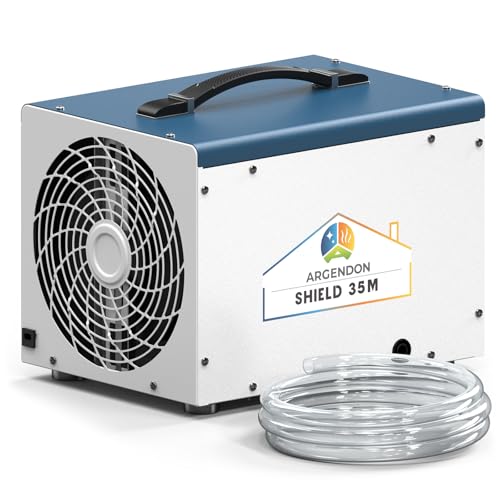
This ARGENDON is the energy-conscious pick of the lineup, designed to run continuously with lower wattage than the larger commercial units. The 70-pint saturated and 35-pint AHAM figures position it for 1,000-square-foot residential spaces rather than full 2,000-square-foot work, but the included pump and drain hose are unusual for the size class.
Where the Prikod 70 above leans on gravity alone, this one gives you pump flexibility in a smaller, more efficient package. The trade-off is that you give up capacity headroom.
Points In Its Favor
- Lower power draw makes continuous 24/7 operation more affordable
- Built-in pump is uncommon at this size class
- Includes drain hose for a complete install out of the box
- Quieter operation than larger commercial units
Trade-Offs To Consider
- 70-pint capacity is undersized at the 2,000 sq ft mark
- Pump adds a maintenance point over gravity-only designs
Key Product Details
Made For
Energy-conscious homeowners running a dehumidifier 24/7 in a smaller residential crawl space who want a pump and lower operating cost in one package.
Where A Sibling Pick Shines
Move to the Prikod 70 Pint Commercial Dehumidifier if you want true gravity drain with zero pump parts, and you already have a low drain point available.
Prikod’s 70-pint unit is purpose-built around a simple idea: drain by gravity, no pump, no motor in the drain path, no overflow worries. The drain hose lives in the foam packaging on the back of the unit, which is a small but telling detail about how the brand expects you to install it. Run the hose to a floor drain, set the humidity setpoint, and walk away.
Coverage tops out near 1,000 square feet, so for a 2,000-square-foot crawl space you would want two of these, or to step up to a larger unit. For a single smaller zone, though, the maintenance story is hard to beat.
What Makes Sense
- True gravity drain with no moving parts in the drain path
- 24/7 unattended operation with zero manual emptying
- Lower upfront cost than pump-equipped siblings
- Drain hose included in the box for an immediate install
Worth Bearing In Mind
- Requires a floor drain or downhill condensate path
- 1,000 sq ft coverage means two units for a full 2,000 sq ft install
Perfect Match For
Homeowners with a single-zone, 1,000-square-foot crawl space and a usable floor drain who want the simplest possible long-term install.
Swap It Out When
Step up to the ARGENDON 180 Pints model if you need a single unit to cover a full 2,000-square-foot crawl space with one installation.
The CADPXS 125-pint unit is the comfortable middle of the brand’s commercial lineup, slotting between the 80-pint gravity model above and the 145-pint auto-defrost unit. It pairs a 60 PPD AHAM figure with a built-in pump and ETL certification, which gives you a balanced install for typical 1,500 to 1,800-square-foot crawl spaces.
For most 2,000-square-foot residential installs, this is the size that hits the mark without overspec’ing the dedicated circuit or the monthly operating cost. It is also the most adaptable of the three CADPXS picks if you are unsure which direction your moisture load will swing over time.
Why It Works Well
- 125-pint saturated capacity handles a 1,500–1,800 sq ft zone with room to spare
- Built-in pump adds drainage flexibility for retrofits
- ETL certification covers commercial-grade electrical safety
- Lower power draw than 145 and 180-pint siblings
Practical Considerations
- Capacity at 1,800 sq ft is the comfort ceiling, not a hard limit at 2,000 sq ft
- Pump adds a long-term maintenance point over gravity-only designs
Feature Rundown
Who Should Grab It
Homeowners with a 1,500 to 1,800-square-foot crawl space who want a pump-equipped, ETL-listed workhorse that sits comfortably between smaller residential units and full commercial monsters.
Not Your Match When
Pick the CADPXS Commercial Dehumidifier with Auto Defrost instead if your crawl space runs cold in winter and you need the coils to keep working below 50°F.
## What To Match Against Your Crawl Space Before Buying Crawl space sizing hinges on three numbers: saturated pints per day (the high-heat peak), AHAM or DOE pints per day (the realistic daily figure in cooler air), and the square footage the unit is rated to cover. For a roughly 2,000-square-foot zone, look for a model that covers at least 2,000 square feet and provides 60+ PPD at AHAM standards, since you want some headroom over the actual square footage rather than a perfect match. Auto defrost is the single feature that separates crawl-space-rated units from ordinary residential dehumidifiers. If your crawl space drops below 50°F in winter, a unit without defrost will ice over, stop extracting, and you may not notice until mold has had weeks to establish itself. The CADPXS 145-pint auto-defrost unit is the clearest example of why this matters. Drainage type is the other real fork in the road. Gravity drain is simpler and has fewer failure points, but it requires a floor drain or a downhill path. A built-in pump pushes water uphill and out to a sink, outside, or anywhere with a power outlet, which makes retrofits much easier. Match the drainage to your actual install geometry, not the spec sheet. For very damp, large, or chronic-moisture situations, ETL-listed commercial units are worth the extra up-front investment, and the dedicated 15- or 20-amp circuit that comes with them. ## Key Considerations Across These Picks ### Where Shoppers Go Wrong The most common mistake is buying on saturated-pint capacity alone. Saturated ratings are measured at 95°F/90% RH, which most crawl spaces see only a few weeks per year. AHAM and DOE figures (industry-standard tests at 80°F/60% RH and 65°F/60% RH) are the numbers that tell you how the unit actually performs in cooler, everyday conditions. Another pitfall is underestimating drainage logistics. A unit that needs a gravity drain will not work if your crawl space floor is flat, and a pump-equipped unit still needs somewhere for the hose to terminate. Decide on drainage before picking capacity, not after. ### When Paying More Pays Off The price difference between 70-pint residential units and 145 to 180-pint commercial units is real, and the upgrade earns its keep in three situations: a crawl space larger than 1,500 square feet, chronic standing-water or groundwater seepage, and installs where you want ETL-listed commercial electrical safety. In a smaller, drier space, a 70-pint unit will keep up at lower operating cost and a friendlier price. ## Frequently Asked Questions ### How many pints per day do I need for a 2,000 square foot crawl space? A 2,000-square-foot crawl space in a typical humid climate needs a unit rated for at least 60 PPD AHAM, with higher capacity if you have standing water or chronic groundwater seepage. For very damp conditions, look for 100+ PPD saturated capacity to keep up with peak summer loads. ### Do I need a pump or gravity drain in my crawl space dehumidifier? Pick a pump if you do not have a floor drain, if the unit sits higher than the drain point, or if you want to route condensate out to a utility sink or outside. Gravity drain is simpler and quieter, but it requires a downhill path to a drain. ### Will a crawl space dehumidifier freeze in winter? A unit without auto defrost will ice up when crawl space air drops below about 50°F, and it will stop removing moisture until temperatures climb back up. Auto-defrost models, such as the CADPXS 145-pint unit, cycle the compressor to melt ice and keep extracting in cold conditions. ### Can one dehumidifier cover a full 2,000 square foot crawl space? Yes, but only if the unit is rated for 2,000+ square feet, which means looking at the 145-pint and 180-pint commercial picks in this roundup. Smaller 70 to 80-pint units are sized for 1,000 to 1,200 square feet and will run constantly without keeping up at the 2,000-square-foot mark. ### How often does a crawl space dehumidifier need maintenance? Plan on cleaning the air filter every one to three months, checking the coil for dust annually, and inspecting the drain line for clogs once or twice a year. Pump-equipped models may need an occasional pump check, while gravity-drain units are the lowest-maintenance option once installed. ## The Takeaway Crawl space moisture is a slow, hidden problem, and the right dehumidifier is the kind of purchase you set up once and forget about. Match the capacity to your actual square footage and humidity load, pick a drainage style that fits your install geometry, and choose auto defrost if your space runs cold in winter. Any of the eight picks above will do honest work, and the right one comes down to your specific space.