

A damp crawl space quietly undermines the rest of the house. Moisture creeps into floor joists, feeds musty odors, and turns a sealed home into a humidifier you didn’t ask for. The right commercial-grade dehumidifier pulls that moisture out before it becomes a repair bill, and the picks below cover everything from everyday basements to industrial-scale spaces.
An Overview Of The Picks

FreAire 34Pint Dehumidifier for 2500Sq.Ft

QFOX 2000 Sq.Ft Rotary Dehumidifier
CADPXS Commercial Dehumidifier with Pump
ARGENDON Crawlspace Dehumidifier 5-Year
ARGENDON 180 Pints Crawlspace Dehumidifier

FreAire 54Pint Quiet Dehumidifier for 4500Sq.Ft

CADPXS Crawl Space Dehumidifier ETL

ARGENDON Crawl Space Dehumidifier with Pump

CADPXS 125 Pints Commercial Dehumidifier
The Details Behind The Selections
The FreAire 34Pint fits the role of a workhorse for homeowners who need reliable moisture control without industrial heft. Rated for spaces up to 2,500 sq. ft., it lands in the sweet spot for average basements, sealed crawl spaces under a modest home, and attached garages where humidity creeps up after summer storms.
Compared to the QFOX rotary unit that follows, this FreAire uses a traditional compressor-based system rather than a desiccant wheel. That distinction matters in cooler conditions, where compressor models like this one tend to hold their rated output more consistently.
Positive Takeaways
- 34-pint daily extraction handles typical mid-size basement humidity without running constantly.
- 6.56 ft drain hose lets you route condensate to a floor drain or sump without buying extra parts.
- 2,500 sq. ft. coverage gives headroom for partially finished spaces that aren’t perfectly sealed.
- Compressor design tends to perform more steadily in cool crawl spaces than desiccant alternatives.
Things To Consider
- Owners commonly report the tank fills quickly in high-humidity conditions, so the drain hose is essentially required for unattended use.
- The 34-pint rating is measured at high-temperature saturation, so real-world output in a 60°F crawl space will be lower.
Key Specs
Who It Suits Best
Homeowners with a sealed crawl space or mid-size basement who want steady compressor-based moisture control without stepping up to industrial capacity.
Where Another Pick Suits Better
For a much larger footprint, the FreAire 54Pint Quiet Dehumidifier delivers broader coverage and a quieter profile.
The QFOX 2000 Sq.Ft Rotary Dehumidifier takes a different path from the FreAire that opened this list. Its desiccant rotary wheel pulls moisture without a compressor, which means quieter operation and stronger performance in cool spaces where compressor units tend to slow down.
For a finished basement that doubles as a living area, or a bedroom built over a damp crawl space, the lower noise floor is the headline feature. The included 2.5L tank and drain hose give you a choice between manual emptying or continuous drainage.
Features That Help
- Desiccant rotary technology, which uses an adsorbent wheel rather than a compressor coil, runs quieter and works in cooler temperatures.
- Sleep mode and ambient lighting keep the unit unobtrusive in living spaces.
- Up to 101 oz daily extraction handles damp basements without marathon runtime.
- Auto shutoff prevents overflow when the tank reaches capacity.
Less Ideal Details
- Desiccant wheels generally consume more power per pint than compressor models, so electricity costs run higher.
- The 2.5L tank empties often in heavy humidity, making the drain hose the practical choice for unattended use.
Made For
Anyone running a dehumidifier in a cool crawl space or finished basement where compressor units struggle and noise matters.
Skip It When
For raw extraction power in a large commercial crawl space, the ARGENDON 180 Pints Crawlspace Dehumidifier delivers far more capacity.
The CADPXS Commercial Dehumidifier with Pump steps up to the workload that most residential units can’t touch. Rated at 145 pints per day at saturation and 60 PPD at the AHAM standard (a common industry benchmark of 80°F and 60% relative humidity), it tackles the kind of moisture load you find in real crawl spaces after a wet season.
The built-in condensate pump is the practical centerpiece. Instead of relying on gravity to move water out, the pump pushes it upward and sideways to a remote drain, sump, or exterior discharge. Auto defrost keeps the coil from icing up in cooler conditions, which extends runtime in unheated crawl spaces.
A Few Strong Suits
- 145-pint saturation rating handles serious moisture loads in large or chronically damp crawl spaces.
- Built-in pump eliminates the need to position the unit directly over a floor drain.
- Auto defrost keeps extraction steady in cool, unheated spaces where standard units would ice up.
- Coverage up to 1,800 sq. ft. suits full-basement or combined crawl space footprints.
Trade Offs
- Auto defrost cycles add brief pauses in extraction, which matters in spaces already running at the edge of capacity.
- The metal outer casing and pump components add weight, so plan mounting or placement carefully before installation.
Feature Snapshot
Best Suited To
Contractors and homeowners dealing with persistently damp crawl spaces who need pump-assisted drainage and auto defrost for cold conditions.
Look Elsewhere When
For a smaller, lighter residential setup without pump requirements, the CADPXS Crawl Space Dehumidifier ETL offers a simpler gravity drain approach.
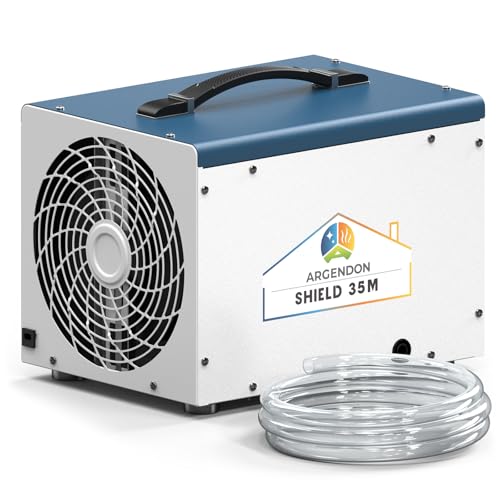
The ARGENDON Crawlspace Dehumidifier arrives with a 5-year limited warranty, which signals the manufacturer expects this unit to stay in service for the long haul. Removing 70 pints per day with 115 CFM airflow (cubic feet per minute, a measure of how much air the unit circulates), it covers up to 1,000 sq. ft. of crawl space or basement.
Where the CADPXS unit above leans on pump-driven drainage, this ARGENDON focuses on straightforward installation and durability. The longer warranty makes it appealing for permanent setups where pulling the unit out for service is inconvenient.
The Upside
- 5-year limited warranty offers rare long-term coverage in this category.
- 70-pint daily capacity handles typical residential crawl space moisture without strain.
- 115 CFM airflow moves enough air to prevent stagnant pockets in long, narrow crawl spaces.
- 1,000 sq. ft. coverage suits most single-foundation crawl spaces and small basements.
Honest Caveats
- Without a built-in pump, drainage depends on gravity, so placement near a floor drain or sump matters.
- 70 PPD is solid for residential use, but the CADPXS Commercial Dehumidifier with Pump outextracts it in larger commercial settings.
Perfect Match For
Homeowners planning a permanent crawl space installation who value warranty length over maximum extraction rate.
Not Your Match When
For higher-volume moisture loads in larger basements, the FreAire 54Pint Quiet Dehumidifier covers significantly more square footage.
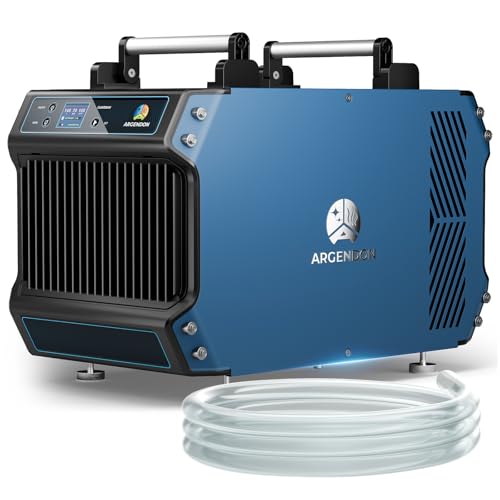
The ARGENDON 180 Pints Crawlspace Dehumidifier sits at the top of the capacity ladder in this roundup. Rated at 180 pints per day at 90°F and 90% relative humidity, it covers up to 2,300 sq. ft., making it the strongest option for industrial crawl spaces, large commercial basements, or chronically wet foundations.
The integrated condensate pump gives it the same installation flexibility as the CADPXS unit reviewed earlier. ETL certification (a safety standard from Intertek, an independent testing lab) adds a layer of confidence for permanent commercial installations where inspectors may scrutinize equipment choices.
What Earns Its Place
- 180-pint daily capacity handles the largest crawl spaces and commercial basements on this list.
- 2,300 sq. ft. coverage suits warehouses, multi-section foundations, and oversized commercial floors.
- Built-in pump simplifies routing condensate when gravity drainage isn’t available.
- ETL certification supports commercial code and inspection requirements.
Points To Keep In Mind
- Higher capacity means higher power draw, so electrical supply and circuit capacity deserve a quick check before installation.
- The size and weight of 180-pint units make them harder to reposition once installed, so plan placement carefully.
Quick Facts
Who Should Grab It
Facility managers and contractors running commercial crawl spaces or large basements where residential-grade capacity simply isn’t enough.
Swap It Out When
For a smaller residential crawl space where 180 pints is overkill, the ARGENDON Crawlspace Dehumidifier 5-Year offers a more measured capacity.
The FreAire 54Pint Quiet Dehumidifier stretches the coverage ceiling well past the 34-pint FreAire that opened this list. Rated for 4,500 sq. ft., it makes sense for oversized basements, combined basement-and-crawl-space footprints, and large open living areas where humidity migrates from below.
The quiet operation mode and front-facing humidity display reflect a design tuned for finished spaces, not just raw crawl space installations. Energy-saving operation adds another practical angle for homeowners running the unit on a continuous schedule.
Real Benefits
- 4,500 sq. ft. coverage handles large open basements and combined foundation footprints.
- Front humidity display lets you check conditions without bending down or using a flashlight.
- Quiet sleep mode keeps the unit unobtrusive in finished basement living areas.
- Energy-saving operation helps offset the cost of continuous runtime.
Soft Spots
- 3.3 ft drain hose is shorter than the 6.56 ft hose on the 34-pint FreAire, so drain routing needs a closer outlet.
- 54-pint capacity is generous for residential use, but commercial-scale crawl spaces still benefit from the CADPXS or 180-pint ARGENDON units.
Right Fit For
Homeowners with oversized basements or finished living areas below grade who want quiet, energy-conscious operation across a wide footprint.
Reach For A Different Pick When
For a true commercial crawl space installation, the CADPXS Commercial Dehumidifier with Pump offers heavier-duty construction and pump-assisted drainage.
The CADPXS Crawl Space Dehumidifier ETL takes the simplest installation path of any CADPXS unit in this roundup. Without a built-in pump, it relies on gravity drainage, which keeps the unit lighter and the setup straightforward for homeowners comfortable with basic plumbing routing.
Extracting 80 pints per day at saturation and 38 PPD at AHAM conditions, it covers up to 1,200 sq. ft. That’s a useful middle ground between the 34-pint FreAire and the heavier 145-pint CADPXS unit reviewed earlier.
Useful Highlights
- 80-pint saturation capacity handles moderate-to-heavy crawl space humidity without commercial-scale pricing.
- Gravity drainage simplifies installation for homeowners with a nearby floor drain or sump.
- ETL certification supports code-conscious installations.
- 1,200 sq. ft. coverage fits most single-foundation crawl spaces and small basements.
Practical Considerations
- Without a pump, the unit must sit slightly above the drain point, which limits placement flexibility in tight crawl spaces.
- 38 PPD at AHAM is the real-world benchmark, so expect noticeably less output in cooler 60°F conditions.
Built With In Mind
Homeowners with a modest crawl space and an accessible drain point who want ETL-certified performance without pump complexity.
A Better Fit Elsewhere
For installations where gravity drainage isn’t possible, the CADPXS Commercial Dehumidifier with Pump solves the same workload with pump-assisted routing.
The ARGENDON Crawl Space Dehumidifier with Pump rounds out the list with a focus on energy-conscious operation. Removing 35 pints per day at AHAM conditions and 70 pints at saturation, it covers up to 1,000 sq. ft., placing it in the same residential tier as the 5-year warranty ARGENDON reviewed earlier.
The included pump and drain hose combination supports continuous operation without manual tank emptying. For most homeowners running a dehumidifier on a continuous schedule, that combination is the practical difference between a unit you set and forget and one you service weekly.
Notable Gains
- Energy-efficient design reduces operating costs over continuous runtime.
- Built-in pump and drain hose support unattended, continuous drainage.
- 70-pint saturation capacity handles typical residential crawl space loads.
- 1,000 sq. ft. coverage fits standard foundation footprints.
Worth Bearing In Mind
- 35 PPD at AHAM is moderate, so expect the unit to run more often in chronically damp conditions.
- The pump adds a small maintenance consideration compared to gravity-only units like the CADPXS ETL model.
Whose Shelf It Belongs On
Homeowners prioritizing lower operating costs over maximum extraction who still want pump-assisted drainage for unattended use.
Consider Something Else When
For higher extraction in a similar footprint, the ARGENDON 180 Pints Crawlspace Dehumidifier delivers significantly more capacity.
The CADPXS 125 Pints Commercial Dehumidifier lands in the middle of the commercial capacity range, between the 80-pint ETL model reviewed earlier and the 145-pint CADPXS with auto defrost. Extracting 125 pints per day at saturation, with 60 PPD at AHAM and 37 PPD at DOE conditions (the Department of Energy’s standard test of 65°F and 60% relative humidity), it bridges residential and industrial needs.
The integrated pump and ETL certification make it a strong fit for commercial installations that don’t quite require the 180-pint ARGENDON’s top-tier output. Crawl spaces, garages, and warehouses up to mid-size commercial floors all fit within its range.
The Practical Payoff
- 125-pint saturation rating sits in a useful middle ground between residential and industrial capacities.
- Built-in pump supports flexible installation away from floor drains.
- ETL certification meets commercial safety standards.
- Energy-efficient operation helps manage continuous runtime costs.
Small Caveats
- 37 PPD at DOE conditions means output drops noticeably in cooler crawl spaces, so sizing up may help in unheated environments.
- Mid-commercial capacity commands a higher investment than residential-tier units, so confirm the workload before committing.
Feature Card
Who Will Love This
Mid-size commercial property managers and contractors who need commercial-grade capacity without stepping all the way up to industrial-scale units.
Another Choice May Suit
For the largest commercial crawl spaces where every pint counts, the ARGENDON 180 Pints Crawlspace Dehumidifier delivers higher peak capacity.
What To Weigh Before Choosing Commercial Dehumidifiers For Crawl Space
Capacity Matches The Space, Not The Catalog
The pints-per-day rating on the box tells you how much water the unit can pull at saturation, but real-world output in a 60°F crawl space is lower. Match the unit’s AHAM rating (80°F, 60% RH) to your measured humidity load, not the headline saturation number. Oversizing wastes electricity; undersizing leaves the space perpetually damp.
Drainage Method Decides Installation
Gravity drain units like the CADPXS ETL model need to sit slightly above a floor drain or sump. Pump-equipped units like the CADPXS Commercial Dehumidifier with Pump push water upward and sideways, which opens up placement in tight or uneven crawl spaces. Pick the drainage method that matches your plumbing reality, not just the unit’s specs.
Cool Conditions Change The Math
Compressor-based units lose output as temperatures drop, which matters in unheated crawl spaces. Desiccant rotary designs like the QFOX 2000 Sq.Ft Rotary Dehumidifier hold their output better in cool conditions, though they draw more power per pint. Auto defrost, like on the CADPXS Commercial Dehumidifier with Pump, helps compressor units stay productive in cold environments.
Certification And Build Quality Signal Longevity
ETL certification (an independent safety standard from Intertek) matters most for commercial installations where inspectors check equipment. A longer warranty, like the 5-year coverage on the ARGENDON Crawlspace Dehumidifier, suggests the manufacturer expects the unit to last. For permanent installations, those signals often outweigh small capacity differences.
Key Considerations Across These Picks
Pitfalls Shoppers Hit
The most common mistake is buying based on saturation capacity alone, which assumes high heat and humidity that crawl spaces rarely reach. AHAM ratings give a more honest picture of real-world output. Another slip is ignoring drainage logistics. A unit that needs to sit above a floor drain won’t work in a crawl space with no drain nearby, no matter how well it extracts.
Where The Extra Money Goes
Higher-tier commercial units cost more because of pump systems, auto defrost, ETL certification, and metal casings that survive years of crawl space conditions. The ARGENDON 180 Pints and CADPXS 125 Pints both reflect that build quality. For permanent installations where service calls are expensive, the upgrade pays for itself in reliability and fewer interventions.
Frequently Asked Questions
How Many Pints Per Day Do I Need For My Crawl Space?
Measure your crawl space square footage and check how saturated the air feels. A 1,000 sq. ft. crawl space with mild humidity typically needs a 50 to 70-pint unit, while chronically damp spaces benefit from 100 pints or more. The AHAM rating matters more than the saturation number for real-world sizing.
Can A Residential Dehumidifier Work In A Crawl Space?
Light-duty residential units struggle in cool, sealed crawl spaces because compressor output drops as temperatures fall. Purpose-built crawl space models like the CADPXS ETL or ARGENDON 5-year units handle the conditions better, though desiccant options like the QFOX rotary unit also perform in cooler temperatures.
Do I Need A Built-In Pump?
A pump matters when the unit can’t sit directly above a floor drain or sump. Pump-equipped models like the CADPXS Commercial Dehumidifier with Pump push water upward and sideways, which opens up placement in tight or uneven crawl spaces. Gravity drainage works fine when a drain point sits nearby.
How Important Is ETL Certification?
ETL certification (a third-party safety standard) matters most for commercial installations, rental properties, and any setup where inspectors may review equipment. For purely residential use, it’s a quality signal rather than a hard requirement, but it does indicate the unit has passed independent safety testing.
What Maintenance Does A Crawl Space Dehumidifier Need?
Coil cleaning every few months keeps extraction efficient, especially in dusty crawl spaces. Checking the drain line for clogs prevents overflow, and pump-equipped units benefit from an occasional pump inspection. Filter access varies by model, so confirm the filter location before installation.
Wrap Up
The right commercial dehumidifier for a crawl space comes down to matching capacity, drainage method, and certification to your specific conditions. For most residential foundations, a 70 to 80-pint unit with reliable drainage covers the workload. For commercial or chronically damp crawl spaces, stepping up to a pump-equipped, ETL-certified model pays off in long-term reliability. Pick the unit that fits your space, drainage reality, and tolerance for service calls, and the rest takes care of itself.