

A damp basement slowly costs you money, from ruined stored boxes to that telltale musty smell creeping upstairs. The right commercial-rated unit pulls serious moisture without running constantly, and it makes the whole lower level feel like usable square footage again. This lineup covers everything from compact thermoelectric models for finished basements to LGR (low-grain refrigerant, meaning a class of dehumidifier that pulls moisture even at very low humidity levels) workhorses built for water damage restoration and crawlspaces.
A Fast Comparison Of The Options

PSOS 98 OZ Dehumidifier for Home 1000 sq.ft (Gray)

FreAire 34Pint Dehumidifier for 2500Sq.Ft

ALORAIR 180 Pints LGR Commercial Dehumidifier with Pump
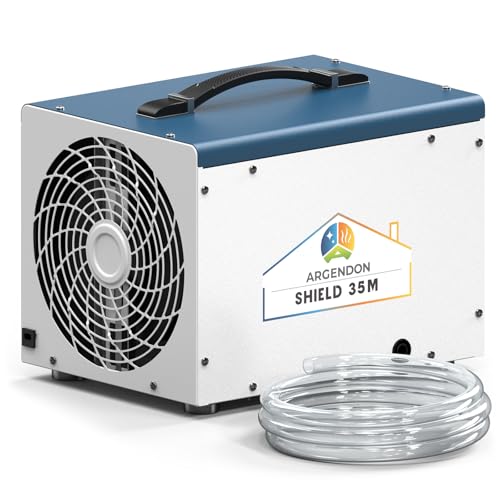
ARGENDON Dehumidifier for Crawlspace and Commercial
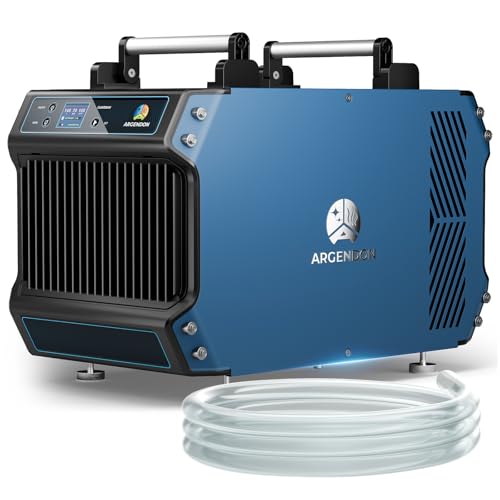
ARGENDON 180 Pints Crawlspace Dehumidifier with Pump

FreAire 54Pint Quiet Dehumidifier for 4500Sq.Ft

ARGENDON Crawl Space Dehumidifier with Pump and Drain Hose

ALORAIR 170 PPD Commercial Dehumidifier with Pump

ALORAIR 190 PPD LGR Commercial Dehumidifier with Pump
Inside Each Recommended Option
For a small finished basement that doubles as a guest room, a quiet thermoelectric unit like the PSOS makes more sense than dragging in a 70-pint workhorse. The 98-ounce built-in tank is on the larger side for this style, which means fewer trips to the sink, and the auto-shutoff feature protects the internal components when the tank fills. The seven-color ambient light is a small touch, but useful in a multi-use basement where the same space shifts from a quiet office to a movie room.
Where it differs from the rest of this list is the technology: thermoelectric dehumidifiers (which use a Peltier element to condense moisture rather than a compressor) trade raw extraction power for near-silent operation. You won’t dry out a flooded crawlspace with this, but in a furnished 1,000-square-foot basement, it can keep the air noticeably fresher.
Practical Pluses
- Near-silent operation, ideal for finished basements used as living space
- 98 oz tank reduces how often you’ll empty it during humid stretches
- Auto shutoff prevents overflow and protects the Peltier module
- Digital humidity readout on the front of the unit
- Compact body slides under most basement utility shelves
Worth Noting
- Thermoelectric extraction is slower than compressor-based picks later in this list
- No continuous drain option, so the tank fills and stops on humid days
Key Specs
Right Fit For
Apartment dwellers and finished-basement homeowners who want silent, low-maintenance moisture control without running ductwork.
Skip It When
Your basement has standing water or chronic damp walls, where the FreAire 34Pint Dehumidifier handles the workload more confidently.
The FreAire 34Pint sits in that sweet spot between the quiet thermoelectric PSOS and the much heavier 70- to 190-pint commercial units. Its compressor-based system pulls moisture from rooms up to 2,500 square feet, which covers most full basements in suburban homes. The 6.56-foot drain hose is the real convenience win: run it to a floor drain, set your target humidity, and walk away.
For a homeowner dealing with mild mustiness rather than standing water, this is the sort of “set-and-forget” basement workhorse that earns its keep. Where the PSOS handled your reading nook, this one handles the rec room, the laundry area, and the storage corner all in one pass.
Positive Points
- 34-pint daily extraction is well-matched to a typical damp basement
- 6.56 ft drain hose simplifies continuous draining
- 2,500 sq. ft. rating covers most residential basements
- Compressor-based system handles lower temperatures better than thermoelectric picks
Trade Offs
- Compressor noise is noticeable, so placement away from living areas matters
- No built-in pump, so the drain must rely on gravity
Feature Snapshot
Who Will Love This
Homeowners with a moderately damp basement who want compressor power without stepping up to full commercial capacity.
Look Elsewhere When
You need active drainage up from a sump pit, where the ALORAIR 190 PPD LGR Commercial Dehumidifier with Pump solves the lift problem.
Stepping up from residential to commercial territory, the ALORAIR 180 Pints LGR is a serious machine designed for water damage restoration teams and large basement finishing projects. The built-in condensate pump pushes water vertically and out through a hose, so you are not limited by gravity like the FreAire above. Coverage reaches 2,300 square feet, and the LGR design keeps pulling moisture at lower humidity levels where standard compressors stall.
The built-in WiFi is the differentiator against the otherwise-similar ALORAIR 170 PPD and ARGENDON 180-pint units. You can monitor humidity and runtime from your phone, which matters when the unit is parked in a crawlspace or sealed job site you only visit weekly.
The Practical Payoff
- Built-in pump handles drainage uphill, useful in basements below drain lines
- WiFi control lets you check humidity without visiting the unit
- LGR tech keeps working at lower humidity levels
- 180-pint capacity covers restoration-scale projects
Points To Keep In Mind
- Body weight and footprint call for a permanent spot rather than daily repositioning
- WiFi setup requires a 2.4 GHz network and a dedicated outlet on a non-GFCI circuit, depending on local code
Made For
Restoration contractors and large-basement homeowners who want remote monitoring plus the lift capability of a built-in pump.
Reach For A Different Pick When
Pure extraction volume matters more than smart features, in which case the ALORAIR 190 PPD LGR Commercial Dehumidifier with Pump is the heavier hitter.
The ARGENDON 70-pint crawlspace model sits in the middle of this list by capacity, but the headline feature is the 5-year limited warranty, which is unusually long for the category. For a homeowner planning to mount the unit in a hard-to-reach crawlspace and forget about it, that warranty window translates into real peace of mind. Its 115 CFM (cubic feet per minute, a measure of how much air the unit can move) air output moves moisture effectively across a 1,000-square-foot area.
Compared to the ALORAIR 180 above, this is a quieter, less thirsty pick. You give up raw pints per day, but for sealed crawlspaces and small commercial rooms, 70 pints is more than enough.
The Case For It
- 5-year limited warranty is among the longest in the segment
- 70-pint daily extraction suited to 1,000 sq. ft. crawlspaces and basements
- 115 CFM airflow keeps air moving through enclosed spaces
- Compact shell fits standard crawlspace access points
Less Ideal Details
- Lower pint-per-day rating than the ALORAIR and larger ARGENDON siblings
- No advertised pump, so drainage must run by gravity
At A Glance
Best Suited To
Homeowners who want a crawlspace-rated unit backed by a long warranty and don’t need maximum daily extraction.
A Better Fit Elsewhere
Restoration crews needing higher throughput should pair this with the ALORAIR 170 PPD Commercial Dehumidifier for the bigger jobs.
Where the smaller ARGENDON 70-pint model is the homeowner pick, this 180-pint ETL-listed (ETL certification means the product meets published safety standards from a Nationally Recognized Testing Laboratory) version is the contractor cousin. It covers up to 2,300 square feet and pairs that capacity with a built-in condensate pump, so you can route drain water up and out to wherever the building’s drainage tie-in lives. The ETL listing also helps in commercial settings where inspectors ask for proof of safety certification.
Versus the WiFi-equipped ALORAIR 180, this ARGENDON skips the smart features and leans into pure mechanical reliability. The honest read is that you trade remote monitoring for a slightly more straightforward control panel, which some owners actually prefer.
Where It Helps
- 180-pint daily extraction handles large commercial basements
- Built-in pump eliminates the need for a separate drain lift
- ETL listing supports commercial and inspection-driven installs
- Coverage area matches mid-size warehouse and basement spaces
Small Caveats
- No smart connectivity, so monitoring is panel-only
- Heavier body, plan a permanent mount or dolly for repositioning
Perfect Match For
Commercial property managers and serious DIYers who need certified hardware and pump-equipped drainage for tough spaces.
Swap It Out When
Remote monitoring from a phone is the deciding factor, in which case the ALORAIR 180 Pints LGR Commercial Dehumidifier is the more connected alternative.
The FreAire 54Pint targets homeowners with whole-basement coverage needs but without the appetite (or outlet capacity) for a 180-pint commercial unit. Its 4,500-square-foot rating is generous for a residential machine, and the included 3.3-foot drain hose gives you a gravity drain option without buying accessories. The front-mounted humidity display is a thoughtful design choice, since you can glance at it without crouching.
It’s a clear step up from the 34-pint FreAire earlier in the list, trading some of the smaller unit’s economy for higher daily throughput. The catch is that 4,500 square feet is theoretical, and you’ll see the best real-world results in finished basements up to about 2,000.
Notable Upsides
- 54-pint daily extraction covers most residential basements
- 4,500 sq. ft. ceiling rating absorbs the realities of open floor plans
- Front humidity readout improves everyday usability
- Quiet mode reduces compressor noise during nighttime operation
Honest Caveats
- Drain hose is short, so the floor drain needs to be close
- Quieter than compressor peers but still audible in a finished room
Who Should Grab It
Homeowners with a large finished basement who want quiet, semi-continuous running and don’t need commercial-grade capacity.
Consider Something Else When
You’re treating a sealed crawlspace rather than a finished room, where the ARGENDON Crawl Space Dehumidifier with Pump and Drain Hose is purpose-built for the job.
The 70-pint ARGENDON Crawl Space model is one of those workhorse units that sits quietly in the background of a sealed crawlspace for years. It removes 35 pints per day under the AHAM standard (a standardized test condition, typically 80°F and 60% relative humidity, used to compare dehumidifiers fairly) and up to 70 pints at saturation, while drawing less energy than older conventional designs. The included pump and drain hose simplify installation in tight spaces where gravity drainage is awkward.
Versus the 180-pint ARGENDON up the list, this is the right size for a typical 1,000-square-foot residential crawlspace rather than a commercial slab.
Everyday Wins
- 35 AHAM pints per day is honest and matches the rating on the box
- Energy-efficient operation relative to older crawlspace units
- Built-in pump and drain hose cut installation steps
- Designed for the dust and temperature swings of sealed crawlspaces
A Few Limitations
- 1,000 sq. ft. ceiling means it’s undersized for large commercial basements
- Filter access requires disassembly, which can be a chore in tight spaces
Built With In Mind
Homeowners sealing off a musty crawlspace who want a low-energy unit with pump-equipped drainage.
Where A Sibling Pick Shines
For very large or high-moisture crawlspaces, the ARGENDON 180 Pints Crawlspace Dehumidifier is the right step up.
The Storm 80X from ALORAIR is a compact LGR commercial unit aimed squarely at restoration professionals. It moves 200 CFM of air through its coils, which is the real story: high airflow means faster drying, and faster drying means shorter job timelines. At 170 PPD (pints per day) under saturation and 80 PPD under the AHAM standard, it covers roughly 2,100 square feet.
The tradeoff versus the heavier 190 PPD ALORAIR is mostly a small step down in maximum daily extraction. For a contractor running multiple units across job sites, the 80X’s compact body is easier to load into a truck and stack on a cart.
The Upside
- 200 CFM airflow accelerates drying on water damage jobs
- LGR design keeps pulling moisture at low humidity levels
- Compact commercial footprint for truck-friendly transport
- Built-in pump simplifies drainage in damaged spaces
Worth Bearing In Mind
- Commercial controls assume some training, not as plug-and-play as residential picks
- Noise level is high enough that finished-living placement isn’t realistic
Whose Shelf It Belongs On
Restoration contractors and property maintenance teams who need high airflow and quick deployment across multiple job sites.
Not Your Match When
You’re a homeowner treating one basement, where the FreAire 54Pint Quiet Dehumidifier is quieter and simpler.
At the top of the list sits the ALORAIR Storm Ultra, the highest-pint commercial unit in this roundup. Under saturation conditions, it pulls 190 pints per day and covers up to 2,600 square feet, which puts it in the same league as equipment used by professional restoration crews. The built-in pump plus smart app control are the two features that set it apart from the rest of the lineup: you can adjust setpoints and watch humidity trends from your phone.
Where it differs from the 170 PPD ALORAIR above is capacity, not core design. For most residential basements, the 80X’s smaller footprint is enough, but for industrial sites and large commercial basements, the Storm Ultra’s extra pints shorten drying timelines noticeably.
Notable Gains
- Highest daily extraction in the roundup at 190 PPD under saturation
- Smart app control for remote monitoring and adjustment
- 2,600 sq. ft. coverage suits large commercial basements
- Built-in pump removes the gravity-drain constraint
Soft Spots
- App setup requires stable WiFi and a compatible router configuration
- Body size and weight need a permanent installation plan
The Right Fit
Industrial site managers and large-property owners who need maximum extraction with the option to monitor from a phone.
Another Choice May Suit
Smaller restoration jobs and tight crawlspaces, where the ALORAIR 170 PPD Commercial Dehumidifier is a more maneuverable choice.
What To Weigh Before Choosing Commercial Dehumidifiers For Basement
Capacity vs. Room Size
A pint-per-day rating only matters relative to the square footage you actually need to treat. Undersizing a unit means it runs constantly and never quite catches up on humid days. Oversizing wastes electricity cycling on and off in a small space. For most full residential basements (700 to 1,500 square feet), 50 to 70 pints is a comfortable range. Commercial basements, restoration sites, and crawlspaces over 1,500 square feet usually start at 100 pints and climb from there.
Drainage Setup
Decide early whether you have a usable floor drain within hose reach. Gravity-drain models like the FreAire 34Pint and FreAire 54Pint are simpler to install but limit placement. Built-in pump models like the ALORAIR 180, ARGENDON 180, ARGENDON Crawl Space, ALORAIR 170 PPD, and ALORAIR 190 PPD push water vertically and out, opening up more install locations. For sealed crawlspaces, a pump is almost always required.
Noise and Living Space
If the dehumidifier sits in a finished basement that doubles as a living area, the thermoelectric PSOS or quiet-mode residential units will keep the room usable. Commercial LGR models run loud, so plan for utility-room or unfinished-space placement.
Smart Features
WiFi and app control are useful in job sites and large basements where you don’t want to walk down to check humidity every few days. For a single residential basement, panel control is often simpler and one less thing to troubleshoot.
Key Considerations Across These Picks
Where Shoppers Go Wrong
The most common slip-up is matching square footage claims too literally. A “4,500 sq. ft.” rating usually assumes an open, dry space, and a typical damp basement demands more headroom than the number suggests. Another pitfall is forgetting about drainage: a powerful 180-pint unit is useless if you have nowhere for the water to go and no built-in pump. Always check the drain type before falling for the highest pint rating.
What The Higher Tier Buys
Stepping from a 50-pint residential unit to a 170 or 190 PPD commercial model brings three concrete upgrades: LGR extraction at low humidity (a separate, more advanced coil-and-heat-exchanger system that keeps working below 50% relative humidity where standard compressors give up), heavier-duty compressors designed for continuous duty cycles, and built-in pumps for non-gravity drainage. The upgrade is worth it for restoration professionals and large basement owners, but overkill for a small finished room where the FreAire 34Pint or PSOS handles the workload.
Frequently Asked Questions
How many pints per day do I need for a basement?
For a 1,000-square-foot residential basement with mild mustiness, a 30 to 50 pint unit is usually enough. Damp basements over 1,500 square feet benefit from 70 pints or higher. Commercial basements and crawlspaces generally need 100 pints and up.
What is an LGR dehumidifier?
LGR stands for low-grain refrigerant, a class of dehumidifier that uses an additional heat exchanger to keep extracting moisture at very low humidity levels where standard compressors stall. They are common in restoration work and sealed crawlspaces.
Do commercial dehumidifiers work in cold basements?
Yes, most compressor-based commercial units continue running in temperatures down to about 40°F, and LGR models handle the lower humidity that comes with cool basements. Thermoelectric picks like the PSOS work in cool air too, but at reduced extraction rates.
Is a built-in pump necessary?
A built-in pump matters when the unit sits below the nearest drain line or in a sealed crawlspace where gravity drainage is awkward. If you have a floor drain at or below unit level, gravity hose drainage works fine.
How often does the filter need cleaning?
Most residential and commercial dehumidifiers in this list benefit from a quick filter rinse every two to four weeks during heavy use. Sealed crawlspace units may stretch that to monthly since they pull in less dust.
The Takeaway
Basement moisture is rarely a one-size problem, and the right pick depends on whether you’re drying out a finished rec room, sealing a musty crawlspace, or running a restoration job. Residential units like the PSOS and FreAire lineup handle everyday dampness without overwhelming your space, while the ALORAIR and ARGENDON commercial models pull serious pints when the conditions call for it. Match the unit to the square footage, drainage situation, and noise tolerance, and the basement becomes usable square footage rather than a worry.