


A damp basement rarely announces itself. You notice a musty smell by the laundry, a faint fog on the windows, cardboard boxes going soft in the corner. The right dehumidifier pulls that moisture out before it turns into warped trim, peeling paint, or a mold remediation bill. This roundup walks through nine workhorse models covering small finished basements, sprawling rec rooms, and workshop-scale spaces, so you can match capacity, drainage, and noise level to the room you actually have.
The Essentials At A Glance

Waykar 145 Pints 6,500 Sq. Ft High Efficiency Dehumidifier with Pump

PLUSCENT 1,500 Sq. Ft 21 Pint Dehumidifier for Basement and Home
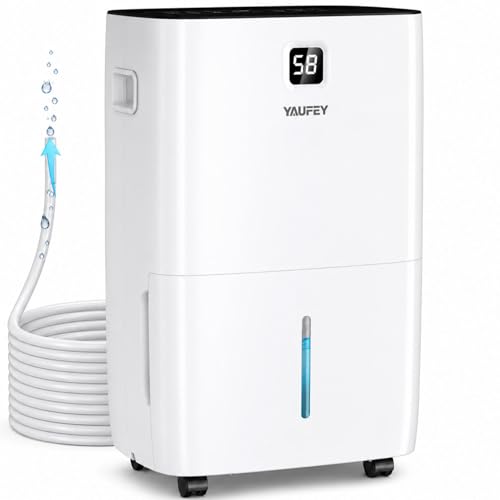
Yaufey 150 Pint Dehumidifier with Upward Drainage for Basement 8500 Sq. Ft.

PSOS 98 OZ Quiet Dehumidifier for Basement Bathroom Bedroom (Gray)

FreAire 34 Pint Dehumidifier for 2500 Sq. Ft with 6.56ft Drain Hose

Waykar 34 Pints 2025 Energy Star Dehumidifier for Home and Basement

Waykar 150 Pint 2025 Energy Star Dehumidifier with Pump for Large Rooms

Yaufey 120 Pint Dehumidifier for Basement 6000 Sq. Ft, ENERGY STAR
Yaufey 80 Pint Dehumidifier for Basement 5000 Sq. Ft, ENERGY STAR
The Details Behind The Selections
Most basement dehumidifiers assume you’ll be around to empty a tank. The Waykar 145 pint model skips that routine entirely thanks to a built-in pump that pushes water upward and out through a drain hose, so a floor drain or sink becomes the only destination you need. Rated for spaces up to 6,500 square feet, it’s the kind of unit you wheel into a rec room, gym, or workshop and basically forget about.
Compared to the smaller PLUSCENT 21-pint unit that opens this list further down, this one trades compactness for sheer throughput. You trade a tall, refrigerator-sized cabinet for a system that can keep up with a basement that sweats after every rainstorm. If your space has a true moisture problem rather than a mild one, the extra capacity pays off.
Standout Benefits
- 145-pint daily extraction handles severe humidity that overwhelms smaller units
- Built-in pump sends water upward, opening up placement away from floor drains
- 6,500 sq ft coverage suits full basements, large gyms, and shop spaces
- Adjustable humidity range of 30% to 80% lets you dial in comfort precisely
Things To Consider
- The cabinet is bulky, so tight crawlspace corners are off the table
- Compressor-style units run warmer than Peltier models, which you may notice in summer
- Drain hose setup requires a nearby drain point or vertical run to a sink
Who It Suits Best
Homeowners with a large, open basement that floods the air with moisture during humid months, and who want a set-and-forget drainage setup rather than daily tank emptying.
Where Another Pick Suits Better
For a smaller, finished basement bedroom, the PSOS 98 OZ Quiet Dehumidifier is easier to live with day to day.
Not every basement needs 145 pints of daily extraction. The PLUSCENT 21-pint model targets the smaller end of the problem: a basement apartment, a converted office, a half-finished rec room. The footprint stays close to a carry-on suitcase, and the included drain hose gives you the option to set up continuous drainage without buying accessories later.
Where the Waykar 145 earlier in this list is sized for warehouse-scale work, this one is a quiet helper. The 160-watt draw also keeps it gentle on the electric bill, which matters for spaces that run the unit every day through summer.
Real Benefits
- 21-pint daily removal matches typical small basement moisture loads
- 1,500 sq ft rating fits apartment-sized rooms without overspending on capacity
- Drain hose included for hands-off continuous operation
- Low 160W draw keeps energy costs manageable
Points To Note
- Capacity drops noticeably in cooler basement temperatures below 65°F
- No internal pump, so drainage relies on gravity to a lower outlet
- Limited reach past 1,500 sq ft, which rules out open basement layouts
Made For
Basement apartments, small finished rooms, and anyone running a dehumidifier on a tight circuit or modest power budget.
Consider Something Else When
Step up to the FreAire 34 Pint Dehumidifier for 2500 Sq. Ft if your space runs larger or you need extra headroom for peak summer humidity.
The Yaufey 150-pint model pushes capacity even higher, claiming coverage up to 8,500 square feet. The clever bit is the upward drainage path. Most basement units need to sit beside a floor drain or below a sink, but this design routes water up and over, opening up placement in finished basements where the lowest point is a finished floor.
Against the Waykar 145 covered above, you gain roughly 2,000 square feet of rated coverage and a more flexible drain path. Three operating modes let you switch between targeted dehumidifying, continuous drying after a leak, and a quieter comfort setting for movie nights.
Reasons It Performs
- 150-pint daily removal tackles serious dampness in sprawling basements
- Upward drainage path enables placement in finished rooms without floor drains
- 8,500 sq ft coverage handles whole-basement layouts
- Three operating modes for routine comfort, drying, and quiet evenings
Worth Noting
- Physical size demands floor space, which finished basements often lack
- Higher capacity means louder operation at peak extraction than smaller picks
- Coil freeze protection matters in uninsulated basements that dip below 60°F
Right Fit For
Homeowners with a large open-plan basement, especially finished spaces where the drain point sits above floor level rather than below it.
Skip It When
The Yaufey 80 Pint Dehumidifier for Basement 5000 Sq. Ft. makes more sense for mid-sized basements where 150 pints is genuine overkill.
The PSOS unit is the odd one out in this list, and that’s the point. Where every other pick here is a compressor-style workhorse, this one uses dual semiconductor condensation (Peltier) technology, which trades raw capacity for near-silent operation. Rated for around 1,000 square feet, it suits a finished basement bedroom or a converted den where compressor hum would drive you up the wall.
The 98-ounce built-in tank keeps the unit self-contained, and the seven-color ambient light is a small but real touch for media rooms. You won’t drain a damp basement with this, but for a finished sitting area with mild humidity, the trade-off lands well.
Practical Pluses
- Whisper-quiet operation from Peltier cooling rather than a compressor
- 98 oz tank means fewer emptying trips than smaller thermoelectric units
- Humidity display on the front for at-a-glance monitoring
- Auto shut-off protects the unit when the tank fills
Honest Caveats
- Peltier capacity drops sharply once room temperature falls below about 60°F
- Not built for serious dampness, so heavy basements will outpace it
- Tank-only design means no continuous drain option for unattended use
Who Will Love This
Anyone outfitting a basement bedroom, sitting room, or home theater where low noise matters more than raw extraction rate.
Look Elsewhere When
The PLUSCENT 1,500 Sq. Ft 21 Pint Dehumidifier is a smarter pick if your basement actually floods with moisture each summer.
Most basements sit somewhere in the middle, not the punishing 6,000-square-foot rec room, not the tidy 1,000-square-foot apartment. The FreAire 34-pint model lands right in that gap, sized for spaces up to 2,500 square feet. The 6.56-foot drain hose gives you real placement flexibility, so the unit can sit across the room from a floor drain without issue.
Compared to the Waykar 34-pint model that appears later in this list, the two are close siblings in capacity, with FreAire leaning on a longer drain hose for installation reach. The trade-off worth weighing: features, control panel layout, and any auto-defrost behavior in cooler basement temperatures.
Practical Advantages
- 34-pint daily extraction suits average basements without oversizing
- 2,500 sq ft coverage handles rec rooms and multi-use basements
- 6.56-foot drain hose opens up placement away from the drain point
- Adjustable humidity range from 30% to 80%
Some Limits To Know
- Capacity can dip in cooler basement corners during early spring
- No built-in pump, so drainage is gravity-dependent
- 34 pints may fall short during a leak or flood-drying situation
Best Suited To
Homeowners with a typical mid-sized basement, finished or partially finished, that needs steady humidity control without industrial overkill.
Another Choice May Suit
For a slightly larger or damper basement, the Yaufey 80 Pint Dehumidifier for Basement 5000 Sq. Ft. steps up capacity without a huge footprint jump.
The Waykar 34-pint model for 2025 leans on an upgraded rotary compressor, which the brand frames as more compact and more efficient than older generations. Energy Star certification means the unit meets stricter efficiency thresholds, which is the main draw if your basement dehumidifier runs 12 or more hours a day through summer.
Where the larger Waykar 145 covered earlier targets heavy-duty spaces, this one fits average basements up to 2,000 square feet. Auto or manual drainage, a 0.62-gallon tank, and a 30% to 80% humidity range cover the basics without piling on extras.
Advantages To Know
- Energy Star rating trims long-term operating costs in always-on basements
- Compact rotary compressor fits tighter basement corners
- Auto or manual drainage for flexible installation
- 0.62-gallon tank handles typical daily output between empties
A Few Limitations
- 2,000 sq ft ceiling falls short of larger basements with open layouts
- No internal pump, so drain routing depends on gravity
- Compressor noise is more noticeable than Peltier alternatives in adjacent rooms
Perfect Match For
Energy-conscious homeowners running a dehumidifier daily in a mid-sized basement who care about utility bills as much as moisture control.
Reach For A Different Pick When
Step up to the Waykar 150 Pint 2025 Energy Star Dehumidifier with Pump if your basement is large and you want pump-assisted drainage.
The 150-pint Waykar takes everything the smaller 34-pint model does well and scales it up. Coverage stretches to 7,000 square feet, an internal pump handles drainage uphill, and Energy Star certification keeps long-term operating costs in check. The auto-defrost feature matters more than it sounds in cold basements, where ice on the coils can shut a compressor unit down.
Smart Auto Comfort Mode reads the room and adjusts output without you tweaking the panel. Against the earlier Waykar 145, this newer model adds defrost cycling and refined auto controls, so it tends to run steadier across seasonal swings.
Points In Its Favor
- Built-in pump routes water upward for flexible placement
- Auto-defrost keeps the unit running in cooler basement temperatures
- Energy Star rating helps offset the cost of running a 150-pint unit
- Smart Auto Comfort Mode removes manual tweaking for daily use
Where It May Fall Short
- Premium price tier reflects the pump, defrost, and auto features
- Compressor noise is more present than the PSOS Peltier model earlier
- 7,000 sq ft rating assumes standard ceiling height and moderate dampness
Built With In Mind
Homeowners with a large basement, attached workshop, or utility space where reliability and pump-driven drainage matter most.
Swap It Out When
The Yaufey 150 Pint Dehumidifier with Upward Drainage covers a similar capacity tier with a comparable drain path at a different price point.
The Yaufey 120-pint model sits a notch below the 150-pint flagship in capacity while still covering up to 6,000 square feet. Energy Star certification pairs with a continuous drain hose, so you can set it up once and largely ignore it. The 30% to 80% humidity range covers the comfort settings most homes actually use.
For homeowners who like the Yaufey 150 covered above but don’t quite need the extra 30 pints of daily extraction, this 120-pint unit is the rational middle step. The trade-off is no internal pump, so drainage still depends on a nearby lower drain point.
Well-Handled Touches
- 120-pint extraction handles typical large-basement loads
- 6,000 sq ft coverage suits most residential basements
- Energy Star rating keeps operating costs in line
- Drain hose included for continuous unattended operation
Practical Considerations
- Drainage relies on gravity rather than a built-in pump
- Coil freeze risk in uninsulated basements below 60°F without auto-defrost
- Bulkier than mid-sized picks, which may matter in tight utility rooms
Whose Shelf It Belongs On
Homeowners with a generously sized basement who want a balance of capacity, efficiency, and continuous drainage without stepping into the highest price tier.
Not Your Match When
The Waykar 150 Pint 2025 Energy Star Dehumidifier with Pump is the better fit if you need pump-assisted drainage and auto-defrost for cold basements.
The Yaufey 80-pint model is a sensible entry point for homeowners new to basement dehumidifying. 80 pints of daily extraction covers up to 5,000 square feet, and the included drain hose lets you set up continuous drainage without buying extra accessories. Energy Star certification keeps the operating cost reasonable for a unit that will likely run much of the year.
Compared to the 120-pint Yaufey one slot up, you give up some daily headroom in exchange for a smaller cabinet and a lower price. For first-timers trying to figure out whether a dehumidifier will solve their moisture problem, 80 pints is enough capacity to actually see results without overspending.
Everyday Perks
- 80-pint daily extraction suits typical mid-sized basements
- 5,000 sq ft coverage handles rec rooms and multi-use spaces
- Energy Star rating helps keep long-term bills in check
- Drain hose included for hands-off daily operation
Things To Weigh
- Capacity can feel tight in basements with active water intrusion
- No built-in pump, so drain routing depends on gravity
- Compressor noise is more noticeable than Peltier alternatives in living spaces
Who Should Grab It
Homeowners buying their first basement dehumidifier, sized for a typical residential basement, who want a balance of capacity and operating efficiency.
A Better Fit Elsewhere
The FreAire 34 Pint Dehumidifier for 2500 Sq. Ft. is a smarter fit if your basement is small and you don’t need 80 pints of extraction.
What Matters Most When Picking A Built-In Basement Dehumidifier
Capacity is the first filter, but it’s not the only one. The right basement dehumidifier depends on the square footage, the basement’s typical temperature, and how you want to handle drainage day to day.
Match Capacity To Square Footage
Manufacturers rate dehumidifiers in pints removed per day at specific temperature and humidity conditions, typically 95°F and 90% relative humidity. Those numbers are a useful ceiling, not a real-world steady-state. A 1,500-square-foot basement with mild dampness usually does fine with a 21 to 34-pint unit, while a 5,000-square-foot rec room with chronic humidity needs 80 pints or more to keep up.
Decide How You’ll Handle Drainage
Continuous drainage through a hose is the easiest setup if you have a nearby floor drain, sink, or condensate pump. A built-in pump adds placement flexibility by pushing water upward, which matters in finished basements where the lowest point is a sealed floor. Tank-only operation works for small or low-output units, but you’ll empty it often during humid months.
Consider Basement Temperature
Compressor-style dehumidifiers lose capacity as temperatures drop, and most stop working efficiently below about 65°F. If your basement runs cool year-round, look for a unit with auto-defrost, which periodically warms the coils to prevent ice buildup. Peltier-style units like the PSOS run silent but lose extraction power in any space below roughly 60°F, so they suit finished living areas more than raw basements.
Plan For Long-Term Operating Cost
An Energy Star-rated dehumidifier costs more upfront but uses less electricity over years of near-constant operation. A 150-pint compressor running 12 hours a day in summer will show up on the utility bill, so efficiency matters more in larger units. Humidistat accuracy also matters: a unit that overshoots its target and short-cycles wears faster than one that runs steadily.
Common Buyer Pitfalls And Where The Money Goes
Wrong Turns To Avoid
The most common error is sizing a dehumidifier by square footage alone. A 1,000-square-foot basement with a sump pump that never quite keeps up with groundwater needs more capacity than a 1,500-square-foot finished basement with a dehumidistat and good air sealing. The other frequent mistake is ignoring basement temperature, which quietly halves the output of compressor units in cold months. Drainage is the third tripwire. Buying a powerful unit with no nearby drain point and no internal pump usually ends with someone hauling the unit to a sink every other day.
When Paying More Pays Off
The price jump between a basic 34-pint model and a 150-pint Energy Star unit with a pump buys three things: capacity you may genuinely need for severe dampness, a pump that removes the daily tank-emptying chore, and efficiency that pays back over years of run time. For a basement that floods the air with moisture every July, those upgrades often pencil out. For a mildly humid finished space, a smaller, quieter unit gets the job done without overspending.