

Humid summers make a regular air conditioner work twice as hard. Sweat sticks to skin, sheets feel damp, and that sticky feeling lingers even after the temperature drops. Combining cooling with moisture removal in a single unit tackles both problems at once, which is why this list mixes portable ACs with built-in dehumidifier modes and standalone basement dehumidifiers built for serious moisture control.
The five picks below cover everything from a 14,000 BTU portable unit for large open living spaces to an 80-pint basement model for moderately damp crawl spaces. Each one is evaluated on coverage, real-world noise levels, energy draw, and the practical ownership details that show up after a few months of use.
Your Options, Compared
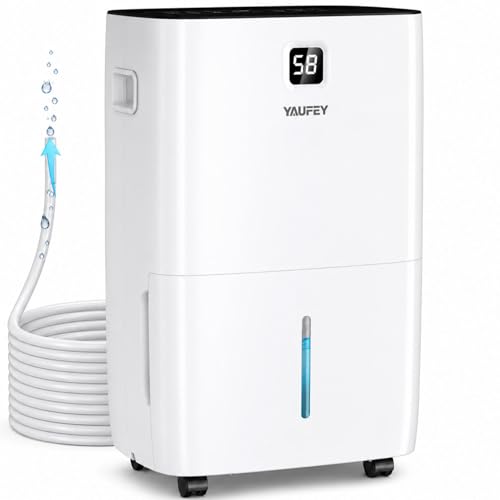
Yaufey 150 Pint Dehumidifier for Basement 8500 Sq. Ft.

MONRIKON 8,000 BTU Portable Air Conditioner with WiFi

Yaufey 120 Pint Dehumidifier 6000 Sq. Ft. with Drain Hose
Yaufey 80 Pint Dehumidifier for Basement 5000 Sq. Ft.
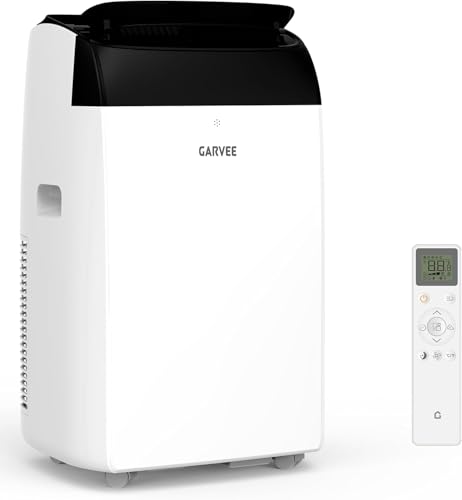
Garvee 14,000 BTU 3-in-1 Portable Air Conditioner
More On The Choices That Made The List
Basements that smell like a wet towel after every rainstorm need real pull, and this 150-pint Yaufey has the spec sheet to match. The upward drainage design sends collected water uphill through a hose, which matters in basements where a floor drain sits higher than the unit itself. Coverage stretches to 8,500 square feet, so it handles open rec rooms and split-level layouts without breaking a sweat.
Three operating modes, an adjustable humidity range, and continuous drain support make it a strong fit for households that want one machine to manage serious moisture. Where it really earns its place is in damp corners where smaller units hum along without making progress.
Practical Advantages
- 150-pint daily extraction handles standing moisture that smaller 50-pint units leave behind
- Upward drainage routing works around basement layouts without a floor drain nearby
- Adjustable humidity setpoint between 30% and 80% in 5% steps lets you dial in comfort room by room
- Three operating modes cover standard drying, continuous operation, and air circulation
Things To Consider
- Its size and weight mean you will probably park it in one spot rather than roll it around
- Emptying the internal tank without the drain hose requires lifting a full container, which gets old fast in a high-output setting
Who It Suits Best
Homeowners with a large, chronically damp basement who want set-and-forget moisture control and have a nearby drain or sink for the hose.
Look Elsewhere When
Pick the Yaufey 80 Pint Dehumidifier instead, since the smaller capacity suits moderately damp garages and workshops where 150 pints is overkill.
Renters and apartment dwellers who can’t cut into a wall get a lot from this 8,000 BTU MONRIKON. It rolls on casters, vents through a standard window kit, and connects to WiFi so the room is cold by the time you get home. Four modes cover cooling, fan-only, sleep, and a dedicated dehumidifier setting that pulls 40.5 pints per day, which is meaningful in a small bedroom or office.
The trade-off shows up in coverage, since 8,000 BTU suits spaces roughly in the 200 to 350 square foot range rather than open-plan lofts. In our view, it lands in a sweet spot for one-room comfort without a permanent install.
Standout Benefits
- WiFi and app control mean you can adjust temperature and mode from the couch or the commute home
- Sleep mode quiets the compressor and ramps the temperature gradually for overnight comfort
- Auto-drain support in dehumidifier mode keeps you from emptying the tank in muggy weather
- Window kit installs without tools, which matters for anyone who moves often
Trade Offs
- Exhaust hose routing limits window placement, and sliding casement windows need an extra panel
- At full cooling output the compressor noise is noticeable, though the sleep profile tones it down
Made For
Studio apartment dwellers and remote workers who want cooling, dehumidifying, and app control in a single rolling unit that does not require permanent installation.
Consider Something Else When
Reach for the Garvee 14,000 BTU Portable Air Conditioner, since its higher cooling capacity better matches open-plan living areas and larger bedrooms.
For finished basements where the kids actually play, the 120-pint Yaufey hits a useful middle ground. It pulls 120 pints per day in extreme conditions and 90 pints in more typical humid weather, covering up to 6,000 square feet. Compared to the 150-pint Yaufey above, it trades a bit of raw output for ENERGY STAR efficiency, which matters in a room that runs daily through the summer.
The included drain hose supports continuous operation, and the built-in humidistat stops the cycle once your target humidity is reached. It is a steady, middle-of-the-road basement pick.
Noteworthy Benefits
- ENERGY STAR efficiency trims power draw over a season of daily use, helping keep utility costs down
- 6,000 square foot coverage suits finished basements, large living areas, and open workshops
- Drain hose connection enables continuous unattended operation, so you are not babysitting a tank
- Auto-restart after a power outage keeps settings intact when the grid flickers
Worth Noting
- Drain hose routing requires a nearby floor drain, utility sink, or condensate pump for hands-off use
- Coil cleaning every few months keeps efficiency high, and accessing the filter takes a few extra steps
Key Specs
Best Suited To
Homeowners with a finished mid-size basement who want ENERGY STAR efficiency and continuous drainage without stepping up to 150-pint capacity.
A Better Fit Elsewhere
Pick the Yaufey 80 Pint Dehumidifier if your space tops out around 5,000 square feet, since the lower capacity saves energy in moderately damp conditions.
Not every basement needs 150 pints of extraction, and this 80-pint Yaufey proves it. The unit covers up to 5,000 square feet and pulls 80 pints per day, which lines up with moderately damp crawl spaces, sealed garages, and small basements that occasionally smell musty after heavy rain. ENERGY STAR certification keeps the kilowatt-hour count from spiraling when the unit runs for weeks on end.
The included drain hose gives you a permanent install option, and the internal tank catches overflow if the hose ever backs up. It is a grounded, no-nonsense pick for spaces that need moisture control without industrial output.
What Earns Its Place
- Right-sized 80-pint output avoids the energy penalty of oversizing for moderate dampness
- 5,000 square foot coverage handles most single-room basements and detached garages
- ENERGY STAR rating delivers efficient operation for daily seasonal use
- Adjustable humidity range from 30% to 80% RH accommodates everything from wine storage to comfort cooling
Honest Caveats
- 80 pints can lag behind severe flooding or persistent standing water; serious dampness may need the 120-pint sibling instead
- Like most basement dehumidifiers, the compressor produces a low hum that may register in a quiet TV room
Who Should Grab It
Homeowners with a moderately damp garage, workshop, or small basement who want reliable moisture control without paying for capacity they will not use.
Reach For A Different Pick When
Choose the MONRIKON 8,000 BTU Portable Air Conditioner instead, since you also need active cooling in a bedroom or home office where a basement unit would not reach.
Open-plan living rooms and loft-style apartments need more cooling muscle than an 8,000 BTU portable can deliver, and that is where the 14,000 BTU Garvee earns its keep. Three modes cover cooling from 62°F to 86°F, a dedicated dehumidifier, and fan-only circulation, so the same unit handles July afternoons and shoulder-season dampness. The sleep mode drops noise below 50 dB, which is quiet enough for bedroom use in most homes.
A 1-24 hour timer adds scheduling flexibility for off-peak energy use. Depending on your layout, this is the closest portable cooling gets to a mini-split without the permanent install.
The Good Stuff
- 14,000 BTU output tackles open living areas and large master bedrooms that smaller portables cannot cool effectively
- Sleep mode under 50 dB keeps the unit running overnight without dominating the room
- Programmable 1-24 hour timer supports off-peak scheduling and automatic shutoff at bedtime
- 3-in-1 design replaces a separate dehumidifier and fan, freeing up floor space in smaller homes
Points To Keep In Mind
- Exhaust hose venting still requires a window, and the heat it expels can warm an adjacent room in tight apartments
- At 14,000 BTU the unit draws meaningful power, so older 15-amp circuits may need attention before running it alongside other appliances
Feature Snapshot
Whose Shelf It Belongs On
Apartment dwellers with open living areas or large master bedrooms who want serious cooling plus a dehumidifier mode and prefer not to commit to a permanent wall install.
Swap It Out When
Pick the Yaufey 150 Pint Dehumidifier instead, since the real problem in your space is basement moisture with no need for active cooling.
What To Weigh Before Buying An AC With Dehumidifier
Matching the unit to the room is the single biggest decision. Portable air conditioners with a built-in dehumidifier mode make sense in living spaces where you want both temperature and moisture control, while a dedicated basement dehumidifier pulls far more water per day for the same electricity. Sizing a portable by BTU (British Thermal Units, a measure of cooling power) to the square footage of the room keeps short-cycling and wasted energy at bay.
Drainage options separate a good unit from a frustrating one. Continuous drain hose support means you can plumb the unit to a floor drain, utility sink, or condensate pump and walk away, while tank-only models require regular emptying, sometimes daily in sticky weather. Look for ENERGY STAR certification on basement models that run for months, since the efficiency gap adds up over a season.
Noise and placement matter more than spec sheets suggest. A 14,000 BTU portable expels warm exhaust through a window hose that can heat an adjacent room, and even sleep-mode compressors register at low volumes in quiet bedrooms. For basements, plan the drain hose route before you unbox the unit, and check whether the humidistat (the sensor that measures room humidity and cycles the compressor on and off) supports your target range, typically 40% to 50% RH for comfort.
Smart features earn their keep for people with irregular schedules. WiFi app control on the MONRIKON portable means a cold room is waiting when you walk in the door, and programmable timers on the Garvee cut overnight runtime without manual intervention. None of those features matter much for a basement unit that runs the same schedule year-round, so spending on smarts depends on how the unit fits into your daily routine.
Smart Shopping Notes For This Category
Where Shoppers Go Wrong
The most common slip is matching capacity to square footage without accounting for ceiling height, sun exposure, or how often the room is used. A west-facing bedroom with 10-foot ceilings needs more cooling than a north-facing room of the same footprint, and a basement that floods once a year needs more extraction than one that just smells musty. Choosing a unit that cannot keep up leads to nonstop compressor runtime and rising utility costs, while oversizing wastes energy and short-cycles the hardware.
Another trap is ignoring the drain setup. Tank-only operation in a basement means hauling water to a utility sink every few hours during humid stretches, which gets old fast. Measure the path from the planned unit location to the nearest drain before buying, and confirm the included hose reaches.
The Upgrade Payoff
Higher-tier models in this category cost more for three concrete reasons: more insulation around the compressor, better humidity sensors, and more efficient heat exchangers. The compressor wrap is what drops noise below 50 dB in sleep mode on the Garvee portable, and a tighter humidistat on ENERGY STAR basement models prevents the unit from overshooting your target and restarting constantly. Better heat exchangers move more moisture per kilowatt-hour, which compounds across a full summer of daily use.
For a basement that runs 24/7 from May through September, the efficiency gap between an ENERGY STAR certified model and a non-certified one is noticeable on the monthly bill. For a portable used a few hours a day, the upgrade payoff shows up more in noise, build quality, and smart features than in pure energy savings. Spending up is worth it whenever the unit runs long enough for the gap to add up, and less critical for occasional seasonal use.
Frequently Asked Questions
Do portable air conditioners actually dehumidify well?
The dehumidifier mode on a portable AC pulls meaningful moisture in a small to mid-size room, though it cannot match a dedicated basement unit’s daily extraction. For a bedroom or home office, the built-in mode handles muggy weather comfortably.
How many pints per day do I need for a basement?
A chronically damp basement typically benefits from 50 to 80 pints of daily extraction, while flooded or poorly sealed basements often need 100 to 150 pints. Sizing up is safer than undersizing, since an overworked dehumidifier never reaches the target humidity.
Is ENERGY STAR worth it on a dehumidifier?
ENERGY STAR certified dehumidifiers use less power per pint of moisture removed, which matters whenever the unit runs daily. For seasonal or occasional use, the certification matters less.
Can I run a portable AC and a dehumidifier at the same time?
Yes, though a portable AC’s cooling cycle already pulls some moisture, so running both in the same room is usually redundant. A better approach is to use the portable AC’s dehumidifier mode in milder weather and switch to cooling when temperature is the priority.
How often do dehumidifier filters need cleaning?
Most basement dehumidifier filters need a quick rinse or vacuum every two to four weeks during heavy use, and a deeper coil cleaning once or twice per season keeps extraction efficient.
Wrap Up
Cooling a room and drying it out are two different problems, and the right pick depends on which one you need to solve. Portable units like the MONRIKON and Garvee handle both in a single rolling package, while the Yaufey basement lineup delivers serious moisture extraction for damp lower levels. Match capacity to your space, plan the drainage path, and let the room’s real conditions drive the decision rather than the spec sheet.