

Humidity has a way of turning a comfortable room into a sticky, musty box. Run a portable AC with a built-in dehumidifier, and a single hose can pull double duty: cooling the air and pulling moisture out of it. For basements that smell like old gym socks or bedrooms that wake you up clammy, the right combination of cooling capacity and moisture removal can change how a space actually feels.
This roundup pulls together six units that tackle moisture from different angles. Some are full climate stations, with WiFi and timers. Others are quiet workhorses built to run quietly in a bedroom, or pump a basement dry without you touching a tank. Each pick comes with a clear profile: who it suits, what it actually does well, and the honest trade-offs you should weigh before spending a cent.
The Essentials At A Glance

MONRIKON 8,000 BTU Portable AC with WiFi, 24H Timer, 4-in-1 Modes
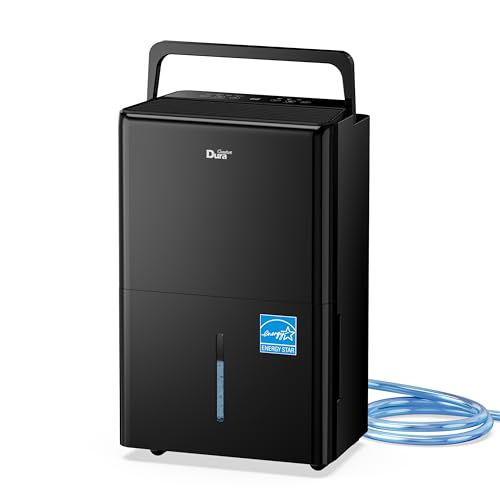
DuraComfort Basement Dehumidifier 4,500 Sq Ft with Pump, 50 Pints

DuraComfort Basement Dehumidifier up to 2,500 Sq Ft, 35 Pints/Day, Energy Star

NineSky 1000 Sq Ft Dehumidifier, 95oz Tank, 7-Color Light, Grey
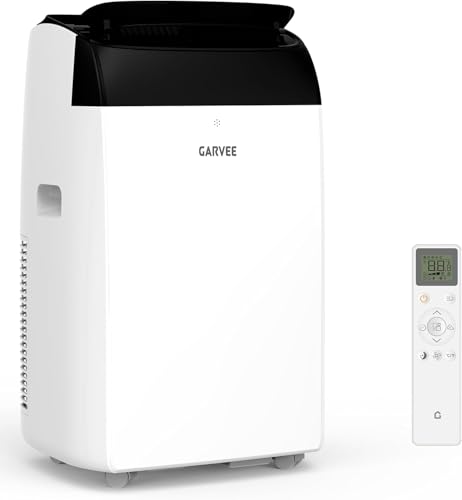
Garvee 14,000 BTU Portable Air Conditioner, 3-in-1

NineSky 1000 Sq Ft Dehumidifier, 95oz Tank, 7-Color Light, Black
The Details Behind The Selections
Portable air conditioners tend to do one job well, and the rest reluctantly. This MONRIKON unit, the first pick on our list, leans into the all-in-one angle: cooling, fan-only, dedicated dehumidification, and a sleep mode all share a single chassis. The 8,000 BTU rating puts it in apartment-bedroom territory, and a window kit is included so you can set it up the same day it lands.
Real-world value here is the WiFi and app control, which is rare at this tier. You can drop the room temperature from your phone on the commute home, or schedule a 24-hour timer so it cycles through the night without babysitting. The two fan speeds, low at 260 m³/h and high at 380 m³/h, give you a clear difference between background circulation and active cooling. For a renter who can’t install a wall unit, this covers cooling and moisture in one box.
A Few Highlights
- Four operating modes in a single unit cut the need for a separate fan or dehumidifier
- App and WiFi control let you adjust settings from the couch or on the way home
- 24-hour timer is genuinely useful for sleep cycles and off-peak hours
- Window kit included for setup without a trip to the hardware store
Things To Consider
- 8,000 BTU suits small to mid-size rooms and may feel underpowered in open-plan spaces
- As with most portables, the exhaust hose needs a window or vent, so placement is somewhat limited
Feature Snapshot
Who It Suits Best
Renters, apartment dwellers, and home office workers who want cooling, fan, and dehumidification in one portable box.
Consider Something Else When
The Garvee 14,000 BTU Portable Air Conditioner suits you better if your space is a large open-plan living area that needs real cooling muscle.
Big basements punish small dehumidifiers. This DuraComfort unit is built for the other end of the scale, with a 50-pint-per-day rating and coverage up to 4,500 square feet. The headline feature is the built-in pump, which pushes water up and out through a hose rather than relying on gravity or your attention.
Compared to the MONRIKON we just covered, this DuraComfort skips cooling entirely and focuses on moisture removal. Smart humidity control lets you set a target between 35% and 80% RH (relative humidity, a measure of how much moisture is in the air), and the unit cycles itself on and off to hold that level. The 1.7-gallon internal tank with float protection catches overflow if the pump setup isn’t active, with a full-tank alert so you know when to drain manually. You may find it overkill for a guest room, but for a damp basement or finished rec room, it’s built for the workload.
Useful Highlights
- Built-in pump enables continuous draining, no manual tank emptying
- Smart humidity control between 35% and 80% RH targets a set comfort level
- 1.7-gallon tank with float switch prevents overflows if you skip the hose
- Coverage up to 4,500 square feet suits large basements and multi-room spaces
Worth Noting
- Dehumidification only, with no cooling function, so it pairs poorly with hot, dry rooms
- Size and weight put it firmly in a “leave it in place” role rather than a portable one
Made For
Homeowners with chronically damp basements, crawl spaces, or large multi-room areas that need serious daily moisture extraction.
Look Elsewhere When
The NineSky 1000 Sq Ft Dehumidifier suits you better if you mainly need quiet moisture control for a single bedroom or small den.
Not every basement needs a 4,500-square-foot workhorse. This mid-size DuraComfort dehumidifier targets up to 2,500 square feet and pulls a maximum of 35 pints per day, with a 2025 Energy Star rating that helps keep the electric bill in check. It also shows up in our list right after its bigger sibling, so it’s a natural step-down option.
The drain hose is included for continuous operation, and a smart humidistat (a sensor that measures and regulates humidity automatically) plus timer give you scheduling options. Energy Star matters here because a dehumidifier that runs 12 hours a day can quietly double a small portion of your power bill. In our view, this is the sweet spot for finished basements around 1,000 to 2,000 square feet, where the larger unit above would be overkill but a small bedroom model couldn’t keep up.
What It Does Well
- Energy Star certified design trims long-term running costs
- Smart humidistat and timer automate daily cycling without supervision
- Continuous drain hose included out of the box
- Capacity suits most mid-size finished basements without oversizing
Trade Offs
- At maximum 35 pints per day, it falls short of larger whole-home options in extremely damp conditions
- Like most Energy Star compressors, owners commonly report a brief warm-air exhaust that slightly raises nearby room temperature
Feature Snapshot
Best Suited To
Homeowners with finished mid-size basements who want set-and-forget humidity control without overpaying for capacity they don’t need.
A Better Fit Elsewhere
The DuraComfort 4,500 Sq Ft 50 Pints model is the right call if your basement runs consistently wet and the larger capacity justifies the extra unit cost.
Quiet rooms deserve quiet hardware. This NineSky dehumidifier uses semiconductor cooling (a solid-state technology that condenses moisture without a noisy compressor) to pull moisture out of small spaces while staying nearly silent. The 95-ounce tank, around 0.74 gallons, holds a useful amount for a bedroom or small den.
Where it differs from the basement DuraComforts is operating volume. There’s no compressor rumble, so the unit can sit on a nightstand shelf without intruding on sleep. Auto shut-off kicks in when the tank fills, and a 7-color ambient light adds a soft visual cue. You may find this design doesn’t have the muscle for a damp basement, but for a closet, nursery, or small bedroom, it’s a tidy answer.
Reasons It Performs
- Semiconductor cooling keeps operation whisper-quiet, ideal for bedrooms
- 95-ounce tank capacity means fewer trips to the sink
- Auto shut-off protects against overflow when the tank is full
- 7-color ambient light doubles as a soft night light for kids’ rooms or hallways
Honest Caveats
- Limited to around 1,000 square feet, so it’s the wrong tool for whole-basement duty
- Semiconductor design runs cooler and slower than compressor units in heavy humidity, so the tank fills faster than you might expect in extreme conditions
Quick Facts
Perfect Match For
Apartment dwellers and light sleepers who want quiet moisture control in a bedroom, nursery, or small office without a compressor buzzing in the background.
Swap It Out When
The DuraComfort 2,500 Sq Ft 35 Pints model fits better for finished basements where compressor-grade extraction is the priority.
When one room is too big for a small portable AC, you size up. This Garvee unit jumps to 14,000 BTU and covers the 3-in-1 angle: cool between 62°F and 86°F, fan-only, and a dehumidifier mode for damp stretches. It also offers a programmable 1-24 hour timer and a sleep mode that ramps the compressor gently to avoid those 3 AM temperature swings.
Comparing to the MONRIKON, this Garvee is built for bigger spaces and runs louder as a result, but it stays under 50 dB (decibels, a measure of sound loudness) in operation, which is roughly the level of a quiet conversation. The fan-only mode is handy for shoulder seasons when you want air moving without active cooling. The honest read is that 14,000 BTU pulls a real amount of power, so a dedicated 15-amp circuit is a good idea for daily summer use.
Useful Strengths
- 14,000 BTU handles larger living rooms, lofts, and open-plan spaces
- Sleep mode plus 1-24 hour timer lets the unit ease through the night automatically
- Three modes (cool, fan, dehumidify) cover most of the year
- Operation under 50 dB keeps it reasonable for living areas
Points To Note
- Larger footprint than bedroom portables, so it suits a permanent corner rather than a closet
- Higher BTU means a heavier unit, and moving it between rooms takes some effort
Right Fit For
Homeowners with large living rooms, bonus rooms, or upstairs spaces that need serious cooling and a built-in dehumidifier for sticky stretches.
Not Your Match When
The MONRIKON 8,000 BTU is a better fit for smaller bedrooms where lower BTU, app control, and a tighter footprint matter more than raw power.
Same engineering as the grey NineSky, wrapped in a black finish. This version keeps the 95-ounce tank, the 1,000-square-foot coverage, the semiconductor cooling, and the 7-color ambient light. The only real difference is aesthetic, so it matters in rooms where a black unit disappears into the furniture better than a grey one.
Real-world use is identical to its sibling. Auto shut-off protects against overflow, the compressor-free design keeps the noise floor low, and the modest footprint means it slides into a closet or under a shelf. In our view, this is the right pick if you’ve narrowed it down to NineSky and need a darker finish, but the underlying performance is the same as the grey unit we covered earlier.
The Practical Payoff
- Black finish blends into darker furniture and modern decor
- Semiconductor cooling keeps the unit whisper-quiet at night
- 95-ounce tank reduces daily empty-outs in typical bedroom conditions
- Auto shut-off prevents spills when the tank is full
Soft Spots
- Semiconductor tech is slower than compressor units in heavy humidity
Who Will Love This
Anyone who values quiet moisture control in a single small room and prefers a black unit over a lighter finish.
Reach For A Different Pick When
The DuraComfort 4,500 Sq Ft 50 Pints is the right call if you need serious whole-basement extraction rather than a quiet bedroom companion.
Matching Capacity To The Room You Actually Have
Matching a unit to your space starts with square footage, but two other numbers matter just as much. Pint capacity, measured in pints of water removed per day, tells you how aggressively the dehumidifier can work, and BTU, or British Thermal Units, tells you the cooling side of the equation. A small bedroom rarely needs more than 25 to 35 pints per day, while a damp basement in a humid climate benefits from 50 pints or more. Sizing below the room’s actual load means the unit runs constantly and never quite hits your target, which is the most common cause of “my dehumidifier doesn’t work” frustration.
Portables split into two cooling technologies. Compressor units (the DuraComfort basement models, plus the MONRIKON and Garvee portable ACs) move serious moisture and cool effectively, but they hum. Semiconductor units (the NineSky picks) are nearly silent and fit nicely on a shelf, but they work best in smaller, less demanding spaces. The trade-off is volume versus capacity: pick the technology that matches the room size and your noise tolerance.
Drainage shape matters for long-term ownership. A tank-only unit asks you to empty it every day in heavy use, while continuous-drain models with a built-in pump (the larger DuraComfort) push water out through a hose and let you forget about it. For basement installations, continuous drain is almost always the easier life, especially when you may find the tank full by morning. Smart features, like humidistat setpoints and timers, are useful for keeping humidity between 35% and 50% RH without constant adjustment.
What The Higher Tier Buys And Common Buying Slip Ups
Where Shoppers Go Wrong
The most common mistake is matching a 1,000-square-foot dehumidifier to a 3,000-square-foot basement. The unit runs nonstop, the tank fills before you wake up, and the humidity never drops. Measure your room honestly, including finished basement walls, and pick a unit that comfortably exceeds the square footage. The opposite mistake happens too: oversized dehumidifiers cycle on and off so frequently that the compressor wears prematurely, and the room overshoots its target into uncomfortably dry air.
A second trap is ignoring ventilation. A portable AC needs an exhaust path, and a basement dehumidifier works best when the room has some air circulation. Closing the unit into a sealed corner with no airflow makes even a good dehumidifier struggle.
Why Top Tier Costs More
The gap between a 35-pint mid-tier dehumidifier and a 50-pint basement model isn’t just capacity. Higher-tier units add built-in pumps, larger compressors, more robust humidistats, and energy-efficient components that cut long-term power costs. In a unit that runs 12 hours a day through the summer, the Energy Star rating on a mid-tier DuraComfort can pay for itself in lower electric bills over a few seasons. Premium pricing also covers quieter fans, more accurate humidity sensors, and the kind of build quality that survives a basement environment for years.
Frequently Asked Questions
What size dehumidifier do I need for a typical bedroom?
A 1,000-square-foot, 25 to 35-pint dehumidifier suits most standard bedrooms. For larger master bedrooms or open loft spaces, stepping up to 50 pints keeps up with the moisture load without constant cycling.
Can a portable air conditioner replace a dehumidifier?
In dry climates, a portable AC’s cooling mode does pull some moisture, but it’s not a substitute for a dedicated dehumidifier. In humid regions, you’ll want both: the AC for temperature, the dehumidifier for moisture, or a 4-in-1 unit like the MONRIKON that handles both jobs in one box.
How often does the tank need emptying?
A 95-ounce tank in a semiconductor unit may need daily emptying in humid conditions, while a 1.7-gallon tank in a compressor unit can run two to three days. Continuous-drain models with a pump, like the larger DuraComfort, remove that step entirely.
Are compressor dehumidifiers noisy enough to keep out of bedrooms?
Modern compressor units typically run between 40 and 50 dB, comparable to a quiet office. For light sleepers, a semiconductor unit like the NineSky stays below that noise floor and is the better bedroom choice.
Do portable ACs need to be vented out a window?
Yes, all single-hose portable air conditioners need an exhaust path, and a window kit is the most common solution. Some models support venting through a sliding door or a drop ceiling, but the principle is the same: hot air must exit the room.
Final Verdict
The right pick depends on the room and the workload. The MONRIKON is the strongest all-in-one for renters and small apartments, the DuraComfort 50-pint model anchors any serious basement setup, and the NineSky units earn their place in quiet bedrooms. Match the technology to the room, size up rather than down, and you’ll end up with a comfortable space instead of a constantly running box that never quite keeps up.