


A damp basement, a musty crawl space, a bedroom that never quite dries out in July, all of these trace back to one culprit: too much water vapor sitting in the air. A 70-pint dehumidifier pulls roughly 70 pints of moisture out of the air every 24 hours under lab conditions (the “AHAM” standard: 80°F and 60% relative humidity), making it a natural fit for mid-size rooms, basements under 2,000 square feet, and sealed crawl spaces. You want the right capacity for the room, steady drainage if you hate emptying tanks, and enough airflow to actually move the air around. This shortlist covers whole-home installs, portable commercial units, and a couple of smaller-capacity options that still earn their spot.
How The Shortlist Stacks Up

AprilAire E070 Pro Dehumidifier Bundle 70 Pint
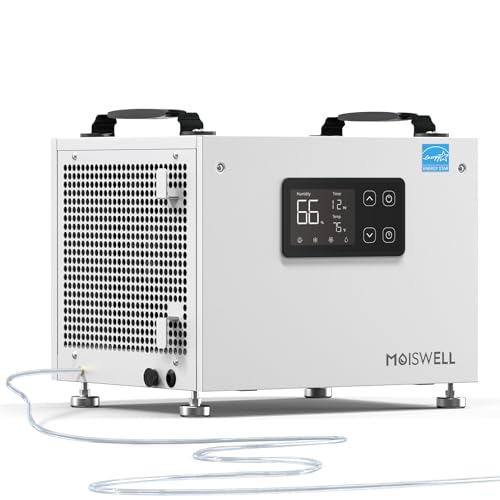
Moiswell 70 Pints Commercial Dehumidifier with Pump

Kesnos 120 Pint Energy Star Dehumidifier
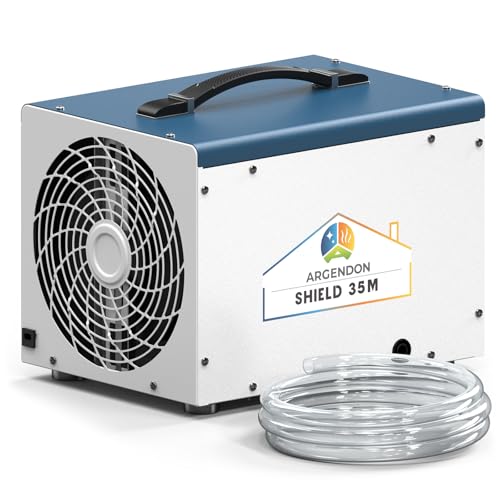
ARGENDON 70 Pint Crawlspace and Commercial Dehumidifier
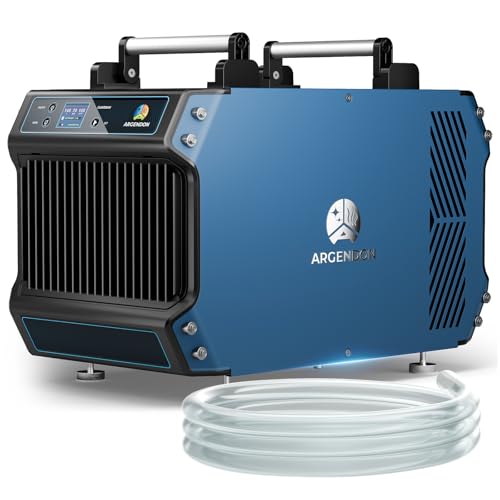
ARGENDON 180 Pints Crawlspace Dehumidifier with Pump
Kesnos 80 Pints Energy Star Dehumidifier
Kesnos 30 Pints Ultra-Quiet Dehumidifier

Kesnos 150 Pint Dehumidifier for Basement
More On The Choices That Made The List
Whole-home moisture control usually means hardwired installation, ducted air supply, and a drain line routed to a floor drain or condensate pump. The AprilAire E070 Pro is built for exactly that workflow, and the “Pro Bundle” version ships with the duct collars, drain hose, risers, and a spare filter so you are not making extra trips mid-install. Rated for spaces up to 2,800 square feet, it sits comfortably between the smaller Moiswell and the much larger ARGENDON 180 below.
If your home already has a return-air sidewall or a dedicated dehumidifier duct, this is the kind of unit HVAC contractors spec in new builds. The MERV-rated filter (a filter rated on the MERV scale, where higher numbers catch smaller particles) protects the coil in dusty basement environments, which matters more than people realize. Run it continuously through the summer and you will probably notice the AC cycling less because latent load (the hidden energy cost of removing moisture rather than heat) is no longer piling on the cooling system.
Reasons It Performs
- Full install kit included: duct collars, drain hose, risers, and a backup filter arrive in the box
- Whole-home coverage up to 2,800 sq ft means one unit can handle a typical basement-plus-lower-level layout
- Coil protection filter cuts down on dust recirculation, which reduces how often the unit needs a deep clean
- Ductable design lets you tie it into existing HVAC returns instead of relying on free-standing placement
Points To Note
- Hardwired install means most owners will need an electrician, which adds cost beyond the unit itself
- Whole-home dehumidifiers are overkill for a single bedroom or a small office
Who It Suits Best
Homeowners finishing a basement or sealing a crawl space, working with a contractor who can handle the electrical and ducting side of the install.
Consider Something Else When
A renter or apartment dweller should look at the Kesnos 80 Pints instead, since it runs on a standard outlet and rolls between rooms.
The Moiswell 70 Pints Commercial Dehumidifier is the first pick on this list that runs on a standard 115V outlet rather than a dedicated circuit, and the built-in condensate pump is the headline feature. A pump lets the unit push water vertically through a hose to a sink, window, or remote drain, which matters in crawl spaces where gravity drainage is not an option. The Energy Star certification (a federal efficiency standard that means the unit meets strict kWh-per-liter thresholds) helps if the unit runs 24/7 through a humid summer.
Rated capacity lands at 70 pints per day at saturation and closer to 35 pints per day under the AHAM standard everyone actually tests against. In practical terms, expect solid performance in a sealed crawl space under 1,000 square feet, which is a common size for residential foundations. Compared to the AprilAire above, this one is more “place and plug” than “call an electrician.”
Good Reasons To Consider
- Integrated pump eliminates the need for a separate condensate pump accessory
- Energy Star certified, so continuous crawl-space operation does not blow up the utility bill
- 115V plug-in design removes the electrician cost from the install
- Commercial-grade housing handles the dust and rough conditions of crawl space duty
Trade Offs
- Smaller coverage area than the AprilAire E070, so it is less ideal for very open finished basements
- The pump adds a layer of mechanical complexity, which is a common failure point over years of use
Made For
Homeowners with a sealed residential crawl space under roughly 1,000 square feet who need set-and-forget drainage without running new electrical.
Look Elsewhere When
You are drying a 2,000+ square foot finished basement; the Kesnos 150 Pint below covers that footprint with room to spare.
Kesnos targets the residential basement market, and the 120-pint model covers up to 6,500 square feet, which is enough for most full-size suburban basements including finished recreation rooms. The included drain hose is a quiet detail that matters: continuous gravity drainage means you never have to remember to empty a tank. Energy Star certification keeps the operating cost reasonable even on a heavy cycle.
The 30% to 80% adjustable humidity range covers the sweet spot recommended for preventing mold growth (generally 30% to 50% relative humidity) without over-drying the air. Compared to the Moiswell above, you trade the integrated pump for significantly more capacity and a larger coverage footprint. One thing worth knowing: the 120-pint figure is measured at saturation, with the AHAM figure running lower.
What Pays Off
- 6,500 sq ft coverage handles full basements with adjacent utility rooms
- Continuous drain hose included for unattended operation
- Adjustable humidity range down to 30% helps with mold and dust-mite control
Honest Caveats
- No built-in pump, so the unit must sit near a floor drain or run to a sink by gravity
- Air filter cleaning tends to come up in owner reports as a regular maintenance task, plan on a monthly rinse
Best Suited To
Owners of mid-to-large finished basements who want set-and-forget operation and have a nearby floor drain to route the included hose.
Reach For A Different Pick When
You need a built-in pump to send water up to a sink or window; the Moiswell 70 Pints with Pump handles vertical drainage more cleanly.
ARGENDON’s 70-pint crawlspace unit takes a more contractor-friendly approach. The 5-year limited warranty is the longest on this list, which tells you something about how the brand expects the hardware to hold up. The 115 CFM airflow rating (cubic feet per minute, a measure of how much air the unit pushes through its coil) is genuinely useful information: higher CFM means the air cycles faster, which reduces the chance of stagnant pockets in a long crawl space.
Coverage tops out at 1,000 square feet, similar to the Moiswell, but ARGENDON skips the built-in pump in favor of straightforward gravity drainage. That makes the unit simpler mechanically, though you give up the convenience of vertical water lift. If your crawl space has a low point with a floor drain or you can route a hose to daylight, the trade-off is worth it. The 5-year warranty, which is double what most residential units ship with, does the heavy lifting on long-term value.
Real Benefits
- 5-year limited warranty outpaces most residential competitors in this category
- 115 CFM airflow keeps air moving through long, narrow crawl spaces
- 70-pint capacity covers standard residential foundations up to 1,000 sq ft
Where It May Fall Short
- No built-in pump, so installation requires accessible gravity drainage
- Smaller coverage ceiling than the Kesnos 120 or 150 units, so it does not scale to large basements
Who Will Love This
Homeowners who want a long warranty and have a crawl space with a workable gravity drain path, no pump required.
Swap It Out When
Your space is large and unfinished; the Kesnos 150 Pint covers up to 7,500 sq ft with similar warranty terms.
When 70 pints is not enough, the ARGENDON 180 steps in. Rated at 180 pints per day under saturated conditions, this is the largest-capacity unit on the list and the only one that targets true commercial and industrial environments. The built-in pump handles vertical water lift, and the ETL listing (a North American safety certification from Intertek, similar in standing to UL) covers commercial installations where inspectors check for it.
Up to 2,300 square feet of coverage puts this in workshop, warehouse, and large basement territory. For most homeowners it is honestly overkill, but for restoration contractors, schools, and anyone with a moisture problem bigger than a residential basement, it earns its spot. The honest read is that the 180-pint figure drops meaningfully under standard AHAM conditions, so plan capacity with some headroom. You may also find the unit’s footprint and weight make it more of a fixed install than a portable option.
Everyday Advantages
- 180-pint saturated capacity handles commercial and industrial moisture loads
- Built-in pump supports vertical drainage up to standard pump-lift heights
- ETL safety listing helps in inspected commercial spaces
Less Ideal Details
- Capacity and footprint make it more of a fixed install than a portable unit
- 180-pint saturation rating is a best-case figure; AHAM conditions drop the real-world number noticeably
Perfect Match For
Restoration contractors, facility managers, and homeowners with very large or commercial-scale moisture problems up to 2,300 sq ft.
Not Your Match When
You are drying a standard residential basement; the AprilAire E070 or Kesnos 120 cover that footprint without the commercial premium.
The Kesnos 80 Pints sits in a useful middle ground: large enough to handle a finished basement, quiet enough for a living room. The front humidity display is a small touch that pays off every day, since you can read the room’s relative humidity at a glance without walking to the unit. Adjustable humidity from 30% to 80% in 5% increments gives fine control that some competing units skip.
Coverage extends to 5,500 square feet, so this unit covers the same general footprint as the larger 120-pint model, just with longer cycle times between tank empties (or with continuous drain). Two fan speeds, low and high, let you drop the noise during evening TV time. Owners commonly report that the washable filter pulls out for a quick rinse under the faucet, which is the kind of maintenance detail that keeps the unit running efficiently for years. Compared to the Moiswell, this one trades raw extraction speed for better in-room usability.
Bright Spots
- Front-facing humidity display makes daily monitoring easy from across the room
- 5% humidity adjustment increments give finer control than most competitors
- Two fan speeds balance noise against moisture removal
- Washable filter simplifies routine maintenance
Practical Considerations
- 5,500 sq ft coverage assumes open floor plans; walled-off rooms may need a second unit
The Right Fit
Homeowners drying a finished basement or large open-concept living area who care more about everyday comfort than raw capacity.
A Better Fit Elsewhere
For pure basement drying duty, the Kesnos 120 or 150 below give you more headroom if the space trends damp.
At 36 dB, the Kesnos 30 Pints runs quieter than a normal conversation, which is unusual for any dehumidifier. That matters in a bedroom, a nursery, or a home office where the constant hum of larger units becomes background irritation. Rated for 2,500 square feet, it covers a single room or a small open apartment comfortably.
This is the smallest-capacity unit on the list by a wide margin, and the target room is the right place to use it. The 30-pint figure can drive relative humidity down to 30% under saturated conditions, which is the range where dust mites and mold struggle to take hold. Compared to the Moiswell and ARGENDON 70-pint models above, you trade a lot of capacity for bedroom-friendly noise. The honest read is that this is a specialty pick, and it does that specialty well.
What Makes Sense
- 36 dB operation is among the quietest dehumidifiers in this category
- 2,500 sq ft rating covers a bedroom, office, or small apartment comfortably
- Can drive humidity down to 30% for mold and dust-mite control
Some Limits To Know
- 30-pint capacity is undersized for basements, crawl spaces, or any open floor plan
- Smaller tank means more frequent manual emptying without a continuous drain
Whose Shelf It Belongs On
Light sleepers, nursery setups, and home office workers who need moisture control without the white noise of larger units.
Where A Sibling Pick Shines
For a damp basement, jump to the Kesnos 80 or 120 above and accept the extra noise in exchange for real capacity.
The Kesnos 150 Pint is the largest of the residential basement units on this list, covering up to 7,500 square feet. The drain hose is included, and the adjustable humidity range mirrors the smaller Kesnos siblings (30% to 80%). For homeowners with very large basements, finished lower levels that include rec rooms and home gyms, or chronic moisture issues that smaller units cannot keep up with, this is the residential answer.
Like the 120-pint model, the 150 figure represents saturated conditions, and you can expect a meaningful drop under standard AHAM testing. The front humidity display carries over from the 80-pint model, so daily monitoring is just as easy. Compared to the commercial ARGENDON 180 above, this unit gives up some raw capacity but runs quieter and is sized for residential outlets. One thing worth considering: at this capacity, you are firmly in “make sure the drain hose reaches a floor drain” territory before unboxing.
Points In Its Favor
- 7,500 sq ft coverage handles very large or fully finished basements
- Drain hose included for continuous unattended operation
- Front humidity display makes daily checks simple
- Quieter operation than the commercial-grade 180-pint alternative
What To Weigh
- 150-pint figure is saturated, not AHAM, so real-world numbers are lower
- Requires a workable gravity drain path, no built-in pump on this model
Built With In Mind
Homeowners with very large finished basements up to 7,500 sq ft who need residential-friendly noise levels and a reachable floor drain.
Skip It When
Your basement is mid-size and you want to keep things simple; the Kesnos 120 Pint hits the same price tier with less install planning.
Choosing The Right Capacity For Your Space
Capacity is the single most important number on the spec sheet, and it is also the easiest to misread. Manufacturers list two figures, and the difference between them is significant. The “saturated” rating (sometimes called the “max” rating) is measured at 90°F and 90% relative humidity, which sounds like a lot until you realize your basement is rarely that extreme. The AHAM rating, 80°F and 60% relative humidity, is the more realistic everyday figure and the one that lines up with how the unit performs in your home.
For a typical residential basement under 1,500 square feet, an AHAM rating of 30 to 40 pints per day is enough. Mid-size finished basements between 1,500 and 3,000 square feet want 40 to 50 AHAM pints. Spaces above 3,000 square feet, including open-concept lower levels, crawl spaces that run the full foundation footprint, and commercial areas, generally need 50+ AHAM pints or a multi-unit setup. Picking capacity based on the saturated figure is a common mistake that leads to over-sized units running short cycles, which is less efficient and wears the compressor faster than steady, longer runs.
Drainage Path Matters More Than People Think
Continuous drainage is the difference between a dehumidifier you forget about and one that demands weekly attention. There are two paths: gravity drainage through a hose routed to a floor drain, sink, or sump pit, and pump-assisted drainage, where an internal pump pushes water vertically to a remote drain. Gravity is simpler, has no pump to fail, but limits where the unit can sit. Pump-assisted costs a bit more but lets the unit live in crawl spaces, lofts, or basement corners with no nearby drain. Pick the drainage type that matches the room, not the other way around.
Noise And Placement Trade Offs
Larger units move more air, which means more noise. Below 40 dB is bedroom-friendly. Between 40 and 50 dB is fine for living areas during the day but noticeable at night. Above 50 dB and you are firmly in basement, workshop, or mechanical-room territory. Match the noise floor to the room, and consider how the unit will sit relative to sleeping areas, because even a 45 dB unit can become irritating over an eight-hour stretch.
Why Energy Star Matters In This Category
A dehumidifier can run 12 to 24 hours a day through humid months, and the electricity adds up. Energy Star certified models use 10% to 20% less energy than standard units, which compounds quickly at continuous operation. The certification also signals the manufacturer met stricter coil, fan, and compressor efficiency targets, which often correlates with longer service life. If the unit will live in a finished basement and run through the summer, Energy Star is worth prioritizing.
Key Considerations Across These Picks
Common Shopping Slip Ups
The most common mistake is sizing by the saturated rating and ending up with a unit that is either too large or too small for real-world conditions. The second is ignoring drainage, buying a great unit and then realizing the hose cannot reach a drain and the tank needs emptying twice a day. A third is overlooking the air filter: most residential dehumidifiers need a monthly rinse and an annual deep clean, and owners who skip this report shorter compressor life and higher energy use.
What The Higher Tier Buys
Higher-capacity and commercial-grade units cost more for a reason, and it is not just raw extraction speed. You are paying for larger coils (more surface area for moisture to condense on, which means more efficient heat transfer), more robust compressors rated for longer run cycles, and better internal components that handle continuous duty. In a basement that runs 16 hours a day through July, the upgrade pays back in efficiency and longevity. In a bedroom that runs only a few hours a week, the upgrade is wasted.
Frequently Asked Questions
What size room does a 70-pint dehumidifier cover?
Most 70-pint units cover between 1,000 and 1,500 square feet under real-world conditions, though coverage claims vary by manufacturer and test conditions.
How often does the tank need emptying?
With a full tank and no drain hose, expect to empty every 8 to 12 hours of continuous operation. Most owners route the included drain hose and skip the tank entirely.
Is a built-in pump worth the extra cost?
A pump is worth it whenever the unit cannot sit next to a gravity drain. Crawl spaces, lofts, and basements with the drain on the opposite wall are common cases where a pump pays for itself quickly.
Can one dehumidifier handle an entire house?
Whole-home systems like the AprilAire E070 can, but they require ducted installation. A single portable unit generally handles one zone, usually the basement, and additional units cover other floors.
How loud are these units?
Portable residential units run between 36 and 50 dB. The Kesnos 30 Pints at 36 dB is the quietest on this list, and commercial units trend louder as capacity climbs.
Closing Remarks
The right dehumidifier is the one that matches your space, your drainage reality, and your tolerance for noise. Smaller rooms and quiet hours call for a unit like the Kesnos 30 Pints. Whole-home installs and sealed crawl spaces need a hardwired, ducted solution like the AprilAire E070. For most homeowners, the decision lands in the residential basement range, where the Kesnos 80, 120, or 150 offer the best balance of capacity, efficiency, and everyday usability. Match the unit to the room, set the humidity between 30% and 50%, and you will feel the difference within a day.