


Damp basements, sticky bedrooms, and that persistent musty closet smell all share one common culprit: excess humidity. A solid 50-pint dehumidifier pulls moisture out of the air at a rate that handles real living spaces, not just a small bathroom after a steamy shower. The right unit can also protect wood floors, reduce mold risk, and make a damp basement feel like part of the house again. This roundup focuses on models built for whole-room or whole-floor coverage, with an eye toward noise, drainage options, and how each one handles everyday humidity swings.
The Essentials At A Glance
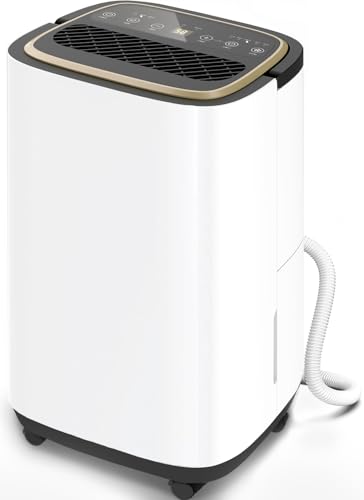
Tehanld 5000 Sq.Ft Dehumidifier with Drain Hose
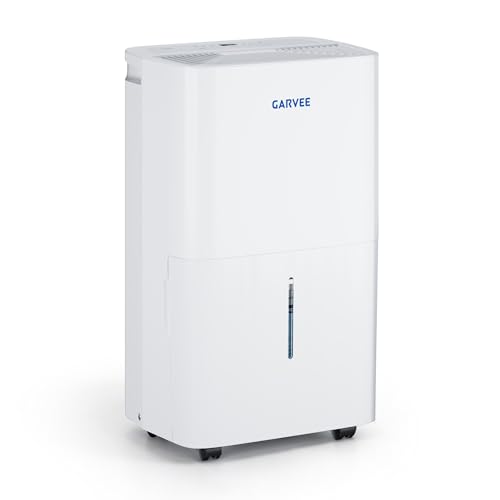
Garvee Max 150 Pint Dehumidifier (5,500 Sq Ft)

AprilAire E050PZ 50-Pint Whole-House Dehumidifier

AEOCKY 50 Pint Ultra-Quiet Dehumidifier (40dB)
GarveeLife 50 Pint Energy Star Dehumidifier (5,500 Sq Ft)

AEOCKY 4500 Sq.Ft Dehumidifier with Pump (80 Pint)

KISSAIR 150 Pint Dehumidifier (6,500 Sq Ft)
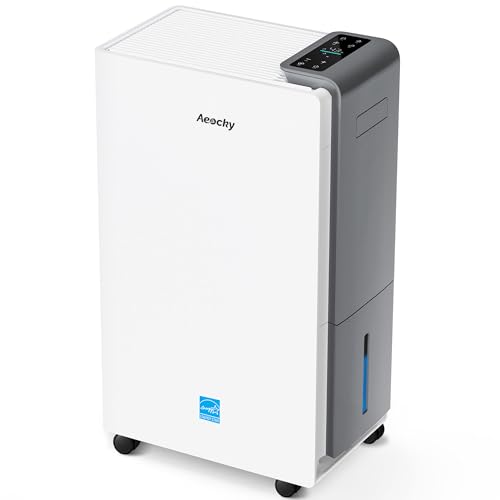
AEOCKY 5500 Sq.Ft Energy Star Most Efficient Dehumidifier
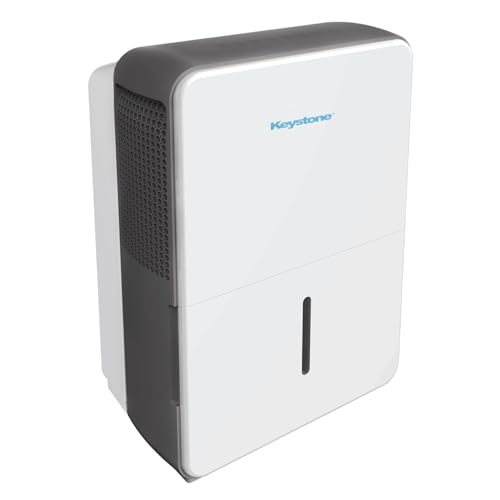
Keystone 50-Pint Portable Dehumidifier (4,500 Sq Ft)
A Closer Look At Each Pick
When the space in question is a 5,000-square-foot basement with a chronic moisture problem, you need a unit that doesn’t tap out by lunchtime. The Tehanld dehumidifier is built for that kind of workload, using a heavy-duty compressor designed to drive humidity down aggressively while the included drain hose lets you route condensate outside without babysitting a tank.
Three operating modes cover most household situations, and a dual-fan-speed setup gives you a quieter nighttime option. Owners in real basements report that the 1.6-gallon reservoir fills quickly during heavy extraction, so the drain hose is a genuine convenience, not just a marketing extra. Set the target humidity between 30% and 80% and the compressor cycles on and off to maintain it.
Where It Delivers
- 5,000 sq. ft. coverage handles a full basement rather than a corner of one
- Continuous drain option frees you from emptying the built-in tank
- Adjustable humidity setpoint from 30% to 80% covers both dry-down and maintenance phases
- Dual fan speeds let you trade airflow for quieter operation at night
Things To Consider
- The compressor is loud enough to feel intrusive in a finished living area
- Bulkier than typical bedroom units, so placement needs planning
- No built-in pump, so the drain hose relies on gravity and a nearby outlet
Who Will Love This
Homeowners with a large, unfinished basement who want set-and-forget moisture control tied to a floor drain or utility sink.
Look Elsewhere When
The AEOCKY 50 Pint Ultra-Quiet Dehumidifier (40dB) suits you better if noise in a living space is the bigger concern than raw coverage.
Severely damp basements push ordinary units to their limits, and the 50-pint rating on most dehumidifiers assumes reasonable starting conditions. The Garvee Max 150 Pint is built for the other scenario, the one where humidity sits at 90% and the space feels like a greenhouse. Its 5,500-square-foot rating gives it headroom to dry down a space before settling into a maintenance cycle.
That extra capacity comes with extra physical size and a louder compressor, so this is a unit you park and forget rather than roll around the house. Compared to the Tehanld covered above, the Garvee is aimed at harsher starting humidity and larger open areas, making it the choice for crawl-space conversions and chronically wet basements.
The Case For It
- 5,500 sq. ft. coverage handles bigger basements and open layouts
- Higher peak extraction rate tackles 90% humidity without stalling
- Suitable for basements, living rooms, and bathrooms in one unit
Trade Offs
- Heavier and larger than standard 50-pint units
- Compressor noise is noticeable in adjacent finished rooms
Who Should Grab It
Owners dealing with a chronically damp basement or recently flooded space that needs aggressive initial moisture removal.
A Better Fit Elsewhere
The KISSAIR 150 Pint Dehumidifier (6,500 Sq Ft) is a stronger fit if your priority is the largest possible coverage footprint rather than extraction rate.
Most of the picks on this list are roll-around portable units. The AprilAire E050PZ belongs to a different category entirely: a whole-house dehumidifier designed for permanent installation, typically tied into existing ductwork or hung in a basement, crawl space, or utility room. The 1,600-square-foot rating reflects its whole-home role, where it manages humidity across the entire envelope rather than one room.
This is the unit to look at when you want a “set it once” solution, not a portable machine you move between rooms. The included Wi-Fi thermostat, drain hose, condensate pump, bracket, and hanging kit point to a real installation project, not a plug-and-play appliance. Compared to the AEOCKY and Garvee picks earlier, this trades portability for integration.
Useful Touches
- Whole-house coverage up to 1,600 sq. ft. for whole-home humidity management
- Includes Wi-Fi thermostat, condensate pump, drain hose, bracket, and hanging kit
- Professional-grade build for permanent, semi-hidden installation
Worth Bearing In Mind
- Installation is more involved than a portable plug-in unit
- Best results require proper ducting or a planned mounting location
The Right Fit
Homeowners planning a permanent humidity solution during a remodel or HVAC upgrade who don’t want a portable box in the living area.
Swap It Out When
The Keystone 50-Pint Portable Dehumidifier (4,500 Sq Ft) is the better match if you want a simple plug-in unit you can move between rooms.
Bedrooms, home offices, and finished basements share one constraint: the dehumidifier has to disappear into the background. The AEOCKY 50 Pint Ultra-Quiet model targets exactly that scenario, claiming a 40 dB operating level that sits closer to a quiet library than a kitchen appliance. “Decibel” simply measures sound pressure, and 40 dB is roughly the volume of soft rainfall, well below the hum of most compressors.
Coverage is rated at 3,500 sq. ft., which is generous for the noise class, and the included drain hose means you can run it continuously without daily tank emptying. Against the Tehanld covered earlier, this one trades raw square-foot rating for a meaningfully quieter experience, which matters in a finished living space.
Good Reasons To Consider
- 40 dB operating level suits bedrooms and living areas
- 3,500 sq. ft. coverage holds up well for the noise class
- Continuous drain option for unattended long-term use
Soft Spots
- Smaller coverage than the Tehanld or Garvee picks above
- Quieter operation can mean slower extraction in extreme conditions
Key Advantages
Made For
Anyone running a dehumidifier in a finished space where compressor noise would otherwise be a constant irritation.
Where Another Pick Suits Better
The Tehanld 5000 Sq.Ft Dehumidifier with Drain Hose makes more sense for a raw, unfinished basement where quiet operation matters less than maximum coverage.
Running a dehumidifier 12 hours a day adds up on the power bill, which is where the Energy Star rating on the GarveeLife earns its keep. The certification means the unit meets specific efficiency benchmarks set by the EPA, so you get the same moisture removal with less electricity than uncertified alternatives. In a basement that runs nearly year-round, that difference shows up on monthly statements.
Auto-defrost matters more than it sounds: in cooler basement temperatures, the coils can ice up, and a unit without defrost has to shut down to thaw. The 24-hour timer and auto shut-off round out a feature set aimed at hands-off, long-term use. This is a practical middle-ground pick between the Tehanld’s raw coverage and the AEOCKY’s quiet focus.
A Few Strong Suits
- Energy Star certified for lower long-term running costs
- Auto-defrost prevents coil icing in cooler basements
- 5,500 sq. ft. coverage with 24-hour timer and auto shut-off
Honest Caveats
- Not designed for whisper-quiet bedroom use
Who It Suits Best
Households running the dehumidifier through humid seasons who care about electricity consumption over months of use.
Consider Something Else When
The AEOCKY 5500 Sq.Ft Energy Star Most Efficient Dehumidifier is the better fit if you want the same general profile with the higher-tier Most Efficient 2025 designation.
A standard drain hose relies on gravity, which is great if your basement has a floor drain and a downhill slope. The AEOCKY 4500 with Pump solves the other layout: the one where the only way to get rid of water is upward or across the room. The built-in condensate pump pushes water out and away, so you’re not chained to a gravity-friendly spot.
An 80-pint peak capacity at saturated conditions gives you extra extraction headroom when humidity spikes after a storm, and the 4,500 sq. ft. rating covers a typical finished basement. The intelligent humidistat reads room conditions and adjusts the compressor automatically. Compared to the GarveeLife above, this trades a pure Energy Star focus for active water removal.
Everyday Wins
- Built-in pump drains water vertically or over distance without a floor drain
- 80-pint peak capacity tackles high-humidity events
- Intelligent humidistat adjusts compressor cycling automatically
Points To Note
- Pump adds moving parts that may need eventual servicing
- Slightly larger footprint than gravity-drain models
Best Suited To
Basement layouts where the only practical drain point is uphill, across the room, or up into a utility sink.
Reach For A Different Pick When
The Garvee Max 150 Pint Dehumidifier (5,500 Sq Ft) is the better fit when a higher peak extraction rate matters more than active pumping.
Open-plan finished basements and large rec rooms defeat most 50-pint units, which is exactly the gap the KISSAIR 150 Pint fills. Its 6,500-square-foot coverage is the largest in this roundup, paired with a 2.11-gallon tank that extends the time between manual emptyings. A 24-hour timer and auto shut-off help you set a run schedule and walk away.
Three operating modes target specific scenarios: Comfort Mode locks in around 50% relative humidity for general living, while a Basement Mode and Continuous Mode handle the extremes. The included drain hose offers a permanent install option, though the tank size is generous enough that most households won’t need to empty it daily.
What Makes Sense
- 6,500 sq. ft. coverage handles the largest open spaces in this roundup
- 2.11-gallon tank reduces manual emptying frequency
- 24-hour timer and three operating modes for flexible scheduling
Some Limits To Know
- Larger physical footprint than mid-size 50-pint units
- Compressor noise will reach adjacent finished rooms
The Right Fit
Homeowners with a big finished basement or open-concept lower level where smaller dehumidifiers can’t keep up.
Skip It When
The AEOCKY 50 Pint Ultra-Quiet Dehumidifier (40dB) is the smarter pick for a finished space where low noise matters more than maximum coverage.
The Energy Star “Most Efficient 2025” designation sits above the standard Energy Star tier, and only a small share of certified models earn it. The AEOCKY 5500 holds that rating, which translates into meaningfully lower electricity use during the long humid stretches when the unit runs almost continuously. For always-on operation, that efficiency gap compounds month after month.
Coverage is rated at 5,500 sq. ft., and the 80-pint peak capacity gives the compressor extra headroom during heavy extraction. Compared to the GarveeLife covered earlier, this unit targets the same long-running use case but pushes further on efficiency. You may find the larger compressor cycle a bit more audible in a quiet finished room, depending on placement.
The Practical Payoff
- Most Efficient 2025 designation for top-tier energy performance
- 5,500 sq. ft. coverage with 80-pint peak extraction
- Built for always-on humidity control with low operating cost
A Few Limitations
- Premium efficiency tier typically costs more upfront
- Compressor noise becomes noticeable in quiet adjacent rooms
Feature Snapshot
Perfect Match For
Households running a dehumidifier through most of the year who want the lowest possible electricity cost per pint removed.
Where A Sibling Pick Shines
The GarveeLife 50 Pint Energy Star Dehumidifier (5,500 Sq Ft) is a sensible alternative if you want standard Energy Star efficiency at a likely lower price point.
Some shoppers don’t need an extreme-capacity unit, a permanent install, or a premium efficiency tier. They need a dependable, mid-size portable that handles a normal basement without fuss. The Keystone 50-Pint fits that profile: 4,500 sq. ft. coverage, a 1.8-gallon tank, and standard features like auto-shutoff and a 24-hour timer.
115V operation means it plugs into a standard household outlet, and the relatively compact portable form factor makes it easy to move between a basement, a garage, or a living room as humidity moves around the house. Owners commonly report that the build is straightforward, with no learning curve on the controls. Among the picks here, this one is the most “set it and forget it” everyday option.
The Upside
- 4,500 sq. ft. coverage suits most mid-size residential spaces
- Portable form factor rolls easily between rooms
- Auto-shutoff and 24-hour timer for hands-off scheduling
Practical Considerations
- Tank emptying required unless you add a separate drain line
- Not a match for the largest open-concept basements
Feature Rundown
Right Fit For
Households that want a single, reliable portable to move between a basement, garage, and living room as humidity shifts seasonally.
Not Your Match When
The KISSAIR 150 Pint Dehumidifier (6,500 Sq Ft) is the better call for very large open spaces where a mid-size portable can’t keep up.
What To Weigh Before Choosing a 50 Pint Dehumidifier
Match Capacity to Your Square Footage
A 50-pint rating describes how much moisture the unit can pull in a day under standard test conditions, but the practical limit depends on your room size, starting humidity, and how often doors stay open. In most basements, a 50-pint unit covers roughly 1,500 to 3,000 sq. ft. effectively, even when the listed coverage area is higher. Choose a model that exceeds your space rather than barely meets it, especially if you run laundry or shower humidity through the same area.
Decide How You Want to Handle Water
Three drainage patterns show up across this list: gravity drain hose, built-in pump, and tank-only. A gravity hose needs a floor drain, sink, or outside exit at a lower elevation. A built-in pump, like the one on the AEOCKY 4500, pushes water uphill or across the room, which is essential when the only drain point is inconvenient. Tank-only models require manual emptying, usually every few days, which is fine for light use but tiresome in peak summer.
Think About Noise and Living Space
Compressor dehumidifiers make real sound, and a basement unit parked under a bedroom will make itself heard. The 40 dB AEOCKY in this roundup is the standout for quiet operation, while high-capacity models like the Garvee Max and KISSAIR 150 trade quiet for raw extraction. For finished living areas, lower noise usually wins. For unfinished basements where you only visit occasionally, capacity matters more.
Weigh Energy Use for Long Runs
Dehumidifiers run for months on end in humid climates, so efficiency compounds. Energy Star models use less electricity per pint removed, and the “Most Efficient” tier cuts that further. If you expect year-round or near-year-round operation, a higher-tier model often pays back the difference through lower monthly bills. For seasonal or short-term use, standard efficiency is usually fine.
Things Worth Knowing Before You Commit
Where Shoppers Go Wrong
The most common mistake is sizing by the listed coverage number without considering starting humidity. A 50-pint unit rated for 4,000 sq. ft. handles a cool, slightly damp basement easily, but it may struggle in a finished basement with shower humidity, a clothes dryer venting nearby, and poor airflow. The other trap is buying a gravity-drain model without checking that you actually have a floor drain or a downhill exit point. Plan the drainage path before you commit.
When Paying More Pays Off
The price difference between a basic portable and a high-efficiency or pump-equipped unit usually reflects two real upgrades: better compressor design and smarter controls. Those upgrades show up as lower noise, lower electricity use, and the ability to run unattended for weeks. For a basement you’ll deal with every humid season for the next several years, the higher tier is often the better long-term value. For occasional or short-term use, the savings on a basic model make more sense.