


Humidity has a way of sneaking up on a home. One week the basement smells fine, the next there’s a faint mustiness behind the laundry, and the wood floors start to feel spongy at the seams. A 20-pint-class dehumidifier sits right in the sweet spot for most living spaces, big enough to make a real dent in moisture, small enough to roll into a closet when the season turns. The nine picks below cover basements, bedrooms, garages, and a few setups that stretch well past residential square footage.
The Picks In Brief

Waykar 145 Pints 6,500 Sq. Ft Dehumidifier with Pump

PLUSCENT 21 Pint Dehumidifier for Basement

Trazico 1500 Sq.Ft Dehumidifier with Drain Hose

FreAire 34 Pint Dehumidifier with 6.56ft Drain Hose

Vellgoo 100 Pint Dehumidifier for Basement and Garage

Waykar 34 Pints Energy Star Dehumidifier 2,000 Sq. Ft.

Waykar 150 Pint Energy Star Dehumidifier with Pump
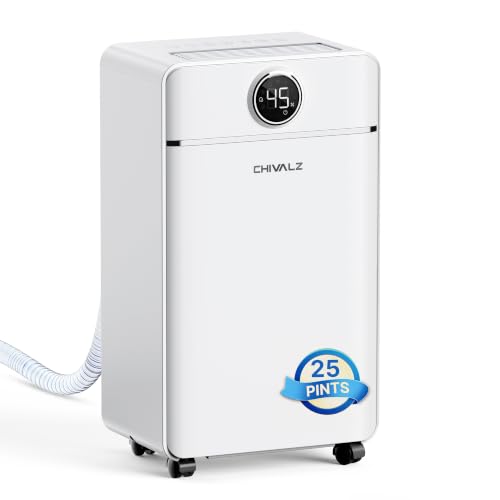
CHIVALZ 25 Pints Dehumidifier for 1,800 Sq. Ft.

DuraComfort 35 Pints Energy Star Dehumidifier 2,500 Sq. Ft.
Taking A Closer Look At The Options
The Waykar 145-pint unit is built for square footage that would intimidate most residential picks, and the integrated pump is what sets it apart from the PLUSCENT and Trazico models reviewed below. Where those rely on gravity-fed drainage to a floor drain, this one can push water upward through a hose, so a basement with a finished ceiling or a storage area above a sump still works.
Realistically, a household with a single damp corner won’t come close to using what this machine offers, but warehouses, workshops, and oversized basements benefit from the headroom. Humidity is adjustable from 30 to 80 percent, and the included tank plus drain hose cover either unattended or set-and-forget operation.
Real-World Strengths
- Built-in condensate pump removes the need to find a floor drain
- 145-pint daily capacity handles spaces up to 6,500 sq. ft.
- Wide humidity range (30 to 80 percent) suits both mild and aggressive drying
- Comes with both a drain hose and a water tank for flexible setup
- Commercial-grade airflow keeps larger rooms moving instead of spot-drying
Things To Consider
- Overkill for a typical 1,500 sq. ft. home, so running costs won’t match the output
- Larger footprint means it wants a permanent spot rather than daily relocation
Key Specs
Made For
Owners of large basements, workshops, and light commercial spaces who need serious extraction and a pump for non-standard drainage layouts.
A Better Fit Elsewhere
Homeowners with a standard 1,500 sq. ft. basement will find the Trazico 1500 Sq.Ft Dehumidifier a more proportionate match for the square footage and energy bill.
The PLUSCENT 21-pint sits comfortably in the entry-level residential bracket, and the 160-watt draw keeps it affordable to run in a space you want to keep dry around the clock. Rated for 1,500 sq. ft., it lines up with a finished basement, a small apartment, or a single open living area that always feels a touch damp in summer.
Compared to the Waykar 145-pint reviewed above, the trade-off is obvious: this is a home-appliance-class unit, not a commercial one. You give up the pump and the high-volume airflow, and in return you get a quieter, lighter box you can move from the bedroom to the laundry without planning the route. The included drain hose helps you set it on continuous mode near a floor drain.
Useful Strengths
- Lightweight 160-watt design keeps electricity use modest
- Includes a drain hose for hands-off operation
- 1,500 sq. ft. rating fits a typical apartment or small basement
Worth Noting
- 21-pint capacity struggles in genuinely wet basements with standing-water history
- No internal pump, so the drain hose relies on gravity alone
Who It Suits Best
Renters and first-time owners who want dependable moisture control in a single mid-size room without overspending on capacity they won’t use.
Look Elsewhere When
You battle serious basement dampness, in which case the Vellgoo 100 Pint Dehumidifier delivers the daily extraction volume you’ll actually need.
The Trazico 21-pint lands in nearly the same size class as the PLUSCENT above, but it leans into automation. The internal humidistat (the sensor that measures room moisture and tells the compressor when to run) targets the 30 to 50 percent band on its own, so you can leave the unit alone in a guest room and trust it not to over-dry the air.
Owners of 1,500 sq. ft. basements and ground-floor living areas get the right-sized match for a typical finished basement, and the included drain hose gives you continuous-drain flexibility. The noise profile is the real differentiator for a quiet household: it tends to run whisper-quiet on low fan, though you’ll hear the compressor cycle during heavy extraction.
Everyday Perks
- Auto-maintains the 30 to 50 percent range without manual tweaking
- Quieter operation than the PLUSCENT, friendlier to bedrooms
- Continuous drain option through the included hose
Trade Offs
- Internal tank fills quickly in a heavily damp space, so you may end up running the drain hose most of the time
Right Fit For
Anyone running a dehumidifier in a living area where they’d rather set it once and forget it, especially in a guest bedroom or finished basement.
Skip It When
You need extraction volume well above 21 pints per day, in which case the Waykar 34 Pints Energy Star Dehumidifier 2,000 Sq. Ft. delivers meaningfully more drying muscle.
FreAire jumps a clear step up in capacity from the Trazico and PLUSCENT, pulling up to 34 pints per day and stretching across 2,500 sq. ft. That’s the kind of coverage that fits a finished walk-out basement, a wide open-concept floor, or a single-zone whole-home run in a smaller property.
The 6.56-foot drain hose is a small but useful detail, longer than the typical 3- to 4-footer, so you can route it to a utility sink or sump without dragging the unit across the room. The compression system handles sustained moisture without the unit short-cycling, which is what usually shows up as noisy startups in cheaper machines.
Strengths Worth Knowing
- 34-pint daily removal covers a 2,500 sq. ft. open layout
- 6.56-foot drain hose reaches a sink or sump from across the room
- Compression-based system runs steadily under heavy load
Small Caveats
- Compressor noise is noticeable in a quiet bedroom at night
- Heavier body than the 21-pint class, so it doesn’t love being moved daily
Feature Snapshot
Best Suited To
Homeowners with a finished basement or open-concept floor who want more drying muscle than a 21-pint unit without jumping all the way to commercial capacity.
Not Your Match When
You’re primarily running the unit in a small bedroom, where the DuraComfort 35 Pints Energy Star Dehumidifier 2,500 Sq. Ft. pairs similar capacity with noticeably quieter operation.
The Vellgoo 100-pint is the mid-range workhorse in this lineup, slotting in above the FreAire 34-pint and well below the Waykar 145-pint reviewed first. A 5,000 sq. ft. ceiling covers a finished basement plus an attached garage, or a multi-zone single-family home where one unit handles the whole footprint.
Garage use is where this machine earns its keep: concrete slab moisture, parked-car condensation, and lawn-mower dampness all respond to 100 pints of daily extraction. You trade a louder compressor and higher energy draw for the kind of throughput that actually moves the needle in a problem space. A continuous-drain setup is the practical move here, since the internal tank won’t last a single day at this capacity.
Reasons It Performs
- 100-pint daily extraction handles damp garages and oversized basements
- 5,000 sq. ft. coverage stretches across multi-room layouts
- Auto-defrost keeps output steady in cooler basement temperatures
Points To Keep In Mind
- Energy draw is noticeably higher than 21-pint residential units
- Internal tank is impractical at this capacity, so plan on running the drain hose
Whose Shelf It Belongs On
Shoppers with a serious moisture problem in a garage, workshop, or multi-room basement who want commercial-class extraction without the largest-capacity price tag.
Reach For A Different Pick When
You only need to dry a single 1,500 sq. ft. room, where the Trazico 1500 Sq.Ft Dehumidifier saves on purchase price and running cost.
The 2025 Waykar 34-pint trims the typical mid-size dehumidifier down with a rotary compressor (a design that uses less power than the standard piston compressor found in most residential units) while still pulling 34 pints a day across up to 2,000 sq. ft. For a basement dehumidifier that runs 12 hours a day through humid months, that efficiency shows up on the electric bill by season’s end.
Compared to the larger Waykar 145-pint that opened this list, the same brand engineering shows up in a more home-friendly package. A 0.62-gallon internal tank and continuous-drain option give you both tank and hose paths, and the 30 to 80 percent humidity range covers everything from keeping a bedroom comfortable to drying out a musty storage room.
Features That Help
- Rotary compressor trims energy use compared to piston-based units
- 0.62-gallon tank plus continuous-drain option for flexible setup
- Auto or manual drainage modes adapt to wherever you install it
Honest Caveats
- Compressor still produces noticeable background hum during heavy cycles
- 2,000 sq. ft. rating is the upper limit, so realistically-sized rooms work best
Spec Overview
Who Will Love This
Always-on users who want meaningful extraction without the energy hit of a full-size unit, especially in a basement that runs the dehumidifier daily through humid months.
Another Choice May Suit
Homeowners chasing the quietest possible bedroom operation should look at the DuraComfort 35 Pints Energy Star Dehumidifier 2,500 Sq. Ft., which targets sleep-friendly noise levels.
The 150-pint Waykar tops the commercial-and-residential crossover category in this list, stretching across 7,000 sq. ft. for whole-home and light commercial use. The pump-equipped design borrows directly from the 145-pint reviewed earlier, but adds Energy Star efficiency and auto-defrost (a feature that automatically warms the coils to melt ice buildup, so the unit keeps pulling moisture in cooler basement temperatures where cheaper machines stall out).
Whole-home coverage is the genuine win here, since one machine can replace two or three mid-size units in a larger property. The smart auto comfort mode adjusts fan and compressor output based on current humidity, which keeps the noise profile lower than fixed-output commercial units. For a homeowner with a sprawling basement or a workshop-plus-garage layout, the scale becomes the selling point.
A Few Strong Suits
- 7,000 sq. ft. coverage replaces multiple mid-size units
- Auto-defrost keeps output strong in cool basement temperatures
- Built-in pump enables drain-up installation where gravity won’t work
What To Weigh
- Capital cost is meaningfully higher than the 21-pint and 34-pint class
- Weight and footprint suit a permanent installation, not portable daily moves
Quick Technical Notes
Perfect Match For
Owners of large properties, multi-zone basements, or light commercial spaces who want one machine to cover the whole footprint.
Swap It Out When
You only need to dry a 1,500 to 2,500 sq. ft. space, in which case the FreAire 34 Pint Dehumidifier with 6.56ft Drain Hose covers the same conditions at a lower purchase point.
CHIVALZ slots between the 21-pint entry-level class and the 34-pint mid-size picks, with a 25-pint daily capacity and 1,800 sq. ft. ceiling. The most distinctive feature is the laundry mode, a higher-output setting that pulls airborne moisture quickly enough to speed up indoor drying on a rack or line.
For households that air-dry laundry indoors during winter or humid shoulder seasons, that mode is genuinely useful rather than marketing fluff. An LED display shows real-time humidity with a stated plus-or-minus 3 percent accuracy, and three running modes (auto, laundry, sleep) cover most daily scenarios. The included drain hose supports continuous run in a basement, while the sleep mode keeps things quiet enough for a nearby bedroom.
The Case For It
- Laundry mode speeds up indoor clothes drying in humid months
- LED humidity display with plus-or-minus 3 percent readout
- Three modes (auto, laundry, sleep) cover varied daily routines
- Includes drain hose for continuous-drain setup
Practical Considerations
- Laundry mode runs louder, so you won’t want it in a bedroom at night
- Stated humidity accuracy may drift slightly in extreme temperature swings
Who Should Grab It
Households that air-dry laundry indoors and want a single unit that handles both basement moisture and active drying cycles.
Where A Sibling Pick Shines
Quiet-bedroom-first shoppers will prefer the DuraComfort 35 Pints Energy Star Dehumidifier 2,500 Sq. Ft., which targets sleep-friendly operation.
The DuraComfort closes the list with a 35-pint capacity aimed at noise-sensitive spaces, the kind of room where a loud compressor cycle would drive you out within an hour. The 2025 Energy Star rating puts it alongside the Waykar 34-pint for efficiency, and the smart humidistat plus timer gives you the same set-and-forget behavior.
Where the FreAire above leans into raw mid-size muscle, this one leans into comfort: bedrooms, nurseries, and home offices benefit most from the quieter operation. The drain hose supports continuous mode, and the 2,500 sq. ft. ceiling handles open layouts and most finished basements. The honest read is that you trade a little raw extraction power for noticeably better sleep-cycle behavior.
What Stands Out
- Quieter compressor cycle than most mid-size rivals
- Smart humidistat and timer for unattended overnight runs
- Energy Star efficiency keeps always-on use affordable
A Few Limitations
- Whisper-quiet claim applies to lower fan settings, not peak extraction
- Continuous drain still requires gravity routing, since no internal pump is included
Key Product Details
Built With In Mind
Bedroom and nursery users who want meaningful moisture control without the audible footprint of a typical mid-size compressor.
Consider Something Else When
You need to dry a multi-room space that exceeds 2,500 sq. ft., in which case the Waykar 150 Pint Energy Star Dehumidifier with Pump covers the same quiet-class comfort at whole-home scale.
What Matters Most Before Choosing 20 Pint Dehumidifiers
Match Capacity To Square Footage First
A 20-pint-class unit covers roughly 1,500 to 2,500 sq. ft. under typical residential conditions, though manufacturers test at 95°F and 90 percent relative humidity, so real-world output in a 68°F basement runs lower. Pick by the size of the space you actually need to dry, not the size of the entire home. A 1,500 sq. ft. unit in a 3,000 sq. ft. basement will run constantly without ever reaching your target humidity.
Drainage Setup Drives Daily Convenience
A built-in pump, like the one on the Waykar 145-pint and 150-pint models, lets you route water upward to a sink or out a window. A gravity drain with a hose works only when the unit sits above a floor drain. Most owners eventually run a continuous drain, so plan the hose path before you commit to a placement spot.
Noise Profile Matters More Than People Expect
Compressors cycle on and off based on humidity, and that cycling is what you hear in a quiet room. Bedroom and nursery users should weight noise output heavily, while basement and garage users can usually tune it out. Energy Star models tend to use rotary compressors, which run quieter than piston-based designs.
Pick Energy Star For Always-On Basements
A dehumidifier that runs 12 hours a day at 200 watts adds up over a humid season. Energy Star models in this list, including both Waykar picks and the DuraComfort, use measurably less electricity at the same extraction volume. The upfront difference pays back over one or two seasons of continuous use.
Key Considerations Across These Picks
Where Shoppers Go Wrong
The most common mistake is buying a 20-pint unit for a genuinely wet basement that needs 50 to 100 pints of daily extraction. The unit runs constantly, short-cycles, and never quite hits the target humidity, which leads to the conclusion that dehumidifiers “don’t work.” Sizing up to the Vellgoo 100-pint or a Waykar commercial-class unit is the honest fix. The opposite mistake also happens: a 100-pint machine in a 1,200 sq. ft. bedroom wastes energy and over-dries the air, which brings its own set of comfort problems.
When Paying More Pays Off
Higher-tier models in this list, the Waykar 145-pint and 150-pint, earn their price through pumps, auto-defrost, and larger coverage areas. The upgrade pays off when you need one of those specific features: a drain-up installation, a cool basement below 60°F, or a multi-zone whole-home setup. For a single 1,500 sq. ft. room, the premium is hard to justify, and a mid-size 34-pint model like the FreAire delivers the right balance.
Frequently Asked Questions
How Many Square Feet Will a 20 Pint Dehumidifier Cover?
Most 20-pint-class units are rated for 1,500 to 2,500 sq. ft. under manufacturer test conditions of 95°F and 90 percent relative humidity, so expect somewhat less coverage in a cooler basement. Match the unit to the size of the damp space rather than the full home.
Can a 20 Pint Dehumidifier Run Continuously?
Yes, every unit in this list supports continuous drainage through an included or compatible hose, which routes condensate to a floor drain, sink, or sump. Running on continuous drain removes the need to manually empty the internal tank.
Where Should I Place a 20 Pint Dehumidifier?
Place the unit in the dampest area of the home, typically a basement, bathroom, or laundry room, with at least 6 to 12 inches of clearance on all sides for airflow. Keep it away from corners and direct sunlight for accurate humidity readings.
Do 20 Pint Dehumidifiers Work in Cold Basements?
Standard units lose efficiency below about 65°F because moisture condenses on the cold coils as frost rather than water. Models with auto-defrost, like the Waykar 150-pint and Vellgoo 100-pint, periodically warm the coils to melt ice and keep extracting in cooler spaces.
How Often Will I Need To Empty the Internal Tank?
Internal tank frequency depends on humidity and unit capacity, but a 21-pint unit in a moderately damp basement typically fills the tank every 8 to 12 hours. For unattended use, plan on running the drain hose rather than relying on manual emptying.
Closing Remarks
The right 20-pint-class dehumidifier comes down to your actual space, not the biggest number on the spec sheet. A 1,500 sq. ft. basement with a floor drain pairs naturally with a 21-pint entry-level unit, while a 5,000 sq. ft. workshop or a multi-zone home needs the throughput of a 100- or 150-pint model. Match capacity to square footage, plan your drainage path before you buy, and prioritize Energy Star efficiency for always-on runs. The picks above cover the realistic scenarios most homeowners run into, and any one of them should keep the moisture in check through the humid months.