
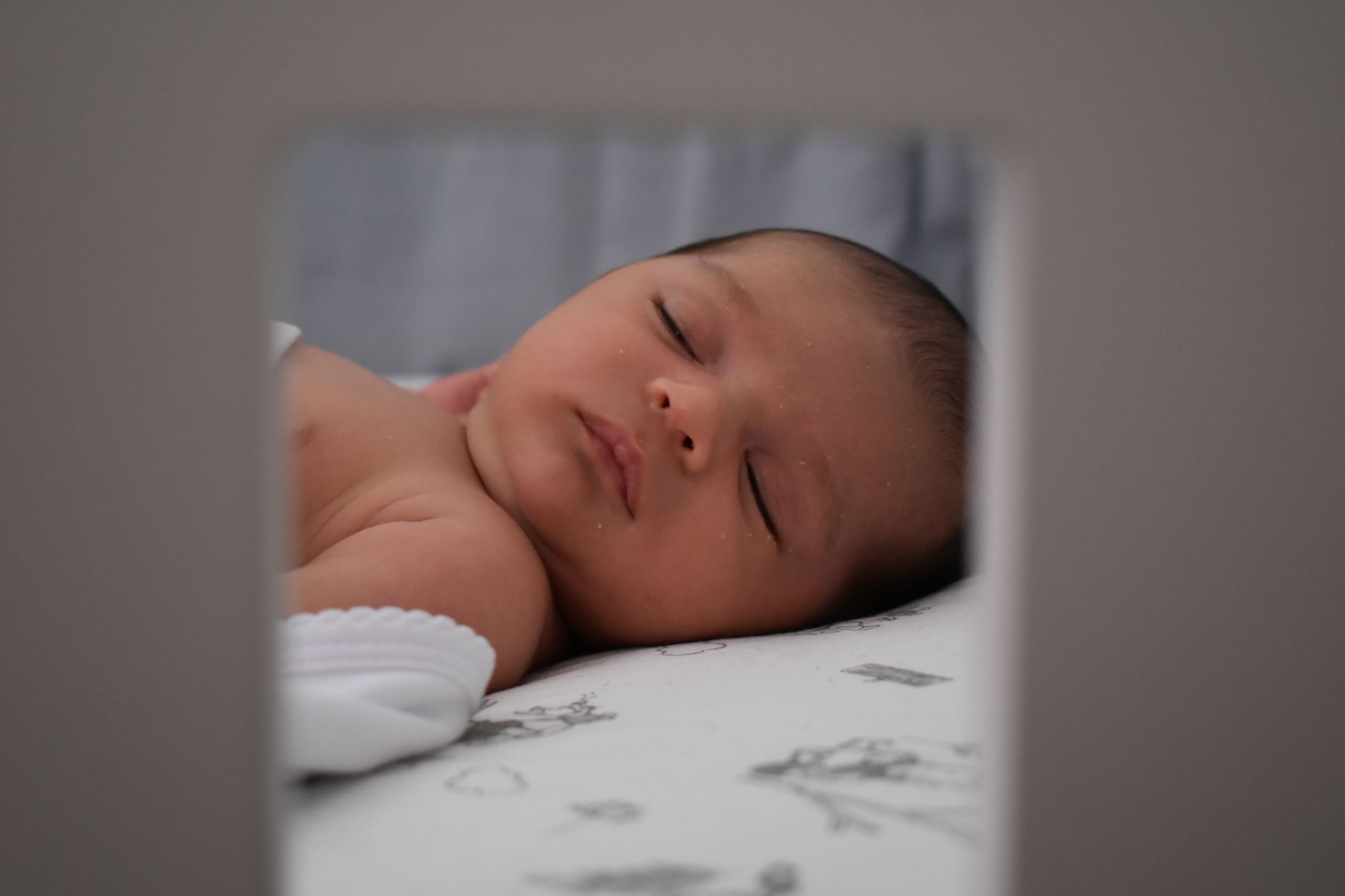

Pediatricians point to a 40–60% relative humidity band as the safest nursery range for newborns and infants, a window most humidifiers can hold with minimal adjustment. Air inside this window keeps a baby’s nasal passages moist enough to filter germs, prevents the dry-air coughs that wake infants at 2 a.m., and stops dust mites from multiplying on crib sheets. Push above 60% and you invite mold on the wall behind the changing table; drop below 30% and a newborn’s lips can crack within a single nap.
Here’s what new parents need to know about keeping nursery air just right, from picking a hygrometer to choosing between cool-mist and warm-mist humidifiers through every season.
The 40–60% Sweet Spot Pediatricians Recommend
Pediatric pulmonologists and the American Academy of Pediatrics point to a relative humidity band of roughly 40% to 60% as the safe humidity level for a sleeping baby, a window narrow enough to keep airways comfortable and wide enough to absorb normal day-to-day swings. The lower edge, around 40%, is the floor at which mucous membranes in the nose and throat stay pliable enough to trap and clear viruses. The upper edge, near 60%, is the ceiling at which dust mite populations double roughly every ten days and mold spores begin colonizing porous surfaces like drywall and crib mattresses.
Why 40% Is the Floor a Baby’s Nose Needs
An infant’s nasal passages are tiny, only a few millimeters across, and they humidify inhaled air before it reaches the lungs. When indoor relative humidity drops under 30%, the mucous layer lining those passages dries out, cracks, and loses its ability to filter particles. Parents notice this first as a dry cough in the morning, blood-tinged mucus on a pacifier, or skin that flakes around the eyebrows. Croup, a barking nighttime cough caused by airway swelling, flares more often in dry winter air, which is why many pediatricians suggest a humidifier the moment the heat kicks on in November.
Why 60% Is the Ceiling Mold and Mites Need
Dust mites, a leading trigger of infant eczema and allergic rhinitis, absorb water straight from the air through their outer cuticle. They thrive once relative humidity climbs above 50% and reproduce fastest between 70% and 80%. Indoor mold follows a similar curve, with spore germination spiking above 60%. Keeping the nursery at 40% to 60% therefore does double duty: it protects skin and breathing at the low end and starves allergens at the high end.
Quick reference: 40–60% relative humidity, measured at crib height, with a calibrated digital hygrometer you check morning and night.
What Happens When Nursery Air Drifts Too Dry or Too Damp
The recommended humidity for newborn sleep matters because both extremes create problems a baby can’t yet communicate. Dry air dehydrates mucous membranes within hours, while stagnant moist air turns the nursery into a petri dish. Spotting the early warning signs helps you correct the environment before a stuffy nose turns into a weeklong cold.
Dry-Air Symptoms You Can Spot Overnight
Cracked lips are often the first clue, especially on a baby who sleeps with their mouth slightly open. A dry, tickly cough that worsens at 3 a.m., a tiny streak of blood on a burp cloth, and skin that looks papery around the wrists are all signs the air has slipped below 30%. Some infants also develop static electricity shocks when you touch the crib rail, a sensory cue that the moisture content of the room has fallen too low.
Over-Humidified Symptoms That Look Subtle at First
Condensation on the inside of nursery windows in the morning, a faint musty smell near the closet, and a recurring wheeze that doesn’t track with a cold are quiet indicators the room has drifted past 60%. You might also notice dark specks along the baseboard or a musty odor coming from stuffed animals, both early mold colonies feeding on the excess moisture. If the baby sounds congested even when healthy, the air is often the culprit before the sinuses are.
Chronic imbalance carries bigger consequences, too. Pediatric pulmonology literature links very dry air to more severe respiratory syncytial virus (RSV) cases in infants, and the EPA flags damp indoor air as a contributor to asthma development in young children. The American Academy of Pediatrics continues to study how room air fits into the broader sudden infant death syndrome (SIDS) risk picture, which is why most safe-sleep checklists now mention humidity alongside mattress firmness and sleep position.
That risk picture is exactly why getting a trustworthy humidity number matters more than picking the right device.
Measuring Humidity the Right Way in a Nursery
You can’t manage what you don’t measure, and nursery humidity is no exception. A small digital hygrometer placed at the right spot and checked at the right times turns guesswork into a number on a screen you can act on.
Choosing a Reliable Hygrometer
Look for a digital hygrometer with a stated accuracy of plus or minus 3% relative humidity, the same tolerance most inexpensive consumer models from brands like ThermoPro and Govee deliver. Analog dial hygrometers drift within a year and are sensitive to mounting angle, so they make a poor first choice. A device that also reads ambient temperature gives you a second variable to track, since warm air holds more moisture and a sudden 5-degree swing can move humidity 10 points in the wrong direction.
Where to Place It in the Room
Mount the sensor at crib height on the wall opposite the door, roughly 3 to 4 feet off the floor, and away from the direct blast of a humidifier, vent, or window. Humidity is not uniform in a room; the air two feet from a cool-mist humidifier can read 55% while the opposite corner sits at 42%. Positioning near the crib gives you the reading the baby actually breathes.
When to Read the Dial
Humidity swings with the daily cycle, often lowest in the late afternoon when the heating system has been running and highest in the early morning when cooler outdoor air seeps in. Check the reading at two fixed times, such as 8 a.m. and 8 p.m., and log it in your phone for a week. The pattern will show you whether the room drifts outside 40–60% during sleep, when the baby is most vulnerable to dry-air coughing fits.
Calibrating Inexpensive Sensors
Most under-$25 digital hygrometers ship with a small calibration screw or a calibration mode you can access by holding two buttons. A simple salt test, sealing the unit in a baggie with damp table salt for eight hours, should produce a reading of 75%. If the sensor reads 70% or 80% instead, the offset is your correction factor. Recheck it once a year, or whenever the reading seems out of step with how the room feels.
Cool-Mist Versus Warm-Mist Humidifiers for Infants
Choosing the right humidifier is one of the most consequential decisions new parents make for nursery air quality. Pediatric guidelines, including those summarized by the AAP, consistently favor cool-mist units over warm-mist models in any room an infant can reach.
Why Cool-Mist Models Win the Safety Vote
Cool-mist humidifiers disperse room-temperature water vapor, so there is no heating element to scald an exploring toddler or curious pet. They also use roughly the same wattage as a nightlight, which keeps electrical load low around a crib. The trade-off is that cool-mist units blow any minerals in the water along with the mist, so choosing the right water source matters more than it does with a steam unit.
Risks Warm-Mist Units Carry
Warm-mist humidifiers boil water to sterilize it, which sounds appealing, but the internal heating element can reach 200°F. A tip-over or a curious hand can produce a serious burn, and the EPA has flagged steam vaporizers as the leading humidifier-related burn source reported to poison control centers. They also superheat the room, which is a problem in summer and can make a small nursery uncomfortable.
Side-by-Side Comparison
| Feature | Cool-Mist Humidifier | Warm-Mist Humidifier |
|---|---|---|
| Burn risk near infant | None (no heating element) | High (boiling water inside) |
| Mineral dust released | Higher; use distilled water to reduce | Low (minerals stay in the tank) |
| Microbial growth risk | Higher; needs daily cleaning | Lower (boiling kills most germs) |
| Energy use | Low (~20–40 W) | High (~300–500 W) |
| Best use case | Nursery, child’s bedroom | Large, supervised rooms, winter cold relief |
Popular cool-mist picks from Crane, Honeywell, and Vicks all clear the AAP’s safety bar, with Crane’s drop-shape units often cited for being especially easy to disassemble and clean. If you already own a warm-mist model, use it in a hallway or master bedroom instead of the nursery and keep the nursery’s humidity in range with a cool-mist unit placed safely out of reach.
When a Dehumidifier Is the Better Choice
Coastal homes, basements converted into nurseries, and humid subtropical regions such as the Gulf Coast often sit above 60% relative humidity for weeks at a stretch. Adding a humidifier in those spaces is the worst possible move. A small compressor dehumidifier sized for 300 to 500 square feet, with a humidistat you can set to 50%, will pull the room back into the safe range without overcooling it. Aim for a model with a washable filter and a continuous-drain option so you aren’t emptying the tank every day.
Seasonal Playbook for Keeping Nursery Humidity Stable
Outdoor weather dictates what happens to indoor humidity, which is why a single setting rarely works year-round. A simple seasonal playbook keeps the nursery inside the 40–60% window no matter what the thermostat is doing.
Winter: Heating Season Is the Dry-Air Crisis
Forced-air heating systems can drop indoor humidity into the teens, well below the 30% threshold that cracks a baby’s lips. Run a cool-mist humidifier on a low setting overnight, top it off with distilled water each evening, and crack the closet door an inch to allow moisture to circulate rather than pool. A bedroom thermostat set between 68°F and 72°F pairs with humidity near 45% to keep an infant comfortable without creating a mold risk on the exterior wall.
Summer and Rainy Season: Pulling Moisture Out
Summer air carries more water vapor, and a closed-up nursery can climb past 70% within hours of a thunderstorm. Run a dehumidifier sized for the room rather than cranking the air conditioner, since overcooling the nursery can trigger its own set of coughs. Aim for a target of 50% during humid months and 45% during the rainy shoulder seasons.
Climate Traps Most Parents Miss
High-altitude homes, anything above 5,000 feet, often have outdoor humidity so low that indoor levels struggle to climb past 25% even with a humidifier running. A second hygrometer near the crib helps you confirm the moisture is reaching the baby’s sleep zone. Homes that recently finished renovations or experienced water damage can spike above 60% for months as building materials off-gas moisture. A 24-hour dehumidifier cycle followed by a hygrometer check is the safest way to confirm the nursery is back in range before the baby sleeps there.
A well-tuned humidifier still spreads mineral dust and mold unless the unit itself is cleaned on a schedule.
Cleaning and Maintenance Habits That Keep the Air Safe
A dirty humidifier can seed the air with exactly the bacteria and mold spores parents are trying to fight. Daily and weekly routines are the difference between a nursery that genuinely helps a baby breathe and one that quietly works against you.
Daily and Weekly Cleaning Routine
Rinse the tank every morning with cool water and a soft brush, then air-dry it upside-down on a clean towel. Once a week, run a dilute white-vinegar cycle (1 part vinegar to 2 parts water) through the base for 20 minutes, followed by two plain-water rinses. Skip the bleach unless the manufacturer specifically recommends it, since bleach residue in the mist can irritate a baby’s airways.
Water-Source Choices That Matter
Tap water carries calcium and magnesium that become a fine white dust on every nearby surface, including the baby’s lungs if inhaled. Distilled water eliminates that dust, and most grocery stores stock one-gallon jugs for under two dollars. If distilled water is hard to find, use a simple in-line demineralization cartridge rated for your humidifier, and change it on the schedule the manufacturer prints on the side.
Nursery-Door Checklist
A laminated card taped to the inside of the nursery door lists every daily and weekly step, letting any caregiver follow the routine without guesswork.
- Each morning: Empty leftover water, rinse the tank, refill with distilled water, and air-dry the cap.
- Each evening: Wipe the exterior base with a dry cloth, check the hygrometer reading, and top off the tank before bedtime.
- Each week: Vinegar-cycle the base, replace the demineralization cartridge if used, and verify the hygrometer against the salt test.
- Each month: Inspect the wick or filter if your model has one and replace it if it looks gray or smells sour.
- Each season: Reset the target humidity for summer (50%) versus winter (45%) and recalibrate the hygrometer.
Consistent care matters more than the brand of humidifier. A well-maintained budget unit from a discount store will outperform a neglected premium model, and the difference shows up in the baby’s sleep and breathing within days.
Bottom Line
Set the nursery to 40–60% relative humidity, measure it with a calibrated digital hygrometer at crib height, and adjust with a cool-mist humidifier in winter or a dehumidifier in summer. Clean the equipment daily, refill with distilled water, and recalibrate the sensor each season. The exact number on the dial, kept steady, is what protects a baby’s airways far more than the brand of gear on the shelf.
FAQ
What is the ideal humidity level for a baby’s room?
Pediatricians recommend 40% to 60% relative humidity, the window that keeps an infant’s nasal passages moist without encouraging dust mites or mold. Measure the air at crib height with a digital hygrometer for the most accurate reading.
How do I measure humidity in a nursery?
Use a digital hygrometer with plus or minus 3% accuracy, mounted on the wall opposite the door at crib height and away from vents. Check the reading twice a day and calibrate the sensor once a year with the salt-bag test.
Can a room be too humid for a baby?
Yes, anything above 60% relative humidity encourages mold, dust mites, and bacterial growth that can worsen eczema, asthma, and infant congestion. A dehumidifier with a humidistat set to 50% is the safest fix in damp climates.
Does humidity help a baby sleep better?
Moisture in the 40–60% range soothes dry airways and reduces nighttime coughing, which means fewer wake-ups. Air that is too dry or too damp has the opposite effect and often fragments infant sleep within a few nights.
When should I use a humidifier versus a dehumidifier for my baby?
Use a cool-mist humidifier during winter when indoor heating drives humidity below 30%, and switch to a dehumidifier in summer, basements, or coastal homes where humidity climbs above 60%. Many nurseries need both tools across a single year.