

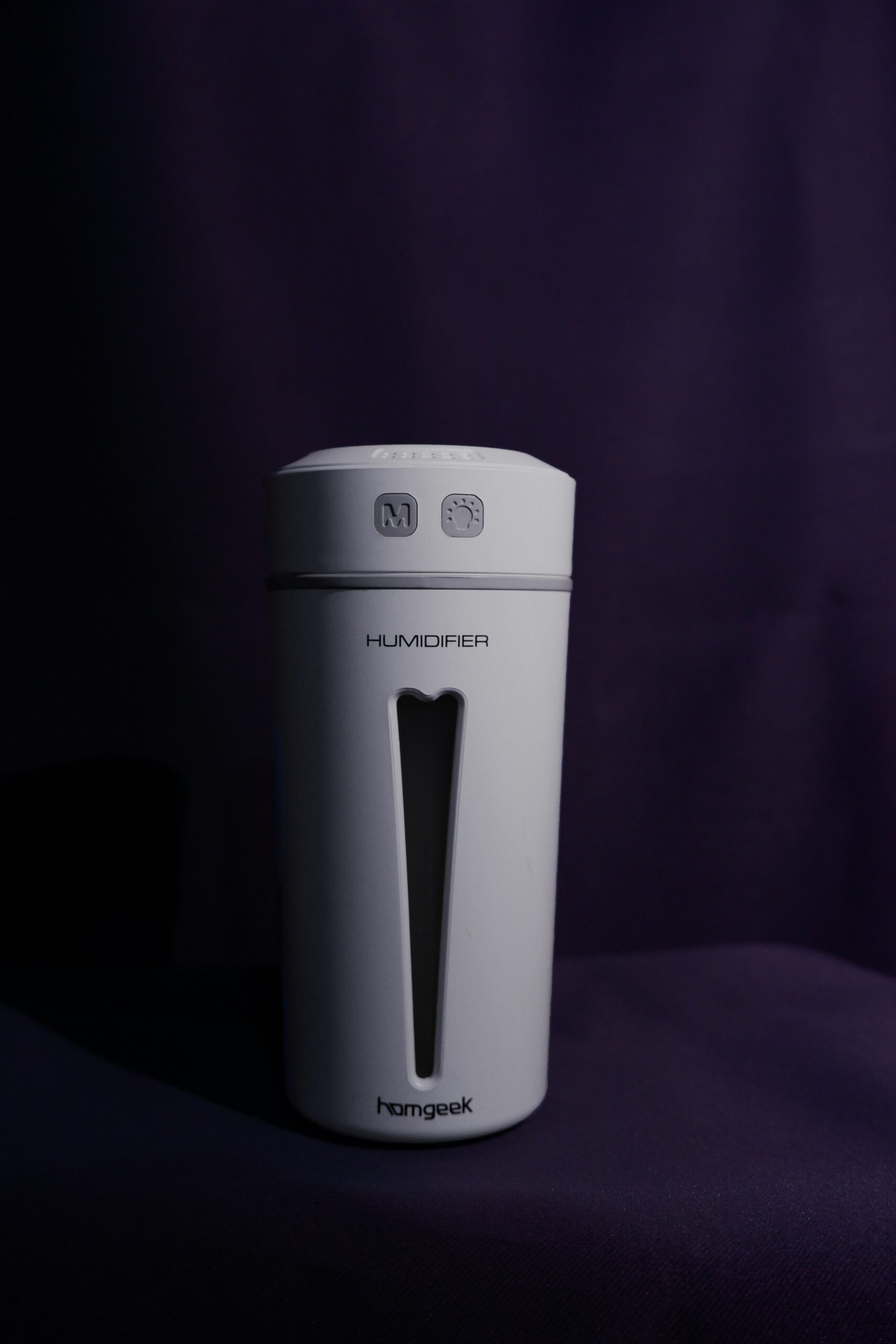

Adding moisture to indoor air changes the weight and behavior of dust particles, though it never actually filters them out. A humidifier can reduce dust in a room by weighing down fine airborne specks so they settle within minutes and by bleeding static charge off furniture and floors so freshly wiped surfaces stay clean. The benefit shows up only between roughly 40% and 50% relative humidity, and only when the unit itself stays free of mold and mineral scale. Run it too dry and static keeps recycling dust. Run it too wet and dust mites, mold spores, and mineral aerosols take over the air.
This guide explains how humidity changes dust behavior, the safe indoor moisture window, which humidifier type suits an allergy-prone room, and how to combine humidity control with HEPA filtration for the cleanest result.
Why Dust Returns No Matter How Often You Wipe
Indoor dust behaves like a slow-motion recycling bin. Skin flakes, textile lint, soil tracked in on shoes, pollen drifting through window seals, and pet dander settle onto floors and fabrics, then lift back into the air the moment a door closes or the furnace cycles on. Indoor air can carry two to five times more particulate matter than outdoor air, mostly because buildings trap and recirculate what people, pets, and fabrics shed every hour.
Three reservoirs keep the cycle alive. Hard flooring scuffs fine particles loose under every footstep. HVAC ductwork acts as a long conveyor belt, blowing accumulated debris out of supply registers. Fabric furnishings like curtains, bedding, and upholstered chairs absorb dust and release it whenever someone sits down or adjusts a pillow.
Static Electricity Drives the Winter Dust Loop
Indoor relative humidity below 30% charges furniture, walls, and floors with the same dry air that makes hair stand up. Those charged surfaces pull dust out of the air like a magnet, which is why a freshly wiped shelf looks dusty again by the next morning. ASHRAE’s winter comfort range sits between 30% and 40%, yet most US homes in January and February drop closer to 15% to 25% once the heater runs nonstop, and that gap is where the static-dust feedback loop becomes nearly impossible to break with a cloth alone.
How Humidity Changes Dust Behavior in Two Ways
Humidifiers influence dust through two physical effects, and understanding both keeps you from expecting the wrong outcome. Particle weight comes first. Each airborne speck absorbs a thin layer of water vapor as relative humidity rises, and a few extra micrograms of mass is enough to tip sub-10-micron particles from hovering for hours to settling in minutes. Controlling humidity ranks among the environmental steps that reduce respiratory irritation from airborne particles, which aligns with guidance from the Mayo Clinic on indoor air quality.
Static reduction comes second. Water molecules that deposit on surfaces bleed off electrical charge, so furniture stops acting as a dust magnet. Elevating humidity from 20% to 50% cut surface dust accumulation on common materials by roughly 30% to 50% over a one-week period in a 2017 Indoor Air study, which is the single biggest reason a humidifier helps with dust even though it filters nothing.
What a Humidifier Cannot Do
Moisture cannot capture or destroy dust. It cannot pull pet dander out of carpet padding or kill dust mites on contact. For actual particle removal, you still need a true HEPA filter in an air purifier or a sealed vacuum. Think of humidity as a way to make dust behave, not as a filtration device. Pairing it with a HEPA unit from brands like Honeywell, Levoit, or Dyson finishes the job the humidifier starts.
The 40% to 50% Sweet Spot and the Risks on Either Side
Keeping indoor relative humidity between 30% and 50% balances comfort against allergen and microbial growth, the EPA’s standing recommendation. For dust specifically, the narrower 40% to 50% band works best because it is high enough to kill static and weigh down fine particles, yet low enough to keep dust mites from thriving. Dust mites absorb moisture from the air through their skin and reproduce fastest when humidity holds above 55% for sustained periods.
Crossing either edge of that window changes the equation fast. Below 30%, static returns and dust seems to reappear minutes after wiping. Above 55%, dust mites multiply, mold colonies establish on damp window frames and bathroom surfaces, and the air feels heavy. Whole-house humidifiers with built-in humidistats hold the band more reliably than portable units because they modulate output against real-time readings.
How to Stay Inside the Window
An inexpensive digital hygrometer costs under $15 and removes the guesswork. Place one in the room where you spend the most time, ideally at breathing height away from windows and exterior walls. Check it morning and evening for the first week to learn how your heating and cooling system affects humidity. If you run a portable humidifier, set it to the target and shut it off when the hygrometer reads above 50% for more than a few hours.
| Relative Humidity | Effect on Dust | Other Consequences |
|---|---|---|
| Below 30% | Static holds particles; dust resettles quickly | Dry skin, nosebleeds, cracked wood furniture |
| 30% to 40% | Slight settling improvement; some static remains | Acceptable for most homes in winter |
| 40% to 50% | Dust settles efficiently; minimal static | Dust mite activity stays low; comfort improves |
| 50% to 60% | Dust still settles, but mite risk rises | Condensation on windows, musty odors possible |
| Above 60% | Mold and dust mites can take hold | Peeling paint, warped flooring, allergy flare-ups |
Which Humidifier Type Helps Most Without Creating New Problems
Not every humidifier handles dust equally well. The right match depends on your water hardness, room size, and how sensitive anyone in the household is to airborne particles. Consumer Reports and ASHRAE both flag mineral output as the most common side effect, especially with ultrasonic models in hard-water areas.
Evaporative and Warm-Mist Models
Evaporative units blow air through a wet wick, which naturally traps minerals and releases a cleaner mist. Warm-mist models boil water first, so any mineral content stays behind in the tank. Both tend to work well in allergy-prone bedrooms and pair easily with a HEPA purifier sitting nearby. The trade-off is fan noise and the cost of replacing wicks or demineralization cartridges on schedule.
Ultrasonic and Steam Vaporizers
Ultrasonic humidifiers vibrate water into an extremely fine mist at near-silent levels, which is why they show up in so many bedrooms. The catch is that minerals in the water ride along with that mist and settle as a fine white powder on nearby nightstands, electronics, and floors. In a hard-water area, that white dust can look and behave exactly like the problem you are trying to solve. Running distilled or filtered water largely fixes it, and many Levoit and Honeywell models offer optional demineralization filters. Steam vaporizers share the same clean-mist advantage after boiling, though they use more electricity.
Whole-House Humidifiers
For consistent 40% to 50% RH across an entire home, a unit installed on the HVAC plenum is hard to beat. Whole-house humidifiers feed moisture into the supply duct, respond to a wall humidistat, and shut off automatically when the target is reached. They cost more upfront and require annual maintenance, but they remove the daily refill routine and keep humidity stable room to room. That stability is the single biggest factor in whether a humidifier can reduce dust in a room over the long term.
| Type | Mineral Output | Noise Level | Best For |
|---|---|---|---|
| Evaporative | Low (minerals stay in wick) | Moderate fan hum | Bedrooms, hard-water areas |
| Warm mist | Low (boiled off) | Quiet, occasional bubbling | Cold climates, child-safe rooms |
| Ultrasonic | High without filtered water | Near silent | Quiet spaces, small rooms |
| Steam vaporizer | Low | Quiet, short bursts | Larger rooms, quick humidifying |
| Whole-house | Low with proper water treatment | None inside living space | Whole-home consistency |
Keeping the Humidifier From Becoming a Dust Source
A neglected humidifier is one of the fastest ways to turn a dust problem into a mold problem. Standing water, warm tank walls, and mineral scale create a perfect home for bacteria and biofilm, which then aerosolize into the same room you are trying to clean. The maintenance habit matters more than the brand or the price tag.
Daily and Weekly Habits
Empty, rinse, and refill the tank every day rather than topping it off. Once a week, disassemble the base and run a solution of white vinegar or a manufacturer-approved descaler through the reservoir and any nozzles to break down mineral scale. Let every part air-dry completely before reassembling. Skipping this step is the number-one reason people report a sudden musty smell or white residue after running a humidifier for a few weeks.
Water Quality and Filter Replacement
Distilled or filtered water costs a few dollars a gallon and prevents the white mineral plume that settles on furniture. Wicks and filters should be replaced on the schedule in the manual, usually every one to three months, because saturated media can start shedding particles back into the air.
Set a calendar reminder to swap filters and deep-clean the tank. A two-minute habit on Sunday morning prevents the slow buildup that turns a helpful appliance into an allergen source.
Knowing When to Turn It Off
Once your hygrometer reads above 50% for more than a few hours, switch the unit off and crack a window or run the bathroom exhaust fan. Rooms with persistent condensation on windows or a damp, earthy smell are telling you to back off. Letting humidity climb higher does not catch more dust; it feeds the very organisms you are trying to discourage.
Because no humidifier stays clean on its own, the rest of the plan has to pick up that slack.
Layering Humidity Control With a Full Dust-Reduction Plan
Humidity is one tool in a larger system, not a standalone fix. The fastest visible improvement usually comes when humidity control runs alongside better filtration, source control, and cleaning method.
Filtration That Finishes the Job
A true HEPA air purifier in the bedroom or home office captures particles the humidifier has already weighed down, removing them from circulation entirely. For whole-home coverage, upgrading HVAC filters to MERV 11 or MERV 13 catches more dust before it reaches the supply registers. Sealing visible duct leaks with mastic sealant stops insulation fibers and accumulated debris from blowing into the living space.
Source Control at the Door
Soil and outdoor particulates make up a large share of indoor dust, so doormats at every entrance cut that inflow dramatically. A walk-off mat outside and a washable mat inside the door removes far more grit than any single appliance. Pet wiping with a damp microfiber cloth before pets settle on furniture keeps dander from launching into the air the moment someone sits down.
Cleaning Method Matters as Much as Frequency
Dusting with a dry cloth or a feather duster redistributes particles into the air. Microfiber cloths trap dust in their fibers and lift it off the surface. Vacuuming with a sealed HEPA canister prevents the fine-particle blowback that bagless cyclonic models often produce. Track visible dust on a single shelf for two weeks with the hygrometer reading in the safe band, and the results confirm the combined strategy is working.
With all of those layers working together, the real question is simply whether the evidence holds up.
Bottom Line
Humidity shapes how dust behaves, and 40% to 50% relative humidity is the range where airborne particles settle quickly and stay settled. Run a clean humidifier inside that window, pair it with a HEPA purifier, upgrade your vacuum and HVAC filter, and you cut both the visible film and the invisible irritants that drive allergy and asthma symptoms indoors.
FAQ
Does a humidifier make dust settle faster?
Yes. Elevated moisture adds tiny amounts of mass to airborne particles and bleeds static charge off surfaces, so fine dust settles within minutes rather than hovering for hours. The effect is strongest between 40% and 50% relative humidity and disappears below 30%.
What is the ideal humidity level to minimize dust?
Most homes see the best balance around 40% to 50% relative humidity. This range weighs down particles and reduces static without encouraging dust mite or mold growth, which climbs sharply above 50%.
Do humidifiers help with allergies and asthma?
They help indirectly by reducing airborne dust and static resuspension, but only inside the 40% to 50% window. Above 55%, dust mites and mold multiply and symptoms get worse, so a hygrometer is essential in any allergy-prone home.
What type of humidifier is best for reducing dust?
Evaporative and warm-mist models release the least mineral dust and suit allergy-prone bedrooms. Ultrasonic units work well with distilled water; whole-house humidifiers with a humidistat deliver the most stable 40% to 50% range across an entire home.
Can too much humidity make dust or mold worse?
Yes. Once relative humidity holds above 55%, dust mites reproduce rapidly and mold colonies can establish on damp surfaces. Above 60%, condensation, peeling paint, and musty odors signal that the humidifier needs to switch off.
What other methods work alongside a humidifier to control dust?
Pair the humidifier with a HEPA air purifier, MERV 11 to 13 HVAC filters, sealed ductwork, doormats at every entrance, microfiber dusting, and a sealed HEPA vacuum. Source control and filtration do the removal; humidity keeps the dust settled.