


A damp basement does more than smell musty. Moisture creeps into drywall, feeds mold colonies, and leaves stored belongings feeling clammy. Picking the right dehumidifier turns that space back into usable square footage, and the eight models below cover everything from compact bedrooms to full basement footprints.
The Leading Options At A Glance

PLUSCENT 21 Pint Dehumidifier for Basement with Drain Hose

PSOS 98 OZ Dehumidifier with Ambient Light (Gray)

VEAGASO 36 Pint Dehumidifier for Basement with Drain Hose

VEAGASO 36 Pint Dehumidifier with 24H Timer & Child Lock

VEAGASO 34 Pint Dehumidifier for Basement with Drain Hose

ALORAIR 120 Pints Energy Star Crawlspace Dehumidifier, Sentinel HD55S

ALORAIR 70 Pints Crawlspace Dehumidifier for Commercial, Sentinel HS35
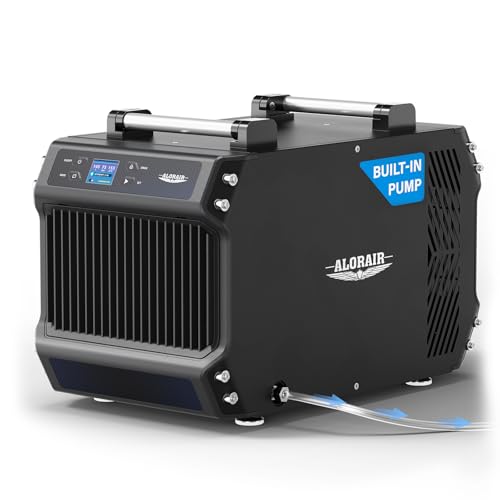
ALORAIR 145 Pints Crawlspace Dehumidifier with Pump, Galaxy 60P
The Strengths Of Each Pick
PLUSCENT’s 21-pint model targets the sweet spot for most finished basements, covering roughly 1,500 square feet at 160 watts. The included drain hose means you can route condensate (the water the unit pulls from the air) to a floor drain or sump pit and skip daily tank emptying, a real time-saver in muggy summer months.
Compared with the smaller PSOS unit below, this one trades compact portability for genuine whole-room drying power. The build leans toward residential use rather than crawl-space abuse, so it fits well in a rec room or home gym.
Noteworthy Benefits
- 1,500 sq. ft. coverage handles most standard basements without needing a second unit.
- Drain hose support frees you from hauling a tank to the sink every few hours.
- 21-pint daily extraction suits both seasonal dampness and year-round humidity.
- 160W draw keeps operating cost reasonable for continuous runs.
Things To Consider
- Not designed for tight crawl spaces where a low-profile ALORAIR model fits better.
- Portable resin body can scuff during frequent moves between rooms.
Made For
Homeowners drying a 1,000 to 1,500 sq. ft. finished basement who want a set-and-forget drain setup.
Look Elsewhere When
Tight crawl-space work calls for the ALORAIR 70 Pints Crawlspace Dehumidifier for Commercial, Sentinel HS35 instead.
The PSOS unit runs dual semiconductor condensation (a thermoelectric cooling method rather than a noisy compressor) and slips neatly into a 1,000 sq. ft. corner. Its 98 oz tank covers a couple of humid days in a bedroom, and the auto shutoff stops the pump when the tank fills, so overnight runs are worry-free.
The seven-color ambient light feels like a small bonus rather than a core feature, and you can switch it off entirely. For someone who wants whisper-quiet operation over raw extraction power, this fills a niche the PLUSCENT above does not.
What Works In Its Favor
- Compressor-free operation keeps bedroom noise low.
- Built-in humidity display takes the guesswork out of settings.
- Auto shutoff protects the unit when the tank is full.
- Compact size slides under most desks and side tables.
Worth Noting
- No continuous-drain option, so a full tank needs manual emptying.
- Semiconductor design pulls less moisture per day than compressor models in very damp basements.
Best Suited To
Light sleepers drying a small bedroom or office who care more about quiet than maximum pint removal.
Skip It When
You need hands-free drainage in a damp basement. Step up to the PLUSCENT 21 Pint Dehumidifier for Basement with Drain Hose.
VEAGASO’s 36-pint model is the one to reach for when a basement smells like wet cardboard after every storm. Rated for up to 2,800 sq. ft., it pulls a serious amount of water per day and ships with a continuous-drain hose for set-it-and-forget-it operation.
Compared with the PLUSCENT above, this VEAGASO trades a smaller footprint for nearly double the daily extraction. The trade-off shows up in size and weight, so plan a semi-permanent spot for it rather than rolling it out daily.
A Few Highlights
- 2,800 sq. ft. coverage tackles oversized basements and cellars.
- Continuous-drain support cuts out tank-emptying chores.
- 36-pint daily capacity handles even storm-soaked air.
- Defrost mode (an automatic coil-warming cycle) helps in cooler basement temperatures.
Points To Keep In Mind
- Larger chassis demands more floor space than the PLUSCENT.
- Compressor noise runs louder than the PSOS semiconductor unit, so placement away from living areas helps.
Key Specs
Right Fit For
Owners of a damp 2,000-plus sq. ft. basement who want continuous drainage and don’t mind a larger footprint.
A Better Fit Elsewhere
Compact bedrooms and offices suit the PSOS 98 OZ Dehumidifier with Ambient Light (Gray) far better.
This sibling of the previous VEAGASO matches the 36-pint extraction and 2,800 sq. ft. coverage, then layers in everyday-friendly controls. A 24-hour timer, three operating modes, a child lock, and a 40 dB quiet mode (a low fan speed designed to stay below conversational noise) make it more thoughtful around a busy household.
The 0.53-gallon internal tank means you can run it without the drain hose on lighter days. That flexibility is what separates this from the no-frills VEAGASO model above.
A Few Strong Suits
- 40 dB low setting keeps the unit background-friendly.
- Child lock prevents curious hands from changing settings.
- 24-hour timer automates on/off cycles around your routine.
- Three operating modes let you tune for power versus noise.
Some Limits To Know
- Smaller tank than some rivals, so manual emptying happens more often without a drain line.
- More onboard controls mean a slightly steeper initial setup than simpler units.
Who Will Love This
Parents and pet households that want a quiet, scheduled basement unit with lockable controls.
Another Choice May Suit
Pure raw capacity seekers get a similar 36-pint experience from the VEAGASO 36 Pint Dehumidifier for Basement with Drain Hose, with fewer extras to pay for.
VEAGASO’s 34-pint model steps down a touch from the 36-pint siblings, but the 2,500 sq. ft. rating lands in the range most mid-size basements actually occupy. The included drain hose keeps installation simple, and the unit fits where the larger VEAGASOs feel oversized.
If the 36-pint models feel like overkill for your square footage, this one balances coverage, capacity, and footprint in a way that matches typical homes.
Where It Helps
- 2,500 sq. ft. coverage fits the majority of residential basements.
- 34-pint removal handles humid summer stretches with margin to spare.
- Drain hose support avoids daily tank runs.
Honest Caveats
- Fewer lifestyle features (timer, child lock) than the VEAGASO 36 Pint with Timer & Child Lock.
- Resin cabinet benefits from careful placement to avoid scuffs on rough basement floors.
Key Specs
Who Should Grab It
Homeowners with a 1,500 to 2,500 sq. ft. basement who want strong capacity without the larger 36-pint footprint.
Swap It Out When
You need extra features like a 24-hour timer or child lock. The VEAGASO 36 Pint Dehumidifier with 24H Timer & Child Lock covers that ground.
The ALORAIR Sentinel HD55S enters a different weight class. Its 120-pint rating (at saturation) and rugged metal housing target harsher environments: crawl spaces, basements with standing-water history, and small workshops where the air feels wet for months on end.
Energy Star certification suggests the unit sips power relative to its output, and the metal body shrugs off the bumps and scrapes a portable plastic case would not. This is the workhorse of the list.
Useful Highlights
- 120-pint extraction handles persistent heavy moisture.
- Metal housing tolerates crawl-space and workshop conditions.
- Energy Star rating indicates efficient long-run operation.
- Effective coverage for spaces up to 1,300 sq. ft.
Practical Considerations
- Heavier and bulkier than any residential unit on this list.
- Premium build reflects in higher upfront positioning relative to plastic-cased models.
- Overkill for small, dry basements or bedrooms.
Feature Snapshot
Whose Shelf It Belongs On
Workshop owners and homeowners with chronically damp crawl spaces who need commercial-grade durability.
Reach For A Different Pick When
You want a quiet, lightweight basement unit for a finished rec room. The PLUSCENT 21 Pint Dehumidifier for Basement with Drain Hose is a calmer daily driver.
The Sentinel HS35 lands between residential and heavy commercial, with 70-pint extraction at saturation and a footprint that fits where the larger ALORAIR HD55S feels like too much. Its 115 CFM airflow (cubic feet per minute, a measure of how much air the unit circulates) helps it dry tight utility spaces and small basements quickly.
Compared with the VEAGASO 36-pint units above, the HS35 trades residential polish for tougher construction and faster moisture pull. It shines in spaces that punish plastic housings.
Advantages To Know
- 70-pint removal handles mid-heavy dampness without stepping up to full commercial.
- 115 CFM airflow speeds drying in confined spaces.
- Coverage up to 1,000 sq. ft. matches typical utility rooms and small basements.
Where It Is Less Suited
- Compressor noise runs louder than the PSOS semiconductor bedroom model.
- Commercial positioning raises cost relative to plastic-cased residential picks.
Feature Rundown
Right Fit For
Owners drying a small basement, garage, or commercial utility room who want tougher construction than a residential unit.
Not Your Match When
Bedroom use demands the PSOS 98 OZ Dehumidifier with Ambient Light (Gray) for near-silent operation.
The Galaxy 60P tops this list with 145-pint extraction and a built-in condensate pump, the feature that drains collected water upward through a hose when no gravity drain is nearby. That pump makes it the right answer for crawl spaces and basement corners where water has nowhere to flow downhill.
For coverage up to 1,800 sq. ft., it out-muscles the Sentinel HD55S while keeping the same commercial-grade construction. The trade-off is weight and positioning: this is a serious install, not a portable pick.
The Practical Payoff
- 145-pint capacity tackles the worst moisture loads.
- Built-in pump sends water uphill or over distance.
- 1,800 sq. ft. coverage scales to large crawl spaces and basements.
Things To Weigh
- Pump-equipped design costs more than gravity-drain models.
- Heavy and best left in a permanent spot once installed.
- Compressor noise rules it out of living areas.
Quick Facts
Built With In Mind
Homeowners with a basement or crawl space lacking a nearby floor drain, where a pumped unit is the only practical option.
Where A Sibling Pick Shines
For finished living space where 21-pint capacity is enough, the PLUSCENT 21 Pint Dehumidifier for Basement with Drain Hose is quieter and lighter.
What To Weigh Before Choosing Small Dehumidifiers For Basement
Square Footage And Pints Per Day
Pint ratings reflect the water pulled from the air under specific lab conditions (typically 95°F and 90% relative humidity), so real-world extraction is lower, especially in cooler basements. As a rule, oversize the unit slightly rather than running a borderline model nonstop. The 21-pint PLUSCENT handles 1,500 sq. ft., while the 36-pint VEAGASO models stretch past 2,500 sq. ft.
Compressor Versus Semiconductor
Compressor models pull more moisture per kilowatt-hour and dominate the heavy-duty picks from VEAGASO and ALORAIR. Semiconductor units like the PSOS are quieter and lighter but extract less water, which is why they fit bedrooms and small dens better than a 1,500 sq. ft. basement.
Drainage Style And Placement
A continuous-drain hose removes the daily tank-emptying chore but only works near a floor drain or sump pit. The ALORAIR Galaxy 60P adds a built-in pump for spaces without gravity drainage, which solves the hardest installation cases in crawl spaces.
Noise, Controls, And Household Fit
A 40 dB mode, child lock, and 24-hour timer (as on the VEAGASO 36 Pint with Timer & Child Lock) matter more in finished basements used as playrooms. Raw extraction is the priority in utility spaces, where the ALORAIR Sentinel series fits better.
Key Considerations Across These Picks
Pitfalls Shoppers Hit
Most return-deck stories start with underestimating square footage. A 1,000 sq. ft. basement in a humid climate needs more than a 21-pint bedroom unit, no matter how quiet the spec sheet sounds. Match the rating to the room, not the room to the rating. Also remember that a tank-only unit in a damp basement can fill every few hours, so a drain option is worth its weight in saved trips to the sink.
When Paying More Pays Off
Spending up on a metal-housed ALORAIR model earns its keep in crawl spaces and workshops, where plastic cabinets crack and scuff within a season. The pump-equipped Galaxy 60P also justifies the premium in basements without a floor drain, since installing a separate condensate pump costs more than the built-in version. For most finished basements, though, a mid-tier VEAGASO or PLUSCENT delivers all the drying most households actually need.
Frequently Asked Questions
How many pints per day do I need for a 1,000 sq. ft. basement?
A 30 to 40-pint model suits most 1,000 sq. ft. basements, though very damp spaces may need a 50-pint or larger unit to keep up during peak humidity. The 36-pint VEAGASO units and the ALORAIR Sentinel HS35 all cover this size comfortably.
Can a small dehumidifier run continuously?
Yes, most modern units are rated for continuous operation when connected to a drain hose. Models without a drain, like the PSOS 98 OZ unit, shut off automatically when the tank fills and resume after manual emptying.
Where should I place a dehumidifier in a basement?
Central placement with a few feet of clearance on all sides helps airflow reach every corner. For basements with a known damp corner, placing the unit 10 to 15 feet away with a clear path to that area typically improves drying speed.
Do dehumidifiers use a lot of electricity?
A 150 to 200W unit running 12 hours a day adds a modest amount to a monthly bill. Energy Star-rated models like the ALORAIR Sentinel HD55S trim that further by cycling the compressor efficiently.
How often do I need to clean a basement dehumidifier?
Wiping the exterior and rinsing the tank every couple of weeks keeps things fresh. Vacuuming the air intake grille (the mesh panel where room air enters the unit) once a season prevents dust buildup from choking airflow and extending run times.
Final Verdict
Basements come in every shape, and so do the dehumidifiers that serve them. A 21-pint PLUSCENT covers most finished basements without fuss, the VEAGASO 36-pint models add coverage and family-friendly controls, and the ALORAIR Sentinel and Galaxy lines step in when the conditions get serious. Match the room to the rating, decide whether a drain setup or a built-in pump matters most, and the right pick tends to reveal itself. The damp basement problem is solvable, and one of these eight units is almost certainly built for your space.