

Summer heat and sticky humidity tend to show up together, and most homes deal with both at once. A standalone AC chills the air but leaves moisture hanging, while a dehumidifier alone won’t drop the temperature. The picks below pair cooling power with moisture control, covering everything from basement dampness to bedroom comfort without a permanent install. Whether you’re tackling a musty crawl space, a home office that never feels cool, or a garage workshop that sweats in July, there’s something here that fits the bill.
A Quick View Of The Lineup
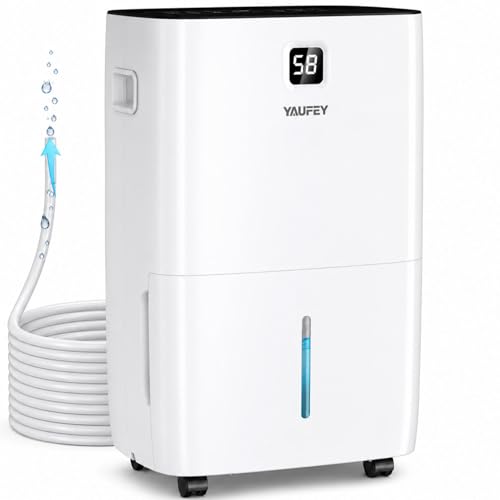
Yaufey 150 Pint Dehumidifier for Basement
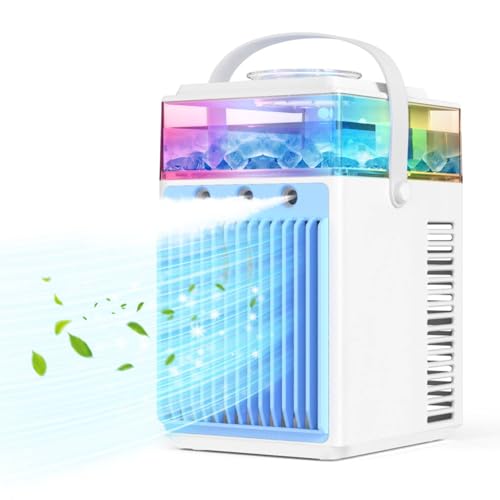
Portable Air Conditioners with App Control
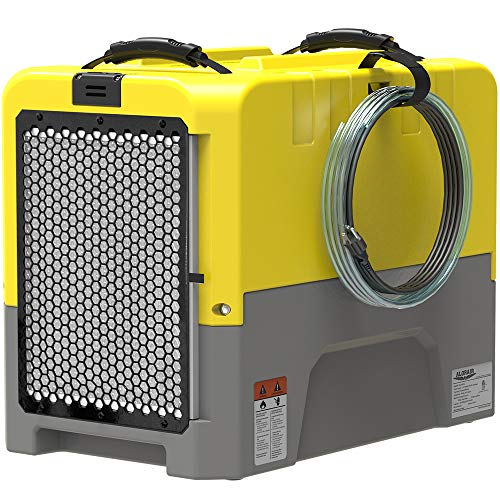
ALORAIR 180 PPD Commercial Dehumidifier with Pump

MONRIKON 8,000 BTU Portable Air Conditioner

Yaufey 80 Pint Dehumidifier for Basement
Yaufey 120 Pint Dehumidifier for Basement
ALORAIR 110 PPD Portable Commercial Dehumidifier

ALORAIR 170 PPD Commercial Dehumidifier
Taking A Closer Look At The Options
Big basements with serious moisture issues need more than a standard room unit, and the Yaufey 150 Pint Dehumidifier steps into that role without complaint. The upward drainage design means you can route a hose out to a sink, sump pit, or floor drain and skip the daily bucket routine. Coverage stretches up to 8,500 square feet, so even split-level homes with a finished lower level fall within reach.
Three operating modes let you tailor the work to the season, from aggressive extraction after a storm to quiet background moisture control. The adjustable humidity range runs 30% to 80% RH, adjustable in 5% increments, which gives you finer tuning than most consumer units. Owners dealing with chronic dampness rather than just a muggy week will appreciate the sustained capacity.
Why It Works Well
- 150-pint daily extraction handles chronic basement dampness without running constantly
- Upward pump drainage eliminates the need to manually empty a collection bucket
- 8,500 sq. ft. coverage fits large finished basements and multi-room lower levels
- 5% humidity increments give finer control than typical 10% step adjustments
- Three operating modes adapt the unit to seasonal conditions, from storm recovery to steady maintenance
Things To Consider
- Physical size and weight make it less suited to moving between rooms frequently
- Higher capacity draws more power, so running costs add up in humid climates
- Drain hose setup requires planning a route to a suitable drain point during install
At A Glance
Who It Suits Best
Homeowners with large, chronically damp basements who want set-and-forget operation and don’t mind the unit’s footprint.
Where Another Pick Suits Better
Smaller finished basements around 5,000 sq. ft. will find the Yaufey 80 Pint Dehumidifier (Item 5) a less power-hungry match for daily comfort.
Personal cooling takes a different form with this Tiptop Home unit, which trades compressor power for portability. The 2,000mAh battery means you can park it on a desk, a nightstand, or a patio table without worrying about an outlet, and the app control lets you tweak settings from across the room. Evaporative cooling (using water evaporation to lower air temperature, rather than a refrigerant cycle) keeps the unit freon-free, which some folks prefer for bedrooms and small spaces.
Energy draw stays light, closer to a light bulb than a window AC, so running it overnight won’t spike the utility bill. It’s a personal-zone cooler, not a whole-room solution, and works best when you’re sitting within a few feet of the airflow. Think desk comfort, a kitchen while you cook, or a nursery corner, rather than replacing central air.
The Upside
- Cordless operation from the 2,000mAh battery lets you place it almost anywhere
- App control adds convenience for adjusting speed and mode from your phone
- Low energy draw means overnight use barely registers on the power bill
- Freon-free evaporative design avoids refrigerant cycle complexity
Worth Noting
- Evaporative cooling drops temperature only near the unit, not whole-room comfort
- Best suited to dry climates; performance softens in already humid environments
- Needs occasional water refills to maintain cooling output
Made For
Anyone needing a personal cool-air bubble at a desk, bedside, or small patio where running a hose or exhaust isn’t practical.
Look Elsewhere When
Bedroom cooling for a full room’s worth of sleeping space is better handled by the MONRIKON 8,000 BTU Portable Air Conditioner (Item 4), which delivers real refrigerant cooling across the whole space.
Restoration contractors and serious property owners tend to gravitate toward the ALORAIR 180 PPD, and for good reason. This is a commercial-grade LGR unit (LGR stands for Low Grain Refrigerant, a dehumidifier design that pulls moisture efficiently even at lower humidity levels) capable of pulling up to 180 pints per day under saturated conditions, with 210 CFM (cubic feet per minute) airflow that moves serious volume across large spaces. Coverage reaches 2,300 square feet, which covers most basements and many warehouse or job-site scenarios.
The built-in pump and 6-year limited warranty signal that this is a tool, not a toy. Compared to the Yaufey 150 Pint in spot 1, the ALORAIR is built for harsher environments and longer duty cycles. Daily humidity control in a home is well within its capability, but the unit truly earns its keep when conditions are extreme or the workload is constant.
Positive Takeaways
- 180 PPD extraction tackles storm damage, floods, and chronic moisture in large spaces
- 210 CFM airflow dries rooms faster than typical consumer units
- Built-in pump supports continuous drainage without manual emptying
- 6-year limited warranty signals long-term build confidence
- LGR technology maintains efficiency at lower humidity levels
Points To Note
- Higher price tier than home-focused dehumidifiers
- Heavier and bulkier than typical consumer models, which makes placement planning important
Best Suited To
Restoration professionals, contractors, and homeowners managing large damp spaces or post-flood recovery who need sustained heavy-duty extraction.
Swap It Out When
For general home basement comfort in the 5,000–6,000 sq. ft. range, the Yaufey 120 Pint Dehumidifier (Item 6) offers plenty of capacity at a friendlier price point.
Bedrooms and home offices need a real cooling cycle, and the MONRIKON 8,000 BTU delivers without the noise penalty of older portable units. The 4-in-1 design bundles cooling, fan, dehumidification, and sleep modes into a single footprint, so you’re not buying separate appliances for summer and shoulder seasons. WiFi and app control mean you can start the room cooling on your commute home, and the 24-hour timer helps with overnight energy savings.
Dehumidification mode pulls roughly 40 pints per day, with auto-drain via the included pipe so you can route moisture to a bucket or window setup. Fan speeds run 260 to 380 m³/h depending on whether you want background airflow or a stronger push. The included window kit covers most standard setups, though sliding door installations may need an aftermarket adapter.
The Practical Payoff
- Four operating modes cover cooling, fan-only, dehumidification, and sleep in one unit
- WiFi/app control lets you adjust settings before walking into the room
- Two fan speeds (260 and 380 m³/h) match airflow to noise preference
- Auto-drain dehumidification mode means less manual bucket emptying
- 24-hour timer supports overnight scheduling for energy savings
Trade Offs
- Window kit fits most windows but may need an adapter for slider or casement styles
- Exhaust hose routing can be visible in cleaner room setups
Perfect Match For
Apartment dwellers and bedroom-focused users who want cooling plus moisture control from a single app-connected unit without permanent installation.
Skip It When
Whole-home or basement moisture control calls for a dedicated dehumidifier like the Yaufey 80 Pint (Item 5), since portable ACs aren’t designed for that scale.
Mid-size finished basements that need steady moisture control without the power appetite of larger units land squarely in the Yaufey 80 Pint’s wheelhouse. Coverage tops out around 5,000 square feet, which fits most rec rooms and home gyms, and the ENERGY STAR certification (a government-backed efficiency standard) means operating costs stay reasonable for continuous use. The included drain hose lets you set up continuous drainage, so you’re not babysitting a collection tank.
Humidity is adjustable across the 30% to 80% RH range, matching the flexibility of the larger Yaufey model in spot 1. For most homeowners, 80 pints is plenty of daily extraction unless you’re dealing with standing water or active leaks. The trade-off versus the 150-pint version is straightforward: less raw capacity, but lower energy bills and a friendlier footprint for everyday comfort.
What Pays Off
- ENERGY STAR certification keeps continuous-operation electricity costs down
- 80-pint capacity handles typical basement dampness without overspec’ing
- 5,000 sq. ft. coverage fits finished rec rooms, gyms, and workshops
- Continuous drain hose hookup avoids manual tank emptying
- Adjustable humidity range from 30% to 80% RH for seasonal flexibility
Honest Caveats
- Not enough capacity for flood recovery or severe standing-water situations
- Drain hose routing still requires a nearby drain or sink for continuous operation
Right Fit For
Homeowners with finished basements around 5,000 sq. ft. who want efficient daily moisture control without paying for industrial extraction capacity.
A Better Fit Elsewhere
Restoration scenarios or spaces over 6,000 sq. ft. benefit from stepping up to the Yaufey 120 Pint Dehumidifier (Item 6) or the ALORAIR 180 PPD (Item 3).
The Yaufey 120 Pint sits comfortably between the 80 and 150-pint siblings, covering up to 6,000 square feet and handling spaces like attached garages, large living areas, and open-plan basements. The 120-pint daily removal (under saturated conditions) translates to 90 pints in typical warm, damp conditions, which is more than enough for most household scenarios. ENERGY STAR certification keeps the operating cost conversation reasonable.
Compared to Item 1’s 150-pint unit, you trade a bit of peak capacity for a more manageable footprint and lower energy draw. Compared to Item 5, you step up in coverage and extraction without jumping to commercial-tier pricing. For most homeowners who want a single dehumidifier that handles both daily comfort and occasional heavy-duty needs, this middle option often hits the mark.
What Stands Out
- 120-pint daily capacity bridges the gap between home and prosumer needs
- 6,000 sq. ft. coverage fits large living areas, garages, and open-plan basements
- ENERGY STAR efficiency helps manage continuous-run electricity costs
- Continuous drain hose included for set-and-forget operation
Worth Bearing In Mind
- Bulkier than small-room dehumidifiers, so plan placement before purchase
- Drainage point access limits where you can install the unit
Feature Snapshot
Who Will Love This
Homeowners with multi-purpose spaces like garage workshops, large basements, or open living areas who want one unit that adapts across seasons.
Consider Something Else When
Compact cooling and air movement for a single bedroom or office is better matched by the MONRIKON 8,000 BTU Portable Air Conditioner (Item 4).
Job sites and smaller restoration projects call for something lighter than the 180 PPD beast in spot 3, and the ALORAIR 110 PPD steps in as the more portable commercial option. It pulls 110 pints per day under saturated conditions (50 pints at the AHAM standard, a standardized test condition of 80°F and 60% RH used for fair comparison across models) and moves 132 CFM of air across 1,300 square feet. The built-in pump keeps things running without manual tank dumping, which matters when the unit is deployed somewhere you can’t check on it hourly.
GPP technology (a coil-and-filter design that improves dehumidifier efficiency at lower humidity levels) helps the unit keep extracting moisture even as conditions dry down, where cheaper units stall out. For water damage recovery in a single room or a small basement, this hits a sweet spot between capacity and portability. Larger restoration projects or whole-basement needs still call for the 180 PPD model, but for focused work, the 110 PPD is easier to position and transport.
Useful Strengths
- 110 PPD daily extraction tackles room-scale water damage effectively
- Built-in pump enables unattended operation on job sites
- 1,300 sq. ft. coverage fits targeted restoration work in single rooms or basements
- GPP technology maintains efficiency as humidity drops
- 132 CFM airflow speeds drying compared to consumer-tier units
Soft Spots
- Limited to 50 PPD at the standardized AHAM rating, so real-world performance varies with conditions
Built With In Mind
Restoration technicians and homeowners managing localized water damage who need commercial-tier extraction in a more transportable package.
Another Choice May Suit
For whole-basement comfort in a finished living space, the Yaufey 80 Pint Dehumidifier (Item 5) delivers quieter daily operation at a more home-friendly price.
The Storm 80X rounds out the list with industrial-grade extraction that targets serious drying scenarios. Pulling up to 170 pints per day under saturated conditions (80 PPD AHAM), with 200 CFM airflow across 2,100 square feet, this is the unit you bring in when the basement took on water or a job site needs fast moisture turnaround. The built-in pump supports continuous operation, which keeps crews focused on the work rather than tank swaps.
Compared to the ALORAIR 180 PPD in spot 3, you trade a small amount of raw capacity for a lighter, more compact chassis, which matters when the unit moves between sites. LGR technology keeps the dehumidifier efficient as the room dries, rather than tapering off prematurely. For most homeowners, this is overkill, but for restoration pros, it earns its place in the truck.
Notable Gains
- 170 PPD saturated extraction handles large-scale water damage recovery
- 200 CFM airflow accelerates drying across wide floor plans
- LGR technology maintains efficiency at lower humidity levels
- Built-in pump enables unattended continuous operation
- 2,100 sq. ft. coverage fits large basements, crawl spaces, and open commercial areas
A Few Limitations
- Industrial capacity is more than most residential users need
- Higher price tier than home-focused dehumidifiers
- Larger footprint requires planning for transport and placement
Quick Facts
Whose Shelf It Belongs On
Restoration contractors and facility managers handling water damage, job-site drying, or large-area moisture control where speed matters.
Reach For A Different Pick When
Daily residential comfort in a 5,000 sq. ft. finished basement calls for the quieter, lighter Yaufey 80 Pint Dehumidifier (Item 5).
What Matters Most When Choosing Portable Climate Control
Room Size And Coverage Match
The single biggest factor is matching the unit to the space. Portable air conditioners are rated in BTU (British Thermal Units, a measure of cooling capacity per hour), and undersizing leaves you with a room that never quite cools off. Dehumidifiers are rated by pints per day and by square footage. For a 400-square-foot bedroom, an 8,000 BTU portable AC and a mid-size 30–50 pint dehumidifier cover the basics. For a 2,000+ square-foot basement, you need either a high-pint dedicated dehumidifier (80 to 180 pints) or a whole-home solution.
Cooling Versus Moisture Removal
These are two different jobs, even though the units often look similar. A portable AC cools the air but only incidentally pulls moisture through condensation. A dehumidifier targets moisture directly, regardless of temperature. If your main problem is sticky, uncomfortable air in a hot room, an AC wins. If your basement is cool but damp and musty, a dehumidifier does the actual work. The MONRIKON unit in spot 4 handles both for a single room, but whole-basement moisture calls for a dedicated unit like the Yaufey 80 or 120 Pint.
Drainage And Maintenance
Continuous drainage through a hose or pump changes everything. Without it, you’ll be emptying a collection tank regularly, which gets old fast. Look for units with built-in pumps or gravity drain hookups if you want set-and-forget operation. Coils and filters need periodic cleaning regardless, and most dehumidifiers benefit from running in a space with some airflow rather than stuffed into a closet.
Pitfalls Shoppers Hit And Where The Extra Money Goes
Wrong Turns To Avoid
The most common slip is sizing by the room you wish you had rather than the room you actually have. A 5,000 BTU unit in a 600-square-foot sun-soaked living room will run nonstop and never catch up. The opposite error is overspec’ing and paying for capacity you can’t use, which just means higher upfront cost and more noise. For portable ACs, check the BTU-to-square-foot recommendations. For dehumidifiers, look at both pints per day and the coverage figure, and assume the listed coverage is optimistic if your space has poor airflow or persistent moisture sources.
The Case For Spending Up
Higher-tier models earn their price through three things: better components, longer warranties, and quieter operation. The ALORAIR commercial units carry 6-year warranties for a reason, and the LGR technology keeps them efficient as conditions improve. The Yaufey ENERGY STAR models cost a bit more upfront but save meaningfully on continuous-run electricity. The upgrade is worth it when the unit runs daily, when noise matters (bedrooms, home offices), or when the space is large enough that a cheaper unit would struggle.
Frequently Asked Questions
What size portable air conditioner do I need for a bedroom?
Most bedrooms between 200 and 400 square feet work well with an 8,000 BTU unit, which balances cooling power with manageable noise. Larger bedrooms or spaces with high ceilings may need 10,000 to 12,000 BTU.
How many pints per day should I look for in a dehumidifier?
For a damp basement under 1,500 square feet, a 30 to 50-pint unit typically suffices. For 2,000 to 5,000 square feet, step up to 50 to 80 pints. Spaces over 5,000 square feet or with chronic moisture issues benefit from 80 to 150+ pint models.
Can a portable air conditioner replace a dehumidifier?
Not effectively. Portable ACs pull some moisture through condensation, but their primary job is cooling, not moisture removal. For dedicated humidity control, especially in basements, a proper dehumidifier does the work much more efficiently.
Do portable air conditioners need to be vented outside?
Yes, most portable ACs require an exhaust hose routed through a window or sliding door using the included kit. Without venting, the heat and moisture just blow back into the room and the unit can’t cool effectively.
How often do dehumidifier filters need cleaning?
Most manufacturers recommend checking the filter every two to four weeks during heavy use and cleaning as needed. A clogged filter reduces efficiency and forces the compressor to work harder, shortening the unit’s lifespan.
The Takeaway
The right pick depends on your real problem. Whole-basement moisture calls for a dedicated dehumidifier sized to your square footage and drainage setup. Bedroom and office cooling benefits from a 4-in-1 portable AC with app control. Personal spaces and travel use cases open up battery-powered evaporative coolers. Industrial restoration work belongs in commercial LGR territory. Match the unit to the job, and either category becomes a genuine comfort upgrade rather than another appliance collecting dust.