


A damp basement, a musty bedroom, a bathroom mirror that never stops fogging. These are the everyday moisture problems that quietly drag down comfort and air quality in your home, and the right in home dehumidifier tackles them head-on without a full HVAC overhaul. The trick is matching capacity and features to your actual square footage and humidity level, not just grabbing the biggest box on the shelf.
This roundup walks through eight solid options for the 2026 shopping season, from compact thermoelectric (a quiet, low-wattage tech that uses a cooling chip rather than a noisy compressor) picks for small rooms to heavy-duty compressor units for finished basements. Every model below was chosen for a specific room size and use case, so you can land on a unit that earns its space rather than overworking itself.
An Overview Of The Picks

PLUSCENT 1,500 Sq. Ft 21 Pint Dehumidifier for Basement and Home with Drain Hose

PSOS 98 OZ Dehumidifier for Home (1000 sq.ft) with Ambient Light, Gray
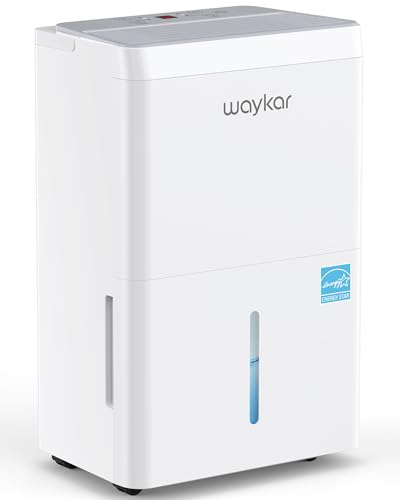
Waykar 6000 Sq.Ft 120 Pint Energy Star Dehumidifier with Drain Hose
Waykar 5000 Sq. Ft. 80 Pints Energy Star Dehumidifier for Home
Waykar 2000 Sq. Ft. 30 Pints Energy Star Dehumidifier for Home
PLUSCENT 1500 Sq Ft 21 Pint Dehumidifier for Basement with Drain Hose
PLUSCENT 2500 Sq Ft 32 Pint Dehumidifier for Basement with Drain Hose

5000 Sq Ft 52 Pint Compressor Dehumidifier for Basement and Home
What Each Pick Brings To The Table
The first PLUSCENT entry on this list is the kind of unit that quietly solves a problem and disappears into a corner. Rated for 1,500 square feet and pulling up to 21 pints per day under the standard 95°F/90% RH (relative humidity) test condition, it sits right in the sweet spot for finished basements, large bedrooms, or open living-and-dining combos where moisture creeps in unnoticed.
You can roll it from room to room, or park it in one spot and use the drain hose for hands-off water removal. Compared with the much smaller PSOS pick below, this is a different animal: a real compressor unit built for sustained daily use rather than a quiet overnight helper.
The Good Stuff
- 1,500 sq. ft. coverage handles most mid-size basements and living areas without working overtime.
- 21-pint daily extraction is well matched to the coverage rating, so it actually keeps up in damp conditions.
- Built-in drain hose port means you can set it up once and skip emptying a tank for weeks.
- Portable form factor with handles and casters makes room-to-room moves painless.
Points To Keep In Mind
- Like most compressor units, it produces noticeable hum on high fan speeds, so placement near a bedroom TV matters.
- Owners commonly report the included drain hose fitting varies by installation, so a check at first setup is wise.
Who It Suits Best
This is a great match for homeowners with a mid-size finished basement or an open living area who want set-and-forget moisture control without paying for whole-home capacity.
Look Elsewhere When
You need something truly silent for a nursery or small bedroom. The PSOS 98 OZ Dehumidifier is built for that kind of low-noise, low-capacity use case.
Where the PLUSCENT above leans on compressor power, the PSOS unit goes the other direction and uses dual semiconductor condensation. That tech choice has real-world consequences: it runs cool, it runs quiet, and it fits naturally in the rooms where noise matters most.
The 98-ounce built-in tank and 1,000 sq. ft. rating put it in small-room territory, but the auto shut-off, humidity display, and a seven-color ambient light make it a more design-aware pick than typical dorm-room dehumidifiers.
Advantages To Know
- Semiconductor design keeps operation quiet enough for bedrooms, nurseries, and home offices.
- Auto shut-off protects the unit when the tank fills, a useful safeguard for overnight runs.
- Visible humidity readout helps you dial in a target without guessing.
- Compact shell and ambient light option let it double as a soft nightlight in darker spaces.
Soft Spots
- Semiconductor units pull less moisture per day than compressor models, so heavy basement work is not the right fit.
- Tank fills quickly in very damp rooms, and there’s no built-in drain port for continuous removal.
Best Suited To
This is a sensible match for renters, apartment dwellers, and parents who want a low-noise unit for a single bedroom or small living space without rearranging the room around it.
A Better Fit Elsewhere
You are tackling a damp basement that runs above 60% RH year-round. The Waykar 6000 Sq.Ft 120 Pint Energy Star Dehumidifier offers the daily extraction and built-in drain hose that a small semiconductor unit simply cannot match.
This is the big machine on the list, and it earns that role. Waykar rates it for spaces up to 6,000 square feet with a 120-pint daily extraction, paired with a built-in drain hose and a removable tank so you can run it either continuously or batch-mode.
For homeowners dealing with a chronically damp basement, a post-flood space, or a multi-room layout that all shares one humidity problem, this is the kind of unit that justifies its footprint. It also claims a 40 dB operation level, which is genuinely quiet for a compressor of this size.
Useful Touches
- 120-pint daily capacity handles truly damp basements rather than just nudging the humidity down a few points.
- Energy Star rating means lower running cost, which matters when the unit runs every day through humid months.
- Smart auto comfort mode adjusts fan and compressor output based on the room’s RH, so you don’t have to babysit it.
- Both tank and continuous drain options cover either a temporary project or a permanent install.
Where It Is Less Suited
- Physical size is substantial, so a corner or utility space is required rather than tucking it under a shelf.
- Higher upfront cost than mid-size picks, and the value only shows up if the moisture problem is genuinely large.
Perfect Match For
This fits homeowners with a large or persistently damp basement, a finished lower level, or anyone running a multi-room moisture problem who wants a single unit to handle the load.
Swap It Out When
Your space is closer to 1,500 sq. ft. and you don’t need 120 pints of daily extraction. The PLUSCENT 1,500 Sq. Ft 21 Pint Dehumidifier covers the same humidity-control job at a much smaller size and price point.
Step down from Waykar’s 120-pint flagship and you land on this 80-pint model rated for 5,000 square feet. It uses the same general platform and the same Energy Star efficiency story, but sized for homes that don’t quite need the biggest unit on the market.
If your moisture problem is real but not extreme, this is often the smarter buy than the top-tier Waykar 6000. It also makes sense in mid-size basements and oversized living areas where the PSOS semiconductor pick would simply be outmatched.
Real Benefits
- 80-pint capacity still moves serious water, enough for a moderately damp 5,000 sq. ft. envelope.
- Energy Star efficiency translates to lower monthly power draw during peak humidity months.
- Continuous drain option plus removable tank gives flexibility for different room layouts.
- Adjustable humidity target between 30% and 80% RH covers a wide comfort range.
Small Caveats
- Owners commonly report that the user interface can take a learning pass to navigate all the mode options.
- Still a compressor unit, so it produces a steady background hum, just quieter than older-style units.
Who Should Grab It
It suits homeowners with a large finished basement or an open-plan space up to 5,000 sq. ft. who want compressor-grade extraction without stepping up to the 120-pint flagship.
Where A Sibling Pick Shines
You have a very large basement above 5,000 sq. ft. with serious water intrusion. The Waykar 6000 Sq.Ft 120 Pint Energy Star Dehumidifier is the right escalation in that scenario.
This 30-pint Waykar is the smallest of the three Waykar models in this roundup, and it shows up in the right places. Rated for 2,000 square feet, it makes sense in a large bedroom, a bonus room, or a small basement where you need real compressor power but not the big guns.
Where the 80- and 120-pint models are clearly workhorses, the 30-pint fits more of a daily-driver profile. It can also serve as a second unit in a larger home for spot humidity issues in a single room.
Well-Handled Touches
- 30-pint extraction handles a 2,000 sq. ft. room without the unit short-cycling or overworking.
- 15% to 80% RH adjustment range is wider than typical, useful in storage rooms where you want a very dry target.
- Energy Star efficiency keeps power draw reasonable for daily operation.
- Continuous drain option means you can run it without weekly tank trips.
What To Weigh
- Not the right choice for basements that actively leak or flood, where the Waykar 80- or 120-pint models are better sized.
- Some owners report the included setup instructions are light, so a quick search for the manual online helps on day one.
Right Fit For
It works well for homeowners with one persistently damp room in the 1,500 to 2,000 sq. ft. range who don’t need whole-basement capacity.
Reach For A Different Pick When
Your problem space is closer to 5,000 sq. ft. or the humidity stays above 60% for months. The Waykar 5000 Sq. Ft. 80 Pints Energy Star Dehumidifier is the natural step up.
PLUSCENT shows up twice in this roundup, and the second entry lands at the same 21-pint and 1,500 sq. ft. tier as the first. The big difference is positioning: this model leans harder on the basement label and is built for set-and-forget operation in a single fixed room.
Compared with the Waykar 2000 Sq. Ft. 30 Pints above, the PLUSCENT trades extraction power for a slightly smaller footprint and a more basement-focused feature set. It’s a good example of two products solving the same problem with different priorities.
The Helpful Details
- 21-pint daily extraction under the standard 95°F/90% RH condition suits a 1,500 sq. ft. basement comfortably.
- Drain hose port lets you set it up once and skip the tank-empty routine for long stretches.
- Multiple operating modes add flexibility for different room conditions and noise preferences.
- Compact form factor fits a closet corner or along a basement wall without dominating the space.
Trade-Offs To Consider
- Less daily extraction than the Waykar 30- and 80-pint models, so very damp basements may still feel underpowered.
- Owners commonly report the tank-full indicator is reliable, but the tank itself can be awkward to remove for cleaning.
Whose Shelf It Belongs On
This belongs in a mid-size finished basement or large bedroom where the user wants a compressor-grade unit without the daily extraction punch of larger Waykars.
Not Your Match When
Your basement sits above 1,500 sq. ft. or runs visibly damp for weeks. The Waykar 5000 Sq. Ft. 80 Pints Energy Star Dehumidifier covers that workload with room to spare.
Sitting right between the two other PLUSCENT models, this 32-pint, 2,500 sq. ft. unit is the brand’s mid-tier workhorse. It pulls noticeably more water than the 21-pint models while still fitting rooms where the Waykar 80- and 120-pint units would be overkill.
You get the same compressor-based design, the same drain hose option for continuous removal, and an extraction rating that handles a moderately damp basement without running constantly. For an open-concept lower level, it’s often the most balanced pick in this lineup.
Where It Excels
- 32-pint daily capacity lands at a true mid-tier extraction that fits real basements rather than just bedrooms.
- 2,500 sq. ft. coverage handles a finished lower level without forcing the compressor to stay at full tilt.
- Versatile operating modes let you tune for noise, dryness, or energy savings.
- Built-in drain hose option makes permanent placement practical.
Honest Caveats
- Heavier than the 21-pint models, so plan a permanent spot rather than moving it weekly.
- Like most compressor units, fan noise on high settings can be intrusive in adjacent living areas.
Built With In Mind
This is built for homeowners with a mid-size finished basement between 1,500 and 2,500 sq. ft. who need more extraction than a 21-pint unit can give.
Another Choice May Suit
You need quieter overnight operation. The PSOS 98 OZ Dehumidifier is far better suited to a bedroom or nursery, even though it cannot match this PLUSCENT on raw extraction.
The list closes with another PLUSCENT, and this one pushes into larger-space territory. A 52-pint daily extraction and 5,000 sq. ft. coverage put it in direct conversation with the Waykar 80-pint model, with a slightly different take on size, weight, and feature balance.
Where the 80-pint Waykar offers more raw extraction, the 52-pint PLUSCENT often presents a lighter, easier-to-place alternative that still handles damp basements. It’s a good reminder that the right dehumidifier is rarely the biggest one on the shelf.
Where It Helps
- 52-pint daily capacity moves significant water in a 5,000 sq. ft. damp room.
- Auto-defrost function keeps the coils working in cooler basement temperatures where many units stall out.
- Compressor-based extraction outperforms thermoelectric designs in truly humid conditions.
- Built-in drain hose port supports long-term, hands-off operation.
Trade-Offs To Consider
- Extraction is lower than the Waykar 80- and 120-pint models, so very large or flooded basements may still outpace it.
- Owners commonly report the included user manual is brief, so a few minutes with the product page pays off on day one.
Who Will Love This
This is a sensible match for homeowners with a 3,000 to 5,000 sq. ft. damp basement who want a step up from 30-pint units without going all the way to a 120-pint flagship.
Skip It When
Your humidity problem spans a full 5,000-plus square feet or you need maximum daily extraction. The Waykar 6000 Sq.Ft 120 Pint Energy Star Dehumidifier is the better match in that scenario.
Matching Capacity To Your Space
Coverage ratings tell you the most important story. A 21-pint, 1,500 sq. ft. unit only meets its rating in real-world conditions when you actually use it in that room size, and going oversized on a small room is a common purchase trap. A unit cycling on and off in a too-dry space wastes electricity without doing useful work.
Drain options matter more than they look at first glance. A continuous drain hose lets you set the unit up in a basement and walk away, while a tank-only model forces weekly trips with a heavy container. For any basement install, the hose option quickly earns its place.
Compressor versus semiconductor is the quiet-vs-power tradeoff. Compressor units move more water per day and handle large or damp spaces, but they hum. Semiconductor units run nearly silent and fit bedrooms, but they cannot keep up with serious basement work.
Energy Star ratings are worth a look for any unit that runs daily through humid months. A few extra dollars up front often pays back in lower utility bills over a summer of constant operation. The Waykar models in particular lean on this efficiency story.
Key Considerations Across These Picks
Pitfalls Shoppers Hit
The most common buying mistake is sizing a dehumidifier by the room you want to dry, not the moisture level you’re actually fighting. A 1,000 sq. ft. bedroom with normal humidity needs a very different unit than a 1,000 sq. ft. basement with a sump pump issue, even though the floor plans look identical on paper.
Another slip-up is ignoring the tank-versus-drain question. Buyers drawn to a sleek tank-only unit quickly discover the chore of weekly emptying, especially in basements where the unit pulls a gallon of water every few days during humid weeks. Choosing a model with a continuous drain option is rarely a regret.
Where The Extra Money Goes
Higher-tier units on this list earn their price through three things: extraction capacity, continuous-drain plumbing, and Energy Star efficiency. A 120-pint Waykar pulls nearly six times the daily water of a semiconductor PSOS unit, which justifies the step up for genuinely damp basements but is overkill for a small bedroom.
The upgrade also tends to buy longer component life. Compressor units from established brands are generally built for daily multi-year use, while entry-level semiconductor models often treat years of use as a stretch goal. For anyone running a dehumidifier eight months a year, that durability difference is real.
Frequently Asked Questions
How many square feet can a 21-pint dehumidifier cover?
A 21-pint unit is generally rated for around 1,500 square feet under standard test conditions, though the actual match depends on how damp the space is. A mildly stuffy room tolerates more coverage, while a wet basement quickly maxes it out.
What is the difference between compressor and thermoelectric dehumidifiers?
Compressor units use a refrigerant cycle, similar to a fridge, to pull more water per day and handle large or damp spaces. Thermoelectric (or semiconductor) units use a cooler chip and run almost silently, but extract far less moisture and are best for small rooms.
Where should a dehumidifier be placed in a basement?
Place it a few feet from a wall, away from furniture, and ideally with access to a floor drain for the continuous-drain hose. Centering it in the dampest part of the room helps the humidistat (the built-in humidity sensor that triggers the unit on and off) read a more accurate room average.
How often does the tank need emptying?
A 21-pint unit running hard can fill a typical internal tank every one to three days, while larger 80- or 120-pint units fill faster. A continuous drain hose removes the issue entirely and is the cleanest long-term solution for any basement install.
Are dehumidifiers expensive to run?
Daily-running compressor units use meaningful electricity, which is why Energy Star ratings and lower wattage matter on the bigger models. For a mid-size basement unit, the running cost typically shows up as a noticeable but not dramatic bump on the monthly utility bill.
Wrap Up
The best in home dehumidifier for your situation comes down to matching the room size, moisture level, and noise tolerance to the right tier on this list. A small PSOS unit handles a damp bedroom without disrupting sleep, while a 120-pint Waykar earns its keep in a chronically wet basement. Pick the size that fits your space, choose a model with a continuous drain option if weekly tank duty sounds tiresome, and let the unit run as long as the humidity demands.