


Winter air gets cruel. Once the furnace kicks on, indoor humidity drops fast, and so does your skin, your sinuses, and the wood trim around the windows. The right humidifier setting keeps moisture in the 40 to 50 percent range, where comfort and health meet, without fogging up the windows or feeding dust mites.
This list covers seven units built for that exact job. Portable cool-mist tanks cover bedrooms and nurseries. Whole-house evaporative models handle every room at once for homeowners with forced-air systems. Pick the format that fits how you live.
The Picks In Brief

Lacidoll 8L Large Humidifier Bedroom 800 sq ft, Black

AprilAire 600M Whole-House Humidifier, Manual
Lacidoll 8L Humidifier for Bedroom, 500 sq ft
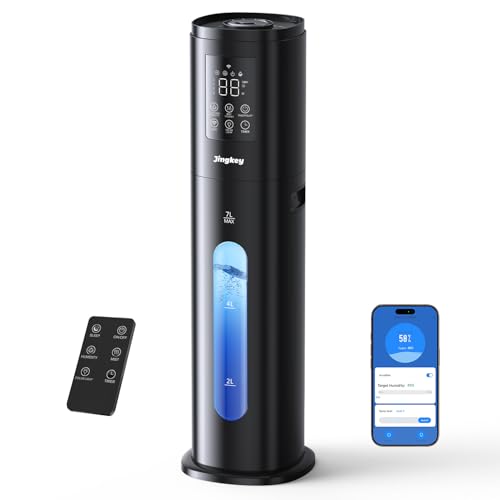
Jingkey 7L Humidifier with Smart App Control
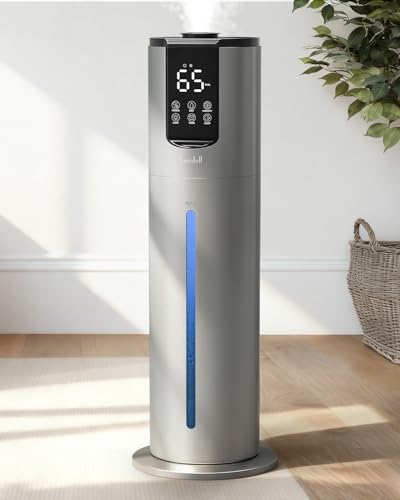
Lacidoll 8L Humidifier for Bedroom, Dark Grey

AprilAire 500M Whole-House Humidifier, Manual

AprilAire 700 Whole-House Humidifier, Automatic
A Breakdown Of The Leading Choices
This Lacidoll tank is built for the long haul, holding around two gallons of water and rated to run up to 48 hours on a single fill. For a home that wants set-and-forget winter comfort, that runtime means most people can fill it Monday and not touch it again until Wednesday.
The top-fill design removes the usual awkward tank-flipping that plagues cheaper cool-mist units, and a 300 mL/h mist rate covers rooms up to 800 square feet. A built-in humidistat, night light, and essential oil tray round out the package, so it works as well in a nursery as it does in an open living space.
The Value In It
- Two-day runtime cuts down on refills during cold snaps
- 800 sq ft coverage handles master bedrooms and combined living areas
- Top-fill opening makes midweek top-ups quick and spill-free
- Built-in humidistat tracks room moisture without a separate meter
- Essential oil tray adds an aromatherapy option for bedrooms
Things To Consider
- Ultrasonic units need regular descaling in hard-water homes
- Cool-mist output may feel light in very dry, high-ceiling rooms
Feature Snapshot
Whose Shelf It Belongs On
Anyone running a forced-air furnace in a moderately dry region who wants a bedroom-friendly tank they only refill every other day.
Consider Something Else When
Heated homes above 3,000 square feet looking for whole-house coverage should consider the AprilAire 600M instead, since a portable tank cannot match furnace-mounted output.
Portable units tackle one room at a time, but the AprilAire 600M lives on the furnace plenum and feeds moisture through the same ductwork that delivers heat. Rated for tightly built homes up to 5,000 square feet, it produces 17 gallons of moisture per day.
The manual control is a simple wall-mounted humidistat that turns the unit on and off based on outdoor temperature. For homeowners tired of hauling water to bedrooms and basements, this trades tank refills for a once-a-season maintenance routine.
Positive Points
- 17 gallons per day output covers large, tightly built homes
- Plumbed installation means no portable tank to refill
- Single-sensor wall control reads indoor humidity directly
- Built in the USA by the original whole-home evaporative brand
Worth Noting
- Requires a forced-air furnace and professional plumbing setup
- Annual water panel replacement is an ongoing ownership cost
- Manual control lacks the digital automation some homeowners want
Best Suited To
Owners of large, tight homes with a forced-air furnace who want a single system to handle every room at once.
Look Elsewhere When
Renters or furnace-free homes should look at the Lacidoll 8L tank instead, which needs no installation.
This Lacidoll shares the same 8-liter tank and 300 mL/h output as the black model, but it trims the coverage to 500 square feet to focus mist on a single bedroom or office. The trade is in cleaning, since every part is fully washable, including the base and the mist chamber.
For households that refill weekly and want minimal scrubbing, the wash-everything design is the selling point. You may find it less of a powerhouse than the 800 sq ft version, but maintenance stays light.
The Helpful Details
- Fully washable components reduce mineral buildup over time
- Up to 40 hours of runtime covers most work weeks
- Top-fill design keeps refills splash-free
Trade Offs
- 500 sq ft rating falls short for combined living and dining areas
- No built-in humidistat means you set output by feel
Feature Snapshot
Who Will Love This
Clean-freak homeowners in smaller bedrooms who would rather rinse a tank than scrub one.
A Better Fit Elsewhere
Large open-plan homes get more mileage out of the AprilAire 500M, which covers the whole house at once.
The Jingkey leans into the smart-home side of winter comfort. A 7-liter tank feeds a built-in humidistat that you can read on your phone, and the unit also ships with a remote and a 24-hour timer.
Four mist levels give finer control than most portable tanks, and you can dial the target humidity in 5 percent steps. For tech-leaning households that already adjust the thermostat from the couch, this slot fits right in.
Advantages To Know
- App control removes the need to walk to the unit to adjust settings
- Built-in humidistat auto-stops mist once the target is reached
- Four mist levels let you tune for sleep versus daytime use
- 24-hour timer supports overnight and workday schedules
Small Caveats
- Smart features add complexity some households may not need
- Smaller 7L tank means more frequent refills than the Lacidoll 8L
Feature Snapshot
Perfect Match For
Smart-home users who want to monitor and adjust humidity without leaving the couch or the bedside.
Not Your Match When
Minimalist shoppers who just want a quiet, set-and-forget tank should look at the Lacidoll 8L black model, which keeps things simpler.
Same Lacidoll hardware, different outfit. This version swaps the black shell for a dark grey finish that blends into modern bedrooms and home offices without looking like a clinical appliance.
Coverage tops out around 500 square feet and the 8-liter tank still runs up to 40 hours. The trade is identical ultrasonic cool-mist performance, paired with a finish that suits minimalist spaces better than the standard black tank.
Everyday Advantages
- Dark grey finish suits contemporary bedrooms and offices
- Same 8L tank and top-fill design as the black model
- Washable parts simplify the weekly cleaning routine
Points To Note
- Coverage rated for smaller rooms than the 800 sq ft Lacidoll
- No advanced smart features, app, or remote included
Who Should Grab It
Style-conscious shoppers furnishing a bedroom or office where the humidifier needs to look at home on the shelf.
Swap It Out When
Big open-plan spaces call for the AprilAire 700, which covers the whole house through the furnace ducts.
The AprilAire 500M is the smaller sibling of the 600M, sized for homes up to 3,600 square feet. It still mounts on the supply plenum and runs through the existing ductwork, so no portable tank sits in the living room.
Daily output lands around 12 gallons, which is plenty for most mid-size homes in cold-winter regions. Like the 600M, it uses a manual wall humidistat and a replaceable water panel that should be swapped once a heating season.
What Makes Sense
- 12 gallons per day covers most mid-size homes comfortably
- Compact furnace-mount footprint fits tight mechanical rooms
- Manual humidistat is simple to read and adjust
Some Limits To Know
- Annual water panel adds an ongoing consumable cost
- No digital automation or scheduling on the unit itself
Quick Facts
Built With In Mind
Homeowners with a forced-air system in a mid-size house who want whole-house humidity without a digital control panel.
Another Choice May Suit
Households wanting hands-free automation should consider the AprilAire 700, which adds a fan-powered design.
The AprilAire 700 sits at the top of the brand’s whole-house line. A built-in fan pulls warm air through the water panel, so it works even when the furnace fan is not running. That makes it the right pick for homes that want steady humidity without thinking about it.
Coverage stretches to 5,300 square feet, and the automatic control adjusts output based on outdoor temperature. You give up the manual dial of the 500M, but gain a system that responds to weather on its own.
Notable Gains
- Fan-powered design runs independently of the furnace blower
- Automatic control tracks outdoor temperature for steady comfort
- Coverage up to 5,300 sq ft handles very large or older leaky homes
Potential Compromises
- Higher installation complexity than the 500M or 600M
- Annual water panel replacement is required for reliable performance
Feature Snapshot
The Right Fit
Owners of large homes with a forced-air system who want humidity they never have to babysit.
Reach For A Different Pick When
Smaller homes or apartments without a forced-air system will do better with the Lacidoll 8L portable tank.
What To Weigh Before Picking Winter Humidifier Settings
A humidifier that runs too high wets the windows and feeds mold. One that runs too low does nothing for dry sinuses or cracked floorboards. The right setting is a moving target, since outdoor temperature and indoor heating both pull moisture out of the air all winter long.
Start with the 40 to 50 percent indoor humidity range, the band most sources and HVAC guides agree on for comfort and health. Use a basic hygrometer (a small device that measures humidity) to check actual levels rather than guessing. Lower the target on the coldest days, since very cold outdoor air holds less moisture and pushes condensation on windows faster.
For whole-house units, the manual or automatic humidistat should sit on an interior wall, away from kitchens and bathrooms, so it reads the living space rather than a steamy outlier. The control also needs an outdoor temperature sensor or manual setting, which lets the unit reduce output when it is below zero outside. This single step prevents the most common winter problem: fogged windows in the morning.
For portable tanks, placement matters as much as the dial. Aim the mist away from walls, wood furniture, and electronics. Cool-mist output can leave a light film on nearby surfaces if the unit sits too close. Run it on a lower setting at night if you wake up with a damp pillow or a foggy window.
Homes with hardwood floors, vintage plaster, or string instruments benefit from the higher end of the range. Homes with double-pane windows, modern insulation, and a tight envelope can sit at the lower end and still feel comfortable. Match the target to the home, not to a single number on a chart.
Where Shoppers Go Wrong And When To Spend More
Where Shoppers Go Wrong
The most common mistake is buying by tank size alone. A bigger tank is not always the right call. An 8-liter unit in a small bedroom can overshoot humidity, while a 4-liter tank in an open living room runs dry by dinner. Match the coverage rating to the room, not the headline tank number.
A second pitfall is ignoring water hardness. Ultrasonic cool-mist units atomize whatever is in the tank, and mineral-heavy tap water leaves a fine white dust on nearby furniture. Homes with hard water benefit from distilled water, a simple pre-filter, or an evaporative whole-house unit that captures minerals in a replaceable panel.
The third trap is underestimating installation on whole-house models. Furnace-mounted units need a water line, a drain, and often a dedicated electrical circuit. Skipping professional setup can leak water into the ductwork or short a humidistat, so the install cost belongs in the budget from day one.
What The Higher Tier Buys
The jump from a portable tank to a whole-house evaporative unit is a real upgrade. The first thing you gain is coverage, since duct-mounted mist reaches every room the furnace does. The second is convenience, because plumbed units refill automatically instead of needing a trip to the sink every other day.
Higher-tier whole-house models add two extras that matter in cold climates. Fan-powered designs keep humidity steady even when the furnace blower is not running, and automatic controls adjust output based on outdoor temperature. Both features cut down on the daily fiddling that manual units need during a cold snap.
The upgrade pays off most in larger homes with a forced-air system, where a single furnace-mounted unit replaces several portable tanks. For apartments, single rooms, or renters, the simpler portable picks still do the job without the install work.
Frequently Asked Questions
What humidity level should I set my humidifier to in winter?
Aim for 40 to 50 percent relative humidity in most homes. Drop the target on the coldest days to avoid window condensation.
Is cool mist or warm mist better for winter?
Cool mist is safer around children and pets since there is no heating element. Warm mist can feel more comfortable in a chilly bedroom, but it costs more to run.
How often do I need to clean a humidifier?
Portable tanks need a quick rinse every few days and a deeper clean weekly. Whole-house units need an annual water panel swap and an occasional check of the drain line.
Can I use tap water in my humidifier?
Tap water works in most portable tanks, but hard water leaves mineral dust. Distilled water, a small pre-filter, or an evaporative whole-house unit solves the problem.
Where should I place a portable humidifier?
Set it a few feet off the floor on a stable surface, away from walls and electronics. Aim the mist into open air rather than directly at furniture.
Closing Remarks
Pick the format first, since whole-house and portable tanks solve different problems. Match coverage to the room, set the humidistat in the 40 to 50 percent range, and adjust down on the coldest nights. A small hygrometer is the cheapest upgrade that pays off all winter, since it turns a guess into a number and lets the unit earn its keep.