


An acoustic guitar lives and dies by its environment. A solid-body electric shrugs off a dry apartment, but a flattop with a thin spruce top can crack, belly-bridge lift, or develop a sharp fret sprout the moment indoor humidity drops below 40%. Run a heater all winter, store the guitar in an unheated closet, or live in a high-altitude climate, and the woodwork starts to move in ways you never wanted.
The fix is simple in concept: hold the air inside the case somewhere between roughly 40% and 50% relative humidity. A dedicated guitar humidifier handles that job, sitting between the strings or hanging inside the case and slowly releasing (or absorbing) moisture as conditions shift. The picks below cover the two main approaches, soundhole humidifiers with sponges or gel, and two-way packet systems, so you can match the right design to your climate and habits.
The Leading Options At A Glance

D’Addario Humidipak Guitar Humidity Control Kit

D’Addario Humidipak Maintain Packets, 12-Pack
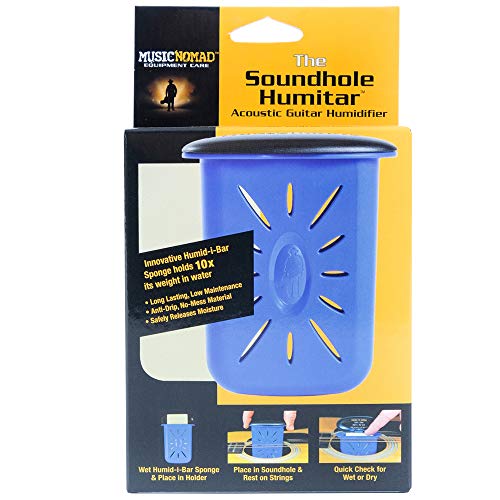
MusicNomad Humitar Acoustic Guitar Humidifier (MN300)

MusicNomad The Humitar ONE Humidifier & Hygrometer (MN311)

Boveda 49% Instrument Humidifier Size 8, 10-Pack

O Oasis OH-5 Humidifier for Acoustic Guitars
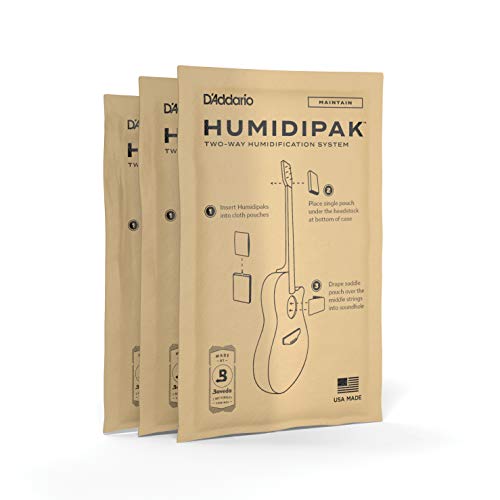
D’Addario Humidipak Maintain Packets, 3-Pack

Boveda 49% Guitar Humidifier Refills, 12-Ct
A Closer Look At Each Pick
If you play an acoustic you care about, the D’Addario Humidipak Kit is the closest thing to “install it and stop thinking about it.” The system uses a two-way humidity control approach, meaning the packs both add and absorb moisture as needed to hold a steady 45% to 50% relative humidity inside a sealed case. You don’t drip water, you don’t squeeze sponges, and you don’t guess.
The kit ships with a perforated plastic holder, a high-absorbency pouch, and a set of starter packs, so a beginner gets everything to start protecting a guitar on day one. Compared with the MusicNomad MN300 that follows, this one trades hands-on maintenance for a passive replacement schedule, which most owners find easier to stick with over years.
Bright Spots
- True two-way regulation holds roughly 45% to 50% RH in a closed case without guesswork
- No dripping, no sponges to soak, no distilled water routine
- Maintenance-free routine: replace the packet, keep playing
- Protects against both dry-season cracking and humid-season swelling
- Fits standard acoustic cases without crowding the body
Things To Consider
- Packs are single-use and need replacement every few months
- Only works as well as your case seal, so a beat-up gig bag undermines the system
- Long-term cost adds up across multiple guitars in a collection
Key Specs
Right Fit For
Owners with a solid-wood acoustic in a hardshell case who want a passive, low-effort humidity routine that runs itself through winter and summer.
Where Another Pick Suits Better
Players in a very dry mountain or desert home who put out heavy moisture should look at the O Oasis OH-5, which is built for high-demand environments.
The 12-pack of D’Addario Humidipak Maintain Packets is the same chemistry that runs the kit above, just sold in a refill carton for owners already committed to the system. A 12-pack runs roughly a full year on a single guitar and stretches much further across a small collection.
For luthiers, repair shops, teachers with studio instruments, or anyone storing several acoustics in cases, buying the bulk pack is the practical move. You avoid running out mid-February and you stop ordering small refills every few months. The trade-off is upfront cost sitting in a single box on the shelf.
Everyday Advantages
- Same two-way 45% to 50% RH target as the starter kit
- Bulk quantity suits multi-guitar households and shops
- No water, no sponges, no re-soaking schedule
- Packets are simple to swap: peel, place, close the case
Worth Noting
- Only useful if you already own the Humidipak holder from the kit
- Single-use packets add up to ongoing spend across many years
Made For
Players with two or more acoustics in cases, plus anyone who already runs the Humidipak system and wants a year’s worth of replacements on hand.
Look Elsewhere When
First-timers without the kit should grab the D’Addario Humidipak Kit above, or pick a sponge-style unit like the MusicNomad Humitar MN300 if you’d rather avoid replaceable packets.
The MusicNomad Humitar MN300 is the modern take on a classic soundhole humidifier, a flexible bar that rests between the strings inside the soundhole and releases moisture slowly through a high-capacity sponge. Drop it in, close the lid, and the guitar sees steady humidity during storage.
For players who don’t want to fuss with a sealed case or refilling packets, the MN300 is refreshingly direct. The Humid-i-Bar sponge holds more water than most competitors, and the no-drip design means you can soak it, slot it in, and walk away. Compared with the two-way packet systems above, this one requires more attention but costs less to run long term.
Where It Helps
- Holds more water per soak than typical soundhole sponges
- Flexible bar shape fits common soundholes without pressure points
- No-drip design reduces the risk of wet spots on the top
- Reusable: refill, reinsert, repeat
Trade Offs
- Needs routine refills, so a forgetful owner may run it dry
- One-way output: it only adds moisture, never absorbs excess
- Distilled water is the smart call to avoid mineral residue on the sponge
Right Fit For
Players storing a guitar on a stand or in a gig bag who like a hands-on, refillable humidifier and don’t mind soaking a sponge every week or two.
Skip It When
You want a true set-and-forget system with both directions of control, where the D’Addario Humidipak Kit in pick 1 makes more sense.
MusicNomad’s Humitar ONE pairs a soundhole humidifier with a built-in hygrometer, a small digital sensor that reads the humidity at the soundhole in real time. The whole unit clips between the strings, so you can glance down and see the current reading before you play.
For owners who like data and want to confirm the humidifier is actually doing its job, the integrated readout removes a lot of guesswork. It builds on the MN300’s no-mess sponge approach and adds the missing measurement piece, which becomes handy during seasonal swings when a case might swing from 30% to 60% RH without you noticing.
A Few Strong Suits
- Built-in hygrometer shows live case humidity at the soundhole
- Combines humidifier and monitor in one slot
- Same flexible, no-drip bar design as the MN300
- Useful for diagnosing a dry room or a leaky case
Points To Note
- Higher upfront cost than a plain sponge humidifier
- Still one-way humidification, so very wet rooms stay wet
- Sensor accuracy lives or dies on a snug soundhole fit
Feature Snapshot
Best Suited To
Owners who want to confirm their humidity routine is working and prefer one device doing both jobs instead of a packet system plus a separate gauge.
Not Your Match When
You’d rather skip the sponge and let the D’Addario Humidipak Maintain Packets, 3-Pack handle humidity passively on a short trial run.
Boveda’s 49% packs use the same two-way membrane technology as the D’Addario system, but the Size 8 packet is built for tight cases, travel bags, and instruments smaller than a full dreadnought. Each pack measures about 2.75 by 2.5 inches, so it tucks into a ukulele case, a mando case, or the accessory compartment of a parlor guitar without crowding the body.
The chemistry is well understood: drop the pack into a sealed case and it holds the air at roughly 49% RH until the membrane is spent, at which point it turns stiff and signals replacement. For a small instrument where a larger soundhole bar won’t fit, this 10-pack solves a real problem.
What Helps Most
- Two-way 49% RH regulation in a compact packet
- Right size for travel cases and smaller instruments
- Indicator turns rigid when the pack is spent
- 10-pack spreads cost across several seasons
Room For Improvement
- Smaller pack means a shorter working life in big cases
- Needs a reasonably sealed environment to do its job well
Who Should Grab It
Players with a parlor guitar, a uke, a mandolin, or anyone carrying a dreadnought in a tight road case where a soundhole humidifier won’t fit cleanly.
Reach For A Different Pick When
You run a full-size dreadnought or jumbo in a standard case, where the larger Boveda refills covered in pick 8 make more sense.
The O Oasis OH-5 is a soundhole humidifier engineered for environments where ordinary sponge units run out of steam. Built for dry mountain states, high desert, and the deep-freeze indoor air of northern winters, it puts out more moisture per cycle than a typical bar-style sponge without leaking onto the top.
For owners in Arizona, Colorado, or anywhere the indoor RH drops into the teens, a standard sponge usually can’t keep up. The OH-5’s higher output keeps solid-wood tops happier when the house is bone-dry. Compare it with the D’Addario Humidipak Kit in pick 1: that system depends on a sealed case, while this one works in a stand or open room.
Notable Gains
- Higher moisture output than typical soundhole sponges
- Works without a perfectly sealed case
- Soundhole form factor keeps it away from the body
- Reusable design keeps running costs modest
Trade-Offs To Consider
- Overkill in mild climates where a smaller sponge would do
- Still one-way output, so humid summer air won’t get pulled down
Who It Suits Best
Players in desert, high-altitude, or sub-zero winter climates who need a soundhole humidifier that pushes out more moisture than the average sponge bar.
A Better Fit Elsewhere
Anyone in a coastal or balanced climate can save money with the MusicNomad Humitar MN300 from pick 3, since the OH-5’s extra output isn’t needed.
The 3-pack of D’Addario Humidipak Maintain Packets is the lowest-commitment way to try the two-way packet approach before buying the full kit or a 12-pack refill. Same chemistry, same 45% to 50% target, just a smaller box to start with.
For a curious owner who already has the Humidipak holder from the kit and wants a couple of replacements on hand, the 3-pack is a tidy starter. The trade-off is cost per packet: you pay more per unit than the 12-pack, so it’s a trial size first, an upgrade to the 12-pack later.
Notable Upsides
- Small format lowers the entry cost for trying the system
- Same two-way 45% to 50% RH chemistry as the larger refill
- Useful for a single guitar over one to two seasons
Honest Caveats
- Higher cost per packet than the 12-pack refill
- Requires the existing Humidipak holder to do anything
Quick Facts
Perfect Match For
Current Humidipak users who just need a few refills between bulk orders, or anyone testing the system before committing to a larger carton.
Swap It Out When
You’d rather own the full setup in one box, in which case the D’Addario Humidipak Kit in pick 1 is the better first purchase.
The 12-pack of Boveda 49% refills targets the bigger end of the market: dreadnought, jumbo, and 12-fret cases where a Size 8 packet simply doesn’t have enough surface area. Same 49% two-way chemistry as the smaller pack, just sized to fill a larger volume of air.
For owners running one or two full-size acoustics in hardshell cases, this refill carton keeps the routine simple: rotate spent packs, drop in a fresh one, close the lid. Compared with the D’Addario Humidipak kit, you trade brand familiarity for Boveda’s reputation among woodwind and bowed-instrument owners, where the same packs also protect oboe and clarinet reeds.
Everyday Perks
- Two-way 49% RH control in full-size case volume
- 12-count carton covers a year or more for one or two guitars
- Spent packs turn rigid, so the replacement signal is obvious
- Works in fabric holders or laid directly in the case
Points To Keep In Mind
- Larger packs can crowd a smaller case if the fit is tight
- Replacement cost adds up over decades of ownership
Core Details
Whose Shelf It Belongs On
Owners of dreadnought or jumbo acoustics in hardshell cases who want a full year of two-way humidity protection in a single purchase.
Consider Something Else When
Your guitar lives in a tight case or travel bag, where the smaller Boveda Size 8 pack from pick 5 fits the space better.
What To Weigh Before Choosing Humidifiers For Acoustic Guitar
Two-Way Packets vs Soundhole Sponges
Two-way packets regulate humidity in both directions, adding moisture when air is dry and absorbing it when air is too humid, which matters if your local climate swings through both seasons. Soundhole sponges only add moisture, which works in dry homes but can leave a guitar sitting in overly damp air during a wet summer. A sealed case is what makes packets most effective, so pair them with a hardshell, not a gig bag.
Matching Output To Your Climate
A standard sponge bar handles a temperate home running 35% to 45% indoor RH during winter. A desert, mountain, or sub-zero household routinely drops into the teens, so a high-output unit like the O Oasis OH-5 is the safer pick. Players in moderate climates who just want protection against the occasional dry week usually do fine with a mid-capacity sponge or packet system.
Case Fit And Daily Habits
The humidifier you actually use is the right one, so consider how you store the guitar. Hardshell cases support packet systems and keep any humidifier working efficiently. A guitar on a stand in the open room needs a soundhole unit, since packets have no sealed environment to regulate. Travelers should match the humidifier to the case size: parlor and travel bags favor the Boveda Size 8, full-size dreadnoughts want the larger refills.
Key Considerations Across These Picks
Pitfalls Shoppers Hit
Many first-time buyers pick a sponge humidifier without checking whether their case actually seals, then blame the unit when a guitar still dries out. A second common mistake is buying a packet system without a fabric holder or hard case, leaving the packs to release moisture into an open room where they exhaust in days. Finally, owners sometimes assume a hygrometer is optional. A quick reading is the difference between guessing and knowing whether the case is in the safe zone.
Where The Extra Money Goes
Premium humidifiers earn their cost through longer life, smarter regulation, or better sealing. The D’Addario Humidipak Kit and Boveda refills cost more upfront because the two-way membrane does both jobs, while a basic sponge only adds moisture. The MusicNomad Humitar ONE charges a small premium for the built-in hygrometer, which can pay for itself by catching a dry-out before the top cracks. Spending up makes sense when the guitar itself is a serious instrument, and a single crack repair would dwarf the price difference.
Frequently Asked Questions
Do Acoustic Guitars Really Need A Humidifier?
Yes, especially solid-wood acoustics. The top, back, and sides expand and contract with humidity, and a dry winter can crack a thin spruce top in weeks. A humidifier keeps the air inside the case in the 40% to 50% RH range where the woodwork stays stable.
How Often Should Humidifier Packets Be Replaced?
D’Addario Humidipak and Boveda packs typically last two to six months in a sealed case, depending on climate and how often the case is opened. A pack that turns stiff or brittle is spent and should be swapped. A small hygrometer makes the schedule obvious.
Can I Use A Room Humidifier Instead Of A Case Humidifier?
A whole-room humidifier helps, but it can’t reach the case’s microclimate consistently, and guitars are most at risk during storage, not play. A case-level humidifier targets the air right around the wood, which is what the instrument actually feels.
Are Two-Way Packets Better Than Soundhole Sponges?
Two-way packets regulate in both directions, which protects against humid summer swings as well as dry winter air. Soundhole sponges only add moisture, so they’re simpler but leave a guitar exposed if the room gets damp. In balanced climates, both work well.
What’s The Ideal Humidity Range For An Acoustic Guitar?
Most builders recommend roughly 40% to 50% relative humidity for solid-wood acoustics, with 45% as a comfortable middle. Staying inside that band keeps the top from shrinking, the bridge from lifting, and the fretboard from throwing sharp ends.