


A damp basement, a musty crawl space, or a workshop that feels sticky in July can quietly damage everything stored there. Home dehumidifiers with pump take the manual emptying out of the picture, pushing collected moisture out through a hose so the unit can run for weeks without attention. The right model matches square footage, humidity severity, and how often you want to touch the thing. These eight options cover everything from small bedrooms to commercial-sized warehouses.
The Leading Options At A Glance

Waykar 145 Pints 6,500 Sq. Ft Dehumidifier with Pump

PLUSCENT 1,500 Sq. Ft 21 Pint Dehumidifier with Drain Hose
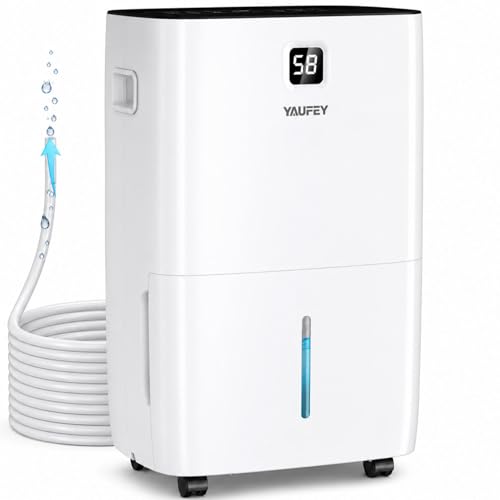
Yaufey 150 Pint Dehumidifier with Upward Drainage

PSOS 98 OZ Quiet Dehumidifier with Ambient Light

Waykar 34 Pints Energy Star Dehumidifier for Home & Basement

Waykar 150 Pints Energy Star Dehumidifier with Pump

Yaufey 80 Pint Dehumidifier for Basement 5,000 Sq. Ft.
Yaufey 120 Pint Dehumidifier for Basement 6,000 Sq. Ft.
Meet The Standout Selections
The Waykar 145-pint pulls serious weight in oversized basements and converted warehouses where ordinary units stall out. A built-in pump pushes condensation up and out through a hose, which means no midnight tank-emptying runs during humid spells. Coverage stretches to roughly 6,500 square feet, so it earns its keep in spaces where two smaller units would normally be required.
Compared to the smaller PLUSCENT below, this is a different animal entirely: more extraction power, more footprint, and a price tag to match. Homeowners with finished basement suites or garage workshops tend to get the most from it, since the unit thrives when it has volume to dehumidify and a floor drain within hose reach.
What Helps Most
- Built-in pump sends water upward, so the unit can drain into a sink, window, or overhead line without a gravity feed.
- 145-pint daily extraction handles the kind of moisture load that overwhelms a 30-pint residential unit.
- Adjustable humidity range of 30% to 80% lets you dial in comfort without cycling endlessly.
- Continuous drain option means the unit can run unattended through storm season in a finished basement.
Trade Offs
- The size and weight make it a two-person carry to the basement stair landing.
- Smaller rooms can over-dry quickly if the setpoint isn’t watched during the first week.
Built With In Mind
Owners of 3,000-plus square foot basements, multi-purpose shops, or anyone who has watched a smaller dehumidifier struggle through August.
Where Another Pick Suits Better
For a single bedroom or small apartment under 1,000 square feet, the PSOS 98 OZ unit below runs quieter and costs far less to operate.
The PLUSCENT 21-pint model fits where commercial units cannot: small basements, RVs, guest bathrooms, and modest bedrooms. A drain hose is included for the moments you want to set it and forget it, and the smaller tank makes sense when occasional manual emptying fits the routine. At 1,500 square feet of coverage, it targets the most common household humidity complaints rather than warehouse-scale problems.
Think of it as the right-sized answer after the heavy-duty Waykar above. Renters in particular benefit from its portable form factor, since it can move between rooms with the seasons or into storage during dry months without much hassle.
Notable Upsides
- Lightweight shell moves easily between a bedroom, bathroom, and RV without strain.
- Drain hose included for hands-off operation on laundry days or storm weekends.
- Runs at a wattage most standard living room circuits handle without complaint.
Worth Noting
- Daily extraction tops out at 21 pints, so a chronically damp basement may need two units.
- No built-in pump, so the drain hose works by gravity only and needs a downward run.
- The tank fills quickly in heavy use, requiring more frequent emptying without the hose attached.
Right Fit For
Apartment dwellers, RV owners, and anyone fighting dampness in a single room rather than an entire basement.
Consider Something Else When
Your basement runs over 2,000 square feet or stays wet enough to need a pump, in which case the Waykar 34-pint below offers more extraction and auto-drain flexibility.
The Yaufey 150-pint tackles the awkward installation problem: not every basement sits higher than a floor drain. Upward drainage means the hose can climb to a window, a utility sink on a pedestal, or even an exterior vent without losing prime. With 8,500 square feet of coverage, the unit suits sprawling finished basements, multi-room workshops, or split-level homes where humidity creeps up from below.
It reads as a step up from the Waykar 145-pint above in installation flexibility, though both extract moisture at similar rates. Homeowners who finished a basement and lost easy access to a gravity drain tend to find this configuration the difference between a unit that runs unattended and one that does not.
What Earns Its Place
- Upward-pumping drain solves the most common install headache in retrofitted basements.
- 150-pint daily removal at 95°F and 90% relative humidity handles worst-case summer loads.
- Humidity setpoints adjustable in 5% increments for finer control than most competitors.
Points To Note
- Footprint is large, so plan floor space before delivery rather than after.
- Some owners report the pump cycling audibly when the drain line runs long distances.
Who It Suits Best
Homeowners with finished basements above grade level, split-level layouts, or anyone whose only drain option sits higher than the unit.
Not Your Match When
A simpler 2,000-square-foot basement will be served just as well by the Waykar 34-pint, which costs less and runs lighter on the electrical bill.
Compressor-driven units like the Waykar models above tend to rumble, which matters at 2 a.m. in a nursery. The PSOS uses thermoelectric (also called Peltier) technology, the same principle that powers small coolers, trading raw extraction for near-silent operation. A 98-ounce tank and roughly 1,000 square feet of coverage make it the obvious pick for bedrooms, small offices, and anywhere noise outweighs the need for commercial-grade moisture removal.
An ambient light ring and humidity display add a touch of design polish you rarely see in this category. Owners who care more about sleeping through the night than drying out a basement tend to be the most enthusiastic about this style of unit.
Useful Touches
- Near-silent operation lets it run all night in a bedroom or nursery without complaint.
- Auto shut-off protects the unit when the tank fills, so it cannot overflow onto a hardwood floor.
- Color ambient light doubles as a low-key night light for kids’ rooms.
Honest Caveats
- Thermoelectric extraction is significantly slower than compressor models, so a damp basement may take days to improve.
- No pump or continuous drain option, which means the tank needs regular manual attention.
Made For
Light sleepers, nursery setups, small offices, and any space where quiet operation matters more than speed.
Skip It When
The target space is a real basement with measurable dampness, where the Waykar 145-pint earlier in this list will finish the job in a fraction of the time.
The Waykar 34-pint hits the sweet spot for most American basements: enough extraction for a 2,000-square-foot space without the bulk or cost of a commercial unit. An upgraded rotary compressor keeps the chassis smaller than older generations, which matters when floor space in a utility room is already spoken for. Both auto and manual drainage are supported, so the unit can run tank-free during humid stretches.
This sits in the middle of the lineup for good reason. It lacks the raw power of the Waykar 145-pint and the upward-drain advantage of the Yaufey 150-pint, but for a typical homeowner with a moderately damp basement, it usually does the job without overspending.
A Strong Showing
- ENERGY STAR efficiency keeps the electric bill reasonable through months of continuous use.
- Auto or manual drainage means you can choose between hose-run and tank-empty routines.
- Compact rotary compressor lets the unit fit where older, bulkier dehumidifiers would not.
- 30% to 80% humidity adjustment covers everything from musty storage to comfortable living space.
Some Limits To Know
- The 0.62-gallon tank fills quickly without a hose, so plan to either drain continuously or empty often.
- Coverage caps around 2,000 square feet, leaving larger basements under-served.
Best Suited To
Typical suburban homeowners with a standard 1,500 to 2,000 square foot basement, looking for set-and-forget operation.
Look Elsewhere When
Above-grade drainage or true commercial output is needed, in which case the Yaufey 150 Pint model earlier in the list solves both at once.
Auto defrost and a self-drying cycle separate the Waykar 150-pint from the run-of-the-mill commercial units on the market. The defrost feature prevents the coils from icing up in cooler basement temperatures, a common failure point for cheaper models running year-round. Self-drying helps the unit resist mildew between uses, important for any dehumidifier that sits idle through dry winter months.
Coverage extends to 7,000 square feet, which puts it between the Waykar 145-pint earlier in this list and the Yaufey 150-pint. Workshops, finished basement suites, and humid commercial back rooms benefit most from the maintenance-friendly features here.
Why It Works Well
- Auto defrost protects the coils in cooler basement temperatures, a common cause of mid-summer failure in lesser units.
- Self-drying cycle keeps the interior dry between humid seasons, reducing mildew risk.
- Built-in pump removes the need for a downward drain path in awkward basements.
What To Weigh
- The price premium over the Waykar 34-pint only pays off for users who need both the volume and the auto-defrost feature.
- Larger chassis demands a stable, level placement to keep the pump operating quietly.
Whose Shelf It Belongs On
Workshop owners, serious home brewers, and anyone running a dehumidifier in a cold basement where coil freeze is a real risk.
Reach For A Different Pick When
A smaller mid-size basement will be served just as well by the Waykar 34-pint, which lacks auto-defrost but costs notably less.
The Yaufey 80-pint lands in the gap between the 34-pint everyday units and the 150-pint commercial workhorses. For a standard suburban basement around 5,000 square feet, it pulls moisture faster than a 30-pint model without crossing into the bulk and electrical demands of a true commercial unit. ENERGY STAR efficiency keeps running costs reasonable when the unit runs through months of continuous duty.
It does not include a built-in pump, so installation planning still requires a downward drain run. For homeowners with a floor drain or sump nearby, the gravity-drain setup works fine and saves the cost of upgrading to a pumped model.
Bright Spots
- 80-pint daily extraction covers the most common residential basement sizes without commercial-grade bulk.
- ENERGY STAR certification helps offset the cost of running through a humid summer.
- Adjustable 30% to 80% humidity range fits everything from finished basements to workshops.
Things That May Matter
- No built-in pump, so the drain hose relies on gravity to a lower exit point.
- Coverage topping out at 5,000 square feet leaves larger basements under-served.
Who Should Grab It
Homeowners with a moderately sized basement and a floor drain or sump within hose distance, looking for a balance of capacity and running cost.
A Better Fit Elsewhere
For very large basements or installations without a gravity drain, the Waykar 150-pint above delivers similar extraction plus a built-in pump.
The Yaufey 120-pint rounds out the lineup as a reliable whole-basement workhorse, capable of 120-pint daily removal in standard humid conditions and 90 pints in milder weather. Coverage to 6,000 square feet fits the typical finished basement, garage, or extended workshop without pushing into commercial-scale territory. ENERGY STAR efficiency keeps operating costs within reason for a unit that may run continuously for months.
Without a built-in pump, it relies on a gravity drain setup, which limits installation to spaces with a floor drain or sump below the unit. Homeowners who want fewer hands-on maintenance cycles should consider the Waykar 150-pint or Waykar 145-pint earlier in this list, both of which add pump functionality at a similar extraction level.
The Case For It
- 120-pint daily extraction handles mid-sized basements without commercial-grade size or weight.
- ENERGY STAR efficiency helps keep utility costs manageable through continuous use.
- Adjustable humidity between 30% and 80% suits everything from storage spaces to living areas.
- 6,000 square foot coverage handles most residential basements in a single unit.
Less Ideal Details
- No built-in pump, so the drain hose must run downward to a floor drain or sump.
- Larger footprint than mid-range units, so floor space planning matters before delivery.
The Right Fit
Homeowners with a full-size basement, gravity drain access, and a preference for a balance of capacity and operating cost over pump-driven convenience.
Swap It Out When
Pump-driven drainage is essential, in which case the Waykar 145-pint earlier in this list offers a similar extraction rate with a built-in pump.
What To Weigh Before Choosing A Pump-Equipped Dehumidifier
Picking a home dehumidifier with pump starts with the room you’re trying to tame, not the unit’s feature list. The right size, drainage style, and noise profile matter far more than a brand name on the label.
Sizing The Space Honestly
Manufacturers rate dehumidifiers in pints of moisture removed per day, and the number is a stress test rather than a steady-state figure. The 21-pint PLUSCENT will feel underpowered in a 3,000-square-foot basement no matter what the spec sheet promises. Measure the actual square footage, note the ceiling height, and account for obvious moisture sources like laundry rooms or attached garages. Coverage claims assume moderate humidity; chronic dampness calls for the next size up.
Drainage Style And Install Reality
A built-in pump changes what you can do with a unit. Without one, the drain hose relies on gravity, which means the floor drain must sit lower than the unit’s hose port. Pump-equipped models like the Waykar 145-pint or Yaufey 150-pint can push water upward to a window, sink, or overhead line, opening up installation in retrofitted basements where a gravity drain is impractical. The trade-off is the pump itself, which can cycle audibly on long hose runs.
Operating Cost Versus Upfront Price
ENERGY STAR-certified units like the Waykar 34-pint and Yaufey 80-pint use less electricity per pint of moisture removed, and a dehumidifier running 12 hours a day adds up on a utility bill over a humid summer. The larger the unit, the more this matters: a 150-pint non-certified model can run hotter on the electric bill than a smaller certified one doing the same job over a longer period. For whole-basement use, efficiency often repays the upfront premium within a season or two.
Noise, Run Time, And Quality Of Life
Compressor-driven dehumidifiers hum. That hum is fine in a utility room and unforgivable in a bedroom. Thermoelectric units like the PSOS run nearly silent but extract moisture at a fraction of the rate, making them bedroom-friendly but basement-impractical. Plan where the unit will actually live, and choose the technology to match that room rather than the spec sheet.
Key Considerations Across These Picks
A few common pitfalls catch first-time shoppers in this category, and the upgrade from a basic unit to a premium one shows up in places you might not expect.
Mistakes Worth Dodging
The most common error is sizing the unit to the room’s square footage rather than the room’s humidity load. A dry, climate-controlled basement under 2,000 square feet does not need a 150-pint workhorse, and a chronically damp 4,000-square-foot basement will not be saved by a 30-pint everyday unit. Read the moisture problem, not just the floor plan. Skipping the drainage plan is the next trap: a unit without a pump relies on gravity, and a unit with a pump still needs a hose run. Lay out the drain path before delivery day, and verify the floor drain or sink sits where the hose can reach.
Where The Extra Money Goes
The jump from a 30-pint residential unit to a 100-plus-pint commercial one pays for three things: extraction capacity, build quality, and features like auto defrost and self-drying cycles. In a cold basement or a workshop, those features prevent the most common failure points. The premium on pump-equipped models is a smaller jump, and for many homeowners it eliminates the need to ever empty a tank by hand, which alone justifies the upgrade if the unit runs unattended through humid months.
Frequently Asked Questions
Do pump-equipped dehumidifiers need a drain hose at all times?
No, most include a built-in tank that catches water when a hose is not connected. The pump simply lets you route the water out through a hose instead of filling the tank. Many owners run the unit tank-only for short stretches, then attach the hose for longer unattended periods.
How often does the filter need cleaning on these units?
Most manufacturers recommend rinsing the filter every two to four weeks during heavy use. A clogged filter restricts airflow, reduces extraction efficiency, and can shorten compressor life. The task takes a minute and a sink, so it is worth building into the routine.
Can a dehumidifier with a pump run continuously?
Yes, that is the main reason people buy them. Set the desired humidity, attach the drain hose to a suitable outlet, and the unit cycles on and off as needed without intervention. In continuous mode, plan a quarterly check on the hose for kinks or biofilm buildup.
What humidity level should be set in a basement?
Most sources suggest between 40% and 50% relative humidity for finished basements to keep mold and dust mites in check. Storage areas can run a touch higher, around 50% to 55%, without issue. Going below 40% tends to over-dry the air and can crack wood flooring or furniture.
Is a thermoelectric dehumidifier enough for a real basement?
Rarely. Thermoelectric units like the PSOS pull moisture at a slow, steady rate suited to small enclosed spaces. A genuine basement with measurable dampness usually needs a compressor-driven model to keep up. Save the thermoelectric pick for the bedroom, office, or RV.
Closing Remarks
The right home dehumidifier with pump is the one that matches your space, your drainage reality, and your tolerance for hands-on maintenance. For most basements, a mid-size ENERGY STAR unit covers the job without overspending. For finished spaces above grade, look upward to pump-equipped commercial models. Quiet rooms and small apartments belong with thermoelectric designs. Match the technology to the room, and the humidity problem usually solves itself within a week.