


High end humidifiers earn their keep in homes where dry winter air turns into cracked skin, warping floorboards, and snoring that wakes the whole hallway. They split into two camps: whole-house evaporative units wired into your furnace, and large-capacity cool-mist ultrasonic towers built for open living spaces. Picking the wrong category usually means constant refilling, white-dust haze, or a unit that can’t keep up with a great room.
The seven picks below cover both worlds, with options for small bedrooms, plant collections, and 5,000-square-foot homes.
The Lineup, Simplified

LRAZU 15L Cool Mist Humidifier 800 sq.ft

AprilAire 600M Whole-House Humidifier 5000 Sq Ft

AprilAire 500 Whole-House Humidifier 3600 Sq Ft

BOXING 3L Humidifier with Auto Mode and Remote
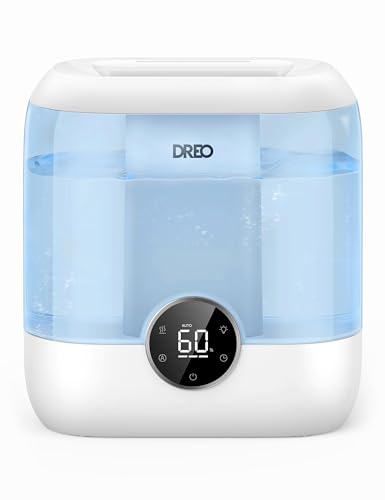
DREO 6L Top Fill Cool Mist Humidifier Blue
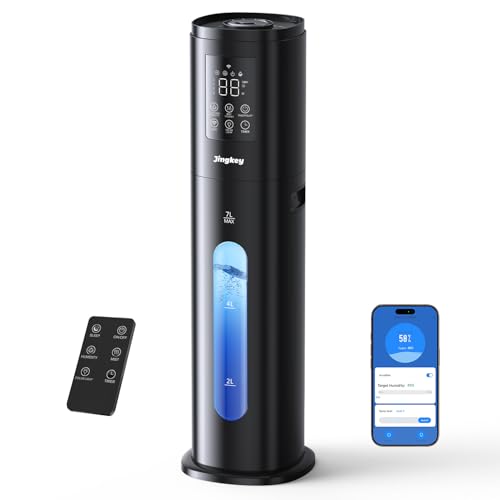
Jingkey 7L Smart App Humidifier 24H Timer

Viprh 7.8L Cool Mist Humidifier with Oil Diffuser
The Details Behind The Selections
The LRAZU 15L is the portable cousin to whole-house units, and for many open-concept homes it does the work without an HVAC retrofit. The 3.96-gallon tank (water capacity, the size of the reservoir that holds liquid between refills) feeds an ultrasonic mist output rated up to 350 mL per hour, which translates to roughly four days of continuous runtime at low settings.
Compared to the AprilAire 600M and 500 below, this is a freestanding option, no furnace tap-in required. For plant collectors, large bedrooms, or a basement rec room, the 800-square-foot coverage is generous, and the 40 to 90 percent humidity range gives real control.
What Earns Its Place
- Tank size cuts refills to roughly once every several days, a real win in busy households.
- Five mist levels let you dial output for a small bedroom or a vaulted great room.
- 800 sq ft rating covers most living areas without needing a second unit.
- Ultrasonic design runs quietly enough for office or nursery use.
Things To Consider
- The reservoir is large, so you’ll need a stable floor spot and two hands to refill.
- Like most ultrasonic units, hard water can leave a faint white dust on nearby surfaces; filtered water helps.
- It’s portable, not whole-house, so multi-room coverage would mean moving it between spaces.
Key Specs
Best Suited To
Plant enthusiasts and large-room dwellers who want long runtime without touching a furnace duct.
Consider Something Else When
Homeowners wanting invisible, set-and-forget moisture across an entire home should look at the AprilAire 600M instead.
The AprilAire 600M is the high-output end of the whole-house category, designed to plumb into a forced-air furnace and push moisture through every register. Rated for tightly built homes up to 5,000 square feet with a 17-gallon-per-day output, it’s the kind of unit you install once and stop thinking about.
Unlike the portable LRAZU above, the 600M requires a return-duct cut-in and a water line, ideally handled by an HVAC pro. In exchange, every room in the home gets even humidity without a tower on the floor.
What It Does Well
- Whole-home coverage through existing ductwork means no visible appliance taking up living space.
- 17 gallons per day output handles dry winter climates without falling behind.
- Manual control keeps the system simple and serviceable for decades.
- Made in the USA by the brand that introduced whole-home evaporative humidification.
Honest Caveats
- Installation requires ductwork, a water saddle valve, and likely a pro visit.
- Manual control lacks the auto-sensor set-and-forget of the AprilAire 500.
- Annual water-panel replacement is part of the ownership cost; skipping it drops performance fast.
Made For
Owners of large, tightly sealed homes with forced-air heating who want invisible humidity control across every room.
Look Elsewhere When
Renters or anyone without HVAC access should pick the LRAZU 15L for similar coverage without the install.
The AprilAire 500 is the smaller sibling to the 600M, tuned for homes up to 3,600 square feet. It uses the same evaporative approach (a fan pulls air through a water-saturated panel, adding humidity as it passes) but pairs it with automatic control that reads the indoor humidity and adjusts itself. For most family homes, the 500’s automatic mode is the upgrade that makes the whole-house category feel effortless.
Where the 600M leans raw output, the 500 trades a bit of daily capacity for the sensor-driven set-and-forget behavior that fits a busy household.
Points In Its Favor
- Automatic sensor control removes the daily “did I bump it?” check.
- Compact form fits standard furnace setups without major duct rework.
- Evaporative method means no white dust, a real plus over the LRAZU ultrasonic pick above.
- Long service life is common with annual panel swaps.
Worth Noting
- Still requires a water line and a return-duct install, not a renter-friendly swap.
- Output is lower than the 600M, so very dry climates may push it on the coldest days.
- Replacement water panels add a small yearly cost.
Feature Snapshot
Right Fit For
Homeowners in moderately dry climates who want automatic, low-touch whole-house moisture.
A Better Fit Elsewhere
Those in very dry regions or larger homes should choose the AprilAire 600M for the extra daily output.
The BOXING 3L is the bedside-class pick on this list, a 20 dB sleep-mode rating (about the noise level of a quiet library), auto humidistat, and a 30-hour runtime from a 3-liter tank. The wide top-fill opening is the small detail owners appreciate most: no flipping the unit over a sink to add water.
Compared to the LRAZU 15L above, this is the nightstand version. The 7-color night light is a small touch, but the auto mode and remote are the real reason it earns a spot.
Benefits That Matter
- 20 dB sleep mode is genuinely quiet, a rare spec in this category.
- Auto humidistat (a built-in humidity sensor that turns mist on and off to hold your target) holds the room steady through the night.
- Top-fill design cuts cleaning and refill time in half.
- Remote control means you never have to leave the bed to tweak settings.
Room For Improvement
- 3L tank calls for refills every couple of nights at high output.
- Coverage is bedroom-scale, not whole-room open-concept scale.
Quick Facts
Perfect Match For
Light sleepers, nursery parents, and small-bedroom dwellers who want a quiet auto unit.
Skip It When
Large open living areas need the LRAZU 15L or one of the DREO picks below instead.
The DREO 6L sits in the sweet spot for most bedrooms and plant rooms. A 60-hour runtime from a 6-liter tank means roughly two and a half days between refills at moderate output. The dual inlets push a 5-micrometer ultrafine mist (a measurement of droplet size; smaller numbers mean the moisture hangs in the air longer instead of settling) up to 40 inches high, which helps the mist disperse before it dampens nearby furniture.
Compared to the BOXING 3L above, this is a quieter-feeling room with the same auto-friendly controls but twice the tank capacity.
What Makes Sense
- 60-hour runtime at low output is real “set and forget” territory for bedrooms.
- Top-fill opening is the easiest-to-clean design in this size class.
- 5-micrometer mist reduces visible white plume and damp rings.
- Built-in night light adds a soft glow without a separate device on the nightstand.
Points To Note
- Coverage tops out around 500 sq ft, so it isn’t a whole-house solution.
- Hard water still means filtered water is the cleaner long-term play.
At A Glance
Who Should Grab It
Anyone who wants a low-maintenance, quiet bedroom humidifier that doesn’t need daily refills.
Reach For A Different Pick When
Smart-home app control matters more than runtime, in which case the Jingkey 7L below is a better fit.
The Jingkey 7L leans hard into the connected-home crowd. A 7-liter tank, 24-hour timer, four mist levels, and both a remote and a smart app for control. The built-in humidistat reads the room, stops at your target between 45 and 95 percent relative humidity (the percentage of water vapor the air is holding compared to its maximum), and restarts when it drops.
Against the DREO 6L above, this trades some noise engineering for app convenience and a slightly larger reservoir. For daily drivers who live in their phone’s smart-home app, the tradeoff is easy.
Key Advantages
- App control integrates with bedroom routines and voice assistants.
- Target humidity stops the unit automatically, saving water and energy.
- 24-hour timer fits predictable sleep and work schedules.
- Four mist levels cover everything from a quiet nursery to a large living area.
Trade Offs
- App setup adds a small step; non-tech households may stick with the remote.
- Unit is bulkier than the DREO 6L, so consider nightstand footprint.
Feature Card
Whose Shelf It Belongs On
Smart-home users who want their humidifier on the same routines as their lights and thermostat.
Not Your Match When
Pure quiet is the priority, in which case the BOXING 3L’s 20 dB sleep mode is the stronger bedside pick.
The Viprh 7.8L closes the list with the most feature-loaded ultrasonic option. A 7.8-liter tank, 44-hour runtime, 600 sq ft coverage, dual mist outlets, and a built-in essential oil tray set it apart from the DREO and Jingkey picks above. The dual-nozzle design hits air from two angles, which speeds up humidity recovery after heating kicks on.
For large bedrooms, home offices, and anyone who wants a humidifier and aroma diffuser in one unit, this is a tidy consolidation.
Why It Works Well
- Dual mist outlets humidify faster than single-nozzle units in the same class.
- Essential oil tray adds scent without buying a second device.
- 44-hour runtime handles a long workweek on a single fill.
- Top-fill design keeps refills quick and clean.
Soft Spots
- Adding oils means the tank and tray need regular cleaning to prevent residue.
- Footprint is on the larger side for tight nightstands.
Right Fit For
Large bedrooms or shared offices that want humidity and light aromatherapy from a single unit.
Swap It Out When
Whole-home coverage is the goal, in which case the AprilAire 600M remains the top of the food chain.
What Separates A Great Humidifier From A Mediocre One
Coverage area is the first filter. A unit rated for 500 sq ft will not keep up in a 1,200 sq ft open layout, and oversizing a 5,000 sq ft whole-house unit in a 900 sq ft apartment wastes water and energy. Match the rating to the actual space, accounting for vaulted ceilings and open floor plans that effectively double the volume.
Tank capacity and runtime matter more than people expect. A 3-liter bedside tank means nightly refills, while a 15-liter unit can run four days between fills. Larger reservoirs also mean fewer start-stop cycles, which extends the life of the ultrasonic membrane (the small vibrating disc that turns water into mist) on ultrasonic models.
Method affects feel. Ultrasonic units are quiet and produce visible mist, but hard water leaves a fine white dust. Evaporative units like the AprilAire 500 and 600M are dust-free but need an annual water panel swap and a duct connection. Warm-mist models boil water, which can be a concern in nurseries.
For smart-home households, app and voice control are now table stakes, and target-humidity sensors save water by stopping output once the room hits your set point. For pure sleep comfort, anything under 25 dB (decibels, a unit of sound loudness, where 20 is a whisper and 30 is a quiet bedroom at night) qualifies as bedroom-safe.
Key Considerations Across These Picks
Common Shopping Slip Ups
The biggest miss is buying a portable unit for whole-house duty, or a whole-house unit for a one-bedroom apartment. Portable ultrasonic towers cap out around 800 sq ft even on generous ratings, so multi-room coverage almost always means a furnace-mounted evaporative system. The reverse mistake is installing a 5,000 sq ft AprilAire in a small condo, where it cycles on and off constantly and wears out the panel early.
Another common trap is ignoring water quality. Hard water and ultrasonic humidifiers produce a fine white mineral dust on nearby surfaces. Filtered or distilled water, or an evaporative unit, sidesteps the issue entirely.
Where The Extra Money Goes
Premium picks earn their cost in three places: more accurate humidity sensors, quieter fans, and longer-lasting components. The AprilAire 600M’s price reflects industrial-grade internals and a daily output that no portable unit can match. Mid-tier options like the DREO 6L trade the very quietest fans and the largest tanks for a more friendly footprint and price.
The upgrade is worth it for whole-house coverage, automatic sensor control, or runs longer than 48 hours between refills. It’s not worth chasing if the goal is a small bedroom, where a compact 3-liter unit will do the same job for far less.
Frequently Asked Questions
How big of a humidifier do I need for a whole house?
Furnace-mounted evaporative units are the realistic answer for full coverage. The AprilAire 600M handles up to 5,000 sq ft, and the AprilAire 500 covers up to 3,600 sq ft.
Are ultrasonic humidifiers safe to use with hard water?
They work, but the dissolved minerals create a fine white dust on nearby furniture. Filtered or distilled water keeps surfaces clean and extends the life of the unit.
How often do whole-house humidifier filters need replacing?
Most evaporative units need a new water panel once per heating season. Skipping it drops output quickly and can let mineral buildup damage the unit.
Can a humidifier help with snoring and dry skin?
Added moisture in the bedroom often reduces the dry-mouth and cracked-skin symptoms of winter heating, and many people find it eases mild snoring caused by dry air.
Do I need a humidifier in summer?
Most homes don’t, since warm air holds more moisture. Dry climates or air-conditioned interiors that drive indoor humidity below 30 percent are the main exceptions.
Closing Remarks
The right humidifier depends less on spec sheets and more on the room, the climate, and how hands-on you want to be. Whole-home evaporative units deliver invisible, even moisture, while portable ultrasonic towers give flexibility without an HVAC install. Pick the shape that fits your space, and the rest tends to fall into place.