

A sealed grow tent can swing from bone-dry to swampy in a single afternoon, and your plants feel every percentage point. The right humidifier or climate accessory keeps VPD (vapor pressure deficit, the balance between temperature and humidity that drives plant transpiration) on target without you babysitting a dial. This list rounds up seven solid options across humidifiers, dehumidifiers, heaters, and a small AC, so you can match gear to your tent size and crop stage instead of guessing.
The Choices Worth Comparing

LRAZU 6L Reptile Fogger Humidifier with Targeting Hose

VIVOSUN AeroLush C08 8000BTU Smart Grow Tent AC
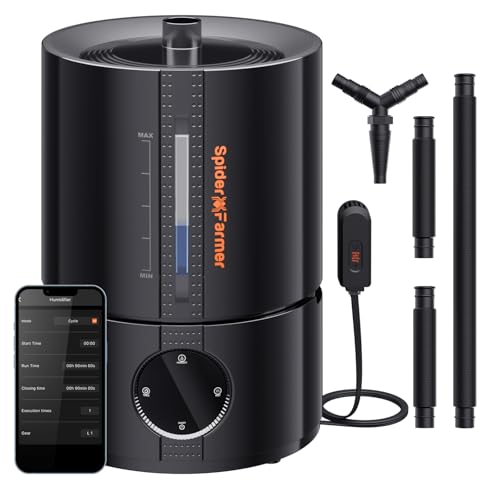
Spider Farmer 5L Cool Mist Plant Humidifier with Hose
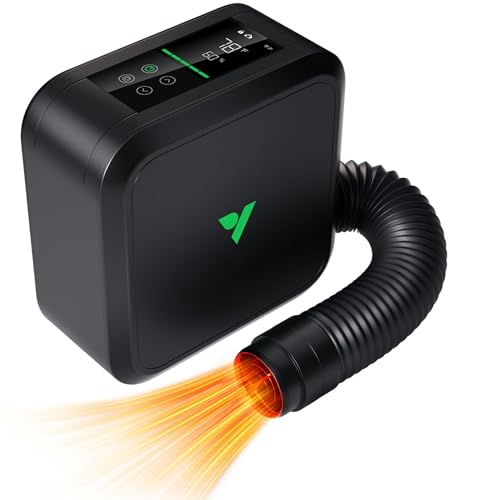
VIVOSUN AeroFlux 700W PTC Grow Tent Heater

VIVOSUN AeroStream H09 Wi-Fi Humidifier 9L

AC Infinity CLOUDFORGE T3 Plant Humidifier 4.5L

VIVOSUN AeroDrain D12 Smart Dehumidifier 12L/Day
Why These Options Stand Out
The LRAZU 6L is pitched at reptile keepers, but the design translates cleanly into a small grow tent. A 6-liter tank keeps refills reasonable, and the extendable hose lets you aim mist right at a propagation tray or a cluster of seedlings without fogging the whole room.
Output is rated up to 400 mL/h with four adjustable levels, so you can dial way down for cuttings and back up for veg. The included external probe reads both temperature and humidity, which is what you want for any real VPD work.
What Makes Sense
- Targeted hose keeps moisture off lights and outlets in tight tents
- 35% to 95% target range, in 5% steps, fits most crop stages
- External probe gives more accurate readings than an in-body sensor
- Six-liter tank means fewer late-night refills
Points To Keep In Mind
- Setup leans toward reptile-housing layouts, so you may need to reroute the hose for tall tents
- Ultrasonic units need regular descaling if your tap water runs hard
Right Fit For
You run a small to mid-size tent and want precise misting without a full smart-climate setup.
Reach For A Different Pick When
The Spider Farmer 5L Cool Mist Plant Humidifier is quieter and built ground-up for indoor grow tents, so it suits light-sensitive growers better.
This is the only true air conditioner on the list, and it earns its spot for growers who wrestle with summer heat. The 8000 BTU compressor handles mid-size tents where a clip fan and an open window just can’t keep up. Built-in Sensirion sensors track temperature, humidity, and VPD in real time.
Four modes (cool, heat, dry, fan) mean you can run it year-round, and the Vivosun app ties into the broader smart-grow ecosystem. For a sealed tent, that kind of single-device control saves a lot of cable clutter.
Positive Takeaways
- Genuine compressor cooling, not just a fan swap
- VPD monitoring built in, so you don’t need a separate controller for the basics
- Auto-restart after power blips protects flowering plants
- App control lets you tweak settings without opening the tent
Trade Offs
- Compressor units produce some heat and noise, so a quiet bedroom setup may not love it
- Ducting and venting add to install time compared with a simple humidifier
Whose Shelf It Belongs On
You run a sealed tent in a hot climate or basement where year-round climate control matters more than low cost.
Skip It When
The VIVOSUN AeroFlux 700W PTC Heater alone solves cold-weather swings, so skip the AeroLush if heat is your only pain point.
Spider Farmer built this 5L unit specifically for tents, and the design choices show it. Rated at or below 35 dB (about the level of a quiet library), it won’t fight your exhaust fan or your sleep schedule. The extendable hose aims cool mist where your plants actually need it.
Max output lands around 450 mL/h, with four mist levels and the same 35% to 95% target range in 5% steps. Pair it with the Spider Farmer GGS controller for app control, and you can stop guessing what your tent is doing at 2 a.m.
Everyday Advantages
- Among the quietest options here, easy to live with in a spare room
- External temp/humidity probe gives trustworthy readings inside the canopy
- Target humidity set-and-forget takes the babysitting out of propagation
Things To Consider
- Five-liter tank means more frequent refills than the 9L VIVOSUN AeroStream H09
- Full app features require the GGS hub or compatible power strip
- Hard water will shorten the life of the ultrasonic membrane without regular cleaning
Best Suited To
You run a 2×2 or 2×4 tent and care more about low noise than raw tank size.
Where Another Pick Suits Better
The VIVOSUN AeroStream H09 9L Wi-Fi Humidifier is a stronger match if you want longer runtime between refills.
Heat is the missing piece in most humidifier lists, and the AeroFlux earns its slot. PTC (positive temperature coefficient) ceramic elements self-regulate, so the unit pulls less power as it warms up, which matters in an enclosed tent. The brand claims around 40% more heating muscle than typical 500W models.
Five heat levels plus a high-precision sensor that tracks VPD give you real control, not just “warmer or colder.” App support ties into the same Vivosun ecosystem as the AeroLush AC and AeroStream H09 humidifier.
Useful Strengths
- Tip-over and overheat cutoffs reduce fire risk in a fabric tent
- Five output levels match seedling warmth against late-flower heat demand
- Real-time VPD tracking helps prevent low-humidity stress when the heater runs hard
Small Caveats
- Heaters dry the air, so you may still need a humidifier running alongside in cold rooms
- 700W draws real current, so check that your outlet and timer are rated for it
Who Should Grab It
You grow in a basement, garage, or unheated space where winter temperatures drop below your plants’ comfort zone.
Swap It Out When
Climate swings in your room stay mild, the VIVOSUN AeroStream H09 humidifier and a small space heater probably cover it without dedicated tent hardware.
Nine liters is a serious tank for a tent humidifier, and the AeroStream H09 uses it. If you run a 4×4 or larger, or a multi-tent setup, the extra capacity translates into nights you sleep through without refilling. The external probe keeps readings honest, and Phantom mode kills the display glow so it doesn’t disrupt photoperiods.
Wi-Fi control through the Vivosun app lets you set humidity targets and receive alerts away from home. Compared with the LRAZU 6L earlier, this one trades compactness for longer runtime and tighter smart integration.
Benefits That Matter
- 1% humidity resolution gives finer control than the 5% steps on smaller units
- Plant-friendly Phantom mode avoids disrupting dark cycles
- 9L tank suits larger tents and humidifier-hungry crops like cannabis clones
Worth Noting
- Bigger footprint, so it competes for floor space in a 2×2 tent
- Wi-Fi features depend on the Vivosun app, which may not suit mixed-brand setups
Built With In Mind
You want one humidifier to cover a large or multi-tent room without constant refills.
A Better Fit Elsewhere
The Spider Farmer 5L Cool Mist is easier to tuck into a small tent, and you trade runtime for footprint.
The CLOUDFORGE T3 leans into the precision end of the spectrum. The next-gen EC (electrostatic/evaporative-style) atomizer breaks water into very fine vapor, and AC Infinity rates it at 10 humidity levels, finer than the 4-step ladders common on cheaper units.
A water-resistant seal addresses the leak issue that plagues some ultrasonic humidifiers, and VPD triggers let the unit respond to canopy conditions rather than just raw humidity. The backlit display hides behind a panel when you want a dark tent.
The Practical Payoff
- 10 mist levels give more headroom for finicky strains or propagation
- VPD triggers automate humidification against the metric that actually drives plant growth
- Sealed top reduces the slow-leak problem that ruins tent floors
Factors To Consider
- 4.5L tank is on the small side for a multi-day, hands-off setup
- Premium build comes at a price premium over basic ultrasonic models
Perfect Match For
You want dialed-in VPD control and a sealed design that won’t slowly weep onto your tent floor.
Not Your Match When
You want long runtime between refills, the VIVOSUN AeroStream H09 9L is a better fit.
Late-flower rot is almost always a humidity problem, which is why a dehumidifier rounds out this list. The AeroDrain D12 pulls up to 12 liters per day from a compressor-based setup, which is the technology you actually want below about 65% RH (relative humidity, the percentage of moisture air can hold at a given temperature).
High-precision sensors feed the Vivosun app, and the unit can sync with the rest of the Vivosun Smart Grow System for hands-off moisture control. If your tent lives in a basement or humid climate, this might save a harvest.
Practical Advantages
- Compressor design handles the sub-50% RH range where desiccant units struggle
- 12L/day capacity covers most 4×4 tents in active flower
- App and ecosystem sync match the rest of the Vivosun lineup
Honest Caveats
- Compressors dump waste heat into the room, which you may need to vent or offset
- Overkill for a 2×2 in a dry climate, so match capacity to your actual room
Made For
You flower in a humid region or basement where late-stage humidity spikes threaten your crop.
Where A Sibling Pick Shines
The VIVOSUN AeroLush C08 AC includes a dry mode that handles mild moisture issues without a dedicated dehumidifier.
What Matters Most Before Choosing Grow Tent Humidifiers
Tank Size and Tent Volume
Match tank capacity to your refill tolerance and tent size. A 4-5L humidifier is plenty for a 2×2, while 9L and up makes more sense in a 4×4 or larger room.
Sensor Accuracy and VPD Logic
Look for an external temperature and humidity probe rather than relying on the in-body sensor. External probes read canopy conditions more honestly, which matters once you start chasing VPD.
Noise and Light Discipline
Ultrasonic misters are quieter than compressors, and a hideable display keeps your dark cycle clean. If your tent sits in a living space, the Spider Farmer 5L is a friendly pick.
Key Considerations Across These Picks
Where Shoppers Go Wrong
The most common mistake is buying a humidifier without sizing it to the tent. A small ultrasonic unit in a 4×4 will run constantly and still miss target. Check both tank size and max output in mL/h before you commit, and remember that late flower usually calls for less humidity, not more, which is where a dehumidifier like the AeroDrain D12 earns its place.
Where The Extra Money Goes
Premium models like the AC Infinity CLOUDFORGE T3 and VIVOSUN AeroLush AC add finer VPD triggers, better seals, and tighter app integration. If you grow a high-value crop or run a sealed room, those upgrades pay back in fewer swings and less hands-on monitoring. For a small personal tent, a mid-tier unit is usually the smarter spend.
Frequently Asked Questions
How often do I need to refill a grow tent humidifier?
A 5L tank in a small tent typically lasts a day or two, while a 9L unit can stretch to three or four days, depending on how hard it runs and your target humidity.
Can I use a regular room humidifier in a grow tent?
You can, but units without external probes and dark-cycle-friendly displays tend to over-humidify or disrupt photoperiods compared with grow-specific models.
Do I need both a humidifier and a dehumidifier?
You may, especially if you run veg and flower in the same space. Seedlings want 70%+ RH, while late flower prefers 40 to 50%, and one device rarely handles both ends well.
What is VPD and why does it matter?
VPD stands for vapor pressure deficit, basically how hard the air is pulling water from your leaves. Targeting a VPD range keeps plants transpiring steadily without stress from overly dry or overly wet air.
Is tap water safe for ultrasonic humidifiers?
Hard water can shorten the life of the membrane and leave white dust on leaves, so filtered or distilled water is the safer choice for any ultrasonic unit.
The Takeaway
Pick the device that matches the problem you actually have: dry air in a small tent, heat in a sealed room, or moisture spikes in late flower. The seven options above cover each of those jobs, so use your real use case to narrow the list.