


A damp basement, a musty bedroom, or a garage that feels like a swamp can quietly damage a home long before anyone notices. The right dehumidifier with a drain hose solves the problem in the background, pumping collected water straight to a floor drain or sink instead of asking anyone to remember to empty a tank. That kind of set-and-forget behavior is what separates the picks below from the rest of the field.
The Essentials At A Glance

PLUSCENT 21 Pint Dehumidifier for Basement and Home

Waykar 145 Pints 6,500 Sq. Ft Dehumidifier with Pump

PSOS 98 OZ Quiet Dehumidifier for Home (Gray)

AEOCKY 50 Pint/Day Ultra-Quiet 40dB Dehumidifier
Waykar 140 Pints Energy Star Dehumidifier

AEOCKY 4500 Sq.Ft 80 Pint/Day Dehumidifier with Pump

Waykar 150 Pint 2025 Energy Star Dehumidifier with Pump
AEOCKY 5500 Sq.Ft 80 Pint/Day Dehumidifier
The Details Behind The Selections
The PLUSCENT 21 Pint Dehumidifier sits in a comfortable middle ground for households that need real moisture control without committing to a commercial-sized box. Rated for spaces up to 1,500 square feet, it covers a typical basement, a couple of bedrooms, or a long single-floor layout. The 160W compressor pulls up to 21 pints of water a day under heavy, sticky conditions, which is enough to keep a moderately damp space from feeling clammy during muggy summer stretches.
For most homeowners, the appeal comes down to simplicity. You can drop it in a finished basement, attach a garden hose to the continuous drain port, and walk away. Compared to the larger Waykar and AEOCKY models covered below, this unit feels lighter and easier to reposition between rooms, which matters when the dampest corner of the house shifts with the season.
Positive Points
- Right-sized for typical residential basements at 1,500 square feet of coverage.
- Continuous drain option frees you from emptying an internal tank every day.
- Manageable footprint makes it easy to move between a finished basement and a bedroom.
- 160W draw keeps it reasonable on a standard 15-amp household circuit.
Things To Consider
- 21-pint daily capacity is modest in very wet crawl spaces or post-flood situations.
- You may find the noise level noticeable in a quiet bedroom at night.
- Owners commonly report that a properly sloped drain hose setup matters; flat runs can pool and stall the unit.
Who It Suits Best
Renters and homeowners with a damp but not soaked basement who want a low-fuss unit that drains on its own.
Consider Something Else When
The AEOCKY 4500 Sq.Ft 80 Pint/Day Dehumidifier with Pump suits larger multi-room basements where a built-in pump is needed to push water upward.
Step up from the PLUSCENT and you land in Waykar territory, where the focus shifts to raw output. The Waykar 145 Pints Dehumidifier pulls up to 145 pints a day in tough conditions and is rated for rooms as large as 6,500 square feet. That puts it firmly in shop, warehouse, and oversized basement territory, well past anything a typical apartment needs.
The integrated pump is the headline feature here. A built-in condensate pump can push water upward through a hose, which means the unit does not have to sit next to a floor drain. Owners commonly use that freedom to install the dehumidifier in a basement corner with the drain hose routed up to a utility sink or out a window. Compared to the PSOS bedroom-friendly unit, this one sounds like a compressor, because it is one.
Everyday Wins
- Integrated pump allows overhead or vertical drain routing without a separate accessory.
- 6,500-square-foot coverage handles large basements, workshops, and light commercial spaces.
- Adjustable humidity range from 30% to 80% lets you fine-tune comfort for stored goods or living space.
Worth Noting
- Size and weight make it a two-person job to relocate once placed.
- Compressor noise is not bedroom-friendly, so a basement or garage setting suits it best.
- The pump adds a mechanical part that, over time, may need cleaning of mineral buildup depending on local water hardness.
Key Product Details
Made For
Owners of large basements, hobby workshops, and light commercial spaces who need serious extraction and want pump-driven drainage.
Look Elsewhere When
The PSOS 98 OZ Quiet Dehumidifier suits a small bedroom or home office where noise and footprint matter more than extraction power.
The PSOS 98 OZ Quiet Dehumidifier takes a different path from the heavy-duty Waykar models. It uses dual semiconductor condensation technology, which trades raw extraction speed for near-silent operation. Rated for spaces around 1,000 square feet, it fits comfortably in a bedroom, a nursery, or a small office where compressor noise would be intrusive.
The 98-ounce built-in tank is large enough to run through a humid night without intervention, and the auto shut-off protects the unit if you forget to empty it. Compared to the PLUSCENT entry above, this one is gentler on the ears and more at home in living space, but it cannot match a compressor unit in truly soggy basements. Think of it as comfort-first, not extraction-first.
Useful Touches
- Near-silent semiconductor operation keeps bedrooms and home offices comfortable.
- Auto shut-off protects the internal components when the 98-ounce tank fills.
- Built-in humidity display makes it easy to dial in a target level at a glance.
Trade Offs
- Semiconductor units typically extract less per day than compressor-based models like the PLUSCENT.
- Best suited to small, enclosed rooms rather than open floor plans or large basements.
Right Fit For
Light sleepers and apartment dwellers who want quiet humidity control in a single bedroom or office.
Skip It When
The AEOCKY 50 Pint/Day Ultra-Quiet 40dB Dehumidifier suits larger living areas where you want quieter compressor performance and more extraction.
The AEOCKY 50 Pint/Day Dehumidifier tries to bridge two camps. It is a compressor-based unit rated for spaces up to 3,500 square feet, but it is engineered to run as quietly as possible, with the manufacturer quoting a 40 dB operating level. For perspective, that is close to a quiet library, which makes a real difference in homes where the dehumidifier has to share space with people.
Output is more than double the PSOS unit while staying within reach of a normal living area. The included drain hose lets you set up continuous drainage into a sink or floor drain, and the 50-pint daily rating is a comfortable margin for a moderately damp basement or a large main floor. Compared to the Waykar 145-pint workhorse, this one trades brute force for everyday livability.
Where It Helps
- 50-pint daily capacity handles a moderately damp basement without strain.
- 3,500-square-foot coverage suits open-plan main floors and large finished basements.
- Included continuous drain hose keeps the unit running without manual tank emptying.
Honest Caveats
- At 40 dB, it is quiet for a compressor unit, but you may still hear it in a pin-drop silent bedroom.
- Filters commonly need a quick vacuum every few weeks in dusty environments.
Feature Snapshot
Best Suited To
Households that want serious dehumidifier output in a finished living area without the usual compressor racket.
A Better Fit Elsewhere
The Waykar 150 Pint 2025 Energy Star Dehumidifier with Pump suits very large or commercial spaces where maximum extraction matters more than quiet operation.
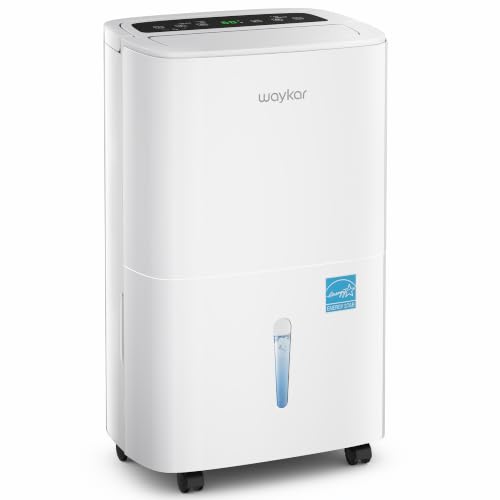
The Waykar 140 Pints Energy Star Dehumidifier is what you reach for when a basement dehumidifier runs almost every day. Rated for up to 6,500 square feet and 140 pints of daily extraction, it is comparable in size to the Waykar 145-pint pump model above, but skips the built-in pump in favor of standard continuous drain hose operation.
The 90-degree automatic air swing spreads treated air across the room, which helps in wide or irregularly shaped basements where a single airflow direction leaves dead spots. Self-drying on the coils is a useful touch for anyone who has dealt with musty smells from a unit that sat idle. The trade-off versus the pumped model is straightforward: you need a gravity-friendly drain path.
Where It Delivers
- 90-degree auto swing distributes treated air across wide basement layouts.
- Self-drying mode helps reduce residual moisture and odors on the coils.
- Energy Star rating targets lower operating cost over the life of the unit.
Points To Note
- No built-in pump, so the drain hose needs a downward path to a floor drain or sump.
- 140-pint output and 6,500-square-foot rating can be overkill in smaller finished basements.
Quick Facts
Who Will Love This
Homeowners with a consistently damp, large basement who want to run a dehumidifier daily without spiking the utility bill.
Swap It Out When
The Waykar 145 Pints 6,500 Sq. Ft Dehumidifier with Pump is the better fit when no gravity drain path is available and water must be pushed upward.
The AEOCKY 4500 Sq.Ft 80 Pint/Day Dehumidifier with Pump is a serious step up from the 50-pint AEOCKY model earlier in the list. The combination of an 80-pint daily extraction ceiling, 4,500-square-foot coverage, and a built-in pump makes it a strong fit for damp multi-room basements where a standard gravity drain is not practical.
The intelligent humidistat adjusts output to hold a target humidity level, which reduces the on-and-off cycling that wears out compressors over time. An upward-pumping drain capability opens up installations that other units simply cannot handle, such as a basement dehumidifier feeding a sink one floor up. Compared to the Waykar 140-pint workhorse, this one is smaller in raw output but more flexible in where it can drain.
Positive Takeaways
- Built-in pump allows upward drain routing when no floor drain is available.
- 4,500-square-foot coverage handles large finished basements and multi-room layouts.
- Intelligent humidistat holds a target humidity level without constant user input.
Practical Considerations
- Pump-equipped models typically cost more than gravity-drain units of similar capacity.
- 80-pint capacity is plenty for a home, but it trails the largest Waykar units in extreme conditions.
Perfect Match For
Homeowners with a finished multi-room basement and no nearby floor drain who want pump-driven continuous drainage.
Reach For A Different Pick When
The Waykar 150 Pint 2025 Energy Star Dehumidifier with Pump makes more sense for warehouse-scale coverage above 6,500 square feet.
The Waykar 150 Pint 2025 Energy Star Dehumidifier with Pump is the biggest Waykar on this list, rated for up to 7,000 square feet of coverage and 150 pints of daily moisture removal. It is built for the kinds of spaces where a residential unit simply runs out of breath, including large basements, commercial floors, and storage facilities that need steady humidity control.
Auto defrost keeps the coils working through cooler months, and a smart auto comfort mode adjusts output based on the conditions in the room. The integrated pump supports both a drain hose and an internal tank, so installation can flex around the building’s plumbing. Compared to the AEOCKY 4500 model, the trade-off is size and noise, but the upside is meaningful commercial-grade throughput.
What It Does Well
- 150-pint daily capacity supports consistently humid, large or commercial spaces.
- Auto defrost keeps the coils clear in cooler basement and garage temperatures.
- Smart auto comfort mode adjusts output without constant manual input.
- Built-in pump supports both drain hose routing and the onboard tank.
Potential Drawbacks
- Size and weight make placement a planned decision rather than a quick move.
- Compressor noise is significant at full output, so placement away from living space is wise.
- Owners commonly report a learning curve to dial in the auto comfort mode for specific rooms.
At A Glance
Built With In Mind
Property managers, workshop owners, and homeowners with very large basements who need serious throughput and pump-driven drainage.
Not Your Match When
The AEOCKY 50 Pint/Day Ultra-Quiet 40dB Dehumidifier fits a normal household better when the priority is quiet operation in a living area.
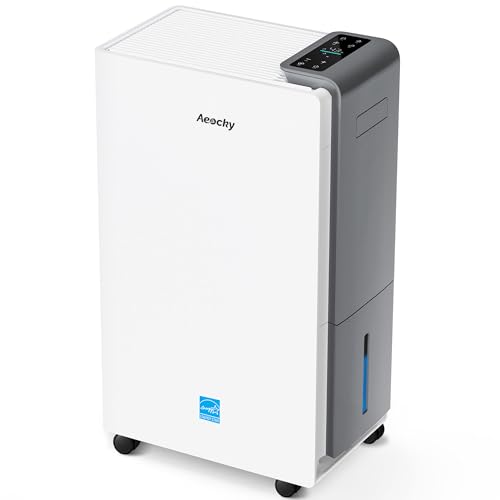
The AEOCKY 5500 Sq.Ft 80 Pint/Day Dehumidifier closes the list with a focus on efficiency. It carries an Energy Star Most Efficient 2025 designation, which is a more selective tier than the standard Energy Star label, and it pairs that rating with 80 pints of daily removal across up to 5,500 square feet.
For households planning to run a dehumidifier through most of the year, the efficiency angle matters more than people expect. Lower wattage at similar output means less heat dumped into the room and lower monthly operating cost. Compared to the AEOCKY pump model earlier, this one trades the integrated pump for higher coverage and a stronger efficiency story, with drain hose operation as the standard drainage method.
Useful Strengths
- Energy Star Most Efficient 2025 designation targets lower long-term operating cost.
- 5,500-square-foot coverage handles large basements and open living areas.
- 80-pint daily output suits sustained, year-round humidity control.
A Few Limitations
- No built-in pump, so installation depends on a gravity-friendly drain path.
- Higher upfront cost is typical for units in the Most Efficient tier.
- You may find the size limits placement options in tight utility rooms.
Whose Shelf It Belongs On
Cost-conscious homeowners with a large, consistently damp basement who plan to run a dehumidifier most days of the year.
Where A Sibling Pick Shines
The AEOCKY 4500 Sq.Ft 80 Pint/Day Dehumidifier with Pump is the better fit when an upward drain route is required and a built-in pump is needed.
What Matters Most Before Choosing Dehumidifiers With Drain Hose
Match Capacity To The Actual Space
Pint-per-day ratings tell you how much water a unit can pull under specific lab conditions (usually 95°F and 90% relative humidity, which means very hot and very humid). Real basements are rarely that extreme, so a 21-pint unit can serve a small finished basement while a 140-pint unit handles an oversized, consistently damp space. Picking a dehumidifier that is too small means it runs constantly without catching up, which shortens compressor life. Picking one that is too large means wasted money on capacity the room never uses.
Decide Between Pump And Gravity Drain
A continuous drain hose is the headline feature on this list, but the way it drains varies. A gravity drain needs a downward path to a floor drain, sump, or sink. A built-in pump can push water upward, which opens up basement corners, second-floor laundry rooms, and other spots where a gravity drain is impossible. If you can place the unit near a low drain, a gravity-drain model is simpler. If your only drain is higher up, the pump versions pay for themselves quickly.
Think About Noise And Placement
Compressor-based dehumidifiers generate real noise, and even a 40 dB rating is audible in a quiet bedroom. Semiconductor units are quieter but extract less water. For a basement mechanical room, noise rarely matters. For a dehumidifier that shares a living area or a bedroom, the AEOCKY 50-pint 40 dB model or the PSOS semiconductor unit will likely be a better match.
Look At Filter And Coil Maintenance
Any dehumidifier that runs often will collect dust on its intake filter. Owners commonly report that a quick vacuum every few weeks keeps airflow and extraction efficiency up. Units with self-drying or auto-defrost features reduce the musty smell that can build up on idle coils, which is worth prioritizing in a basement that does not run 24/7.
Key Considerations Across These Picks
Wrong Turns To Avoid
A common mistake is choosing a unit by room size alone, without thinking about how the drain hose will actually route. A small, quiet bedroom dehumidifier with a tank-only design will frustrate anyone who expects continuous drainage. The other frequent slip-up is ignoring the pump question; if the only nearby drain is uphill, a gravity-only model simply will not work without siphoning tricks. Match the unit to the plumbing reality of the room, not just the square footage on the box.
When Paying More Pays Off
Higher-tier dehumidifiers in this list earn their place in a few specific ways. Energy Star Most Efficient models reduce operating cost over years of near-constant use. Pump-equipped units add installation flexibility that cheaper gravity-drain models cannot match. Larger commercial-grade Waykar units handle square footage that mid-size residential picks cannot keep up with. For a small bedroom used seasonally, the premium tier is hard to justify. For a whole basement running daily, it is usually the smarter spend.
Frequently Asked Questions
How do I set up continuous drainage on a dehumidifier with a drain hose?
Most units include a hose port on the back or side. Attach a standard garden hose or the included drain hose, route it to a floor drain or sink, and make sure the hose runs continuously downward. For pump-equipped models, the hose can route upward or over longer distances.
Can a dehumidifier with a drain hose run unattended?
Yes. With a properly routed drain hose, the unit empties itself as it runs. The internal tank fills only as a backup if the hose is disconnected, and most units include an auto shut-off to protect the compressor in that situation.
Where should I place a dehumidifier for the best results?
Place the unit in the dampest area of the room, ideally with a few feet of clearance on all sides for airflow. Keep it away from walls and furniture that block the intake, and make sure the drain hose has a clear, downward path to its destination.
Do I need a pump or is a gravity drain enough?
A gravity drain works when the hose can run continuously downward to a floor drain, sump, or sink. A pump is required when the only available drain sits higher than the dehumidifier, or when the drain path is long and complex.
How often do dehumidifier filters need cleaning?
For a unit running regularly, a quick vacuum of the intake filter every two to four weeks is typical. Dusty basements and workshops may need more frequent attention, while lightly used units can go longer between cleanings.
Bottom Line
A dehumidifier with a drain hose is one of those appliances you set up once and then forget about, which is exactly the point. Match the capacity to the room, decide whether a built-in pump is necessary, and choose a noise level that fits the space. Any of the eight picks above will keep dampness in check; the right one simply depends on the room you are trying to save.