

A damp basement that smells like wet cardboard, a bedroom window fogging up every winter morning, or a finished attic that never quite dries out, those are the daily frustrations a properly sized dehumidifier solves. Picking the right one comes down to matching the unit’s pint capacity (the amount of moisture it can pull from the air in 24 hours, measured in pints) and room coverage to your specific space, not chasing the highest number on the box. The list below covers compact units for tight rooms, mid-size workhorses for open living areas, and heavy-pull models built for basements and crawlspaces.
The Shortlist At A Glance

PSOS 98 OZ Quiet Dehumidifier for Home, Basement, Bathroom, Bedroom (Gray)

FreAire 34Pint Dehumidifier for 2500Sq.Ft With 6.56ft Drain Hose

Kesnos 120 Pint Energy Star Dehumidifier for Basement with Drain Hose, 6500 Sq. Ft
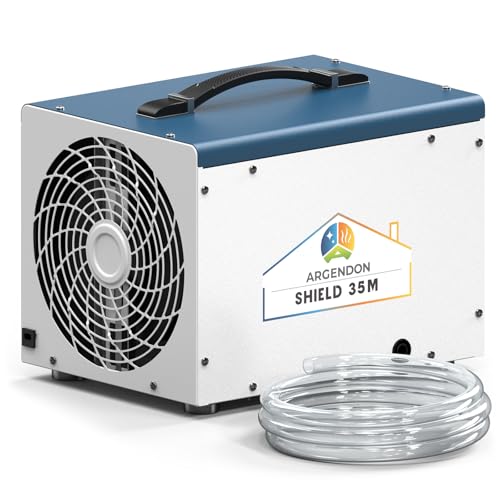
ARGENDON Dehumidifier for Crawlspace and Commercial 5-Year Limited Warranty
Kesnos 80 Pints Energy Star Dehumidifier for Home w/Front Humidity Display
Kesnos 30 Pints Energy Star Dehumidifier for Home, Ultra-Quiet 36 dB, 2500 Sq. Ft.

Kesnos 150 Pint Dehumidifier for Basement with Drain Hose, 7,500 Sq. Ft.
The Details Behind The Selections
The PSOS unit is built for smaller spaces where portability matters more than raw extraction power. A 98-ounce tank means fewer trips to the sink in a typical bedroom, and the thermoelectric (a small, quiet Peltier-style cooling element rather than a compressor) design keeps noise low enough to leave running overnight without disturbing light sleepers.
Coverage tops out around 1,000 square feet, so it works well for a small apartment or a single room rather than an open floor plan. Compared to the FreAire and Kesnos compressor models later in the list, this one trades pulling power for a footprint you can tuck onto a shelf. The ambient lighting feature is a nice touch for a nursery or reading nook.
Real-World Strengths
- Near-silent operation makes it bedroom-friendly
- 7-color ambient light doubles as a soft nightlight
- Auto shut-off protects the unit when the tank fills
- Lightweight enough to move between rooms easily
Things To Consider
- Tank empties more often in heavy-humidity rooms
- Thermoelectric design pulls less moisture than a compressor in basements
Made For
Bedrooms, nurseries, and small dens where low noise and a compact footprint matter more than maximum extraction.
Swap It Out When
The FreAire 34Pint Dehumidifier suits you better if your humidity problem is a damp living room or a basement that needs serious daily pulling power.
The FreAire sits in that comfortable middle ground between a bedroom-friendly compact unit and a full basement workhorse. A 34-pint daily extraction capacity handles 2,500 square feet comfortably, which covers most open-concept living areas and finished basements without straining.
The included 6.56-foot drain hose is the quiet hero of the package. You can route it to a floor drain, sump pump, or utility sink and forget about emptying a tank, which is a real quality-of-life upgrade over the PSOS model. Versus the Kesnos 80- and 120-pint units further down, this one runs on a smaller motor and uses less power, though it won’t keep up with a saturated basement after heavy rain.
Where It Helps
- Continuous drain option eliminates manual tank emptying
- Reaches up to 2,500 square feet, enough for most living areas
- 34-pint daily capacity suits moderately damp spaces
- Compressor design pulls moisture in cooler basement temps better than thermoelectric units
Points To Note
- Louder than the PSOS model in quiet rooms
- Not built for very large basements above 3,000 square feet
- Filter needs periodic cleaning to maintain airflow
Key Specs
Right Fit For
Homeowners with finished basements or open living areas up to 2,500 square feet who want set-and-forget drain operation.
A Better Fit Elsewhere
The Kesnos 120 Pint Energy Star model is a stronger match for full basements over 3,000 square feet with persistent heavy dampness.
The Kesnos 120-pint is the workhorse your basement has been waiting for. Pulling up to 120 pints of moisture per day, it handles spaces up to 6,500 square feet, which is a serious step up from the FreAire and the PSOS units earlier in this list.
Energy Star certification means the unit is independently verified to use less electricity than standard models, so running it 24/7 in a basement won’t blow up the utility bill. The adjustable humidity range of 30% to 80% gives you granular control, and the included drain hose lets you set it up near a floor drain. The catch is size: this is a full-size appliance, not something you tuck behind an end table.
Strong Points
- 120-pint daily capacity tackles severe basement dampness
- Energy Star certified for lower operating costs
- 6,500 sq. ft. coverage handles large basements and open layouts
- Wide 30% to 80% humidity range suits different climate goals
Trade Offs
- Large footprint requires dedicated floor space
- Compressor noise noticeable in living areas
- Overkill for single bedrooms or small apartments
Best Suited To
Homeowners with full basements, large workshops, or moisture-prone areas that need sustained heavy extraction without monthly operating-cost surprises.
Look Elsewhere When
The Kesnos 30 Pints Energy Star model is a smarter pick for apartment dwellers, since the 120-pint capacity is more machine than a 1,500 sq. ft. space actually needs.
The ARGENDON is the heavy commercial unit in the lineup, designed for crawlspaces, workshops, and utility areas where you want to install something once and stop thinking about it. A 70-pint daily capacity paired with 115 CFM (cubic feet per minute) air output means it cycles air through tight spaces efficiently.
The 5-year limited warranty stands out in a category where most residential units ship with 1- or 2-year coverage. Compared to the Kesnos 80-pint home unit, this one trades a quieter home-grade finish for a more rugged housing meant to live in a crawlspace. For most living areas, it’s overkill, but for its intended environment, it earns its place.
Practical Advantages
- 5-year limited warranty for long-term peace of mind
- 115 CFM air output circulates air in tight crawlspaces
- 70-pint daily capacity handles persistent moisture problems
- Suitable for basements, bathrooms, and commercial spaces up to 1,000 sq. ft.
Worth Noting
- Industrial design doesn’t blend into finished living spaces
- Installation in crawlspaces may need a dedicated outlet
- Higher upfront cost than residential-only models
Feature Snapshot
Whose Shelf It Belongs On
Homeowners with crawlspace moisture, garage workshops, or anyone outfitting a commercial space that needs long-warranty reliability.
Skip It When
The Kesnos 80 Pints Energy Star model fits better in a finished basement where quieter home-grade operation and lower energy use matter more than industrial build.
The Kesnos 80-pint hits a useful middle ground between the FreAire 34-pint and the Kesnos 120-pint models. An 80-pint daily extraction capacity covers up to 5,500 square feet, which suits multi-room households and medium basements.
The front humidity display is the small detail that makes a daily difference. You can glance across the room and see the current reading, then adjust the 5% increment settings without crouching down to read a top-mounted panel. Energy Star certification keeps operating costs in check, and the low/high fan options let you tune noise versus speed. Versus the ARGENDON commercial unit, this one looks and sounds more like a home appliance.
Strengths Worth Knowing
- Front-facing humidity display visible across the room
- 5,500 sq. ft. coverage suits most mid-to-large homes
- 5% humidity adjustments let you dial in comfort precisely
- Two fan speeds balance noise and air movement
Some Limits To Know
- Not built for severe flood-zone basements above 6,000 sq. ft.
- Compressor noise louder than the FreAire in quiet hours
Quick Facts
Perfect Match For
Multi-room households and homeowners with mid-size basements who want a balance of capacity, efficiency, and an easy-to-read front display.
Reach For A Different Pick When
The Kesnos 150 Pint Dehumidifier is the better call for whole-basement coverage above 6,000 square feet with persistent water intrusion.
At 36 dB (a sound level roughly equivalent to a quiet library), this Kesnos is the quietest compressor unit in the lineup and noticeably more refined than the FreAire model earlier in this list. A 30-pint daily capacity covers 2,500 square feet, sized for living rooms, large bedrooms, and home offices.
Energy Star certification and a target humidity of 30% (lower than the 40% floor on some competing units) mean the room feels drier and stays drier without extra run time. Compared to the PSOS compact unit, you trade portability for serious pulling power. The honest read is that 36 dB is impressively quiet for a compressor, though still audible if you press your ear to the grille.
The Good Stuff
- 36 dB operation is one of the quietest compressor units available
- Targets 30% RH (relative humidity) for a noticeably drier feel
- 2,500 sq. ft. coverage suits most living rooms and bedrooms
- Energy Star certified for lower electricity draw
Honest Caveats
- 30-pint capacity may underserve severe basement moisture
- Filter cleaning needed every few weeks in dusty rooms
Who Should Grab It
Light sleepers, home office workers, and living-room dwellers who want compressor-grade pulling power without the usual compressor noise.
Not Your Match When
The Kesnos 80 Pints Energy Star model is a smarter choice for whole-house coverage or basements where the 30-pint capacity would run nonstop.
The Kesnos 150-pint is the largest-capacity model in the lineup, built for serious basement environments up to 7,500 square feet. A 150-pint daily extraction rate means it cycles through serious moisture loads without running constantly.
You get a front humidity display similar to the 80-pint model and a MIRAGE sleep mode that drops fan noise for nighttime use. The included drain hose supports continuous operation in basements with a nearby drain. Versus the 120-pint Kesnos, the extra 30 pints of daily capacity and additional 1,000 square feet of coverage make sense only if your space is at the upper end. For most homes, the 120-pint is plenty.
Useful Strengths
- 150-pint daily capacity is the highest in the lineup
- 7,500 sq. ft. coverage handles very large basements
- Front humidity display for at-a-glance readings
- MIRAGE sleep mode quiets the unit overnight
- Adjustable 30% to 80% humidity range for flexible control
Points To Keep In Mind
- Most homeowners don’t need this much capacity
- Larger footprint than the 80- or 120-pint models
- Higher compressor output means more heat exhaust into the room
Feature Rundown
Who Will Love This
Homeowners with very large basements above 6,000 square feet or those in flood-prone regions who need maximum daily extraction.
Where A Sibling Pick Shines
The Kesnos 120 Pint Energy Star model is a more right-sized choice for typical 4,000 to 5,500 square foot basements where the 150-pint capacity is excessive.
What To Weigh Before Choosing A Dehumidifier For Large Rooms
Match Capacity To Square Footage, Not Hype
Pint-per-day ratings look impressive, but they only matter relative to your space. A 1,000 sq. ft. bedroom setup with mild humidity rarely needs more than a 30-pint unit, and oversizing means short cycling (the unit turning on and off rapidly because it hits its target humidity almost immediately) and wasted energy. For basements above 3,000 square feet, look at 70 to 150-pint models. Mid-size living areas around 2,500 square feet land in the 34-pint sweet spot, like the FreAire.
Compressor Vs. Thermoelectric, And Why It Matters
Thermoelectric dehumidifiers (the PSOS unit earlier) are small and quiet but pull less moisture, especially in cooler rooms below 65°F. Compressor models (every other unit in this list) handle cold basements and heavy loads far better. If your damp space is below 60°F in winter, a compressor is non-negotiable.
Drain Setup Beats Tank Emptying
Manual tank emptying gets old fast in a busy basement. Any unit with a drain hose, including the FreAire, the Kesnos 120-pint, and the Kesnos 150-pint, can run continuously to a nearby floor drain. If a drain is available, prioritize that feature over tank size.
Noise Tolerance Shapes The Pick
Bedrooms and living rooms benefit from quieter models, like the Kesnos 30 Pints at 36 dB or the PSOS thermoelectric unit. Basements and workshops can absorb more compressor noise, which is where the larger Kesnos and ARGENDON models earn their place.
Key Considerations Across These Picks
Pitfalls Shoppers Hit
The most common mistake is matching a small dehumidifier to a saturated basement and expecting it to keep up, which only leads to a constantly full tank and a room that never dries out. Equally common is buying a 150-pint industrial unit for a 1,000 square foot apartment, wasting both money and floor space. Always check the room’s typical temperature too, since thermoelectric units lose effectiveness below 65°F.
Where The Extra Money Goes
Higher-tier models like the Kesnos 150-pint and the ARGENDON commercial unit add larger compressors, more durable housings, longer warranties, and energy-efficient compressors that meet Energy Star standards. The upgrade pays off when you actually need the capacity, whether that’s a flood-prone basement or a workshop running year-round. For a single bedroom or small den, the premium isn’t worth it.
Frequently Asked Questions
How Many Pints Do I Need For A Large Room?
For spaces between 1,500 and 2,500 square feet, a 30 to 34-pint model is the typical fit. Above 3,000 square feet or in basements with persistent dampness, you’ll want 70 pints or more.
Can I Run A Dehumidifier Continuously?
Yes, most compressor models are designed for 24/7 operation, especially when connected to a drain hose. Just clean the filter on schedule and make sure the exhaust air has somewhere to vent.
Where Should I Place A Dehumidifier In A Large Room?
Central placement with a few feet of clearance on all sides gives the best airflow. Avoid corners, behind furniture, or directly against exterior walls in winter, since cold surfaces reduce efficiency.
Do Energy Star Models Really Save Money?
Energy Star certified units, like the Kesnos 30-, 80-, and 120-pint models, use independently verified efficient compressors and smart defrost cycles. Over a year of continuous basement use, the savings on your electric bill add up.
What Humidity Level Should I Aim For?
Most homes feel comfortable between 40% and 50% relative humidity. Below 40% can dry out wood furniture and irritate sinuses, while above 60% encourages mold and dust mites.
Final Takeaway
A good dehumidifier for large rooms comes down to honest matching: the right pint capacity for your square footage, a compressor if the space runs cool, and a drain setup if you don’t want to babysit a tank. The PSOS handles quiet bedrooms, the FreAire covers mid-size living areas, the Kesnos 80- and 120-pint models handle most basements, and the 150-pint and ARGENDON units answer the call for serious moisture loads. Pick the smallest unit that can still keep up, and you’ll get drier air without the extra cost.