


Small apartments create a specific humidity problem. Steam from a single bathroom, a drying rack in the bedroom, and a galley kitchen with no proper vent can push moisture levels past comfort without warning. A good dehumidifier pulls that dampness back down, protects wooden floors from cupping, and keeps closet mold from getting a foothold. This roundup covers eight options sized for compact living, from quiet Peltier units that sit on a nightstand to compressor models with built-in pumps for serious moisture loads.
The Main Contenders

Waykar 145 Pints 6,500 Sq. Ft Dehumidifier with Pump

PSOS 98 OZ Dehumidifier for Home (1000 sq.ft)

FreAire 34Pint Dehumidifier for 2500Sq.Ft

Waykar 34 Pints 2025 Energy Star Dehumidifier

Waykar 150 Pint 2025 Energy Star Dehumidifier with Pump

TABYIK 35 OZ Small Dehumidifier (Grey)

TABYIK 35 OZ Small Dehumidifier (Blue)
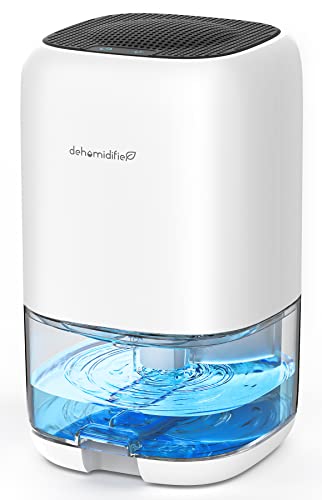
TABYIK 35 OZ Small Dehumidifier (White)
The Waykar 145-pint compressor unit is overkill for a 400-square-foot studio, and that’s exactly why it earns a spot here. Renters with chronically damp ground-floor units, converted basements, or lofts with poor ventilation need extraction power that small Peltier models simply can’t deliver. This one pulls moisture through a built-in pump and 6,500-square-foot capacity claim, then pushes water out through a drain hose, so you set it once and forget it instead of emptying tanks every eight hours.
Where the smaller PSOS unit on this list whispers, this one hums like a small refrigerator. You may find the operating noise noticeable in a sleeping area, so placing it in a utility closet, kitchen nook, or basement corner works better. The footprint and weight mean it’s not something you move around weekly.
Useful Touches
- Built-in pump removes the need to manually empty a reservoir during long runs
- Drain hose included, letting you route condensation toward a floor drain or sink
- Adjustable humidity range from 30% to 80% suits living spaces and storage areas alike
- High extraction rate means faster results in rooms that stay damp for weeks
Things To Consider
- Size and weight make it tough to relocate between rooms frequently
- Compressor noise is louder than Peltier alternatives, so placement matters
Key Specs
Right Fit For
Renters with ground-floor apartments, basement conversions, or chronic moisture issues who need set-and-forget extraction power.
Reach For A Different Pick When
The PSOS 98 OZ unit fits small bedroom or bathroom duty better, since compressor models like this Waykar are too loud for sleep-adjacent placement.
The PSOS 98 OZ lands in a useful middle ground that the smaller TABYIK units can’t quite match. It uses dual semiconductor condensation, a thermoelectric method that pulls heat across a cool surface to condense moisture without a compressor, which keeps noise low enough to run in a bedroom. The 98-ounce tank and 1,000-square-foot coverage make it the right size for a one-bedroom apartment where dampness seeps in from a bathroom or laundry closet.
Seven color ambient lighting turns a utilitarian appliance into something that doesn’t visually clash with a bedside setup. You can cycle through hues or shut the light off entirely if it’s distracting at night. Compared to the Waykar 145-pint pickup, this PSOS trades raw power for quiet operation and a much smaller physical footprint.
What Earns Its Place
- Semiconductor design keeps noise low enough for sleep-adjacent rooms
- 98-ounce tank reduces the number of mid-week empty trips
- Visible humidity display helps you track conditions at a glance
- Auto shut-off prevents overflow when the tank fills
- Color ambient light adds a soft nightlight function for bedrooms
Honest Caveats
- Semiconductor extraction is slower than compressor models in heavy dampness
- Performance drops noticeably in cooler rooms below roughly 60°F
- Tank still requires manual emptying on a regular schedule
Made For
Apartment dwellers who want bedroom-friendly moisture control without the compressor hum that larger units produce.
Look Elsewhere When
Severe basement moisture points you toward the Waykar 150 Pint 2025 Energy Star Dehumidifier with Pump, since Peltier-style units like this PSOS cannot keep up with standing water problems.
FreAire’s 34-pint dehumidifier sits in the compressor category without ballooning into a commercial-grade monster. The 2,500-square-foot coverage claim is generous, but in real apartments it works well for studio and one-bedroom units with moderate moisture issues. A 6.56-foot drain hose ships in the box, so you can route condensate to a sink or floor drain and skip the tank-emptying routine entirely.
The trade-off is compressor noise, which is louder than the PSOS semiconductor pickup above and noticeably more present than the TABYIK Peltier models lower on this list. Run it during the day, in a kitchen, or in a hallway closet where you won’t notice the hum. The 34-pint extraction rating is honest, not marketing fluff, so a damp bathroom dries out in a few hours rather than overnight.
Key Advantages
- 34-pint daily extraction handles moderate moisture issues quickly
- Drain hose included for hands-off continuous operation
- Coverage rating accommodates open-plan studio layouts
Worth Noting
- Compressor noise makes bedroom placement less ideal
- Heavier than thermoelectric options at this size
- Some owners report the tank setup feels finicky when switching between manual and continuous drain
Best Suited To
Studio and one-bedroom renters who want compressor-grade extraction without stepping up to a 145-pint commercial unit.
Not Your Match When
Bedroom-only use favors the TABYIK 35 OZ Small Dehumidifier (Grey), which runs quieter during sleep hours.
Waykar’s updated 34-pint model is the one to consider when electric bills matter. A rotary compressor is a more efficient design than older reciprocating compressors, so the unit sips power relative to its extraction output. The 0.62-gallon tank is on the smaller side, but you get both auto and manual drainage options, which means you can hook up a hose for continuous use or empty the tank when portability matters more.
Spec-wise it covers up to 2,000 square feet, which overshoots a typical apartment but gives you headroom for humidity-heavy days. Compared to the FreAire 34Pint earlier in this list, the build feels more polished, and the 30% to 80% adjustable range gives finer control. It still hums like a compressor, so quiet rooms will hear it working.
A Favorable Mix
- Rotary compressor design keeps energy use lower than older compressor styles
- Auto and manual drainage options cover both permanent and portable setups
- Adjustable humidity range from 30% to 80% accommodates seasonal shifts
- Compact body for a 34-pint compressor unit
Trade Offs
- Smaller 0.62-gallon tank needs frequent emptying without a drain hose
- Compressor noise is audible in quiet rooms
Quick Facts
Who It Suits Best
Energy-conscious renters running a dehumidifier daily who want compressor power without the commercial-tier electric draw.
Swap It Out When
Sleep-sensitive setups point you toward the PSOS 98 OZ Dehumidifier, since this Waykar’s compressor is louder than Peltier or semiconductor alternatives.
The 150-pint Waykar is the bigger sibling to the 145-pint unit reviewed earlier, and it brings a smart auto comfort mode to the table. The pump drains water upward and outward, which means you can route the hose to a sink, window drain, or bucket without relying on gravity alone. Auto defrost protects the coils in cooler basement corners where temperatures dip overnight.
That said, this is a serious appliance, not a discreet bedroom helper. The 7,000-square-foot coverage rating is meant for whole floors and basements, so it shines in studio basements, lofts, or ground-floor apartments where one large unit replaces multiple smaller ones. Compared to the FreAire, you get more extraction and a pump, at the cost of size.
Why It Works Well
- Pump-enabled drainage sends water upward, easing installation in unusual layouts
- Smart auto comfort mode adjusts output based on ambient humidity
- Auto defrost extends operation in cooler spaces
- 150-pint daily extraction handles heavy moisture loads without strain
Points To Note
- Physical size demands floor space that smaller apartments may not have
- Compressor noise is significant, so bedroom placement is unrealistic
Perfect Match For
Ground-floor and basement apartment dwellers dealing with persistent high humidity who want a single unit covering the whole space.
Skip It When
Compact urban apartments are better served by the Waykar 34 Pints 2025 Energy Star Dehumidifier, which delivers similar control without the bulk.
TABYIK’s 35 OZ unit uses Peltier technology, a thermoelectric cooling method with no compressor, so the 28 dB operating level genuinely disappears into background sound. The 280-square-foot coverage is honest for a bedroom, a small bathroom, or an RV, and the 35-ounce tank keeps the auto shut-off from triggering mid-day during light humidity. Seven color light options double as a soft nightlight, which is a small but welcome touch in a child’s room or studio.
Don’t expect this to fix a flooded basement. Peltier units work best in enclosed, smaller spaces, and their extraction rate is modest. For an apartment with one or two problem rooms, however, this is the kind of appliance you leave on a shelf, notice only when the tank fills, and otherwise forget about.
Everyday Advantages
- 28 dB operation makes it genuinely sleep-friendly
- Lightweight body moves easily between bedroom, bathroom, and RV
- Seven color light adds ambient function without needing a second appliance
- Auto shut-off protects against overflow during unattended runs
Soft Spots
- Peltier extraction slows noticeably in cooler rooms
- Tank requires manual emptying every few days in humid conditions
Who Should Grab It
Light sleepers and bedroom-first apartment dwellers who want silent moisture control in a room under 300 square feet.
Where Another Pick Suits Better
Whole-apartment humidity calls for the FreAire 34Pint Dehumidifier, which covers far more square footage with stronger extraction.
The blue version of the TABYIK 35 OZ shares every spec with the grey unit above: 35-ounce tank, 280-square-foot coverage, 28 dB Peltier operation, and the same auto shut-off protection. What changes is the housing color, which sounds trivial but matters in spaces where the unit sits out rather than tucked away. A blue body blends into a coastal-themed bedroom or a child’s play corner better than grey or white.
The light, compact form factor also makes this a natural fit for RV use or small studio bathrooms. Compared to the PSOS semiconductor unit, the TABYIK runs quieter but extracts moisture more slowly. For a tightly enclosed space, that trade-off is the right one.
The Practical Payoff
- Compact body fits on RVs, narrow shelves, and tight bathroom counters
- Blue housing complements playful or coastal decor without clashing
- Auto shut-off gives you confidence leaving the unit unattended
Room For Improvement
- Coverage tops out around 280 square feet, so larger rooms need a bigger unit
- Like other Peltier models, performance dips in cold environments
Feature Snapshot
Who Will Love This
RV travelers and renters with one humidity-prone room who want an appliance that disappears into the space rather than dominating it.
Where A Sibling Pick Shines
Living-room-scale coverage calls for the PSOS 98 OZ Dehumidifier, which handles up to 1,000 square feet with similar quiet operation.
The white TABYIK rounds out the trio of Peltier 35 OZ models and is the one to pick if a clean, neutral look matters most. A white housing blends into Scandinavian decor, white-painted shelving, and minimal apartment setups where a grey or blue unit would stand out. The internal specs mirror the blue and grey siblings exactly: 35-ounce tank, 280-square-foot coverage, 28 dB operation.
Functionally, none of the three color variants out-perform the others. The honest read is that you’re choosing an aesthetic finish, not a performance tier. Compared to the compressor-based FreAire earlier, this TABYIK trades extraction strength for silence and portability, which is exactly the right call for a small, quiet space.
The Value In It
- White finish suits minimalist or Scandinavian-style interiors
- Same quiet 28 dB operation as the other TABYIK variants
- Lightweight enough to move between rooms without strain
Some Limits To Know
- Peltier extraction rate is modest compared to compressor models
- No drain option means manual tank emptying stays part of the routine
Whose Shelf It Belongs On
Design-conscious renters who want a quiet bedroom dehumidifier that doesn’t visually interrupt a curated space.
A Better Fit Elsewhere
Heavy, building-wide moisture is better handled by the Waykar 150 Pint 2025 Energy Star Dehumidifier with Pump, which has the extraction power this TABYIK lacks.
What To Weigh Before Picking A Dehumidifier For Your Apartment
Apartment humidity usually traces back to a handful of sources. A bathroom without a strong vent, a kitchen that traps steam from stovetop cooking, a ground-floor unit sitting on a concrete slab, or a bedroom closet against an exterior wall are all common trouble spots. The right dehumidifier matches the room size, the moisture load, and your tolerance for noise. Getting those three right matters more than chasing the highest pint rating on the box.
Room Size And Moisture Load
Square footage drives the choice more than anything else. Rooms under 300 square feet, including most bedrooms and small bathrooms, do well with Peltier units like the TABYIK 35 OZ or a semiconductor model like the PSOS 98 OZ. Open-plan studios and one-bedroom units with combined living and dining areas benefit from 30-pint compressor models such as the FreAire or the Waykar 34 Pints 2025. Anything larger, including basement-style apartments, calls for a 145- or 150-pint pump-equipped unit.
Compressor Versus Thermoelectric
Compressor dehumidifiers extract moisture faster and handle heavier humidity, but they hum audibly and weigh more. Thermoelectric units, which include Peltier and semiconductor designs, run near-silently and weigh just a few pounds, at the cost of slower extraction. For bedrooms, the silent option wins. For basements and damp ground-floor units, compressor power is worth the noise.
Tank Capacity And Drainage
A larger onboard tank means fewer trips to the sink, but a drain hose turns the unit into a set-and-forget appliance. Pump-equipped models push water upward through a hose, which is useful when the nearest drain sits higher than the unit. Smaller Peltier models rarely offer continuous drainage, so plan on weekly emptying.
Features That Earn Their Cost
Auto shut-off protects against overflow when you’re away. A built-in humidity display takes the guesswork out of adjusting settings. Color ambient lights are mostly cosmetic, but they double as a nightlight, which adds real value in a child’s room. For most apartment dwellers, the right balance is a quiet unit with auto shut-off and a readable display, not a feature-heavy model designed for commercial loads.
Key Considerations Across These Picks
Where Shoppers Go Wrong
Plenty of renters shop by pint rating alone and end up with a 150-pint commercial unit humming in a 400-square-foot studio. The opposite mistake is buying a small Peltier unit to handle a basement water problem it cannot touch. Matching extraction rate to room size, then choosing between compressor and thermoelectric based on whether noise matters, tends to produce better results than chasing specs.
When Paying More Pays Off
Higher-tier models earn their premium through pumps, auto defrost, smart humidity modes, and larger coverage ratings. None of that matters in a 250-square-foot bedroom, but it transforms the experience in a chronically damp ground-floor unit. If a single dehumidifier can replace two smaller ones or eliminate manual tank emptying, the upgrade often pays for itself in convenience.
Frequently Asked Questions
What Size Dehumidifier Do Apartments Need?
Most apartments between 300 and 1,000 square feet work well with a 30 to 35-pint compressor unit or a 98-ounce semiconductor model. Smaller bedrooms and bathrooms can run on a 35-ounce Peltier unit without overworking it.
How Loud Are These Dehumidifiers?
Peltier and semiconductor models run at roughly 28 dB, which is quieter than a soft whisper. Compressor dehumidifiers produce more noise, comparable to a small refrigerator, so placement away from sleeping areas is wise.
Where Should A Dehumidifier Sit In An Apartment?
Place the unit in the room with the strongest moisture source, such as a bathroom, kitchen, or bedroom with poor ventilation. Keep it a few inches from walls for airflow and route any drain hose toward a sink or floor drain when possible.
Do Dehumidifiers Use A Lot Of Electricity?
Modern compressor units with Energy Star ratings use far less power than older models. Peltier units consume under 1 kWh per day, which makes them inexpensive to run continuously in a small room.
Can A Dehumidifier Help With Mold And Musty Smells?
A dehumidifier reduces the moisture that allows mold to grow, which in turn helps with musty odors. Existing mold needs cleaning, since the appliance alone cannot remove growth already present on walls or fabrics.
Closing Remarks
The right dehumidifier for a small apartment depends less on raw specs and more on matching the room, the noise tolerance, and the moisture source. Quiet Peltier units handle bedrooms beautifully, while compressor and pump-equipped models earn their place in chronically damp units. Pick the category that fits your space, and the rest of the decision usually sorts itself out.