


Moisture inside a parked RV is its own kind of punishment. You seal up at night, the cooking, breathing, and showering add water vapor to the air, and by morning the windows fog and the cushions feel clammy. The right dehumidifier pulls that moisture before it ever settles into soft furnishings or electronics. After sorting through compact thermoelectric units, compressor rigs sized for home basements, and passive absorber tablets, this lineup covers the realistic range of RV scenarios, from weekenders in mild climates to full-timers dealing with serious damp.
The Lineup, Simplified

PLUSCENT 1,500 Sq. Ft 21 Pint Dehumidifier with Drain Hose

PSOS 98 OZ Quiet Dehumidifier with 7 Color Ambient Light

FreAire 34 Pint Dehumidifier for 2,500 Sq. Ft with 6.56ft Drain Hose

DampRid Drop-In Tablet Refill Pack, 4 Pack

TABYIK 35 OZ Dehumidifier for RV, Grey, 28dB

TABYIK 35 OZ Dehumidifier for RV, Blue, 28dB
TABYIK 35 OZ Dehumidifier for RV, White, 28dB
Why These Options Stand Out
Compressor-based dehumidifiers like the PLUSCENT extract moisture the way a home unit does, using a refrigerated coil rather than the quieter but weaker thermoelectric modules found in smaller RV picks. That matters in a large Class A or a fifth wheel where the air volume easily outpaces a 35 oz bedroom gadget.
Pair it with a continuous drain hose and the tank becomes a non-issue for full-timers. You route the hose to a gray tank or a bucket you empty weekly, then forget about it. It also gives you roughly 1,500 square feet of coverage, so an open-concept coach with a kitchen, living area, and bedroom all flowing into one space benefits most.
Positive Points
- Compressor system pulls moisture faster than any thermoelectric option here, so a damp coach dries in hours rather than overnight.
- Included drain hose turns a constant tank-emptying chore into a set-and-forget setup.
- Coverage up to 1,500 sq. ft. suits open floor plans where one small unit would always be playing catch-up.
- 160W draw is moderate for a compressor unit, easier on inverter budgets than older home dehumidifiers.
Practical Considerations
- Compressors generate heat and hum, so this lands in a utility bay or bedroom corner rather than next to a pillow.
- Size and weight are closer to a household dehumidifier, which means a permanent mounting spot in the RV is worth planning.
Key Specs
Whose Rig It Belongs On
Large motorhome owners who treat the RV as a second home and need real moisture extraction across a wide open floor plan.
Reach For A Different Pick When
The PSOS 98 OZ model fits better for anyone who wants a quieter semiconductor unit placed in a bedroom without compressor noise.
The PSOS leans into dual semiconductor condensation, which is a quieter, lighter alternative to compressor dehumidifiers, paired with a 7-color ambient light ring. For a bedroom, that combination is the point. The unit pulls moisture without the rumble that wakes light sleepers, and the light doubles as a soft nightlight for kids or guests.
The 98 oz tank is generous for the format, and the built-in humidity display takes the guesswork out of whether the unit is actually doing anything. Coverage rated around 1,000 sq. ft. sounds optimistic for a thermoelectric unit, so a single bedroom or small living area is the realistic fit.
What Pays Off
- Semiconductor design runs quiet enough to sit on a nightstand or shelf without disturbing sleep.
- 98 oz reservoir means most nights end before the auto shut-off triggers, reducing daily emptying.
- Onboard humidity readout replaces the usual guess-and-check approach to running the unit.
- Ambient lighting gives the unit a second job as a mood light, useful in an RV where every surface pulls double duty.
Small Caveats
- Semiconductor units work best in moderately humid, warmer interiors and lose efficiency below roughly 59°F.
- The tank still needs a manual dump, and on extended trips you will empty it more often than the drain-equipped PLUSCENT or FreAire.
Right Fit For
RVers who camp in mild to warm climates and want a quiet, light-touch unit in the bedroom.
Consider Something Else When
Boondocking in cool, damp forests, where the FreAire compressor unit handles the moisture load that thermoelectric gear cannot reach.
Where the PLUSCENT covers a normal RV comfortably, the FreAire steps in for severe conditions: tropical storms, gulf-coast humidity, or a coach that doubles as a workshop or craft space. At 34 pints per day and 2,500 sq. ft. of claimed coverage, this is the largest pull in the list and the only realistic option for full-timers who treat the RV as a primary residence in muggy regions.
The 6.56 ft drain hose is a step up from the shorter hoses bundled with most home dehumidifiers, and that extra length gives flexibility in routing to a sink trap, a dedicated bucket, or a gray tank. The trade-off is bulk and weight, and the compressor’s signature hum.
A Strong Showing
- 34 pint daily extraction handles the worst humidity spikes without running the tank dry in a day.
- 2,500 sq. ft. rating future-proofs the purchase if you ever move it into a stick-built basement.
- Long drain hose reaches awkward drain points without extension fittings.
Trade-Offs To Consider
- The compressor cycle is louder than any semiconductor unit here, so bedroom placement is usually a bad call.
- Size makes it more of a stationary install than a stow-and-go travel companion.
Feature Snapshot
Best Suited To
Full-time RVers in humid southern or coastal regions who want extraction rates a small thermoelectric unit cannot match.
Skip It When
You mostly camp in dry climates or keep a tight sleeping schedule, where a TABYIK 35 OZ unit stays out of the way.
DampRid tablets are a different product category altogether, since they are passive moisture absorbers, not powered machines, and they belong in storage bays, closets, under-sink cabinets, and anywhere you do not want a cord or a tank. Drop one into a reusable container, and it quietly pulls water from the air until it dissolves.
For an RV, the practical use is layered. A powered dehumidifier handles the main living space, while DampRid tablets cover spots the powered unit cannot reach: the pass-through storage, the plumbing bay, the linen closet. Fragrance-free matters for RVs with sensitive noses or fabric that absorbs scents.
Where It Delivers
- Zero power draw, so the tablets keep working while the coach sits unplugged in storage.
- Completely silent, perfect for spots where even a 28 dB thermoelectric unit is too much.
- 4-pack covers a few small zones for months before a refill is needed.
- Fragrance-free formula avoids overpowering scents in a tight, enclosed cabin.
Some Limits To Know
- Tablets cannot keep up with active humidity in a large open living area, they supplement rather than replace.
- Need the separate reusable container to function as a moisture trap, sold apart from this refill pack.
Perfect Match For
RVers who need moisture control in storage bays, closets, and other unpowered spaces the main dehumidifier never reaches.
Where Another Pick Suits Better
The PSOS 98 OZ unit handles the actual living space, since DampRid tablets alone cannot dry a damp coach interior.
TABYIK’s grey 35 OZ unit uses Peltier thermoelectric cooling (a solid-state module that cools one side while heating the other, condensing moisture on the cool surface) at 28 dB, which is essentially a soft whisper. For anyone sleeping within a few feet of the unit, that low noise floor is the entire reason to pick it.
Daily extraction tops out around 16 oz in a small closed room, so think of this as a personal dehumidifier for a single bedroom rather than a whole coach solution. The grey finish blends with most modern RV interiors, and the auto shut-off keeps the unit safe if you forget to empty the tank.
The Helpful Details
- 28 dB operation is one of the quietest specs in the list, suitable for shelf placement near the bed.
- 35 oz tank is small but matches the extraction rate, so you empty it on a predictable schedule.
- Auto shut-off protects the unit when the tank fills overnight.
- Low energy draw, well under 1 kWh per day, easy on solar setups and small inverters.
Points To Note
- Realistic coverage sits near the 280 sq. ft. mark, so multi-room use requires more than one unit.
- Peltier performance drops as the cabin cools, so winter camping in unheated RVs is a weak spot.
Quick Facts
Made For
Light sleepers in travel trailers and campervans who want bedroom moisture control without compressor noise.
Look Elsewhere When
You need whole-coach coverage, where the PLUSCENT 21 Pint unit pulls moisture at a scale this thermoelectric design cannot match.
The blue variant of the TABYIK 35 OZ shares the same Peltier engine and 28 dB rating as the grey model, with the only meaningful change being the cabinet finish. That finish detail matters more than it sounds in a tight RV interior, where a blue unit may blend better with a coastal palette than a neutral grey.
It still works as a bedroom-targeted unit with the same 280 sq. ft. coverage, the same 7-color mood light, and the same low energy use. The 7-color ambient ring is helpful for nightlights in kids’ bunks or as a soft visual cue when the unit is running.
Features That Help
- Identical whisper-quiet 28 dB operation as the grey TABYIK, so bedroom placement is still realistic.
- Cabinet finish suits coastal or nautical interiors where grey reads as cold.
- 7-color ambient ring provides soft lighting without taking up a separate outlet.
Minor Gripes
- Peltier performance dips below roughly 59°F, so shoulder-season camping without a furnace limits results.
Who Should Grab It
RVers with lighter, coastal-style interiors who want a quiet bedroom unit that visually matches the décor.
Swap It Out When
You want an under-sink or closet helper instead, where the DampRid Drop-In Tablet Refill Pack fits the bill.
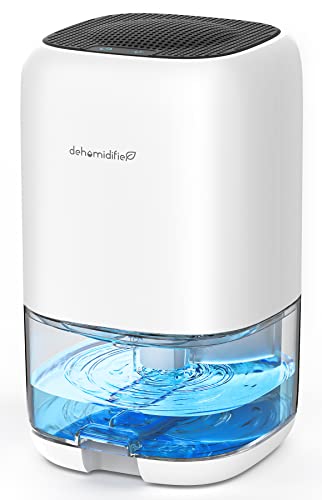
The white TABYIK is the original of the trio, with the same 35 oz tank, 28 dB Peltier engine, and 280 sq. ft. room-scale coverage as its grey and blue siblings. The white cabinet tends to suit minimalist travel trailers and modern van conversions where neutral palettes dominate the interior.
It is the longest-running option on the list, which is worth something on its own. Long availability means replacement parts, color-matched add-ons, and a track record you can actually search. For first-time RV dehumidifier shoppers, that stability can outweigh the small color choice.
A Few Highlights
- Quiet 28 dB operation keeps the bedroom calm without compressor rattle.
- Neutral white finish suits most RV interiors and van builds.
- Low daily energy use stays friendly to solar banks and small inverters.
Points To Keep In Mind
- Peltier extraction tops out around 16 oz per day, so a single unit suits one room, not a whole coach.
- Tank needs manual emptying, and you may find yourself doing it more often in coastal or rainy conditions.
Who It Suits Best
Travel trailer owners and van lifers who want a quiet, neutral-colored unit for a single sleeping or living space.
A Better Fit Elsewhere
You face heavy coastal humidity and need stronger extraction, where the FreAire 34 Pint compressor unit steps in.
What Matters Most When Picking an RV Dehumidifier
Match the Tech to the Cabin Temperature
Compressor dehumidifiers like the PLUSCENT and FreAire pull moisture well in any temperature a typical RV reaches, from chilly shoulder-season nights to tropical afternoons. Peltier thermoelectric units like the three TABYIK models and the PSOS 98 OZ rely on a temperature differential, so they slow down sharply below roughly 59°F. Camp often in cool, damp forests or run an unheated rig in winter, and a compressor model earns its keep.
Size the Unit to the Space, Not the Spec Sheet
Manufacturers often list coverage at maximum dehumidification rates, which assumes a sealed, warm room. In an RV, doors open, slides go out, and airflow mixes the whole coach. A 280 sq. ft. bedroom unit realistically handles one enclosed room, and a 1,500 sq. ft. compressor unit handles a single open-concept coach. You may find the listed coverage generous by 30-40% in real RV conditions.
Decide on Tank vs. Drain Hose Early
Tank-only units need daily attention, which is fine for weekend trips but tedious for full-timing. Drain hose models, including the PLUSCENT 21 Pint and FreAire 34 Pint, route water to a sink, gray tank, or bucket and run unattended. RVers who leave the rig for daytime activities benefit most from a drain-equipped compressor unit.
Think About Noise, Especially at Night
Compressor dehumidifiers hum, and that hum is fine during the day but noticeable at night. Thermoelectric units run nearly silent, which is why the TABYIK trio and the PSOS are popular for bedroom placement. Decide where the unit lives before deciding on the technology, since moving a noisy compressor to the bedroom ruins sleep fast.
Key Considerations Across These Picks
Pitfalls Shoppers Hit
Treating RV coverage claims like home coverage claims is the most common mistake. RV volume is smaller than square footage suggests, with vaulted ceilings and open lofts, so a unit rated for 1,000 sq. ft. may struggle in a 400 sq. ft. coach with high ceilings. The honest read is to size up, not down, when matching a unit to your space. Another trap is buying a thermoelectric unit for cold-weather camping, where the Peltier module barely condenses any water below 59°F.
When Paying More Pays Off
The price gap between a 35 oz Peltier unit and a 34 pint compressor unit reflects the underlying technology, not just capacity. Compressor models cost more because they move more moisture in harsher conditions and run unattended via drain hose. The upgrade is worth it for full-timers, coastal campers, and anyone storing the RV in humid climates. Weekend campers in dry regions do not need that headroom, and a budget Peltier unit handles the job fine.