


A wet crawl space quietly undermines the rest of a house. Moisture seeps into floor joists, feeds mold colonies, and pushes that stale, earthy smell into living areas above. A dehumidifier with a built-in pump solves the drainage headache that stops most people from installing one in the first place, since you don’t have to manually empty a tank or rely purely on gravity-fed routing. The seven units below cover the full range, from compact residential picks to heavy commercial workhorses, so the right match comes down to square footage, how often the space floods, and whether you want remote monitoring or hands-off automation.
The Choices Worth Comparing

FreAire 34Pint Dehumidifier with 6.56ft Drain Hose

ALORAIR Smart Wi-Fi 120 Pints Energy Star Crawlspace Dehumidifier
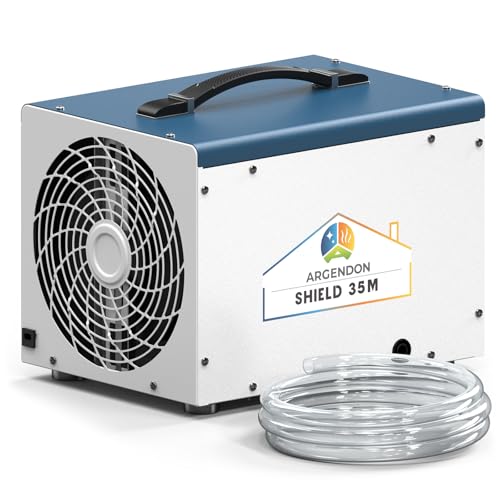
ARGENDON Crawlspace & Commercial Dehumidifier 5-Year Warranty
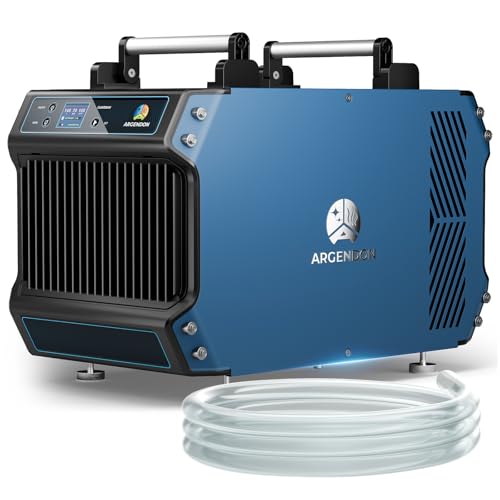
ARGENDON 180 Pints Crawlspace Dehumidifier with Pump, ETL

ARGENDON Crawl Space Dehumidifier with Pump and Drain Hose

ALORAIR Sentinel HS35 70 Pints Crawlspace Dehumidifier

ALORAIR Sentinel HD55S Gold 120 Pints Energy Star Dehumidifier
More Details On Our Top Picks
Most people overcomplicate crawl space drying. The FreAire 34Pint Dehumidifier keeps it simple by pairing a daily moisture removal rating (measured at 95°F and 90% relative humidity) with a 6.56-foot drain hose, so the condensate (the water the unit pulls from the air) can route out to a sump, floor drain, or condensation pump without you touching a tank. Rated coverage stretches up to 2,500 square feet, which means a typical residential crawl space sits well within its working envelope.
Where the FreAire earns its place at the top of the budget-friendly list is the install path. There is no proprietary app to wrestle with, no metal-cased industrial housing, just a compact residential form factor that you set, hose, and largely forget. Homeowners in mild-to-moderate humidity zones will find it does the steady background work without complaint.
What Makes Sense
- Comes with a 6.56-foot drain hose, eliminating the need to buy fittings separately for a basic gravity drain
- Up to 2,500 sq. ft. rated coverage handles most small and mid-size crawl spaces comfortably
- Compact residential footprint slides into tight access points and low-clearance areas
- Simpler control layout is approachable for first-time dehumidifier owners
Worth Noting
- Residential-grade casing, not designed for frequent handling or rough commercial environments
- Drain hose is gravity-dependent, so the outlet point must sit lower than the unit
Who It Suits Best
First-time owners in moderately humid climates with a single small-to-mid residential crawl space, where a straightforward hose-out install beats feature lists.
Look Elsewhere When
You want a rugged metal housing for harsh conditions, in which case the ALORAIR Sentinel HD55S Gold covers similar capacity with a more durable build.
The crawl space is the part of the house nobody wants to crawl into, which is exactly why the ALORAIR Smart Wi-Fi model exists. It pairs a 120-pint-per-day extraction rate (at saturation, meaning under the most extreme humidity conditions the unit is rated for) with built-in Wi-Fi, so humidity readings, setpoint changes, and runtime alerts land on your phone instead of requiring a flashlight trip under the floor. Energy Star certification signals it sips power relative to its capacity, important since this unit may run nearly continuously in coastal or high-water-table regions.
For a tech-forward homeowner, the remote visibility is the real differentiator. You spot a humidity spike after a storm before musty odors migrate upstairs, and you adjust the target without a trip to the crawl space. The trade-off shows up in price, since you are paying for the wireless module as much as the compressor.
Everyday Perks
- Wi-Fi app control lets you monitor humidity, tweak setpoints, and check status from indoors
- 120-pint capacity handles larger crawl spaces and chronically damp basements
- Energy Star rating helps manage long-term operating cost during near-continuous use
- Built-in pump simplifies condensate routing when a floor drain is not nearby
Trade Offs
- Wi-Fi setup requires a stable signal reach into the crawl space, which may need a mesh extender in deeper homes
- Pricier than non-connected equivalents with the same moisture removal
Right Fit For
Homeowners with larger crawl spaces, frequent humidity swings, or second homes where remote monitoring prevents weekend surprises.
Consider Something Else When
You only need basic moisture control in a small space, in which case the FreAire 34Pint delivers the pump-and-hose essentials at a lower tier.
Long warranty terms in dehumidifiers matter because compressors and coils take a beating from continuous operation. The ARGENDON Crawlspace and Commercial unit backs its build with a 5-year limited warranty, which is uncommon in this category and tells you the manufacturer expects the hardware to keep running. At 70 pints per day with 115 CFM (cubic feet per minute) airflow, it covers up to 1,000 square feet, landing it squarely in mid-size residential territory.
Set-and-forget is the theme here. Once installed and routed to a drain, the unit cycles on its own, and the warranty means you’re not stress-testing your investment every season. Compared to the FreAire, you trade some residential simplicity for a more durable build intended for rougher service.
Real-World Strengths
- 5-year limited warranty signals long-term reliability and reduces replacement anxiety
- 115 CFM airflow moves air effectively across crawl space joists and piers
- 70-pint extraction suits 1,000 sq. ft. coverage in mid-size residential spaces
- Designed for both crawlspace and commercial use, giving flexibility if needs change
Small Caveats
- Warranty registration terms vary, so the registration paperwork matters for full coverage
- Heavier than plastic-cased residential units, requiring a sturdy mounting location
Best Suited To
Homeowners who plan to install once and leave the unit running for years, valuing warranty protection over connectivity features.
Swap It Out When
You want app-based remote monitoring, in which case the ALORAIR Smart Wi-Fi 120 Pints offers similar capacity with connectivity built in.
There is a level of dampness that residential dehumidifiers cannot touch, and that is the market the ARGENDON 180 Pints was built for. Rated at 180 pints per day at 90°F and 90% relative humidity with coverage up to 2,300 square feet, this is industrial-grade extraction in a form factor that still routes through a crawl space access. The ETL listing (a North American safety certification mark) gives inspectors and code-conscious homeowners a recognizable safety compliance point to point to.
The pump is the quiet hero here. High-volume extraction without an active condensate pump means you’d be emptying a tank multiple times a day, which is impractical in a sealed crawl space. With the pump routing water out, the unit can run continuously, doing the heavy lifting that smaller residential models cannot.
Standout Benefits
- 180-pint extraction rate handles extreme humidity and standing-moisture scenarios
- 2,300 sq. ft. coverage suits large crawl spaces, multi-section basements, and light commercial sites
- Integrated pump enables continuous operation without manual tank emptying
- ETL safety listing supports code and inspection requirements
Points To Keep In Mind
- Commercial sizing means a larger physical footprint, harder to position in shallow crawl spaces
- Operating cost is higher due to the larger compressor, so sensible for genuinely heavy moisture loads rather than routine drying
Made For
Contractors, property managers, and homeowners with chronically flooded or extremely damp crawl spaces where lighter units simply cannot keep up.
Skip It When
Your crawl space is mid-size with seasonal moisture, where the ARGENDON Crawl Space Dehumidifier with Pump and Drain Hose handles the workload at a lower tier.
The mid-size gap between the 34-pint residential units and the 180-pint commercial workhorse is where many homeowners actually live, and the ARGENDON Crawl Space Dehumidifier with Pump sits comfortably there. It removes 35 pints per day under AHAM conditions (a standardized test at 80°F and 60% relative humidity used for fair comparisons) and 70 pints at saturation, covering up to 1,000 square feet, with an energy-efficient design that the manufacturer highlights as a key operating-cost advantage.
The pump and drain hose pairing here is the practical draw. Many crawl spaces lack a floor drain or gravity outlet, and a built-in pump pushes condensate up and out to wherever your plumbing can receive it. Compared to the higher-volume 180-pint sibling, you trade extraction headroom for noticeably lower energy draw.
A Favorable Mix
- Efficient operation helps offset the long-run cost of continuous dehumidification
- Built-in pump eliminates the need for a separate condensate pump accessory
- Mid-size 70-pint capacity covers typical 1,000 sq. ft. residential crawl spaces
- Suitable for basements and crawl spaces, with flexible placement options
A Few Limitations
- Lower saturation capacity than commercial-tier units, so high-flood scenarios may outpace it
- Drain routing still requires planning to find a suitable discharge point
Who Should Grab It
Homeowners with a single mid-size residential crawl space or basement, where energy-conscious operation matters more than maximum extraction power.
Where Another Pick Suits Better
You need an app and remote monitoring on top of mid-size capacity, in which case the ALORAIR Smart Wi-Fi 120 Pints adds connectivity to a similar workload class.
Some crawl spaces barely give you room to kneel, and squeezing a full-size unit through the access hatch rules out a lot of otherwise fine picks. The ALORAIR Sentinel HS35 was designed for exactly that constraint. Rated at 35 pints per day under AHAM and up to 70 pints at saturation, with 115 CFM airflow and coverage to 1,000 square feet, it delivers mid-size numbers in a body that fits where bigger models physically cannot.
For older homes with shallow pier foundations, low-clearance crawl spaces, or narrow access points, the HS35 removes a real installation friction. The trade-off is that a more compact housing usually means lighter-duty internal components, so the unit fits the residential-to-light-commercial range rather than heavy industrial service.
Positive Takeaways
- Compact form factor handles low-clearance and narrow-access installations
- 70-pint capacity covers up to 1,000 sq. ft., matching the mid-size workload class
- 115 CFM airflow supports good air movement across a residential crawl space
- Versatile placement in basements, bathrooms, bedrooms, and closets beyond the crawl space
Room For Improvement
- Compact housing generally means lighter internal components than full commercial units
- Not suited to extreme or chronic flooding where 100+ pint extraction is required
Perfect Match For
Homeowners with shallow, narrow, or access-restricted crawl spaces where a larger commercial unit simply will not fit.
Reach For A Different Pick When
You have an open, accessible crawl space and want the most durable metal housing, where the ALORAIR Sentinel HD55S Gold steps up with a tougher build.
Plastic-cased residential units handle clean basements, but crawl spaces are a different environment. The ALORAIR Sentinel HD55S Gold brings a metal outer casing to the same 120-pint class, rated to remove 55 pints per day at AHAM and 120 pints at saturation, covering up to 1,300 square feet. The metal housing shrugs off the bumps, dust, and accidental contact that come with working in tight utility spaces, and it makes surface cleaning a simple wipe-down rather than a delicate job.
Energy Star certification is the supporting actor here, since a 120-pint-class unit pulling continuous duty in a hot, humid climate can dominate a utility bill. The HD55S is positioned for the rough-service side of the residential-to-commercial divide, and it closes out this list as the heavy-duty option for shoppers who prioritize build over connectivity.
Real Benefits
- Metal outer casing withstands rougher crawl space conditions and is easy to wipe clean
- 120-pint capacity suits 1,300 sq. ft. coverage, between the HS35 and the 180-pint commercial tier
- Energy Star rating helps manage power draw during long runtime cycles
- cETL safety listing supports inspection and code-conscious installs
Potential Compromises
- Heavier than plastic-cased residential units, so the mounting platform matters
- Lacks the Wi-Fi connectivity of the newer ALORAIR Smart Wi-Fi model
Built With In Mind
Homeowners with larger, accessible crawl spaces who want durable construction and Energy Star efficiency without paying for app-based features.
Where A Sibling Pick Shines
Remote monitoring matters to you more than metal housing, in which case the ALORAIR Smart Wi-Fi 120 Pints offers the same capacity with a connected app experience.
Picking the Right Crawl Space Dehumidifier With Pump
A crawl space dehumidifier differs from a basement model in two important ways: it has to handle cooler air and tighter clearances, and it almost always needs a pump to move condensate out since gravity drains are rare under a house. Capacity matters, but the right size depends on square footage, the moisture source, and how often the space floods.
Match Capacity to Square Footage and Moisture Load
For most residential crawl spaces under 1,000 square feet with seasonal humidity, a 30 to 50-pint-per-day AHAM-rated unit is plenty. For chronically damp spaces, high water tables, or larger footprints, 70 to 120 pints at saturation is the more honest rating to compare. Commercial-grade picks above 150 pints exist for properties with active water intrusion rather than just humidity.
Built-In Pump vs. Gravity Drain
A built-in pump (sometimes called a condensate pump) pushes water vertically and across longer horizontal runs, so you can route to a sump, utility sink, or exterior discharge. A gravity drain only works when the outlet sits below the unit. In nearly every crawl space install, a pump is the practical choice, and it removes the chore of emptying a collection tank.
Casing, Filtration, and Long-Term Service
Metal-cased units tolerate rough handling and wipe clean easily, while plastic housings keep weight and cost down. Coils need periodic access for cleaning, and a washable filter saves on replacement cost over years of near-continuous operation. Warranty length is a useful signal: 5-year coverage suggests the manufacturer expects the compressor to last, while 1-year terms are the category default.
Connectivity and Monitoring
Wi-Fi and app integration let you see humidity, set targets, and receive alerts without going under the house. For primary residences, this is convenience. For second homes, rental properties, or homes where you travel, it is closer to essential, since a humidity spike can go unnoticed for weeks otherwise.
Key Considerations Across These Picks
Common Shopping Slip Ups
The most frequent mistake is matching a dehumidifier to square footage without considering moisture source. A space with active water intrusion needs a much higher-capacity unit than the same square footage with only ambient humidity. Another trap is overlooking the drain path entirely: a unit without a working pump or gravity outlet becomes a tank-emptying chore that usually gets ignored, and ignored tanks lead to shutdowns and rising humidity.
Where The Extra Money Goes
Higher-tier models add capacity, durable metal housings, Energy Star efficiency, and connectivity. The upgrade pays off when the crawl space is large, the climate is harsh, or you cannot easily access the unit for routine checks. For a small, well-sealed crawl space with a basic drain path, a mid-range residential model delivers the same end result without the extra cost.
Frequently Asked Questions
How many pints per day do I need for a crawl space?
Most residential crawl spaces under 1,000 square feet do well with a 30 to 50-pint AHAM-rated unit. Larger or chronically damp spaces benefit from 70 to 120 pints at saturation.
Do I really need a built-in pump?
In a typical crawl space, yes. Without a pump, you depend on a gravity drain sitting below the unit, which is rare under a house. A pump pushes condensate up and out to a practical discharge point.
Can I install a crawl space dehumidifier myself?
Many homeowners handle the install themselves: mount or place the unit, attach the drain hose or pump line, set the humidistat, and plug it in. Running a new dedicated electrical circuit is the one step that usually calls for a licensed electrician.
How often does the filter need cleaning?
A washable filter typically wants a quick rinse every 1 to 3 months, more often in dusty crawl spaces or during first-time operation when the system is pulling down years of accumulated moisture.
Will a dehumidifier with a pump run continuously?
Yes, and that is the point. Continuous operation is how the unit keeps humidity below the target setpoint. A working pump removes the need to babysit a tank.
Bottom Line
The right crawl space dehumidifier with a pump comes down to matching capacity to the moisture you actually face, not the square footage alone. Smaller, well-sealed spaces do well with a residential model and a basic drain hose. Larger or chronically damp foundations need higher-capacity picks, durable housings, and ideally some form of remote monitoring. Any of the seven above will do honest work; the best fit is the one that matches your space, your climate, and how often you want to think about it.