


Cold basements and chilly bedrooms create a different kind of moisture problem than steamy summer rooms. Standard refrigerant dehumidifiers lose pulling power as the temperature drops, and a unit that handled July humidity may stall out by November. Run a unit in a freezing garage, and you risk frozen coils, water damage to the surrounding room, or a machine that simply refuses to keep pulling moisture from the air. The picks below lean on compressor-based systems rated for low-temperature operation, paired with auto-defrost cycles, gravity or pump drainage, and adequate tank or hose capacity to keep water moving without babysitting.
The Shortlist At A Glance
The Shortlist At A Glance

Waykar 145-Pint High Efficiency Dehumidifier with Pump

PSOS 98 OZ Dehumidifier with Ambient Light

FreAire 34-Pint Dehumidifier with Drain Hose
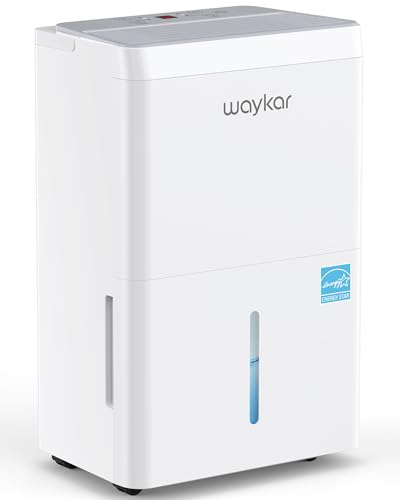
Waykar 120-Pint Energy Star Dehumidifier

Waykar 34-Pint 2025 Energy Star Dehumidifier

Waykar 150-Pint 2025 Energy Star Dehumidifier with Pump
Waykar 80-Pint 2025 Energy Star Dehumidifier
The Picks, Examined More Closely
Built for serious moisture loads, this Waykar pulls up to 145 pints per day and targets spaces as large as 6,500 square feet. The built-in pump pushes water upward and out through the included drain hose, which makes it a strong fit for basements where the floor drain sits higher than the unit. Compared to the PSOS pick later in this list, it trades bedroom-friendly quietness for raw pulling power, and it shows in the spec sheet.
The 30% to 80% adjustable humidity range gives you room to dial in conditions for storage rooms, gyms, or finished living areas. Owners running it in unheated basements will want to keep the room above the manufacturer’s stated minimum operating temperature so the coils do not ice over mid-cycle. Pair it with a thermostat-controlled space heater in truly cold zones.
Well-Handled Touches
- Integrated pump moves water vertically to a remote drain, removing the daily tank-empty routine in basements with awkward layouts.
- 145-pint daily capacity handles open-concept lower levels that overwhelm smaller 34-pint units.
- Wide humidity setpoint range lets you match conditions for storage versus everyday living without cycling constantly.
- Included drain hose gives you a true set-and-forget installation when paired with a floor drain or sump.
Things To Consider
- Its size and weight make it a semi-permanent install rather than a unit you drag from room to room each morning.
- Airflow noise lands well above the 40 dB mark of the dedicated quiet model, so living areas will notice it.
- Very cold basement corners may still trigger coil freeze-ups, which is common with compressor units at the edge of their operating range.
Key Specs
Who Will Love This
Owners of large, damp basements or light commercial spaces who want pump-based drainage and do not mind a heavier install.
Look Elsewhere When
The PSOS 98 OZ Dehumidifier is a better fit for a quiet bedroom or a small office where compressor noise would be a constant distraction.
The PSOS unit takes a different path from every Waykar on this list, using dual semiconductor condensation (a quiet, heat-pump-style moisture extractor) instead of a heavy compressor. That makes it light enough to move between a bedroom, bathroom, and small office without strain. Coverage tops out near 1,000 square feet, so it earns its place in tight layouts rather than open basements.
The 98-ounce tank is larger than most compact models, and the auto shut-off keeps the unit from spilling when the reservoir fills. Owners in genuinely cold rooms should know that thermo-electric designs pull less water as temperatures fall, so performance in an unheated garage in January will be modest. For a heated bedroom with a humidity display and a 7-color ambient light, it covers the daily case well.
Where It Excels
- Near-silent operation makes it livable in bedrooms, nurseries, and home offices.
- 98-ounce reservoir stretches runtime between empties, which is generous for the compact class.
- Lightweight build lets you carry it upstairs or across a hallway without help.
- Auto shut-off protects flooring and surfaces when the tank reaches capacity.
Worth Noting
- Thermo-electric extraction weakens as room temperature drops, so very cold basements will see limited pull.
- No continuous drain option means manual emptying in high-humidity rooms.
- 1,000 sq. ft. coverage shrinks fast in open layouts with high ceilings.
Key Specs
Built With In Mind
Light sleepers and apartment dwellers who want quiet moisture control in a single room without installing a drain line.
Swap It Out When
The Waykar 145-Pint High Efficiency Dehumidifier suits you better if the priority is a damp basement or a large open room that a compact unit cannot keep up with.
FreAire’s 34-pint sits in the comfortable middle of this list, sized for rooms up to 2,500 square feet. The compression system pulls moisture at a useful clip without the bulk of a 145-pint commercial unit. The included 6.56-foot drain hose gives you a real continuous-drain option, which the PSOS pick above does not.
For most basements and finished lower levels, 34 pints is the daily-driver tier: enough capacity to matter, small enough to roll between rooms. Cold-weather operation is the usual compressor caveat, so below about 41°F the coils can frost and the cycle pauses. In a heated space or a basement with a small heater, it hums along without complaint.
Where It Delivers
- 2,500 sq. ft. coverage handles typical mid-size basements without struggling.
- Included 6.56-foot drain hose supports gravity drainage to a floor drain or sump.
- 34-pint daily pull lands in the sweet spot for most single-room dehumidification needs.
- Manageable weight and size compared to higher-capacity commercial units.
Points To Note
- Like most compressor dehumidifiers, it slows in cold rooms and can frost up at the low end of its range.
- No built-in pump, so the drain hose depends on gravity routing to a lower outlet.
- Plastic housing and tank need careful handling during emptying to avoid stress cracks over time.
Key Specs
Right Fit For
Homeowners with a mid-size basement or open living area who want set-and-forget drainage and a balanced capacity rating.
Consider Something Else When
The Waykar 80-Pint 2025 Energy Star Dehumidifier is the better call for multi-room coverage where 34 pints cannot keep up.
This Waykar leans into living-area usability with a 40 dB noise rating, which is closer to a soft library than to a typical basement workhorse. Coverage reaches 6,000 square feet at 120 pints per day, so it does not sacrifice pulling power for quietness. The Smart Auto Comfort Mode reads the room and shifts the target humidity on its own.
The 30% to 80% RH range keeps it flexible for storage rooms, bedrooms, and laundry areas alike. Drainage options include both a tank and a hose outlet, so you can plumb it to a floor drain or empty manually. In very cold basements, expect the usual compressor slowdown, so a space heater or a warmer room helps it stay in its efficiency zone.
A Few Strong Suits
- 40 dB operation keeps it livable in finished basements, bedrooms, and bonus rooms.
- Energy Star rating helps trim ongoing electricity costs during long winter runs.
- Smart Auto Comfort Mode reduces manual tweaks once you set your target range.
- Dual drainage options (tank or hose) support both portable and permanent setups.
Honest Caveats
- Even at 40 dB, the compressor cycles audibly in very quiet rooms once the room settles at night.
- Built-in humidistat sensors can drift over years, so periodic recalibration against a separate hygrometer is sensible.
Best Suited To
Households that want serious moisture control in a finished living space without the constant drone of a traditional basement unit.
Reach For A Different Pick When
The Waykar 150-Pint 2025 Energy Star Dehumidifier with Pump is the stronger choice for spaces where you need built-in pump drainage rather than gravity-only hose routing.
The 2025 Waykar 34-pint slots in as a compact-but-efficient option for smaller basements and living rooms. The 0.62-gallon tank is the smallest in this roundup, but the dual-mode drainage (auto or manual) keeps it usable in a permanent install. Rotary compressor tech keeps the footprint trim without gutting the daily pull.
Capacity is set for 2,000 square feet, which fits most apartments and small basements with room to spare. Owners running it in cold spaces should monitor for early auto-defrost cycles, which can interrupt continuous operation in the lowest temperature ranges. In a heated room, it cycles predictably and quietly.
Useful Touches
- Compact rotary compressor build fits tight storage spots and small laundry rooms.
- Energy Star rating supports long winter use without spiking the utility bill.
- Dual auto or manual drainage adapts to whether you plumb a hose or empty the tank.
- 34-pint pull pairs with a 2,000 sq. ft. rating suited to typical apartment footprints.
Some Limits To Know
- The 0.62-gallon tank needs frequent manual emptying when a drain hose is not connected.
- Smaller air intake can clog faster in dusty basements, so a quick vacuum of the grille every few weeks helps airflow.
Perfect Match For
Apartment dwellers and small-home owners who want efficient compressor dehumidification without dedicating half a closet to the unit.
Skip It When
The FreAire 34-Pint Dehumidifier is a sensible alternative for spaces up to 2,500 sq. ft. where a slightly larger reach and a longer drain hose are preferable.
Topping the capacity chart, the 150-pint Waykar covers up to 7,000 square feet and pairs that pull with an internal pump and a dedicated auto-defrost mode. The defrost cycle is the cold-weather feature that matters most: it keeps the coils from icing up in chilly basements and workshops, where a standard compressor would stall. The Smart Auto Comfort Mode handles the humidity setpoint so you do not have to babysit it.
Both drain hose and tank options are included, so installation is flexible whether you have a floor drain nearby or not. For whole-home dehumidification in cold climates, this is the unit built to stay on the job through a long winter. Just plan for a dedicated outlet and a stable spot, since it is not something you move around casually.
Everyday Perks
- Auto-defrost prevents coil freeze-ups in unheated basements and cold storage rooms.
- Built-in pump supports upward drainage to a sink, window drain, or remote sump.
- 7,000 sq. ft. coverage handles whole-floor dehumidification in larger homes.
- Smart Auto Comfort Mode adjusts the setpoint based on room readings, reducing manual cycling.
Points To Keep In Mind
- Its footprint is closer to a small appliance than a portable unit, so plan placement before delivery.
- Compressor noise will register in upstairs living areas if installed near quiet zones.
Who Should Grab It
Owners of large homes, finished basements, or light commercial spaces that need serious pulling power with cold-weather auto-defrost.
A Better Fit Elsewhere
The Waykar 120-Pint Energy Star Dehumidifier suits you better if 40 dB quiet operation is the priority over the additional capacity and pump.
The 80-pint Waykar splits the difference between the 34-pint and 145-pint models, covering 5,000 square feet with steady compressor output. It is the workhorse pick for multi-room homes that need more pull than a small unit, without stepping up to commercial-grade hardware. Energy Star certification supports long winter cycles on a sensible electrical draw.
The 30% to 80% humidity range and the included drain hose let you install it once and leave it alone. The honest read is that this model makes the most sense for households that sit between the apartment tier and the whole-basement tier, which is a wider group than most roundups acknowledge. Cold-weather performance is solid as long as the room stays within the compressor’s operating range.
What Makes Sense
- 80-pint capacity covers large living areas and finished basements in a single unit.
- Energy Star rating balances daily pull with manageable energy use over long runs.
- 5,000 sq. ft. rating fits most multi-room residential scenarios without overkill.
- Included drain hose enables permanent install with minimal setup.
Potential Compromises
- No built-in pump, so hose routing depends on gravity to a lower drain.
- Filter access requires the unit to be pulled away from the wall, which is a hassle in tight installations.
Made For
Multi-room homes and finished basements that need more than a 34-pint unit can deliver, without committing to a commercial-grade install.
Not Your Match When
The Waykar 150-Pint 2025 Energy Star Dehumidifier with Pump is the right upgrade if your space needs pump-based drainage or auto-defrost for very cold rooms.
Picking The Right Cold-Weather Dehumidifier For Your Space
Cold-weather dehumidification comes down to three things: a compressor that can keep pulling moisture at low temperatures, a defrost system that prevents coil icing, and a drainage path that does not require hauling a tank through a freezing basement. A “compressor-based” dehumidifier uses a refrigerant cycle, much like a window air conditioner, to condense moisture out of the air. A “thermo-electric” or “Peltier” dehumidifier uses a small heat pump instead, which is quieter but loses pulling power as temperatures drop.
Operating Temperature Range
Always check the manufacturer’s stated minimum operating temperature. Compressor units typically work down to about 41°F (5°C) before performance drops or coils start to freeze. For unheated basements, garages, or workshops, look for an auto-defrost cycle that periodically warms the coils to clear ice. Without that feature, the unit can short-cycle in winter and leave the room just as damp as it started.
Capacity And Coverage Match
Pick a unit whose daily moisture removal (in pints) and coverage area (in square feet) actually fit your room. A 34-pint unit struggles in a 3,000 sq. ft. open basement, while a 150-pint commercial unit is overkill for a 500 sq. ft. bedroom. In most homes, 30 to 50 pints covers a typical basement, while 80 to 150 pints fits whole-floor or light commercial scenarios.
Drainage Setup
Continuous drainage through a hose or pump removes the daily chore of emptying a tank. Pump-equipped units like the Waykar 145-pint and 150-pint can push water upward to a sink or window drain, which is helpful when the unit sits below the floor drain. Gravity drainage works only when the drain sits lower than the unit, so check your basement layout before relying on a hose alone.
Noise And Placement
A 40 dB unit is about as quiet as a library and fits living areas, while louder commercial units belong in mechanical rooms. If the dehumidifier will run near a bedroom, prioritize lower decibel ratings and a “sleep” or “comfort” mode. Plan for a stable, level surface and access to a standard outlet before the unit arrives.
Key Considerations Across These Picks
Common Shopping Slip Ups
A frequent miss is sizing by square footage alone and ignoring how cold the room actually gets. A 2,500 sq. ft. basement that hovers at 40°F demands an auto-defrost compressor, not a thermo-electric unit, even if the coverage number looks generous on paper. Another trap is overlooking drainage: a 145-pint unit without a pump or floor drain turns into a daily tank-emptying chore that quickly loses its appeal.
Where The Extra Money Goes
Higher-tier models in this category pay for auto-defrost, integrated pumps, and larger coils that hold their rated capacity in cold rooms. That is the upgrade path: better cold tolerance, less babysitting, and quieter operation. The jump from a 34-pint apartment unit to an 80- or 150-pint whole-home unit mostly buys you peace of mind through a long winter, not just a faster pull on a humid day.
Frequently Asked Questions
What Temperature Is Too Cold For A Dehumidifier?
Most compressor units lose effective performance below about 41°F (5°C), and thermo-electric models slow even earlier. Auto-defrost features extend that range by warming the coils periodically, but no dehumidifier pulls well in a freezing room. Pairing the unit with a space heater or moving it to a heated zone is the practical workaround in truly cold spaces.
Do Dehumidifiers Work In Basements During Winter?
Yes, as long as the basement stays within the unit’s operating range and the unit has an auto-defrost cycle. Many winter moisture problems come from cold air infiltrating the basement and warming slightly inside, which raises relative humidity even when outdoor temperatures are low. A properly sized unit running steadily through the season keeps dampness in check.
Should You Run A Dehumidifier All Day In Cold Weather?
Continuous low-level operation usually beats cycling on and off, since the compressor warms up and stabilizes faster than it cools down. Many owners set the target humidity around 40 to 50% and let the unit’s humidistat manage runtime. In an unheated basement, leaving it on at a moderate setting avoids the freeze-up cycles that come from short, repeated runs.
Is A Pump Necessary For Basement Use?
A built-in pump is helpful when the unit sits above the floor drain or sump, since it can push water upward through a hose. Without a pump, gravity drainage requires a drain that sits lower than the unit, which is not always possible. For finished basements with a utility sink nearby, a pump-equipped model removes a real maintenance chore.
How Often Do You Need To Empty The Tank?
Tank-only models in steady use may need daily emptying during damp stretches, while continuous-drain setups can run indefinitely. Tank size matters: the PSOS 98 oz tank and the Waykar 0.62-gallon (about 80 oz) tank both hold a day or two of typical bedroom output. For basement duty, plan on a hose or a pump setup rather than relying on the tank.
Bottom Line
Cold-weather dehumidification rewards the right match between room temperature, square footage, and drainage setup. The Waykar 150-Pint with Pump leads on raw capacity and cold-weather auto-defrost, while the Waykar 120-Pint hits a quieter sweet spot for finished living areas. For bedrooms and small offices, the PSOS thermo-electric unit keeps things quiet at the cost of cold-weather pulling power. Match the unit to the room, plan your drainage in advance, and the rest takes care of itself through the season.