

A damp basement doesn’t just feel clammy, it quietly feeds mold, musty smells, and warped storage. The right dehumidifier with a built-in drain hose solves the daily tank-emptying problem and keeps moisture on autopilot. This lineup focuses on units sized for real basements, with continuous-drain options and noise levels that won’t drive you out of the room.
A Snapshot Of The Selections

PLUSCENT 21 Pint Dehumidifier for Basement with Drain Hose

PSOS 98 OZ Quiet Dehumidifier for Home (Gray)

AEOCKY 50 Pint 3500 Sq.Ft Ultra-Quiet Dehumidifier

Kesnos 120 Pint Energy Star Basement Dehumidifier 6500 Sq.Ft

AEOCKY 80 Pint Dehumidifier with Pump, 4500 Sq.Ft
Kesnos 80 Pints Energy Star Dehumidifier with Front Display
Kesnos 30 Pints Energy Star Ultra-Quiet Dehumidifier 2500 Sq.Ft
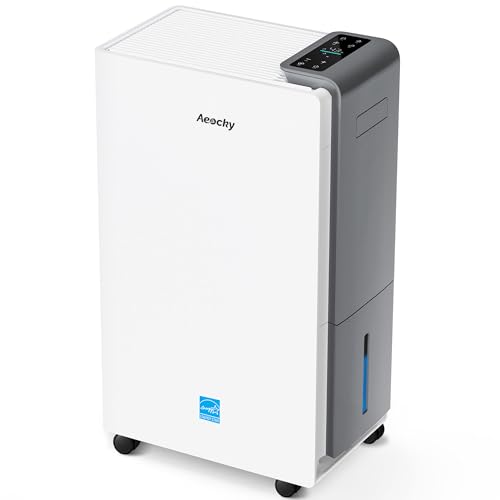
AEOCKY 5500 Sq.Ft Energy Star Most Efficient 2025 Dehumidifier
A Breakdown Of The Leading Choices
The PLUSCENT 21 Pint fits the sort of basement most people actually have, around 1,500 square feet with moderate moisture. At roughly 21 pints per day, it handles a family room or utility area without sounding like a window unit. The 160W compressor keeps electricity use modest, which matters for a unit that may run on a smart outlet timer for months.
For homeowners who want a true plug-and-forget setup, the included drain hose changes the daily math. Route it to a floor drain, sump pit, or condensate pump, and the unit never needs the tank walked to the sink. Compared with the larger picks later in this list, this one trades raw capacity for a smaller cabinet that tucks behind a workbench.
Strong Points
- 21-pint extraction sized for 1,500 sq. ft. basements and family rooms
- Includes a drain hose for continuous, unattended drainage
- Modest 160W draw keeps running costs low during multi-week stretches
- Compact cabinet is easier to position than the 80- and 120-pint units
Things To Consider
- Underpowered for basements with standing-water history or visible seepage
- No built-in pump, so the drain hose relies on gravity and a nearby low point
Who It Suits Best
Homeowners with a moderately damp, finished basement under 1,500 sq. ft. who want a low-maintenance, set-and-forget unit.
Look Elsewhere When
The Kesnos 120 Pint Energy Star Dehumidifier 6500 Sq.Ft makes more sense for chronically wet basements where moisture keeps returning after rain.
The PSOS 98 OZ runs on dual semiconductor condensation (thermoelectric cooling that pulls moisture without a compressor), which is why it stays quiet enough to sit on a nightstand. Coverage tops out around 1,000 sq. ft., and the seven-color ambient light doubles as a soft nightlight in a finished basement guest room.
The tank-based design won’t replace a whole-house system, and the 98-ounce reservoir still needs a manual trip to the sink every few days. For a small apartment, nursery, or office, though, the silent operation is the real draw. Owners commonly report the whisper mode is the one that actually gets used at night.
Everyday Wins
- Compressor-free operation drops noise well below traditional dehumidifiers
- Built-in humidity display on the front panel
- Auto shut-off protects the unit when the tank fills
- Ambient light adds atmosphere to finished basement rooms
Worth Noting
- No continuous-drain port, so it cannot run on a hose unattended
- Capacity is too small for damp, unfinished basements or large rec rooms
Made For
Bedrooms, small home offices, and finished basement dens where silence matters more than tank-free operation.
Where Another Pick Suits Better
Pick the AEOCKY 50 Pint 3500 Sq.Ft Ultra-Quiet Dehumidifier when you need real compressor-grade extraction in a quiet package.
The AEOCKY 50 Pint splits the difference between the smaller PLUSCENT and the 80- and 120-pint giants, pulling moisture from up to 3,500 sq. ft. at roughly 40 dB on its lower fan setting. For a homeowner with a large rec room, home gym, or split basement, that middle capacity often hits the sweet spot.
The included drain hose matches the rest of the AEOCKY line, so the unit can run to a utility sink without anyone touching the tank. Compared with the PSOS Peltier unit above, this one trades silence for raw extraction. Compared with the Kesnos 80-pint below, it sacrifices a little coverage for a noticeably quieter cabinet.
Practical Advantages
- 50-pint output sized for 3,500 sq. ft. finished basements
- Rated at about 40 dB for low-noise overnight runs
- Continuous-drain hose included for unattended operation
Trade Offs
- Heavier and bulkier than the 21- and 30-pint picks
- No internal condensate pump, so drainage depends on gravity
Best Suited To
Households with a large, finished basement that needs serious moisture control but still doubles as a living space.
Skip It When
The AEOCKY 80 Pint Dehumidifier with Pump 4500 Sq.Ft is the better match when there is no floor drain within hose reach.
The Kesnos 120 Pint exists for the basement that punishes smaller units. Up to 120 pints a day covers roughly 6,500 sq. ft., and the adjustable humidistat lets you dial in 30 to 80 percent relative humidity in 5-percent steps. The Energy Star rating helps offset the larger compressor on the electric bill.
This is a serious machine, meaning it is loud on high fan and large enough to need a corner of its own. The drain hose routes to a sump pump or floor drain for fully hands-off operation, which is the only realistic way to run a 120-pint unit day after day. Filter cleaning is a once-a-month chore owners commonly mention in their routine.
Notable Gains
- 120-pint extraction tackles stone-walled and chronically damp basements
- Energy Star rating keeps efficiency reasonable for a unit this size
- Adjustable 30 to 80 percent humidistat in 5-percent increments
- Drain hose included for continuous gravity drainage
Honest Caveats
- Cabinet is large and heavy, so plan its corner before unboxing
- High-fan mode is loud enough to be intrusive in living areas
- Air filter needs monthly cleaning in dusty basements
Who Will Love This
Owners of large, unfinished, or stone-foundation basements with persistent damp who want a single unit to do the whole job.
Reach For A Different Pick When
The Kesnos 80 Pints Energy Star Dehumidifier with Front Display handles 5,500 sq. ft. with a friendlier footprint when extraction this large is overkill.
The AEOCKY 80 Pint with Pump fixes the most common basement headache: no floor drain within gravity reach. The integrated condensate pump pushes water upward through a hose, so you can route discharge to a sink, window, or upstairs utility drain. Coverage spans about 4,500 sq. ft. with up to 80 pints of daily extraction.
The intelligent humidistat reads the room and adjusts fan speed, which matters when humidity swings between dry winter and muggy summer. Owners who set this up on a smart plug often describe it as the first unit they did not have to babysit. Compared with the Kesnos 120 below, it trades raw capacity for installation flexibility.
Where It Helps
- Internal pump lifts condensate, so gravity drainage is not required
- Covers up to 4,500 sq. ft. for most finished basements
- Intelligent humidistat adjusts output as room conditions change
Points To Note
- Pump adds moving parts that owners commonly clean annually
- Pricier than gravity-only units at similar capacity
Perfect Match For
Finished basements with no floor drain, or installations where the drain line must run upward to reach a sink.
Consider Something Else When
Choose the Kesnos 120 Pint Energy Star Dehumidifier 6500 Sq.Ft for raw extraction in larger, damper spaces where a pump is unnecessary.
The Kesnos 80 Pints with Front Display keeps the readouts visible without bending down. Coverage runs to about 5,500 sq. ft. with up to 80 pints per day, and a 30 to 80 percent humidity range covers most homeowner targets. Two fan speeds let you trade noise for faster drying.
The front display is a small touch that changes daily use, especially in a workshop or storage room where you walk past the unit constantly. The included drain hose handles continuous operation, and the Energy Star rating keeps runtime costs manageable. Against the AEOCKY 80-pint above, the difference comes down to pump versus gravity.
A Few Highlights
- Front-facing humidity display reads at a glance
- Up to 80-pint daily extraction for 5,500 sq. ft. coverage
- Energy Star rated for better long-term efficiency
- Drain hose included for continuous operation
Minor Gripes
- No built-in pump limits drain routing options
- High-fan speed runs louder than the 50-pint AEOCKY above
Built With In Mind
Workshops, storage areas, and rec rooms where the unit sits at eye level and the front display saves a crouch.
A Better Fit Elsewhere
The AEOCKY 80 Pint Dehumidifier with Pump 4500 Sq.Ft is the smarter call when the drain must travel up or sideways to reach a sink.
The Kesnos 30 Pints pulls a different lever, prioritizing silence over capacity. Rated at roughly 36 dB on its quiet mode, it sits comfortably next to a TV or a bedroom wall without raising voices. Coverage is around 2,500 sq. ft., which covers most living-area basements and bonus rooms.
The 30-pint capacity is the main limit. It will keep a finished basement dry in moderate climates, but it cannot keep up with a stone-walled basement that sweats after every rain. For most homeowners, though, the ultra-quiet operation is the feature that decides between a dehumidifier you tolerate and one you forget is running.
Reasons It Performs
- 36 dB quiet mode is library-friendly for living spaces
- 2,500 sq. ft. coverage suits most finished basements
- Energy Star certified for efficient continuous use
- Compact cabinet fits along a wall or in a closet
Less Ideal Details
- 30-pint capacity trails the 50-, 80-, and 120-pint units in this list
- Best for moderate, not severe, basement moisture
The Right Fit
Households running a dehumidifier in a finished living area where noise and energy use matter as much as extraction.
Swap It Out When
The Kesnos 120 Pint Energy Star Dehumidifier 6500 Sq.Ft earns its spot for basements with persistent, heavy moisture that a 30-pint unit cannot keep up with.
The AEOCKY 5500 Sq.Ft carries the Energy Star Most Efficient 2025 designation, a stricter tier than standard Energy Star certification. That distinction matters on a unit designed to run 24/7 in a 5,500 sq. ft. basement, where even a small efficiency gap compounds over months. Up to 80 pints of daily extraction handles most whole-home setups.
Continuous-drain operation through the included hose makes unattended use realistic, and the humidistat automates fan output as conditions shift. Compared with the Kesnos 80-pint unit above, the AEOCKY trades a smaller coverage rating for a meaningfully better efficiency profile. For always-on installations, that gap shows up on the electric bill.
Positive Takeaways
- Energy Star Most Efficient 2025 for stronger long-term savings
- Covers up to 5,500 sq. ft. with 80-pint daily extraction
- Drain hose included for hands-off continuous operation
- Built for whole-home and large basement setups
Points To Keep In Mind
- Higher upfront cost than standard Energy Star models
- Most efficient when run for long stretches rather than short cycles
Whose Shelf It Belongs On
Owners planning to run a dehumidifier around the clock across a large basement, where the efficiency savings pay back the higher initial cost.
Not Your Match When
The AEOCKY 50 Pint 3500 Sq.Ft Ultra-Quiet Dehumidifier is the right scale for smaller, finished basements where premium efficiency is overkill.
What Matters Most When Shopping For Basement Dehumidifiers With Drain Hoses
Match Capacity To The Square Footage, Not The Label
Manufacturers rate dehumidifiers in pints per day at 95°F and 90 percent relative humidity, an aggressive test that rarely matches a real basement. In a typical 60°F basement at 60 percent humidity, a 30-pint unit may pull closer to 10 to 15 pints. Measure your space, then size up if your basement shows signs of standing water, visible efflorescence, or musty odors after rain.
Choose Drainage That Matches Your Plumbing
A gravity drain hose works only when the hose can run downhill to a floor drain, sump pit, or condensate pump. If the only drain is a utility sink six feet above the basement floor, an integrated pump (like the AEOCKY 80-pint with Pump) is the practical answer. Confirm the hose port size and length before you commit, since adapters for non-standard fittings are a common frustration.
Pay Attention To Noise If The Basement Is Lived In
A 50-pint compressor unit in a quiet finished basement reads as background noise at 40 dB, while a 120-pint beast on high fan reads as a server room. Thermoelectric Peltier units (like the PSOS) drop the noise floor dramatically but cap capacity around 1,000 sq. ft. Match the room to the unit, not the other way around.
Filter Access And Maintenance Decide Daily Habits
Most dehumidifiers in this list use a washable mesh filter that needs a monthly rinse in dusty basements. Look for a filter you can pull without tools, and a washable tank if you plan to run without a hose during setup. Skipping the filter cleaning is the most common reason performance drops after a season, so accessibility matters more than it seems.
Key Considerations Across These Picks
Where Shoppers Go Wrong
A frequent misstep is buying a unit sized by the floor’s square footage alone, without checking the actual humidity load. A damp, stone-walled basement under 1,000 sq. ft. can demand the extraction power of a 50- or 80-pint unit, not the 21-pint compact that the same square footage would suggest in a finished space. Match capacity to moisture behavior, not just room size. Another common trap is ignoring the drain routing until installation day, which leads to a tank-emptying routine nobody wants.
Where The Extra Money Goes
Premium models like the AEOCKY 5500 Sq.Ft Energy Star Most Efficient 2025 add a higher-tier efficiency rating, a more accurate humidistat, and quieter variable-speed fans. Built-in condensate pumps (like the AEOCKY 80-pint with Pump) add installation flexibility that pays off in basements without floor drains. The upgrade is worth it for always-on setups, large square footage, or homes where the dehumidifier sits inside a finished living space rather than a utility corner.
Frequently Asked Questions
How Does A Drain Hose Change Daily Use?
A drain hose routes the collected water to a floor drain, sump pump, or external container so you never have to empty the tank manually. The unit runs as long as the drain line is clear and the destination can accept the volume.
Do All Basement Dehumidifiers Come With A Hose?
No. Smaller or bedroom-focused units, like the PSOS 98 OZ, use a tank-only design for quieter operation. Always confirm the listing includes a continuous-drain port and the hose itself, since some units require a separate purchase.
Can I Use A Condensate Pump Instead Of A Hose?
Yes. A separate condensate pump is a common alternative when the basement has no floor drain. Units with a built-in pump, such as the AEOCKY 80-pint model, handle the same job without buying extra hardware.
What Humidity Level Should I Target In A Basement?
Most sources suggest keeping basement relative humidity between 30 and 50 percent to discourage mold and musty smells. A hygrometer (a small humidity meter) helps you set the humidistat accurately rather than guessing from the unit’s display.
How Often Does The Filter Need Cleaning?
A monthly rinse under warm water is a reasonable baseline for most basements. In dusty or construction-adjacent spaces, check the filter every two to three weeks to keep airflow and extraction performance steady.
Bottom Line
The right dehumidifier depends on basement size, drainage access, and how loud the unit can run without disrupting daily life. Match capacity to moisture, route the drain line before you buy, and size up if the basement has a history of dampness. A well-chosen unit becomes a quiet appliance you forget is running, and that is the goal.